Welcome to Modern Agriculture!

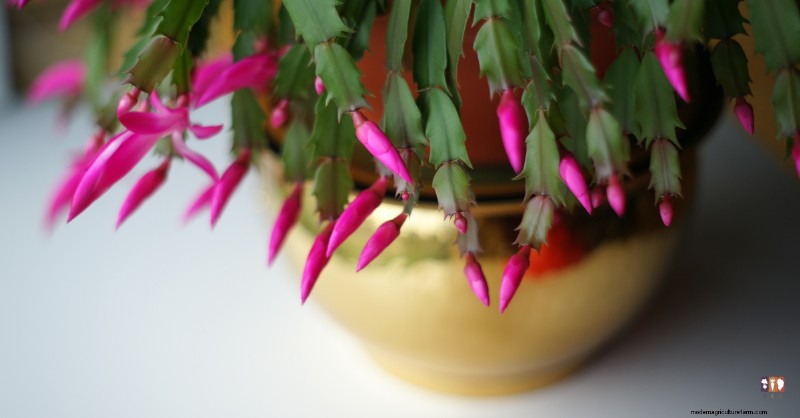
The Christmas cactus is a popular houseplant, and for good reason! These exotic plants are native to the tropical rainforests of Brazil, but have made their way to countless U.S. homes to spend the winter months showing off their gorgeous blooms. With proper care, Christmas cactus plants can be passed on for decades, blooming every holiday season from year to year.
Christmas cactus care is fairly simple. These plants require regular watering, 12+ hours of darkness daily leading up to their blooming period, and indirect but bright light.
It’s important to note that the Christmas cactus is just one type of holiday cactus, in addition to the Thanksgiving cactus and Easter cactus. Care for each of these plants is quite similar.
Here are the most important things to know about caring for your Christmas cactus:
Lets dive in to more of the specifics of caring for your Christmas cactus – from soil requirements to practical troubleshooting.
This post may contain affiliate links, which simply means I may earn a commission off of links at no extra cost to you. Thank you for supporting my site!
Christmas cacti love environments that mimic their natural habitat in the tropical rain forests – indirect yet bright light, somewhat humid conditions, and temperatures between 60-70ºF. If possible, slightly cooler nighttime temperatures can help to imitate their tropical home and encourage healthy blooms.
In USDA zones 10-12, you can grow your Christmas cactuses outdoors. In colder zones, they can be kept outside during the summer months, but will need to be moved indoors during the colder winters.
The best place to keep your cactus is in a spot that’s out of direct sunlight, especially during the hot summers. Too much bright light can burn their leaves. In addition, it’s a good idea to find a place that’s away from cold drafts and fluctuating temperatures. These plants love consistency, so keep them away from opening doors and windows as well as heat sources such as vents, stoves, or fireplaces.
As a general rule, water your Christmas cactus once every 3-4 weeks during the winter months, and once a week during the spring and summer growing seasons. Proper watering is important not only for having an overall healthy plant, but also for encouraging more blooms on your Christmas cactus.
The best way, however, to decide how much water your plant needs is to check the top inch of the soil regularly to gauge the soil moisture. Holiday cactuses prefer moist soil that’s not soggy or waterlogged. Too much excess water can lead to root rot, wilting, and yellow leaves, while overly dry soil can cause the leaves to shrivel and wrinkle and may lead to buds dropping off.
Another way to monitor Christmas cactus watering is to place your plant in a shower or sink, remove the saucer, and let any excess water run out through the drainage holes to make sure that it gets enough moisture without becoming waterlogged. Using this method every time may lead to overwatering – once every month or so should be sufficient.
The type of soil your plant is in will also make a difference in the amount of water it needs. Outdoor garden plants will naturally need more water in their somewhat dry soil, as will indoor plants if they are near heat sources. On the other hand, an indoor plant potted up in a well-draining potting mix with perlite and in a humid environment will likely need less water.
If possible, it’s best to use distilled or filtered water or rainwater to irrigate your Christmas cactus. Many municipal water sources have chemicals and chlorine in them which may build up in the soil and cause stress to the plant. If you do use tap water, you can let it sit for 24 hours to let the chlorine and other gasses dissipate.
Christmas cactuses like humidity and well-draining soil. At the same time, it’s important that their soil doesn’t become waterlogged and soggy, since this can lead to root rot among other problems. A store-bought or DIY potting soil with vermiculite and perlite is a good option. Course sand can also help to create a well-draining consistency that doesn’t retain too much moisture.
Christmas cactuses aren’t too particular about soil pH. A pH of 5.5 to 7.0 will work well.
I love making my own potting soil – it’s typically less expensive, I know exactly what’s in it, and I can adjust it using the exact components I want. If you find it simpler to buy a commercial potting soil, Miracle-Gro Cactus, Palm and Citrus Potting Mix or Espoma Organic Cactus Mix are good options for this tropical plant.
If you decide to fertilize your Christmas cactus, the best time to do it is during its active growing season in the spring or summer. Once a year is typically enough. Keep in mind that it’s better to under-fertilize than to over-fertilize, as over-fertilization can cause build up and “fertilizer burn” when the roots become too bogged down with excess salts.
(If you do add too much fertilizer, flush the soil by placing your plant in the shower, drenching it with water, and allowing it to drain completely.)
A balanced, water-soluble fertilizer is the best choice for a Christmas cactus. Look for something with an NPK ratio of 10-10-10 or 20-20-20.
The allure of a Christmas cactus is its bright, beautiful flowers during a time of year when vibrant blooms are scarce to none. To help encourage your plant to bloom during the winter months (and hopefully right around Christmas), give it 6-8 weeks of complete darkness for at least 12 hours per day.
This dark period mimics the shorter days of winter and “tricks” the plant into entering its winter bloom season. During this time, avoid all light, even from lamps or streetlights. Keeping your plant in a basement or closet with a grow light can be a good option. You can also cover it with a thick box or bucket to block out the light.
When you begin to see flower buds appearing, you can move your plant back out to its regular home.
Christmas cactuses don’t need pruning every year, but if you have an overly large plant, you can prune it every 3-5 years. The best time to do this is in the early spring, after it’s finished blooming.
Even better, you can easily propagate your Christmas cactus by dividing a large plant or simply taking a cutting and rooting it in soil or water.
Struggling to keep your Christmas cactus happy? Here are some common problems you may encounter and tips for what to do.
Holiday cacti are often confused with one another and even mislabeled at garden centers. However, each do have slight differences in appearance and tend to bloom around their respective holidays. Still, their actual bloom time is usually more or less determined by when they begin receiving 12+ hours of daily darkness.
Care requirements are very similar for each of these plants. One exception is that the Easter cactus needs less water and is very sensitive to overwatering.