
Welcome to Modern Agriculture!

This article has been checked for horticultural accuracy by Oliver Parsons.
April is a busy time in ornamental and vegetable gardens in the UK, as lots of seeds can be sown this month. Now, the days are longer and warmer reliably. April is the month to make tentative sowings of some seeds outside, while others can be started under glass and planted out after all risk of frost has passed. In the vegetable garden, crops such as carrots and peas can be sown direct outside. In contrast, tender crops like sweetcorn and courgettes should be sown under cover and kept in a greenhouse or on a sunny windowsill before planting out towards the end of May or early June. April is also the month for planting potatoes if they are maincrops, as well as onion sets, shallots and garlic, and Jerusalem artichokes. Many vegetables can be grown in pots, including carrots, salads and radish. Even if you have a dedicated veg patch, it's still worth growing some extras in pots, too, near the house for easy picking.
While bare-root planting season is over, potted fruit trees and bushes such as currants, gooseberry, citrus and fig trees can be planted at any time. In the ornamental garden, annual climbers like canary creeper (Tropaeolum peregrinum) and Spanish flag (Ipomoea lobata) can be sown now for summer container displays, while others like cosmos and field poppies can be sown to fill gaps in borders. Summer-flowering bulbs and corms such as eucomis, gladiolus and freesias can be planted in containers and placed outside once the risk of frost is over.
Many seeds can be sown outside at this time of year, but the weather still likely to be often quite cold and blustery in April, you might find that it's worth investing in additional kit, which we've suggested below.
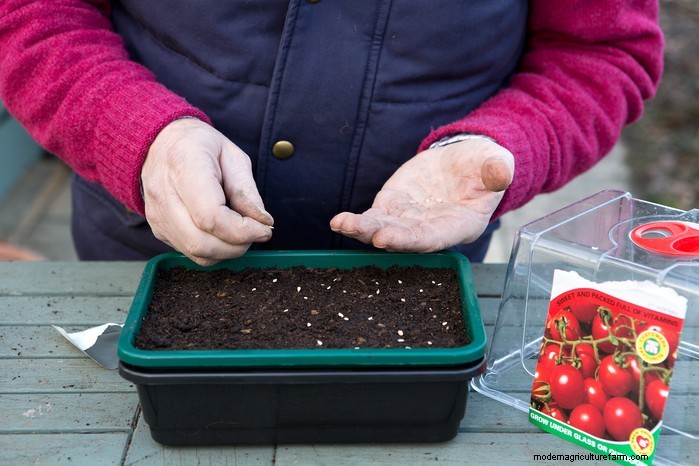
Sowing tomato seeds. Sarah Cuttle
When to harvest: July to October.
How to grow: very early April is your absolute last chance to sow these tender fruits, which need a long growing season to do well. For much better results this month buy seedling plants, which can soon be planted out. If you are sowing seed, do so indoors on a heated propagator to speed up germination.
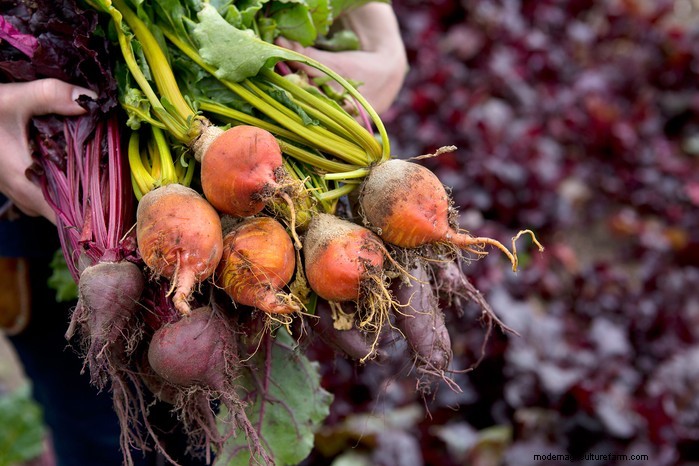
A bunch of freshly harvested orange and purple beetroot. Sarah Cuttle
When to harvest: June to October.
How to grow: beetroot is an easy crop to grow, making it ideal for beginners. It will grow in any fertile, well-drained soil and also does well in pots (in pots, choose varieties that are less prone to bolting as these will tolerate the drier conditions of a container better than others). Follow the spacing instructions on the packet and thin the seedlings to about 10cm when they are around 3cm high. Harvest when the beetroots have reached the size of a golf ball, or if you enjoy them roasted at the size of a cricket ball.
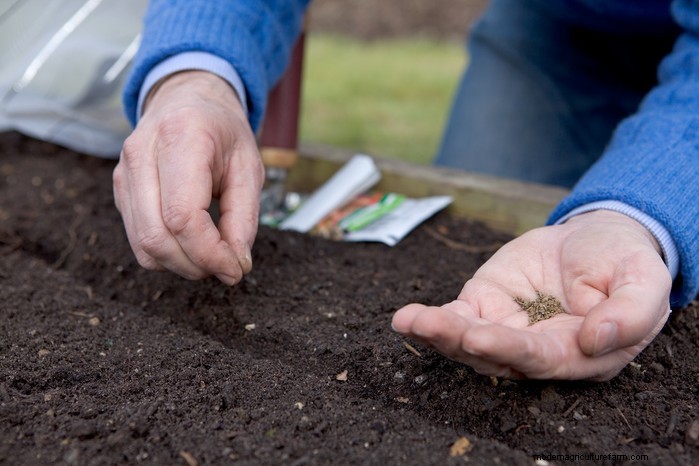
Sowing carrot seed. Sarah Cuttle
When to harvest: May to October.
How to grow: sow carrots on well-prepared soil that's free of stones – stony soil can result in forked carrots. Carrots also grow well in containers – choose short, round varieties or harvest longer varieties as baby carrots. At this time of year, it's a good idea to protect against carrot fly by putting up a barrier such as horticultural fleece around the crop. Alternatively, plant onions nearby as their scent will put the pest off. Your crop should be ready to harvest three to four months after sowing.
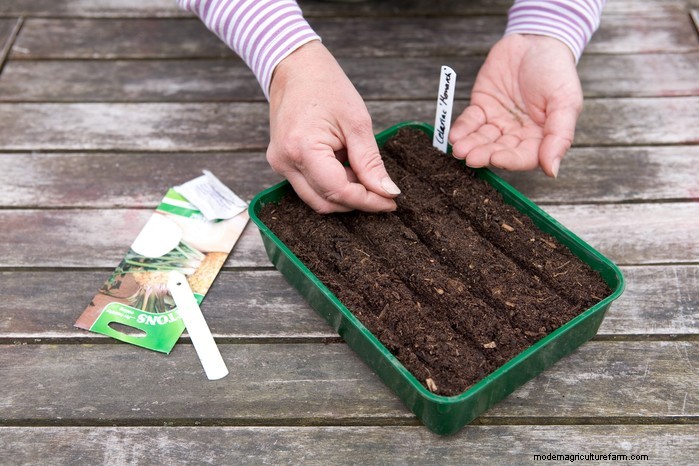
Sowing celeriac seeds in a seed tray. Sarah Cuttle
When to harvest: October to March.
How to grow: celeriac needs a long growing season for an autumn/winter harvest, so sow now, under cover. Transfer the seedlings to individual pots when they're large enough to handle.
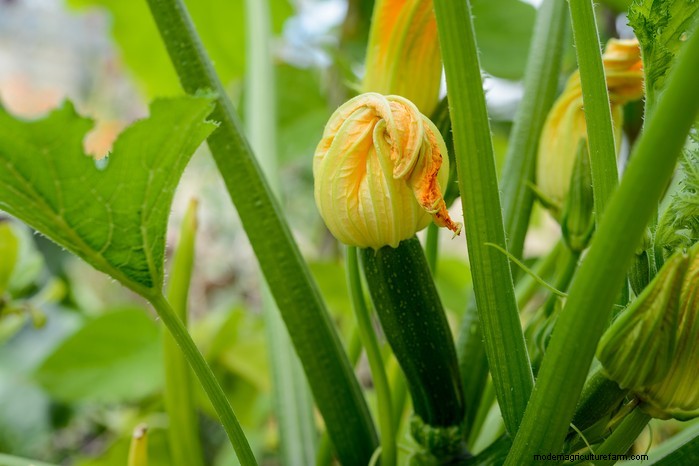
Orange flowers on developing courgettes. Jason Ingram
When to harvest: July to October.
How to grow: courgettes, cucumbers, pumpkins, squashes and marrows are known as curcurbits. They can all be sown in the same way – in individual 5cm pots under cover. Plant outside once all risk of frost has passed, after hardening off the plants for at least a couple of weeks. Cucumbers do best in a greenhouse, but can be grown in a very sunny and sheltered spot outside.
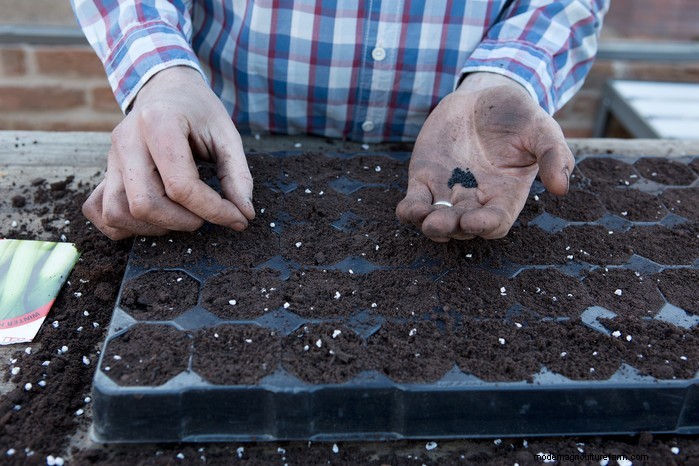
Sowing leek seeds. Sarah Cuttle
When to harvest: August to January.
How to grow: for an autumn or spring harvest, leeks can be sown in shallow drills direct in the ground from April or in seed trays under cover to plant out later.
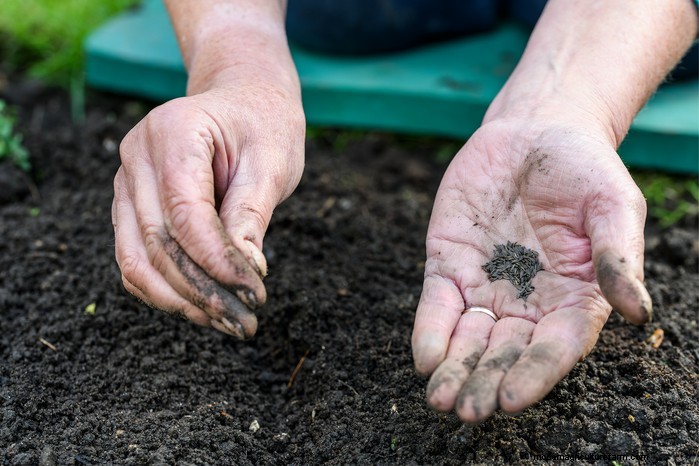
Sowing lettuce 'Romaine Ballon' seeds. Jason Ingram
When to harvest: May to November.
How to grow: lettuce is best sown under cover, in seed trays or modules, and planted out when large enough to handle. This can give them a head start on slugs and snails, which find young lettuce growth irresistible. Alternatively, sow lettuces in large pots and protect the seedlings using copper tape or by hand-picking slugs and snails when you see them.
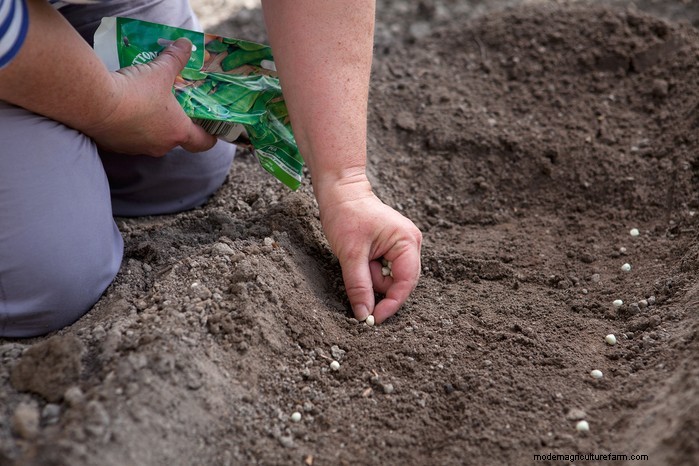
Sowing pea seeds. Sarah Cuttle
When to harvest: June to October.
How to grow: peas are easy to grow and can be harvested in early summer. You can sow them direct outside, but mice may eat them – if this is a problem, sow them indoors and plant the plants outside when they are 15cm tall. Alternatively, sow in guttering and transplant the whole row of seedlings into a trench when they're ready.
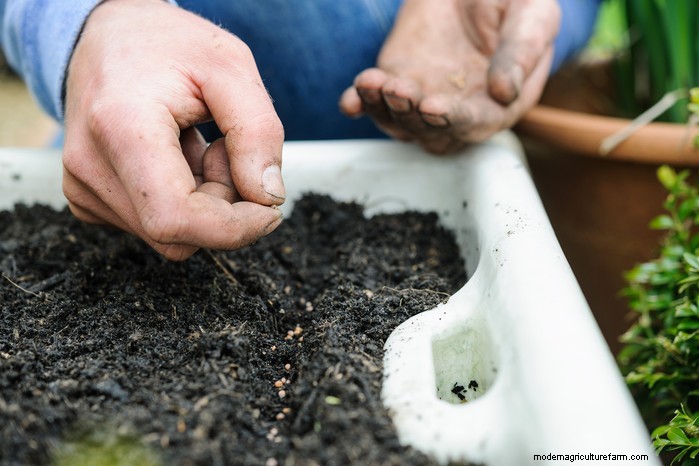
Sowing radish seeds in a container. Jason Ingram
When to harvest: May to December.
How to grow: radishes make a fast-growing 'catch crop', growing on ground that's empty for a few weeks or between slower-growing crops, such as parsnips. They also grow well in pots. Sow direct every three to four weeks for a continuous supply throughout summer.
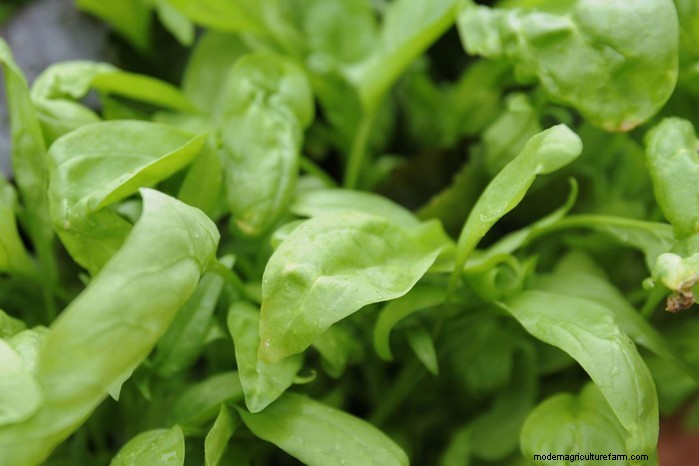
Spinach ready for harvesting. Tim Sandall
When to harvest: May to October, October to April.
How to grow: spinach can be sown direct outside in April, but if it's chilly, hold off until May or cover with horticultural fleece. Bear in mind that spinach needs lots of moisture and protection from slugs and snails. It grows better in a spot with a bit of shade.
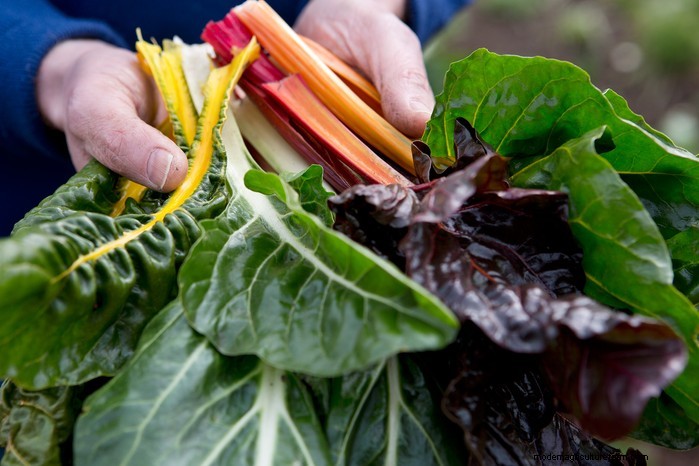
Red, orange and yellow stemmed Swiss chard. Sarah Cuttle
When to harvest: June to November.
How to grow: Swiss chard is a beautiful crop for a sunny or partially shaded spot and can be sown directly outside in April.
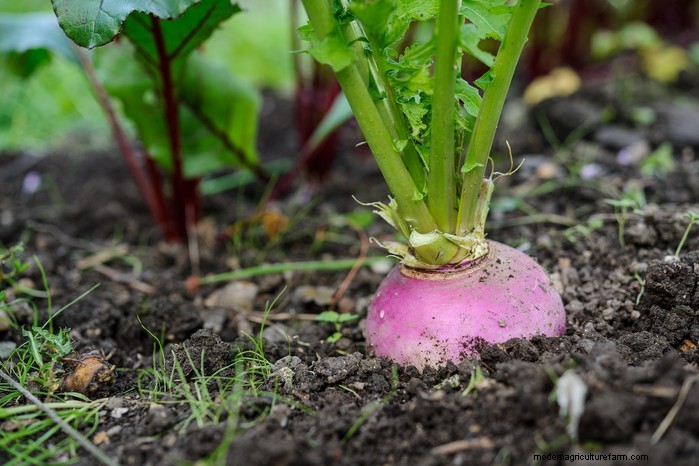
A turnip ready to harvest. Jason Ingram
When to harvest: March to December.
How to grow: turnips are quick-growing, ready to harvest in just six weeks. They can also be grown in pots. Harvest them when they are around the size of a golf ball for the best flavour, or eat the leaves as greens. Keep well watered.
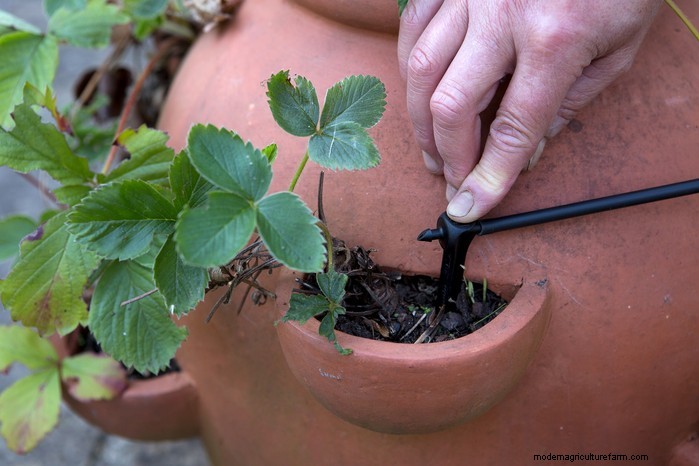
Adding automatic irrigation for strawberries in pots. Sarah Cuttle
When to harvest: June to September.
How to grow: strawberry runners can be planted in April and will fruit within a few weeks. Plant them in the ground in rows or in a bespoke 'strawberry pot' or hanging basket. Place a layer of straw underneath them to protect developing fruit from slugs and snails.
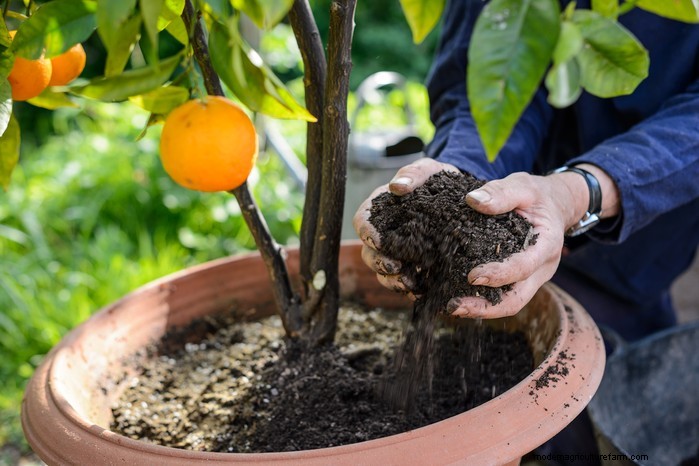
Top-dressing the compost for an orange tree growing in a pot. Jason Ingram
When to harvest: depends on the fruit.
How to grow: many dwarf fruit trees are suitable for growing in pots – choose a large container and use a soil-based compost. Water the tree more regularly than you would if planting in the ground and top-dress with fresh compost each spring.
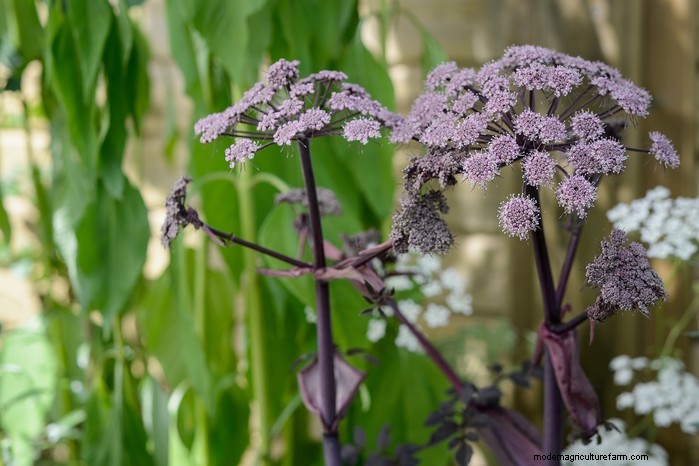
Large purple flowerheads and foliage of Angelica gigas. Jason Ingram
Flowers: May to September.
How to grow: this short-lived, majestic biennial or short-lived perennial is perfect for providing height at the back of beds and borders. Sow under cover from March to May and transplant when all risk of frost has passed. You'll have beautiful crimson umbels from May to September, which will be covered with bees and butterflies. You could also try sowing Angelica archangelica, from May onwards.
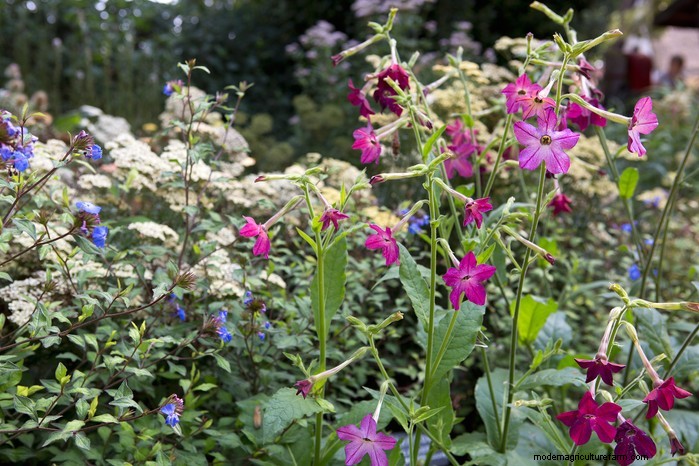
Magenta nicotiana flowers. Sarah Cuttle
Flowers: May to October (depending on species).
How to grow: nicotianas have a seductive fragrance, which is especially pronounced at night. Sow seed in March and April, then, after all risk of frost has passed, plant out in their final position around seating areas so you can enjoy the scent on summer evenings. Nicotiana sylvestris has elegant, drooping flowers, while those of Nicotiana alata 'Tinkerbell' are an attractive terracotta colour.
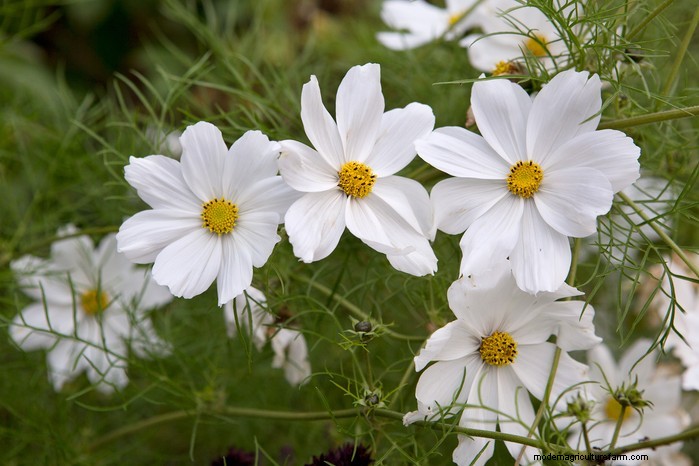
White cosmos flowers. Sarah Cuttle
Flowers: June to October.
How to grow: cosmos come in a beautiful array of colours and shapes, including perfumed chocolate cosmos (Cosmos atrosanguineus) and many cultivars of Cosmos bipinnatus. Here are 10 beautiful cosmos to grow.
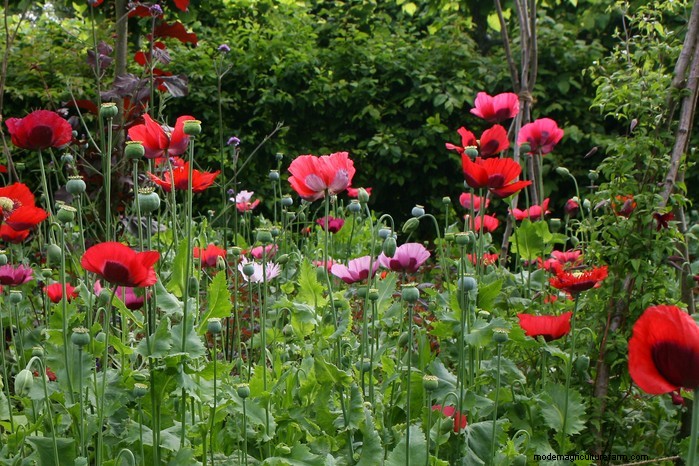
Red and mauve opium poppies. Marsha Arnold
Flowers: May to August.
How to grow: several types of poppy can be grown from seed, including orange California poppies (Eschscholzia californica), field poppies (Papaver rhoeas) and larger opium poppies (Papaver somniferum). They can all be sown from March to May, for flowers in summer and autumn.
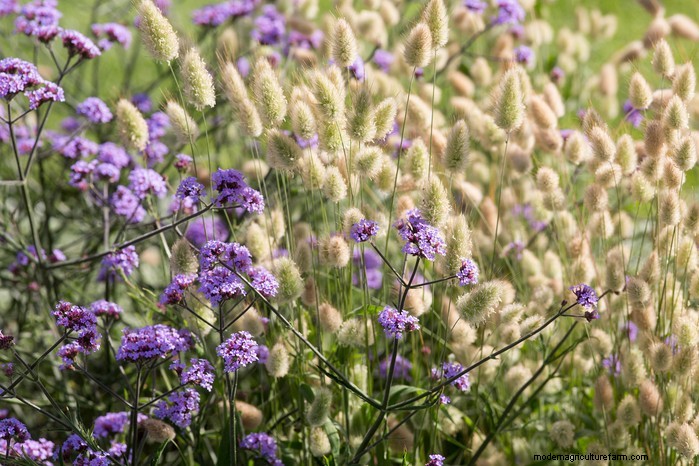
Oval, cream bunny's tail grass flowerheads beside purple Verbena bonariensis flowers. Paul Debois
Flowers: July to September.
How to grow: aptly known as the bunny's tail grass, Lagurus ovatus is a pleasing partner to other annuals and perennials such as Verbena bonariensis. Sow indoors, in pots or trays sited in a warm place. Alternatively, direct sow seeds outdoors from April onwards, where you want them to flower.
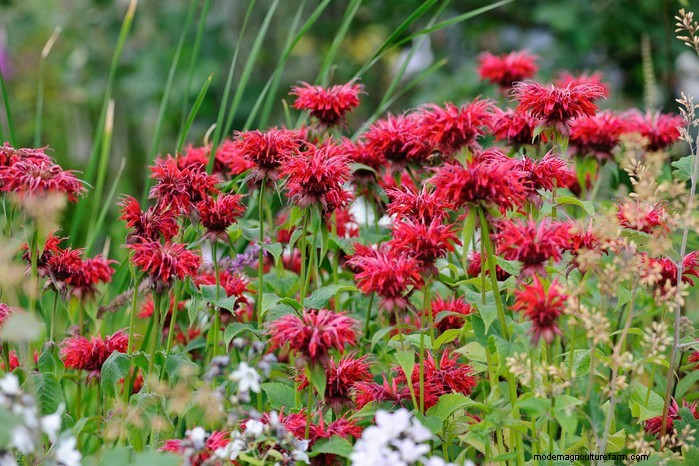
Brilliant red flowers of Monarda 'Cambridge Scarlet'. Jason Ingram
Flowers: June to September.
How to grow: bee balm (such as Monarda 'Cambridge Scarlet' above) can be sown from late winter to mid-spring. Keep the soil moist and cover the seeds to prevent them from drying out. Pot up the seedlings when they are large enough to handle, then plant them out in full sun or partial shade.
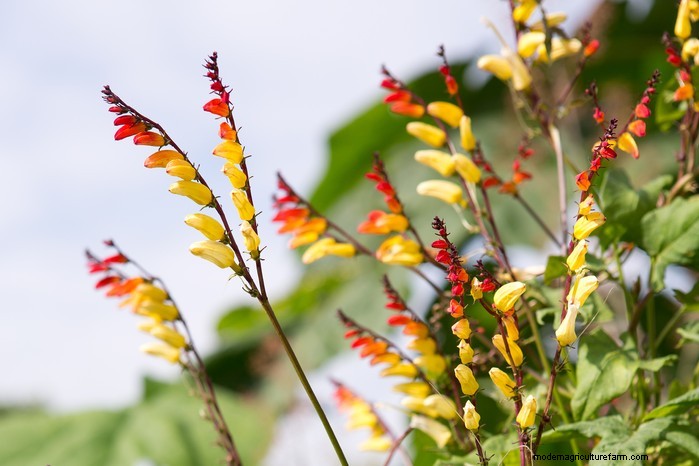
Red, orange and yellow flowers of Spanish flag
Flowers: June to September.
How to grow: Spanish flag (Ipomoea lobata) is a vigorous annual climber, producing cascades of fiery red and yellow flowers, which look fantastic in annual container displays. Sow it under cover from March to May, then plant out after the last frosts.
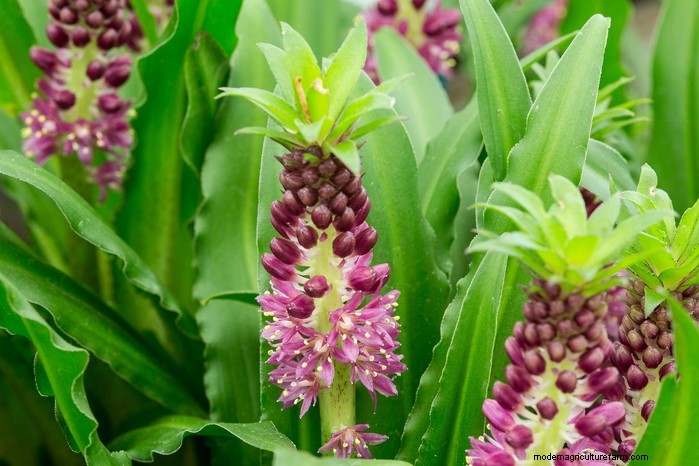
Pineapple lily in flower. Paul Debois
Flowers: July to September.
How to grow: exotic pineapple lilies (botanical name: eucomis) are usually planted in spring. Plant the bulbs 15cm deep in pots in a cold frame or unheated greenhouse, and plant out or move pots into the garden when all risk of frost has passed.
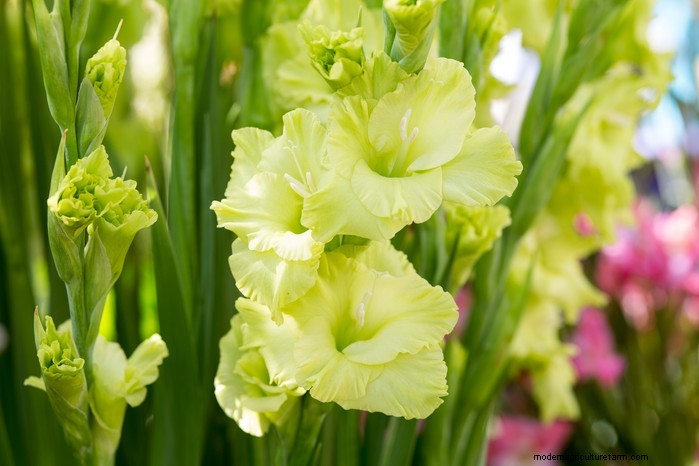
Gladiolus 'Green Star'. Paul Debois
Flowers: May to August.
How to grow: plant corms in a pot and keep them in a frost-free place. Gladioli can be planted outside from next month, once the risk of frost is over. Grow gladioli in moist but well-drained soil in full sun. Divide congested clumps every few years.
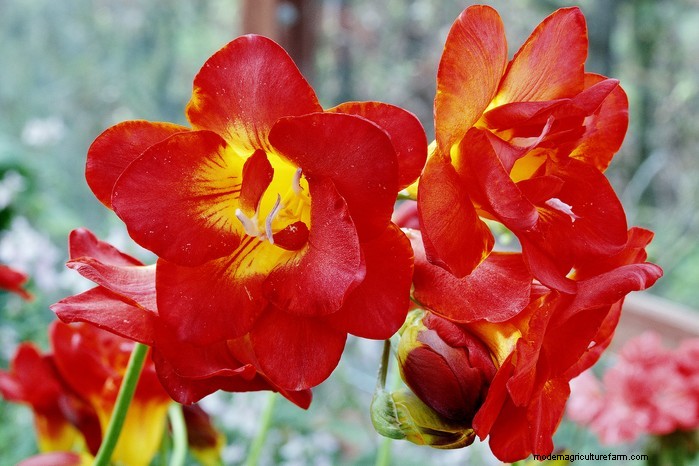
Red freesia in a pot. Stephen Hamilton
Flowers: June to July.
How to grow: plant 'prepared' freesia corms this month, outside in well-drained soil or in containers with the pointy-end up, at a depth of 3-5cm, and spaced 5cm apart. Water well and then stand the pot in a cool, shaded, frost-free place – a temperature of around 5°C is ideal. When shoots appear after 3-4 weeks, move containers into a warm and sunny position.
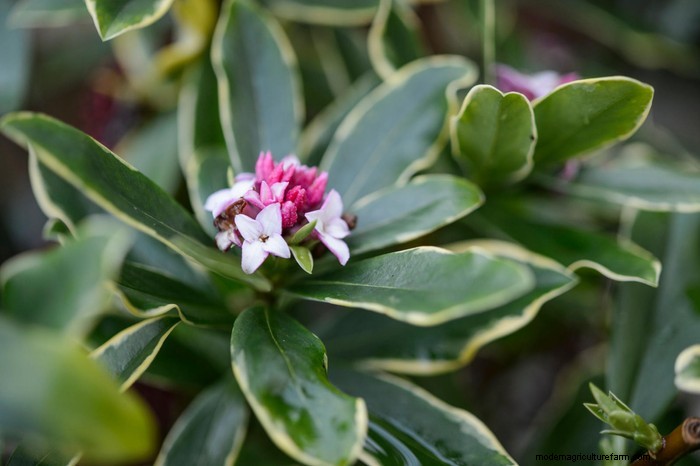
Daphne odora. Jason Ingram
How to grow: April is a good time to plant evergreen shrubs. First, soak the rootball. Then, dig a hole that's 50 per cent wider than the pot and fork compost into the base, making sure the hole depth equals the depth of the pot. Tease out the roots from the bottom of the plant. Place the shrub in the centre of the hole, then backfill with soil and firm in thoroughly.


