Welcome to Modern Agriculture!

If you love mushrooms and want to grow them at home, it’s hard to beat king trumpets. These delicious and sizable fungi also go by the name “king oyster.”
They are picky with temperature and humidity, which makes them a little tricky for first-time growers. However, with a little patience and extra care, you’ll harvest large and succulent fruiting bodies that pack tons of flavor and nutrients.
No matter if you’re an expert or novice mushroom grower, you’ll love growing and harvesting these giant morsels. Let’s dive into growing and caring for the beloved king trumpet mushrooms so you get a successful harvest at home.
Organic King Trumpet Mushroom Grow Kit Fruiting Block
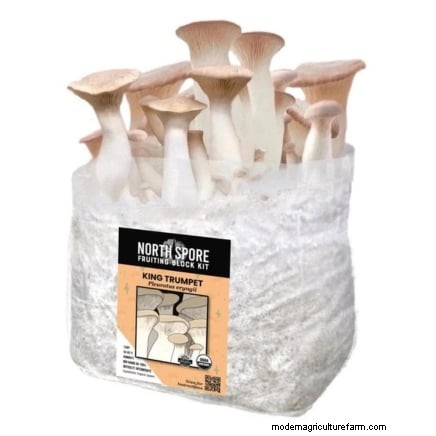
View at Epicgardening.com
‘King Trumpet’ Mushroom Overview
Mushroom Type Edible mushroom
Family Pleurotaceae
Genus Pleurotus
Species Pleurotus eryngii
Native Area Middle East, Asia, Mediterranean Europe, and North Africa
Exposure Indirect light
Height 6-8 inches
Watering Requirements Regular misting
Pests & Diseases fungus gnats and mold
Maintenance Medium
Substrate Type Hardwood sawdust with wheat bran and grains
Fruiting Temperatures 50-65°F or 10-18°C
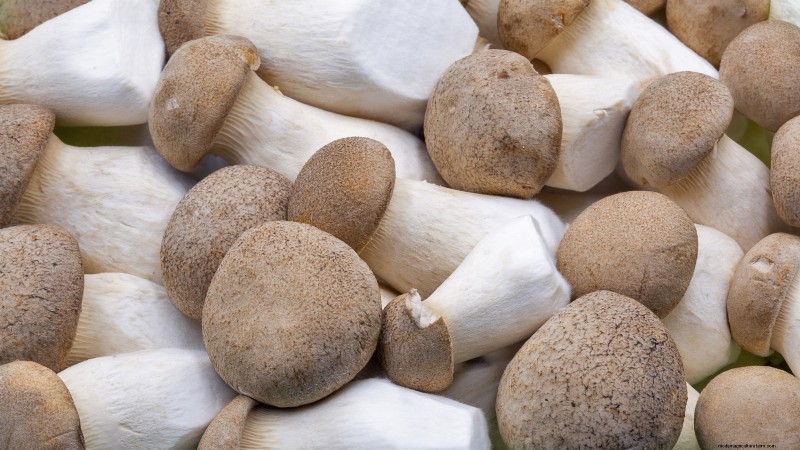 They are cultivated worldwide for their size, flavor, and health benefits.
King trumpets are gilled mushrooms that belong to the genus Pleurotus spp. There are over 200 species in the genus, and all of them are edible. Along with other common oyster mushrooms, people around the world cultivate them for their flavor, texture, size, and medicinal properties.
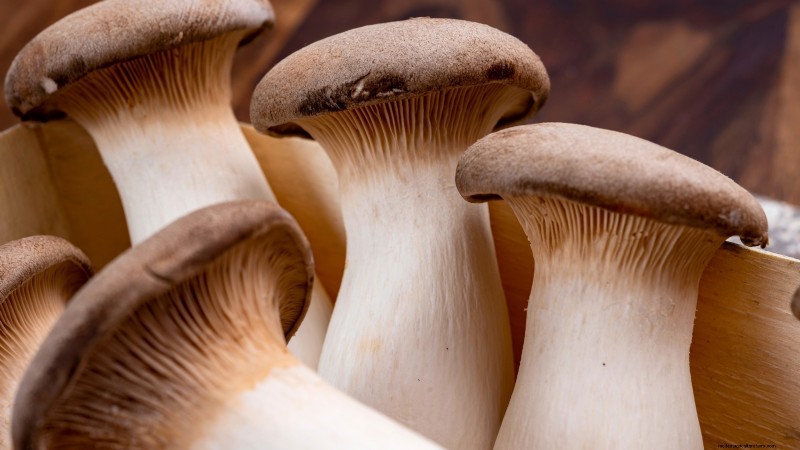 They’re rich in umami and essential nutrients, perfect for cooking.
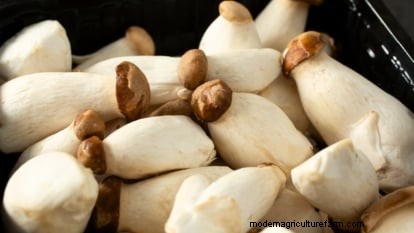
Pleurotus eryngii forms large edible fruiting bodies that resemble trumpets. They have a thick white stem and beautiful golden brown caps. They are one of the largest oyster mushrooms, with some weighing a pound or more.
Chefs, foodies, and health-conscious eaters love them for their umami-rich taste, texture, and health properties. They pack essential nutrients such as iron, fiber, potassium, and Vitamins B and D.
These fungal fruits go by several names, including king oyster, king eryngii, royal trumpet, and French horn. They are high-yielding and grow as individual mushrooms instead of clusters. You’ll find them in many cuisines, such as Japanese, French, Chinese, and Italian.
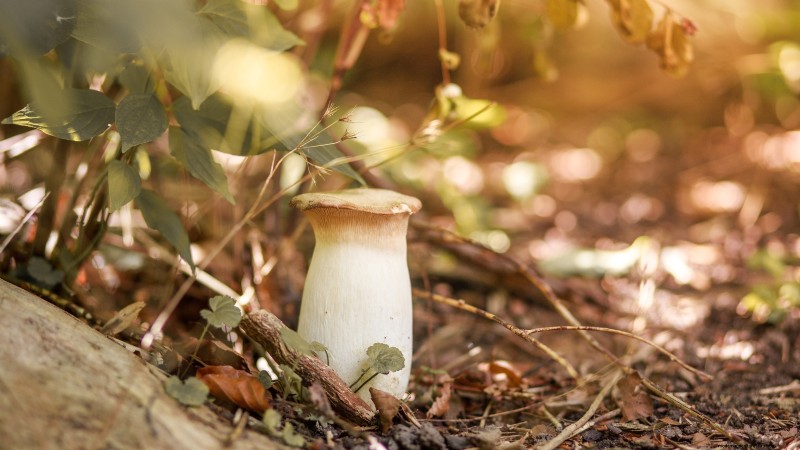 These thrive in humid, limestone-rich soils with hardwood tree roots.
They are native to North Africa, Europe, and the Middle East, where they thrive on the roots of hardwood trees such as beeches, oaks, and elms. They prefer moist, limestone-rich soils in areas with high humidity.
Their natural habitat ranges from temperate hardwood forests and some Mediterranean woodlands. They grow in highland regions with significant rainfall and moist old-growth canopies.
Like other members of the Pleurotus spp. genus, this species forms a symbiotic relationship with some trees. Their mycelium combines with the tree roots and helps the trees absorb nutrients more efficiently. In exchange, the fungi feed off carbohydrates and decaying organic matter.
There are several ways to grow these king trumpet mushrooms. Compared to some other popular medicinal and edible species like reiki and blue oysters, kings are not the easiest to grow. The simplest way to grow them is by using a growing kit, followed by a grain spawn.
If you’re a beginner, I suggest starting with a grow kit. With step-by-step instructions and a substrate fully inoculated with the right mycelium, it really can’t get any easier. Plus, you can grow them right on your countertop.
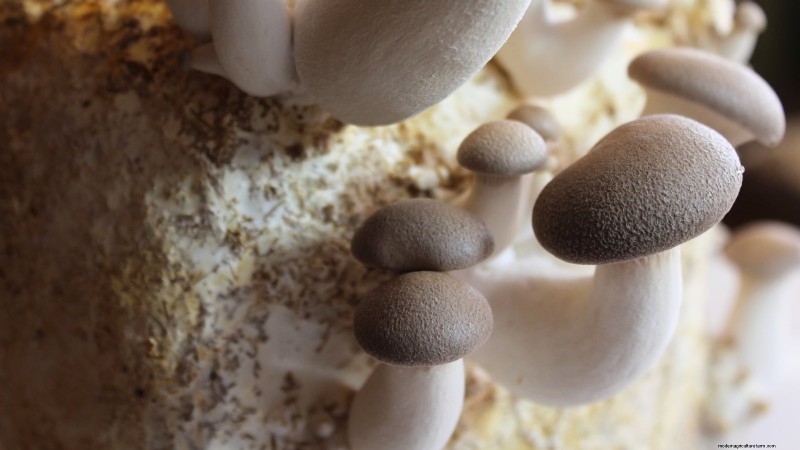 Get meaty, flavorful mushrooms in weeks with proper care.
These mushrooms are easy to grow with the proper growing kit in hand! You won’t have to worry about making mistakes by following the directions. And, you’ll get clean and flavorful fruiting bodies every time.
Fruiting blocks are rectangular blocks of sawdust or wood inoculated with mycelium. They are 5 lbs or less and take up very little space. For the best results, try growing your fruiting block in a controlled environment, such as a martha tent or monotub.
‘King’s Trumpet’ are top fruiting mushrooms that grow from the top of the substrate. Once you get your fruiting block, follow these simple steps to get flavorful and meaty harvests every time.
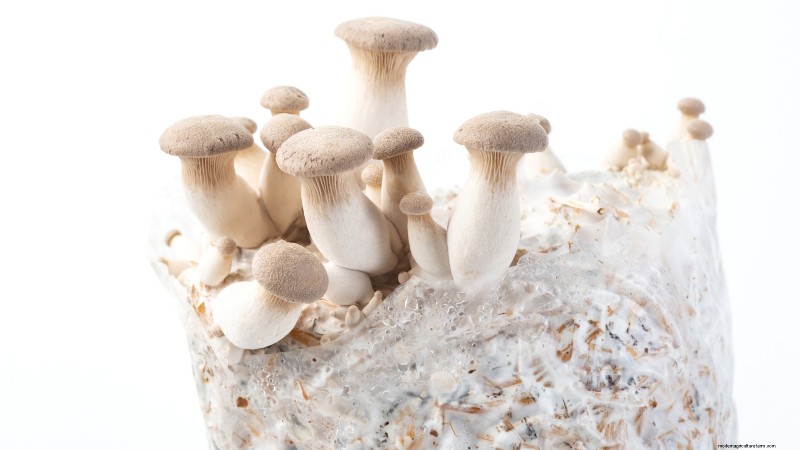 Enjoy the challenge of growing fungi with grain spawns.
Grain spawns are mixtures of used grains, husks, and sawdust inoculated with mycelium. This method is trickier than using a kit but if you’re up for a challenge, you’ll have fun! You’ll also be able to grow a huge assortment of hardwood-loving fungi in the future.
Below are the steps to create a substrate, innoculate it with mycelium, and grow these trumpet-shaped beauties.
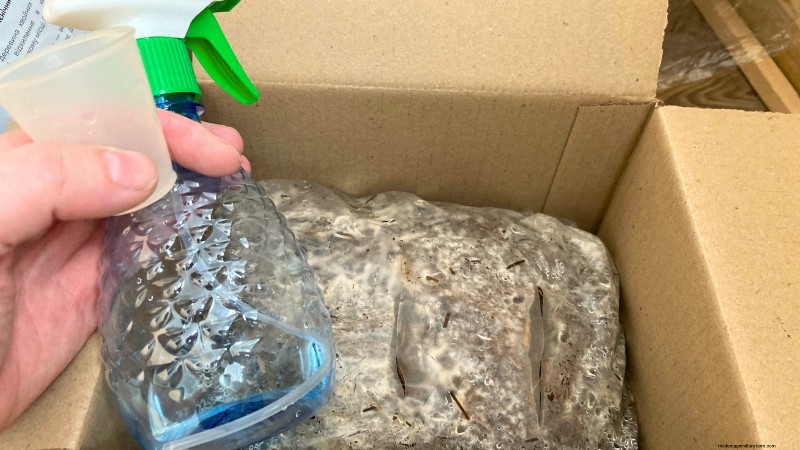 Mist your substrate and monitor humidity for best results.
Assemble mushroom bags or containers for the substrate. Mushroom bags work best for king trumpets. They can stand up to the heat and pressure of a pressure cooker and allow gentle airflow exchange while minimizing the risk of contamination.
Get a hygrometer to measure the humidity and a trusty thermometer to help maintain the right temperature. You’ll also need a spray bottle to mist your substrate and a pressure cooker to sterilize it.
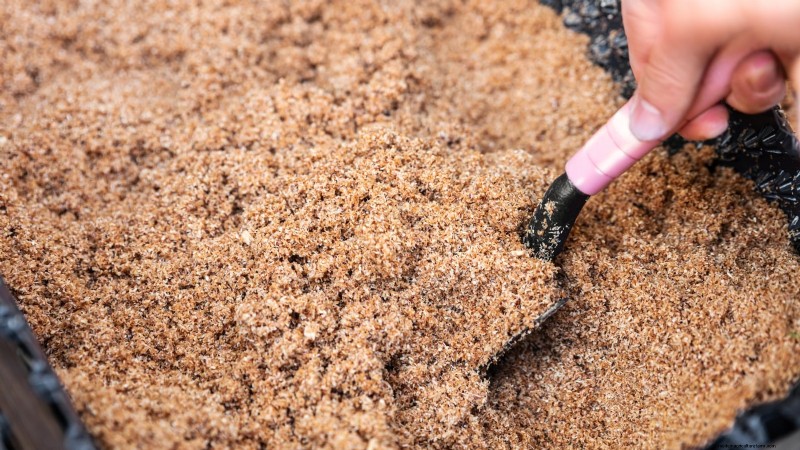 Combine hardwood sawdust with wheat bran for ideal growth.
King trumpets thrive on a mixture of hardwood sawdust and grains like wheat bran. This substrate mimics the hardwood forests of their native range. Softwood sawdust and coffee grounds won’t work as well. Try 10% wheat bran to your hardwood sawdust.
Add water to your substrate until it’s thoroughly moist. Squeeze the substrate with your hands. Only a few drops of water should come out. It should be moist and keep its shape in your hands.
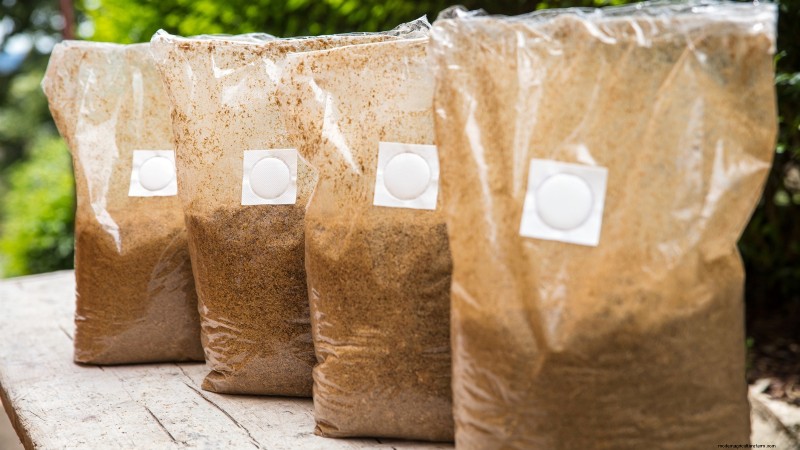 Ensure there is no air inside the bag before pressure cooking.
Load your mixed and hydrated substrate into your mushroom bags. Fold the bag carefully above the substrate and flatten the top, keeping the filter against the plastic and not the substrate. Make sure there’s no air built up inside which can burst in your pressure cooker.
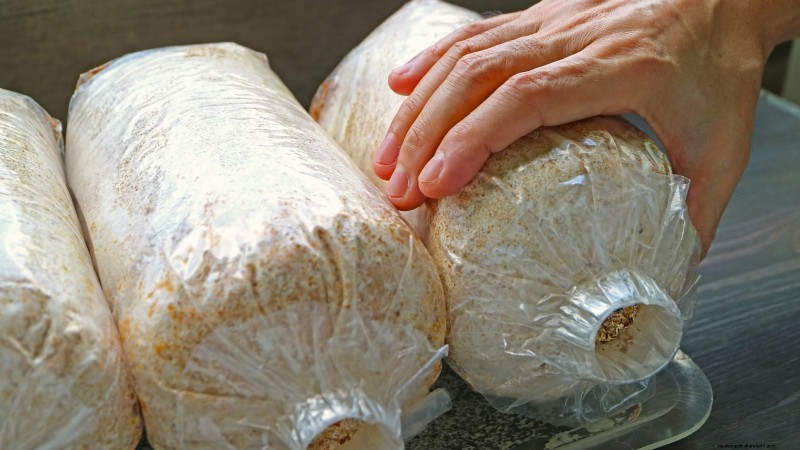 Sterilize substrate in a pressure cooker for perfect results.
The next step is to sterilize your substrate to remove impurities. The best way to do this is using a pressure cooker. Place your substrate blocks into a pressure cooker and follow your cooker’s instructions.
Cook it for 120 minutes at 15 psi. Let the bags cool off naturally and form a vacuum seal around the substrate. After they cool, remove the sterilized bags.
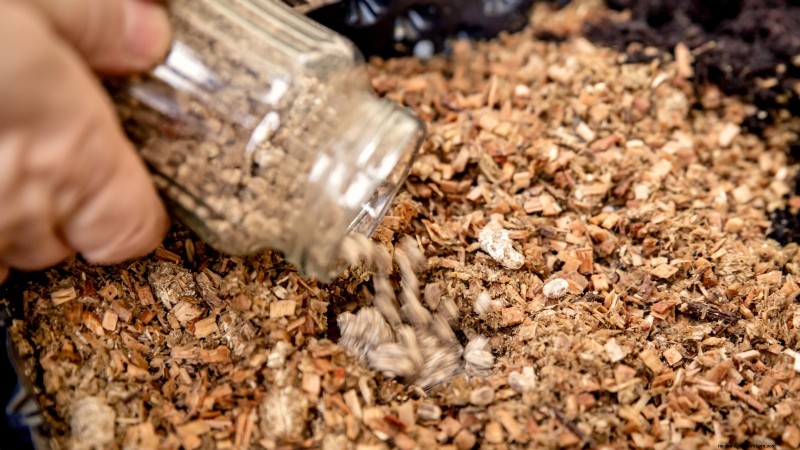 Carefully mix grain spawn with the substrate for even growth.
Add your grain spawn once the bags cool. First, thoroughly disinfect the space with rubbing alcohol and let it evaporate. Wear gloves and a mask. Try doing this step under a laminar flow hood to prevent contamination.
Add up to 20% grain spawn evenly across the substrate. Seal the bag carefully but leave a little air inside the bag for shaking. Next, give the bag a good shake to mix the spawn with the substrate.
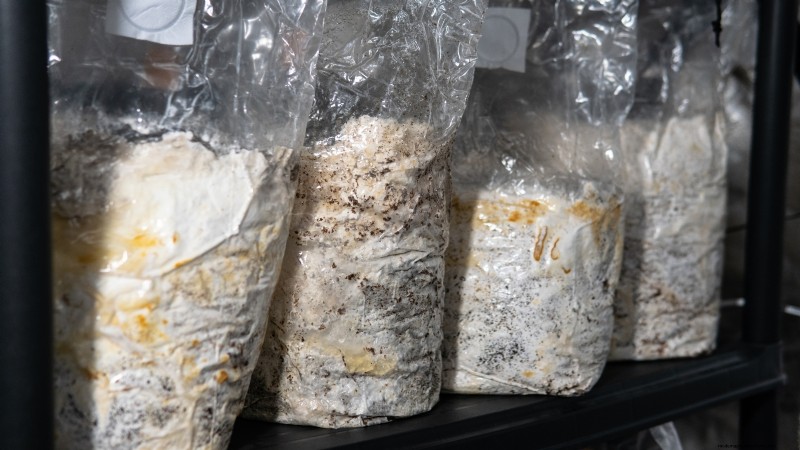 Maintain temperature and humidity to encourage healthy growth.
Leave the bags in a cool place with indirect light like a basement. This is where king oysters can be tricky. Use your thermometer and hygrometer to maintain a temperature of 50-65°F or 10-18°C and 95-100% humidity.
As you incubate, the mycelium should spread throughout the substrate. This should take around two to three weeks.
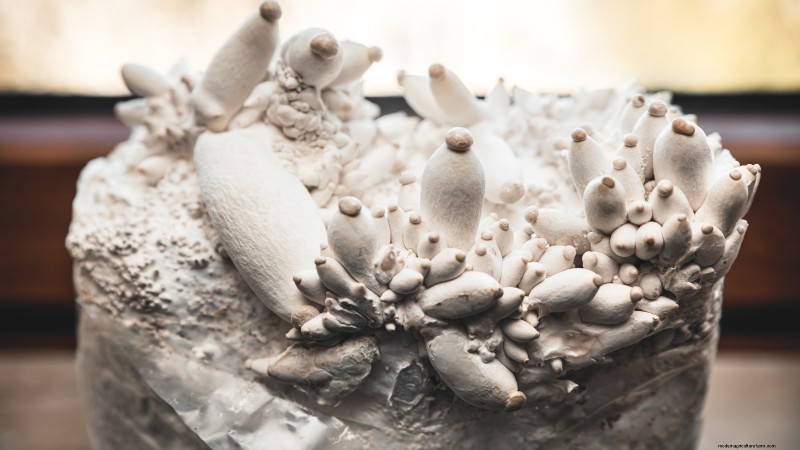 Mist and monitor humidity as pins begin to form.
Now the fun part! Once the mycelium has colonized the substrate, you should start to see tiny hyphal knots or pins, develop.
Cut the top four inches of the bag off and keep misting. Keep the humidity levels between 85-95% during this stage. Harvest your mushrooms just before their caps flatten.
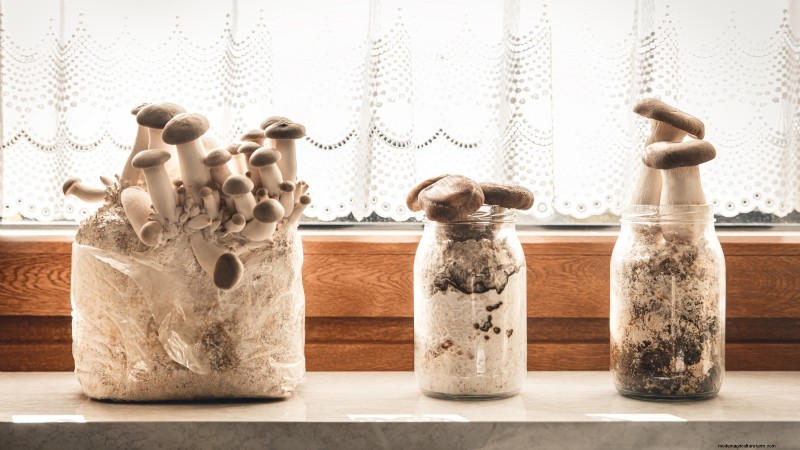 Store bags in cool places with indirect light for success.
Like other Pleurotus species, king trumpets don’t need a lot of light to thrive. They prefer indirect light. Mycelium needs this light to signal that the environment is suitable for fruiting.
Store your growing bags in a cool space with an outside window. Garages and basements with windows work great.
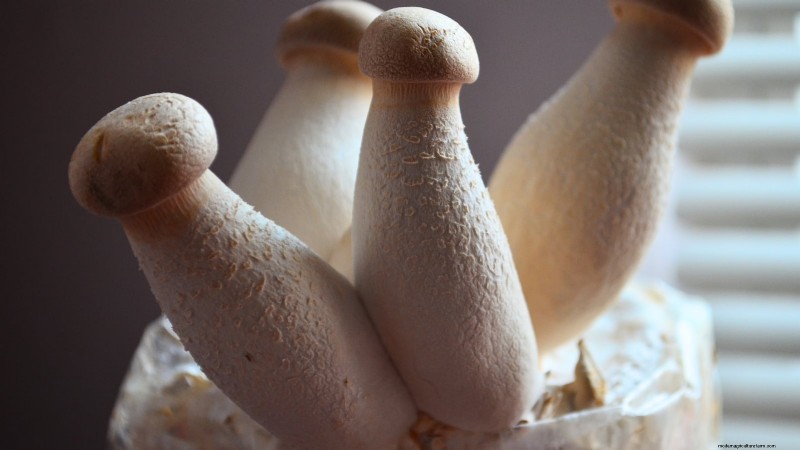 Maintain cool, moist conditions for optimal mycelium development.
Pleurotus eryngii thrive in cooler places with high humidity. In their native range, they grow in cool, moist forests on the forest floor.
Keep your mycelium growing in a cool space between 50-65°F or 10-18°C. Maintain a humidity level of 95-100% during the primordia phase and 85-95% during fruiting.
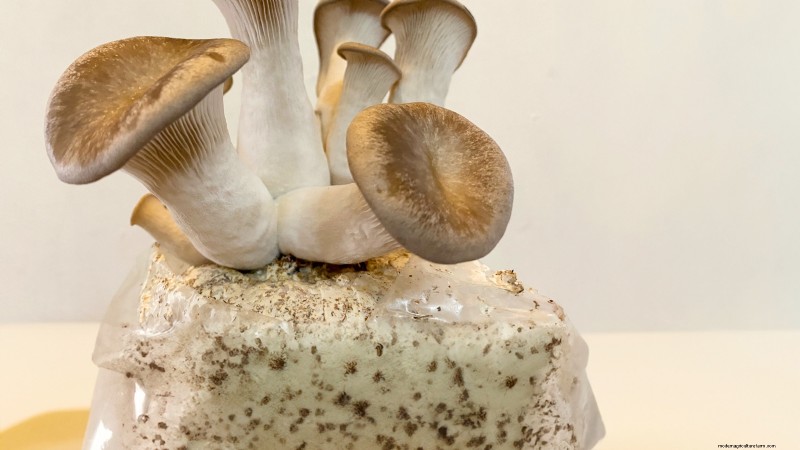 Choose the right substrate mix for healthy, thriving mushrooms.
Unlike plants, mushrooms don’t benefit from organic or chemical fertilizers. The most important step is using a viable food when preparing your substrate.
For these mushrooms, this is hardwood sawdust and grain, typically wheat bran or rice bran. For king oysters, the typical ratio is 90% hardwood sawdust and 10% wheat bran.
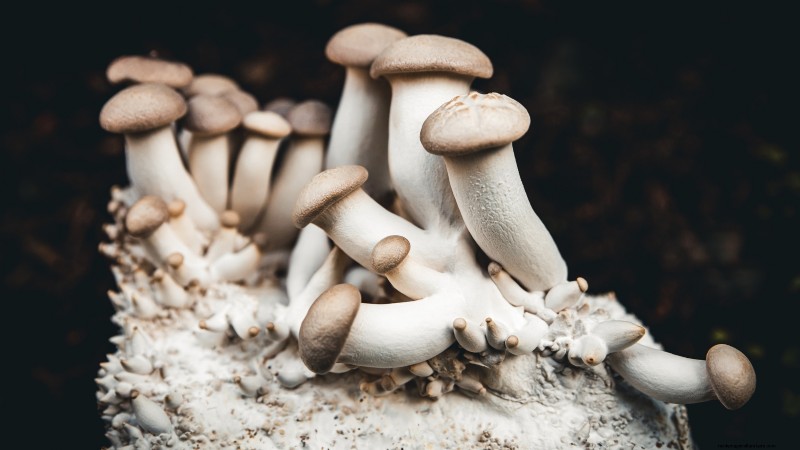 Sterilizing your space ensures a healthier, stronger crop.
These mushrooms require a little more maintenance than other home-growing species like blue oysters and reishi. The most important step in keeping your Pleurotus eryngii healthy is maintaining the right temperature and humidity during the growing period.
The next important step is making sure your growing space is clean and sterilized. Mushrooms can become infected easily and when this happens, you’ll lose your precious crop.
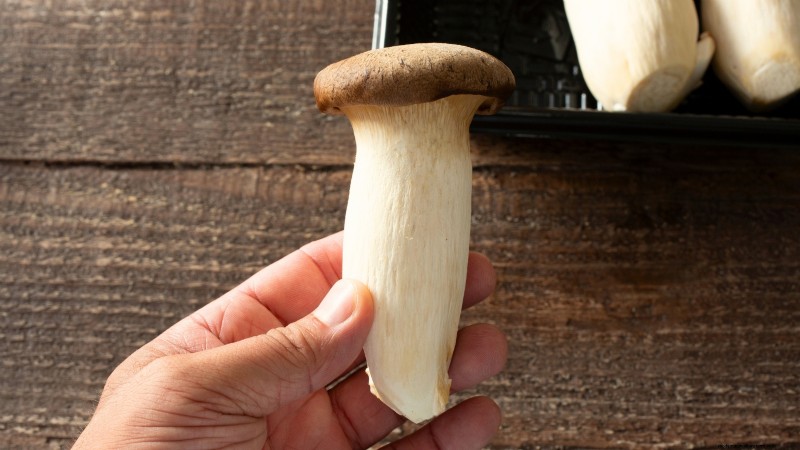 Keep an eye on your crop for optimal harvest timing.
It can take two to three weeks to harvest your king trumpet mushrooms. Watch them closely because, unlike plants, they grow quickly during the fruiting stage.
When they are over six inches, you should to see their caps fully form. Before they flatten out is the perfect time to harvest them. If you wait until their caps flatten out, your mushrooms will taste bitter and have a much shorter shelf life.
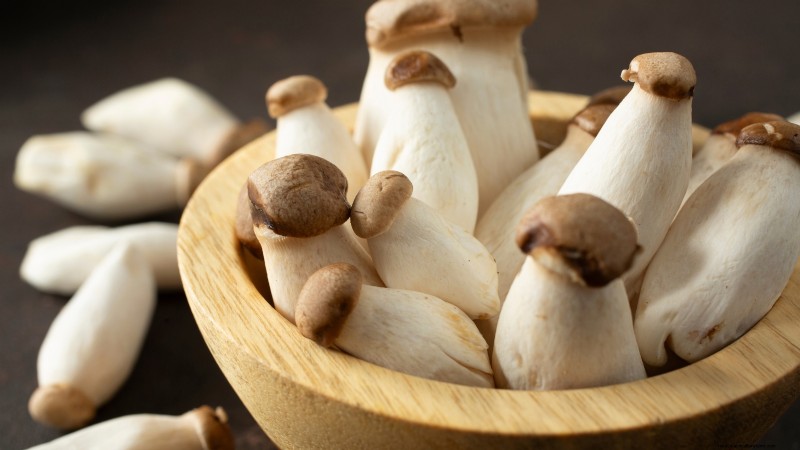 Dehydrate mushrooms for weeks of storage in dry conditions.
Twist the base of the mushrooms carefully. They should easily pop off the block. Feel free to use disinfected scissors instead.
Store fresh mushrooms in a cool, dry place in a paper bag. Make sure they’re completely dry first or else they can go bad quickly. Use them within a few days.
Dried mushrooms can be kept for weeks or even longer. Simply place them in a dehydrator or oven spaced apart. Make sure they’re completely dry before dehydrating. If you live in a dry location, you can even air dry them for 7-10 days.
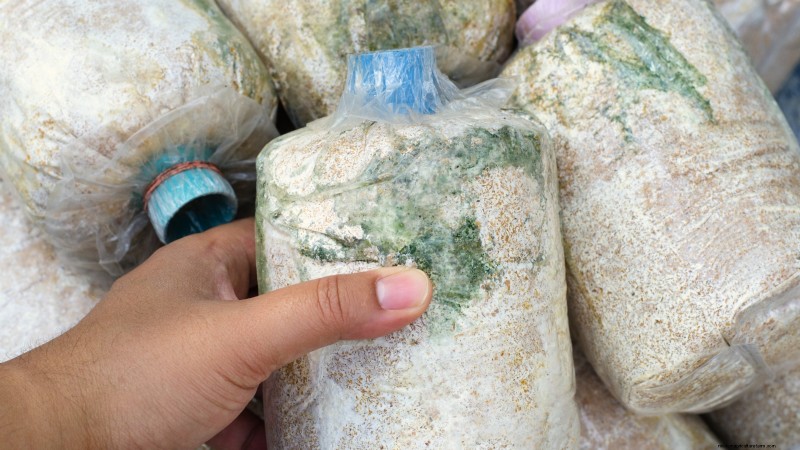 If not carefully managed, contamination can ruin your batch.
Contamination is the most common and annoying problem you’ll have as a mushroom grower. Green mold, such as Trichoderma, is the most common culprit in ruining your mycelium. Once it’s made its way into your substrate, your batch of king trumpets is finished.
This mold is lethal during the first phases of colonization. Once your mycelium has grown into the substrate and colonized everything, you’re safe. Grow kits have already been painstakingly disinfected. If you’re growing your mushrooms from grain spawn, you’ll have to keep everything completely disinfected.
Another common problem is no growth. This happens if the CO2 is too high, temperatures are too high, or your mycelium doesn’t fully colonize the substrate. To remedy this, you can try soaking your bag in water for 20 minutes. You can also try relocating your bag to a cooler location.
In the end, growing mushrooms takes patience and perseverance. When you’re growing a new species, take your time and be prepared to make mistakes. It can take several goes before you get it right but once you do, you’ll have a bountiful harvest!
King trumpets are considered an intermediate mushroom. They are sensitive to temperature and humidity. If it’s too hot or too dry, they may not fruit.
Yes! These mushrooms are prized for their rich flavor and meaty texture. They are some of the best mushrooms grilled because of their large size and texture.