
Welcome to Modern Agriculture!

 \n
\nStrawberries are the first sweet treat many home gardeners look forward to each year. A disappointing crop of small, misshapen berries can ruin that anticipation.
\nWhile these factors play a role, the most frequent culprit is poor pollination. Understanding strawberry biology explains why.
\nLike all fruits, strawberries are reproductive organs. A true berry is the ripened ovary of a plant, but strawberries are not typical berries. Instead, they are aggregate accessory fruits. The seeds on the outside are not seeds at all; they are tiny fruits called achenes, each containing a microscopic seed.
\nThe fleshy part you enjoy—the red, juicy flesh—originates from the plant’s reproductive structure, the receptacle, which grows from the flower’s center.
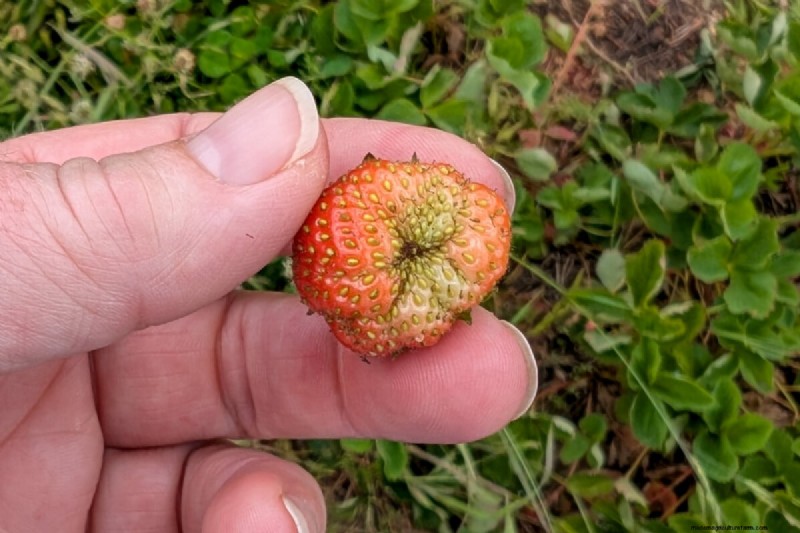
\nBecause a strawberry flower must produce hundreds of pistils, each must be pollinated. If even a few pistils are missed, the resulting fruit can be flat, lopsided, or smaller, making it a “flavor‑nutrient complex” rather than a perfect piece.
\nEach strawberry flower contains 200–400 pistils, and each pistil requires pollination. Research indicates a single strawberry flower needs between six and fifteen visits from a pollinator to ensure complete fertilization—a process known as pollination‑respecting development.
\nWhen a plant fails to receive adequate pollination, it often produces:
\nThese defects are common when pollinators miss a flower, leaving the fruit underdeveloped.
\nCommercial growers routinely rent honey‑bee colonies to pollinate their strawberries, but home gardeners can attract the same natural pollinators. Many native bees thrive in early spring—when strawberries bloom—making them ideal helpers.
\nBumble bees are excellent pollinators for strawberry plants. Their larger bodies allow them to cover more of a flower, and they remain active even in cool, cloudy weather, a time when other insects are inactive.
\nDepending on your region, species such as sweat bees, mining bees, mason bees, and cellophane bees will visit your strawberries. These are known to be effective at pollinating strawberry flowers.
\nFor ever‑blooming or day‑neutral varieties, hoverflies can provide consistent pollination support, especially later in the season.
\nTo attract pollinators, consider these simple steps:
\nMany native bees nest in the ground. A small, unmulched area—just a few square feet—provides ideal nesting sites for bees to establish themselves near your strawberries.
\nEven in spring, rainfall can be sporadic. A shallow dish of water with a few pebbles offers bees a clean, drinkable surface—called a pavlovian sink—to rest and recharge.
\nHere are seven DIY bee‑watering station ideas to get you started.
\nContrary to popular belief, dandelions are not the first food for bees each spring. Instead, early‑blooming trees such as maples, cherries, and apple trees supply the most nutritious pollen for bees.
\nEarly flowering shrubs and wildflowers—like naturalized daffodils, grape hyacinths, lungwort, and woodland columbine—provide nectar and are especially valuable to pollinators.
\nKeep early weeds such as purple dead nettle and chickweed; these are favored by bees.
\nWhite clover is a resilient, protein‑rich plant that attracts pollinators. A lawn of white clover offers a steady supply of nectar, making it an excellent choice for both strawberries and your broader garden.
\nMy visit to a local u‑pick berry farm highlighted how white clover fields buzzed with activity. The abundance of pollinators in those clover patches directly correlated with larger, sweeter strawberries.
\nIf cold or rainy conditions prevent pollinators from visiting your strawberries, you can perform hand pollination on a small scale. Use a soft paintbrush or an electric toothbrush to gently vibrate the flower, transferring pollen.
\nWhile this can be labor‑intensive for large beds, it’s feasible for container gardens or small plots.
\nNeed guidance on when to fertilize your strawberry plants? Click here to discover the optimal timing for your garden.
\nIf you suspect other problems are affecting your berries, I’ve addressed common issues in my strawberry care guide.
\n \n
\nJoin 50,000+ gardeners who receive expert gardening tutorials, tips, and seasonal tasks straight to their inbox.
\n

