High Tunnel Management: Proven Practices for Optimal Crop Yield
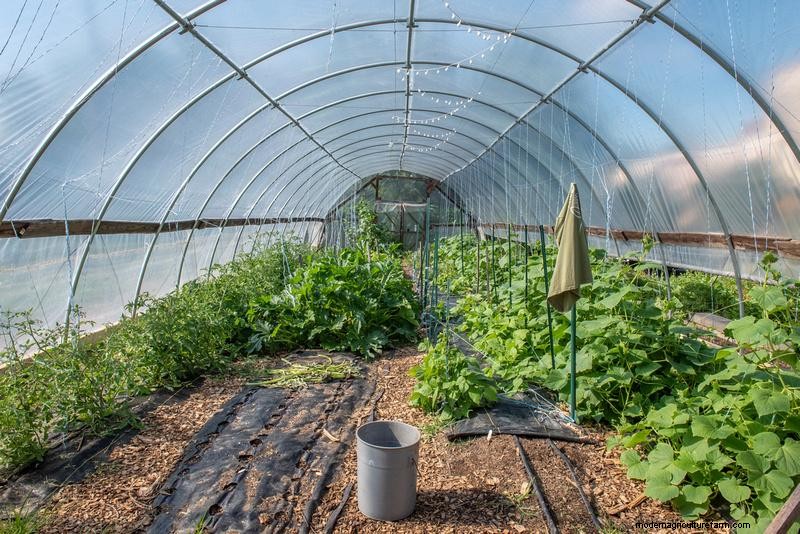
High tunnel at Whitelock Community Farm. Photo by Lena McBean, (c) UMD AGNR Image Database.
Updated: October 29, 2021
High tunnels (or hoop houses) extend the growing season for specialty crops. This article will help growers learn how to get the most out of their high tunnel by adopting best management practices for temperature management, soil and growing media monitoring, safety considerations, pest management, and crop selection.
For a printer‑friendly version of this article, click here.
Temperature Management
- Prevent both cold and heat extremes to protect plant health.
- Accurate temperature monitoring—use low‑tech tools like handheld thermometers or high‑tech data loggers—to guide interventions.
- Passive warming options: floating row covers, low tunnels, and double‑layer plastic with an air channel.
- Active heating solutions: propane, gas, or electric heaters—always assess fire risk and ensure adequate ventilation.
- Cooling strategies: shade cloth, roll‑up or roof vents, and white wash paint on the tunnel roof.
- Learn more about tunnel temperature control
Soil and Growing Media Management
Safety Considerations
- High humidity and limited airflow increase heat‑illness risk—especially for elders, infants, and those with circulatory or heart conditions.
- Air quality: reduced airflow can trap outdoor pollutants such as ozone, which can damage plants and human lungs. Avoid working during “code orange” air‑quality alerts.
- Pesticide safety: high tunnels are semi‑enclosed; always read and follow the label, and ventilate or wear additional PPE when using pesticides, even organic ones.
Pest Management
- Control moisture and humidity to lower disease pressure—use drip irrigation and avoid overhead watering.
- Common pests: thrips, aphids, and mites. Common diseases: powdery mildew on cucurbits.
- More on mites and thrips in high tunnels
- Insect netting or screens over vents can help exclude pests.
Crop Selection
- High tunnels represent prime real estate—select crops that maximize the structure’s benefits.
- Choose crops that benefit from protection against rain and moisture‑related diseases, such as tomatoes or cut flowers.
- Seek market differentiation: early‑season tomatoes or heat‑loving crops like ginger and turmeric can give you a competitive edge.
- U‑Del high‑tunnel planting schedule
- Opt for varieties adapted to tunnel conditions and disease‑resistant:
Additional Resources
This work funded by a grant from USDA‑NRCS MD, Award # NR203B19XXXXC003.
University programs, activities, and facilities are available to all without regard to race, color, sex, gender identity or expression, sexual orientation, marital status, age, national origin, political affiliation, physical or mental disability, religion, protected veteran status, genetic information, personal appearance, or any other legally protected class. If you need a reasonable accommodation to participate in any event or activity, please contact your local University of Maryland Extension Office.
Los programas, actividades e instalaciones de la universidad están disponibles para todos sin distinción de raza, color, sexo, identidad o expresión de género, orientación sexual, estado civil, edad, origen nacional, afiliación política, discapacidad física o mental, religión, estado de veterano protegido, información genética, apariencia personal o cualquier otra clase legalmente protegida. Si necesita adaptaciones razonables para participar en cualquier evento o actividad, comuníquese con la Oficina de Extensión de la Universidad de Maryland de su localidad.