
Welcome to Modern Agriculture!

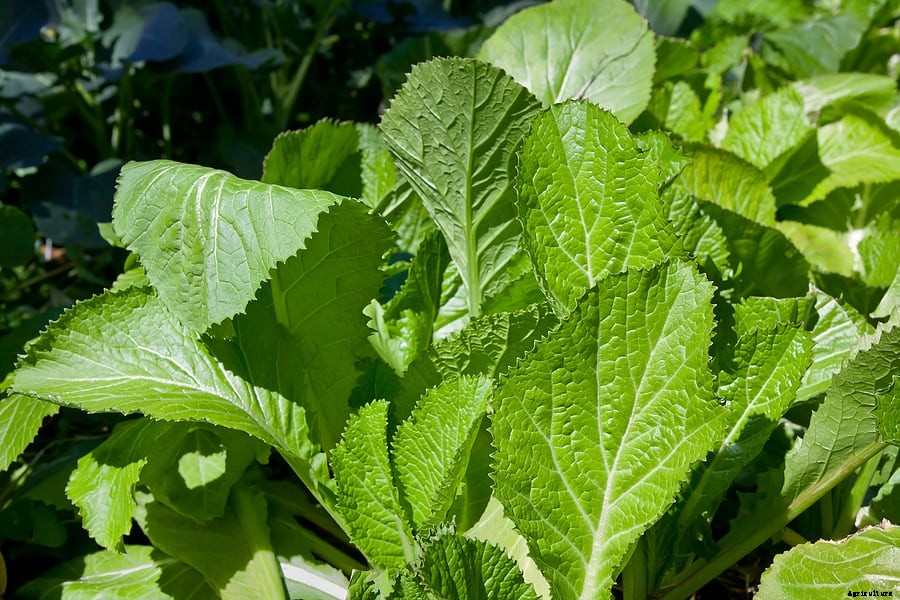 Mustard is a cool-season leaf crop. Sow mustard as early as 4 to 6 weeks before the average last frost date in spring. Sow succession crops every 4 to 6 weeks. Mustard requires 30 to 40 days to reach harvest. Plant crops so that they come to harvest before temperature average greater than 75°F (24°C). Sow mustard in autumn or early winter in mild winter regions.
Description. Mustard is a hardy leaf vegetable with a rosette of large light or dark green curly leaves that grow to 3 feet (.9m) tall. Leaves and leaf stalks are eaten and have a peppery flavor. The seeds can be ground and used as a condiment.
Yield. Plant 6 to 10 mustard plants per household member.
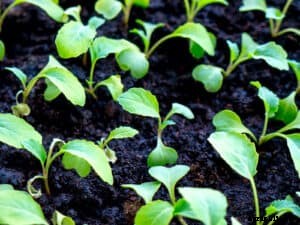
Site. Grow mustard in full sun or partial shade. Plant mustard in well-worked, well-drained soil rich in organic matter. Add aged compost to planting beds before planting. Mustard prefers a soil pH of 5.5 to 6.8.
Planting time. Sow mustard as early as 4 to 6 weeks before the average last frost date in spring. Sow succession crops every 4 to 6 weeks. Mustard requires 30 to 40 days to reach harvest. Plant crops so that they come to harvest before temperature average greater than 75°F (24°C). Sow mustard in autumn or early winter in mild winter regions. Seeds may be slow to germinate if the soil is too coo, 40°F (4.4°C) or less. Mustard grown in hot weather or long days will bolt and go to seed.
Planting and spacing. Sow mustard seed ½ inch (12mm) deep; when seedlings are large enough to handle thin them from 4 to 8 inches (10-20cm) apart; space rows 12 to 24 inches a(30-61cm) part.
Companion plants. English peas, snap peas.
Container growing. Mustard can easily be grown in a container. Broadcast seeds over the soil surface and cover lightly with soil. Thinnings can be eaten.
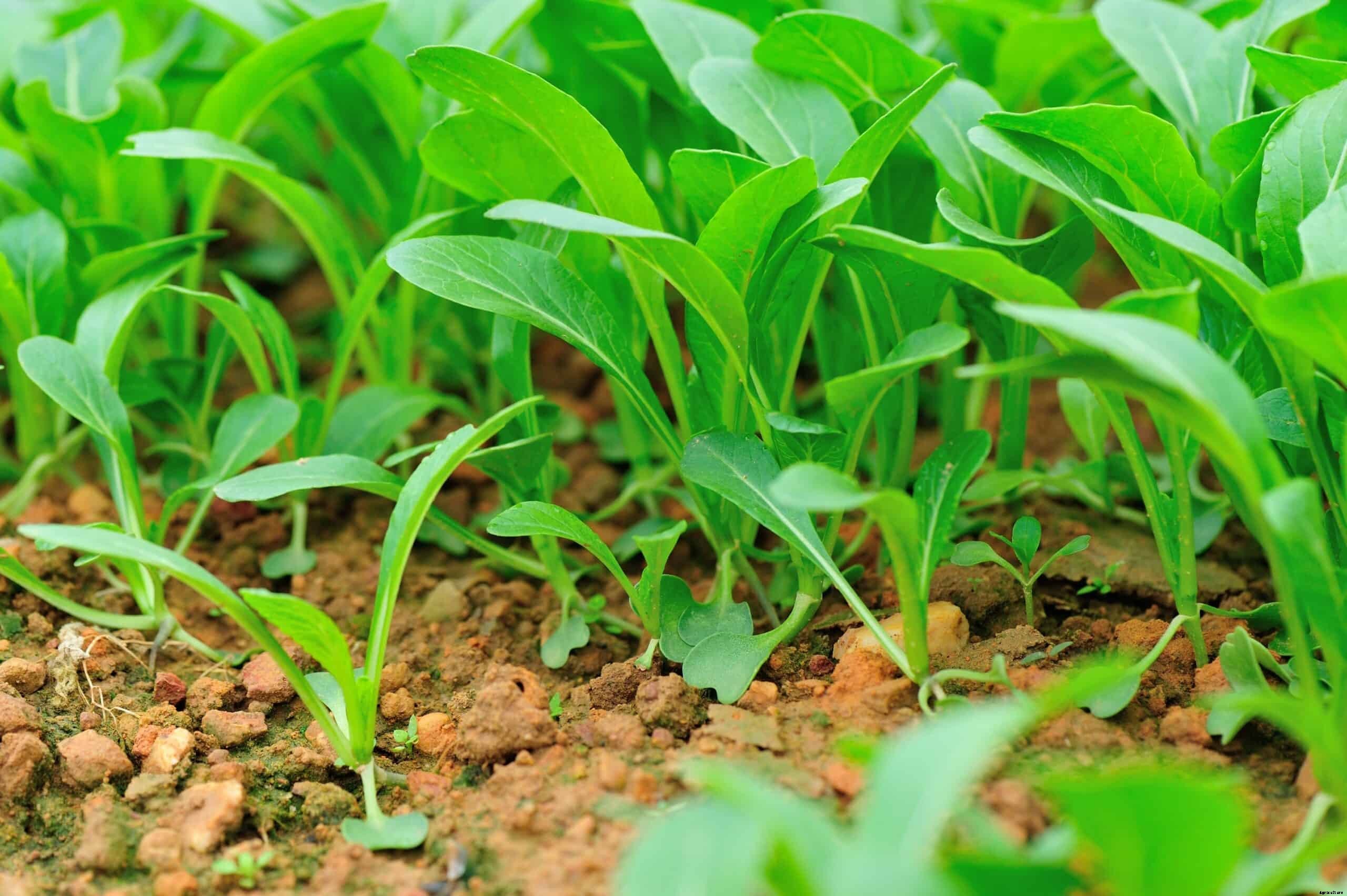
Water and feeding. Keep soil evenly moist to keep leaves growing quickly. Do not allow the soil to dry out. Add aged compost to planting beds before sowing. Side dress plants with aged compost at midseason.
Care. Keep planting beds weed-free. Pull mustard from the garden as soon as it goes to seed to avoid prolific self-seeding.
Pests. Mustard can be attacked by flea beetles and aphids. Wash these pests away with a blast of water.
Diseases. Mustard is susceptible to white rust. Remove leaves that have white rust. Water plants at the base of the stem keeping moisture off the leaves.
Harvest. Pick individual leaves when they are young and tender, 3 to 4 inches (7-10cm) long, or cut and use the entire plant. Complete the harvest before the weather grows hot; hot weather will cause leaves to become tough and strong flavored. Complete the harvest before the plant goes to seed.
Storing and preserving. Mustard will keep in the vegetable compartment of the refrigerator for 2 to 3 weeks. Mustard leaves can be frozen or dried. Mustard seeds can be sprouted.
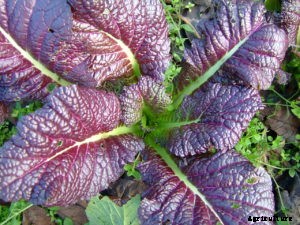
Common name. Mustard, Chinese mustard, leaf mustard, spinach greens
Botanical name. Brassica juncea
Origin. Asia
Grow 80 vegetables: KITCHEN GARDEN GROWERS’ GUIDE


