
Welcome to Modern Agriculture!

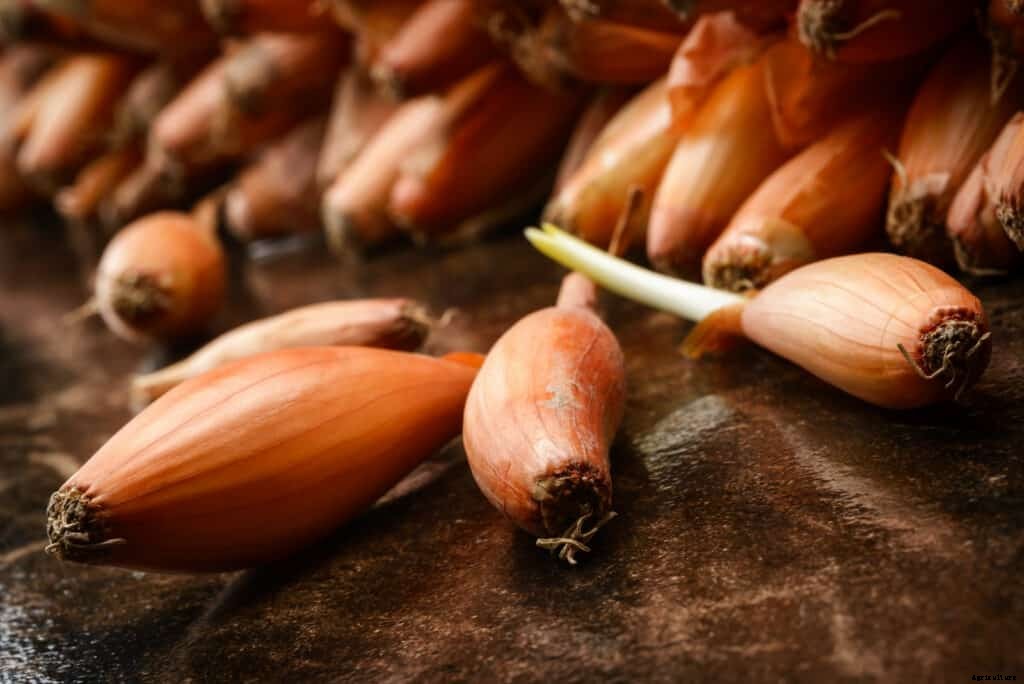 Shallots are a cool-weather vegetable usually grown from cloves, not seeds. Set cloves in the garden as early as 4 to 6 weeks before the average last frost date in spring. Shallots require a dormant period of about 30 days soon after planting with temperatures between 32° and 50°F (0-10°C). Shallots will grow in soil temperatures ranging from 35°F to 90°F (2-32°C).
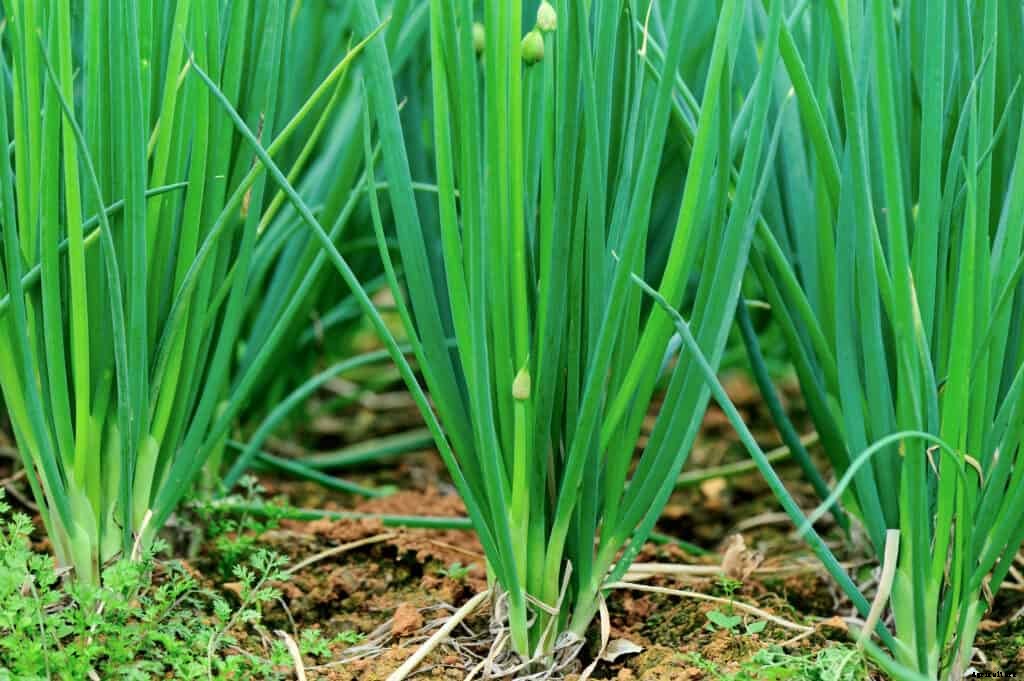
Description. The shallot is a member of the onion family, a very hardy biennial grown as an annual. Shallots grow to about 8 inches (20cm) tall in a clump with narrow green leaves and roots that look like small onions, about ½ inch (12mm) in diameter at maturity. Shallots are more delicately flavored than regular onions. Young outer leaves can be used like chives.
Yield. Plant 4 to 6 shallots per household member.
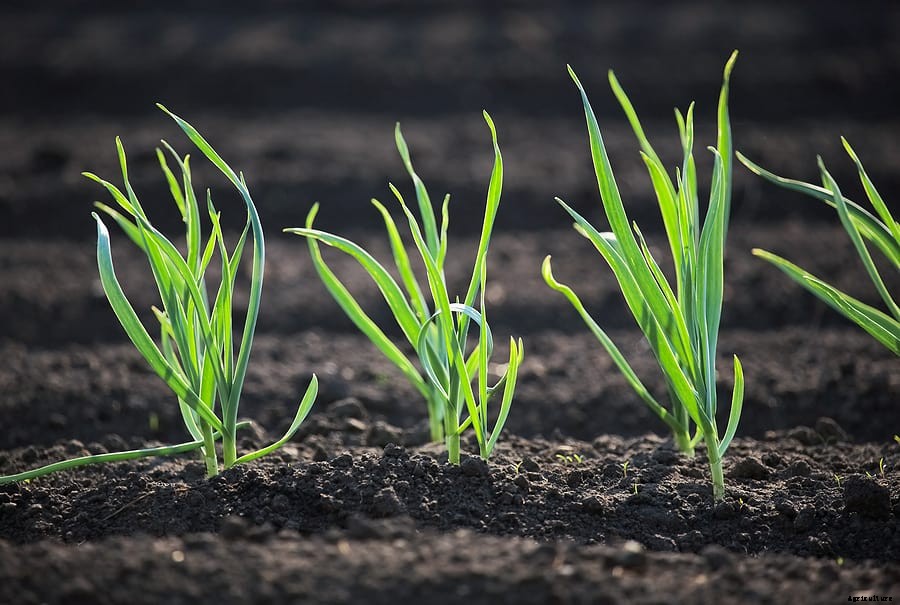 Planting Shallots
Site. Grow shallots in full sun; shallots will tolerate partial sun. Plant shallots in well-worked, well-drained, moisture-retentive soil rich in organic matter. Shallots prefer a soil pH of 5.0 to 6.8. Shallots will be less flavorful if grown in clay soil.
Planting time. Shallots are usually grown from cloves, not seeds. Set cloves in the garden as early as 4 to 6 weeks before the average last frost date in spring. Shallots require a dormant period of about 30 days soon after planting with temperatures between 32° and 50°F (0-10°C). Shallots will grow in soil temperatures ranging from 35°F to 90°F (2-32°C). Shallots are ready for harvest in 60 to 120 days.
Planting and spacing. Set shallot cloves broad end down and cover with ½ inch (12mm) of soil or less. Space cloves 6 to 8 inches (15-20cm) apart in rows 12 inches (30cm) part. Shallot bulbs contain 3 to 4 cloves protected by a brown papery skin. Plant individual cloves.
Companion plants. Beets, lettuce, strawberries, summer savory, tomatoes. Do not plant shallots with beans or peas.
Container growing. Shallots can be grown in an 8-inch (20cm) pot, plant 2 or 3 cloves in the pot. If the weather warms, move containers to a cool spot.
Water and feeding. Keep shallots evenly moist; do not allow the soil to dry out. Add aged compost to planting beds before planting. Side dress shallots with aged compost at midseason.
Care. Keep planting beds weed-free so that shallots do not compete for water and nutrients. Bend or “lodge” the stalks when they are 16 inches (40cm) tall or more; this will force shallots to mature in 3 to 4 weeks. Shallots clumps can be divided into multiple plants every year or two. Do not plant shallots where garlic bulbs have previously grown.
Pests. Shallots have no serious pest problems.
Diseases. Where the soil is well-drained, shallots generally have no serious disease problems. White rot can affect shallots along with other alliums. White rot is characterized by white growth on the leaves at the neck of the plant. It can not be cured. Remove and destroy shallots infected with white rot and do not plant onion-family crops in the same sport for at least 5 years.
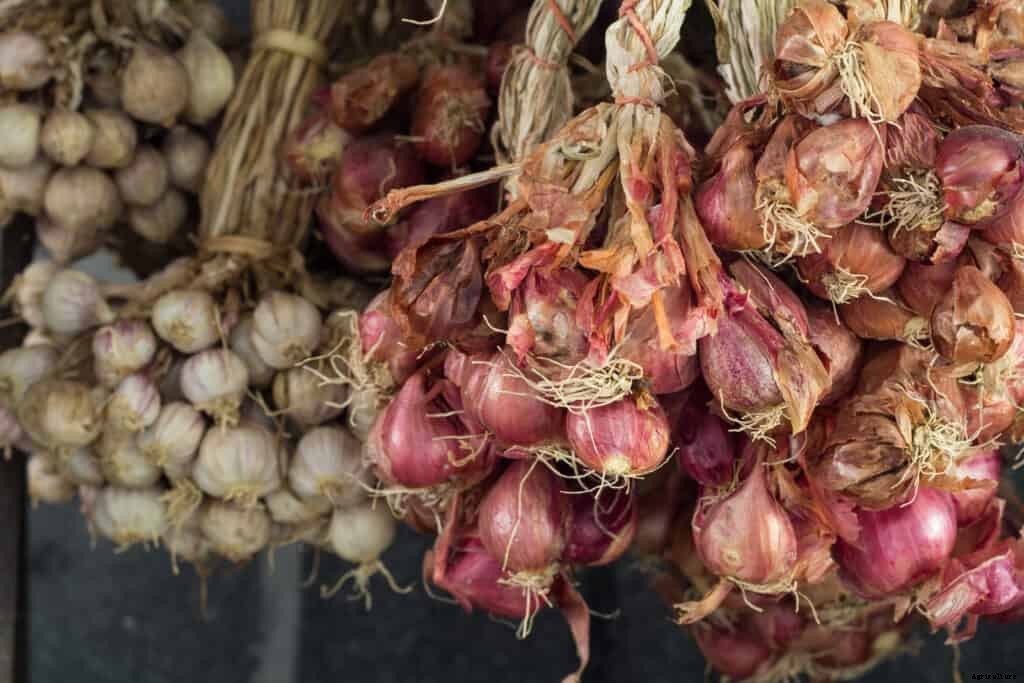
Harvest. Green shallot leaves can be cut throughout the growing season and used as a seasoning. Be careful not to cut away any new growth coming from the central stem. Bulbs are ready for harvest when leaves yellow, wither, and fall over. Allow harvested bulbs to dry for a month.
Storing and preserving. Store shallot bulbs like onions in a cold, dry place for up to 6 months. Freeze or dry shallots like onions. Shallot greens will keep in the refrigerator for up to one week. Greens can be chopped and frozen like chives.
Varieties. ‘Atlantic’ (90 days); ‘Atlas’ (90 days); ‘Dutch Yellow’ (90 days); ‘French Shallots’ (90 days); ‘Frog Leg Shallots’ (90 days); ‘Giant Red’ (70 days); ‘Golden Gourmet’ (77 days); ‘Grey Shallot’ (90 days); ‘Odetta’s White Shallot’ (90 days); ‘Pink Shallots’ (90 days); ‘Success’ (90 days).
Common name. Shallot
Botanical name. Allium cepa
Origin. Asia
Grow 80 vegetables: KITCHEN GARDEN GROWERS’ GUIDE


