
Welcome to Modern Agriculture!

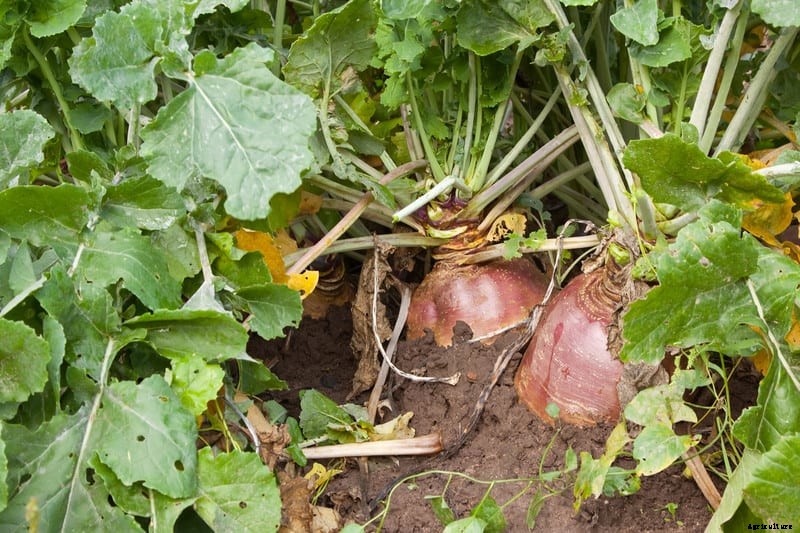 Rutabaga is a hardy, cool-weather biennial vegetable grown as an annual. Sow rutabaga seed in the garden 4 to 6 before the average date of the last frost in spring. Sow rutabaga also in late summer for autumn or winter harvest. In mild winter regions sow rutabaga in autumn for winter harvest. Grow rutabaga so that it comes to harvest before temperatures average above 75°F (24°C); rutabaga requires 60 to 90 days to reach harvest.
Description. Rutabaga is a biennial vegetable grown as an annual. Rutabaga is grown for its large swollen root which has a purple or creamy brown or combination of both skin and yellow or white flesh. It is larger, denser, and sweeter than a turnip. Rutabaga has a rosette of smooth, deeply lobed, deep green leaves that grow from the swollen root. The rutabaga also can be distinguished from the turnip by the leaf scars on its top.
Yield. Plant 5 to 10 rutabagas per household member.
Site. Rutabagas grow best in well-worked, well-drained soil rich in organic matter. Add aged compost to planting beds in advance of sowing. Remove soil lumps and rocks which could cause roots to split or become malformed. Add aged compost to planting beds before planting and as a side dressing at midseason. Rutabagas prefer a soil pH of 5.5 to 6.5.
Planting time. Rutabagas grow best in cool weather. Sow rutabaga seed in the garden 4 to 6 weeks before the average date of the last frost in spring. Sow rutabaga also in late summer for autumn or winter harvest. In mild winter regions sow rutabaga in autumn for winter harvest. Grow rutabaga so that it comes to harvest before temperatures average above 75°F (24°C); rutabaga requires 60 to 90 days to reach harvest. Rutabaga roots will become grow small and stringy in hot weather.
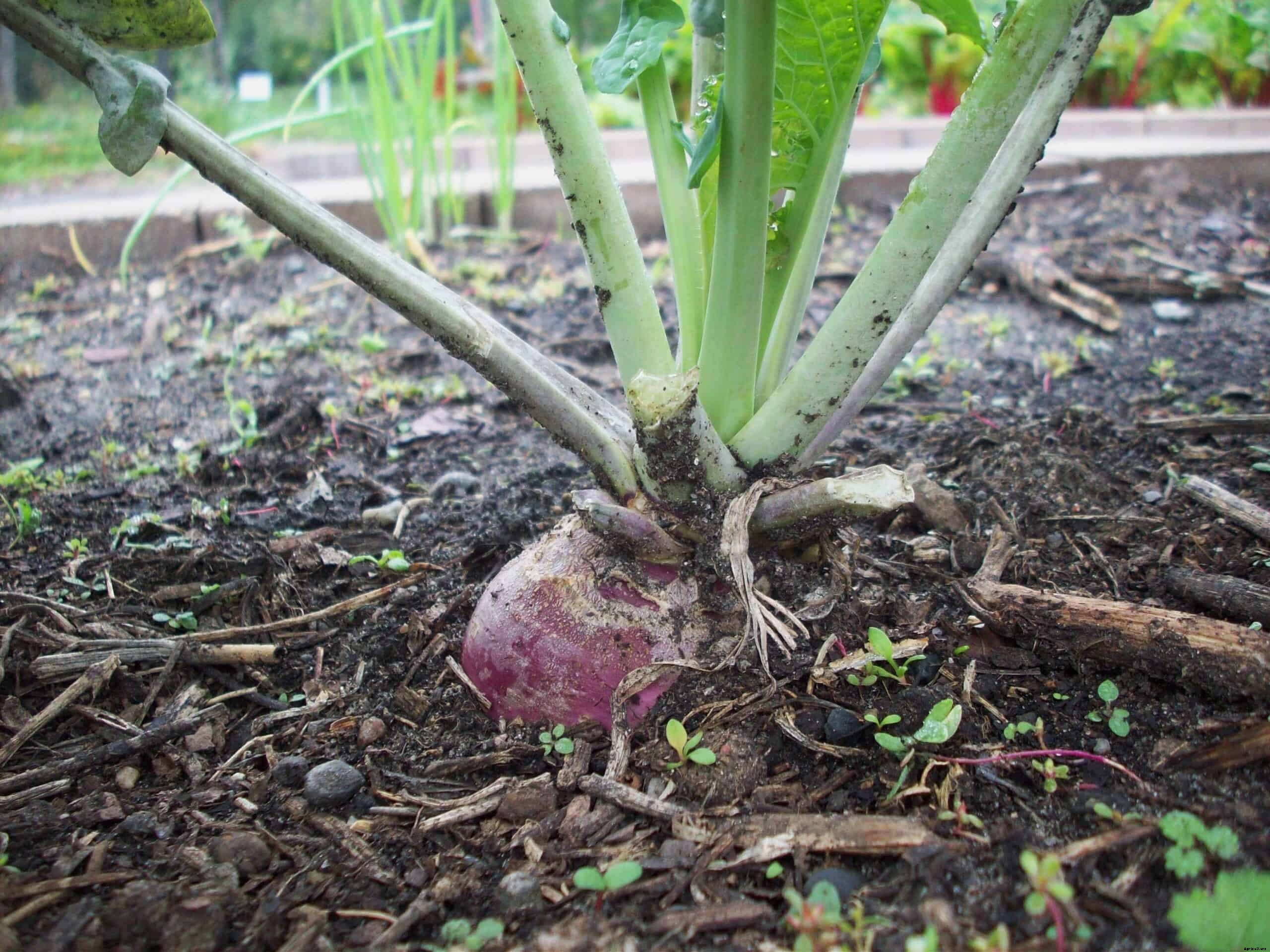 Planting and spacing. Sow rutabaga seed ½ inch (12mm) deep and 1 inch (2.5cm) apart. Thin successful seedlings to 4 to 6 inches (10-15cm) apart. Space rows 18 to 24 inches (45-61cm) apart. Thinning is important so that roots have room to develop.
Companion plants. Beets, carrots, turnips.
Container growing. Rutabagas can become quite large–often reaching 3 to 5 pounds–and are not a good crop for container growing.
Water and feeding. Give rutabagas regular, even water so that roots growing steadily. Do not let the soil dry out. Roots that grow too slowly will be tough. Sporadic watering can cause developing roots to crack.
Care. Grow rutabagas in cool temperatures or they will be small and bitter. When roots start to swell, trim the outer foliage to enhance root growth.
Pests. Aphids and flea beetles can attack rutabagas. Pinch out foliage infested with aphids or spray them away with a stream of water.
Diseases. Rutabagas have no serious disease problems. White rust, a fungal disease, can cause small cottony blotches on the upper surfaces of the leaves.
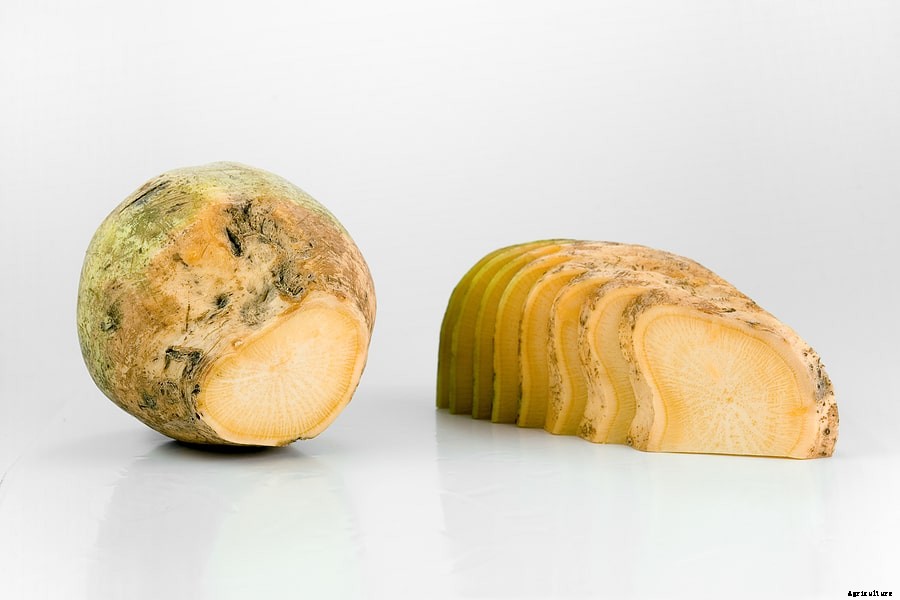
Harvest. Rutabagas are ready for harvest 60 to 90 days after sowing. Lift rutabagas when they are 3 to 5 inches (7-12cm) in diameter and tops are about 12 inches (30cm) tall. Rutabagas can remain in the ground as long as the soil temperature does not dip below 24°F (-4.4°C). Mulch roots remaining in the ground.
Storing and preserving. Rutabaga will keep in the vegetable compartment of the refrigerator for 2 to 4 months. Rutabaga can be diced and frozen.
Varieties. ‘Altasweet’ (92 days); ‘American Purple Top’ (90 days); ‘Laurentian’ (90 days); ‘Swede Purple Top’ (100 days).
Common name. Rutabaga, Swedish turnip, Swede, Russian turnip, yellow turnip
Botanical name. Brassica napus, Napobrassica group
Origin. Northern Europe
Grow 80 vegetables: KITCHEN GARDEN GROWERS’ GUIDE


