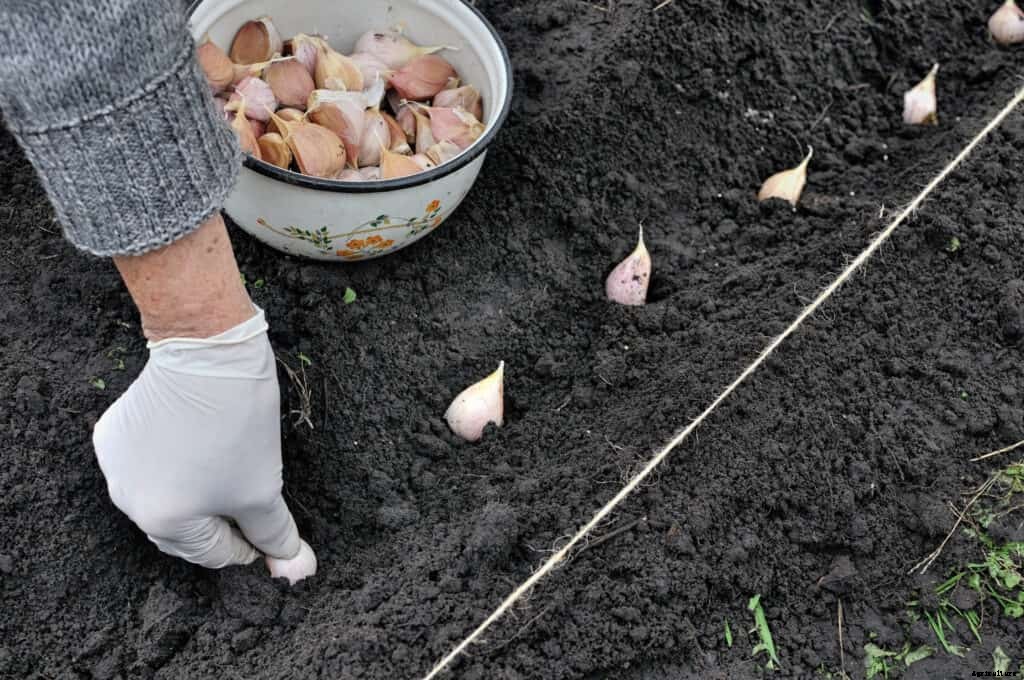
Garlic is grown from cloves formed in bulbs. Cloves used to start new plants are called “seed cloves”. Seed clove size is important to yield.
The yield of a large clove is usually greater than a medium-size clove, which, in turn, is usually greater than a small-size clove. The largest cloves commonly produce the largest bulbs.
Garlic grows best if days are short and cool at the start of growth and long and warm nearer harvest.
Plant garlic in the cool of autumn or early spring to gain the chilling needed for bulb formation. Bulb growth accelerates as the days grow warmer and longer in mid- to late summer.
Grow garlic and other roots crops in light-textured soil free of pebbles and stones. This will ensure roots do not become malformed.
Garlic matures in 90 to 100 after spring planting, about eight months after autumn planting.
Garlic Sowing and Planting Tips
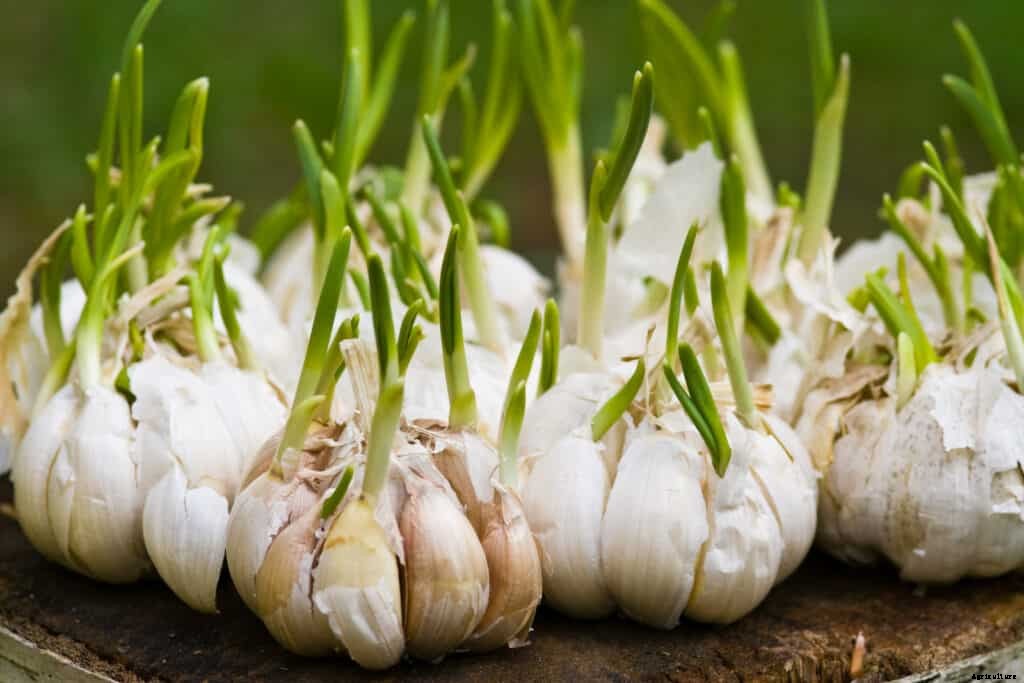
- Grow garlic from seed cloves. Cloves should be chilled in storage at 41°F (5°C) for several months before planting
- Cloves are viable for about 1 year; papery, dehydrated cloves are not viable.
- In cold-winter regions, sow cloves in early spring up to 6 weeks before the last expected frost; also plant in autumn about 6 weeks before the soil freezes.
- In mild-winter regions, sow cloves very early in spring for harvest in late summer or sow in autumn for harvest the following mid- to late-summer.
- Sow cloves 2 inches (5 cm) deep; cloves for larger “elephant” garlic (see below) should be set 4 inches (10 cm) deep.
- Space cloves 4 to 8 inches (10-15 cm) apart in all directions; space elephant garlic 12 inches (30 cm) apart.
- Space rows of garlic 12 inches (30 cm) apart.
- Sow seed in loose, fertile soil. Adding aged compost to planting beds in advance of sowing will feed the soil and aide moisture retention.
- Seed cloves will germinate in 7 to 14 days at a temperature of 55°F (13°C) or thereabouts; germination will take longer in colder soil.
- Optimum soil temperature to grow garlic is 45°F to 85°F (7-29°C).
- Garlic prefers a soil pH range of 4.5 to 8.3.
- Grow garlic in full sun for best yield.
- Keep the soil evenly moist during growth—but do not saturate the soil; wet soil will cause bulbs to rot.
- Avoid fertilizers high in nitrogen; too much nitrogen will delay bulb formation.
- Garlic grown in potassium-deficient soil will not store well; garlic grown in phosphorus-deficient soil will have thick necks and mature more slowly.
- Keep planting beds free of weeds to avoid competition for moisture and nutrients.
- Avoid planting garlic where onions or leeks have grown recently.
- Fertilize with an organic fertilizer such as fish emulsion at half strength.
- Common garlic pest enemies include aphids, nematodes, and thrips. Protect young plants from pests and cold for two to three weeks after planting with spun poly row covers.
Interplanting: Plant garlic with beets, celery, lettuce, spinach, and members of the cabbage family.
Container Growing Garlic: Choose a container 10 to 12 inches (25-30 cm) deep.
Garlic Planting Calendar
- Cold-winter regions: sow cloves in early spring up to 6 weeks before the last expected frost; also plant in autumn about 6 weeks before the soil freezes for harvest the next summer.
- Mild-winter regions: sow cloves in late winter or very early spring for harvest in late summer or sow in autumn for harvest the following mid- to late-summer.
Garlic Types and Classifications
There are three types of garlic to grow:
- Softneck garlic including silverskin and artichoke garlic: necks are soft and pliable at maturity; bulbs produce medium-size cloves. These are the strongest-flavored garlic. They are less winter hardy than hardneck but store better.
- Hardneck, stiffneck, or top-setting garlic, also called Spanish garlic: necks are stiff; stem curls in a loop at the top; mild-flavored and easy to peel.
- Elephant garlic: large, fist-sized bulbs; mild and easy to peel; not as hardy as other types.
Botanical Name: Allium sativum
Garlic is a member of the Alliaceae also called Lilliaceae family; other members of this family include onions and leeks.


