
Welcome to Modern Agriculture!

Introduction to Bottle gourd pests, disease and control methods: The bottle gourd is a very important vegetable crop in India and it belongs to the Cucurbitaceae family. Bottle gourd is also known as lauki, ghia or dudhi in India. The Bottle gourd (Lagenaria siceraria) plant is affected by many more diseases. It occurs almost on all the cultivated cucurbits. The diseases are confined mostly to the plant leaves, although the fruit of infected. Bottle gourd plants may be of poor quality resulting from the loss of foliage.
The vegetable in green stage and leaves with stem are used as a vegetable and the hard shell of the Bottle Gourd is used for a different purpose. In this article we also discussed below topics;
You can apply this pests and diseases information for growing Bottle gourd in pots, growing Bottle gourd from seed, growing Bottle gourd at home, growing Bottle gourd from seed indoors, growing Bottle gourd on the terrace, growing Bottle gourd in the backyard, growing Bottle gourd in the balcony, growing Bottle gourd outdoors, and growing Bottle gourd in containers.
Bottle gourd (Lagenaria siceraria) is an annual, vigorous, climbing vine with large leaves and has white flowers. Bottle gourds come in many shapes and sizes. They are;
The plant grows quickly and vigorously, spreading over large areas.
Incase if you miss this: Growing Garlic Hydroponically.
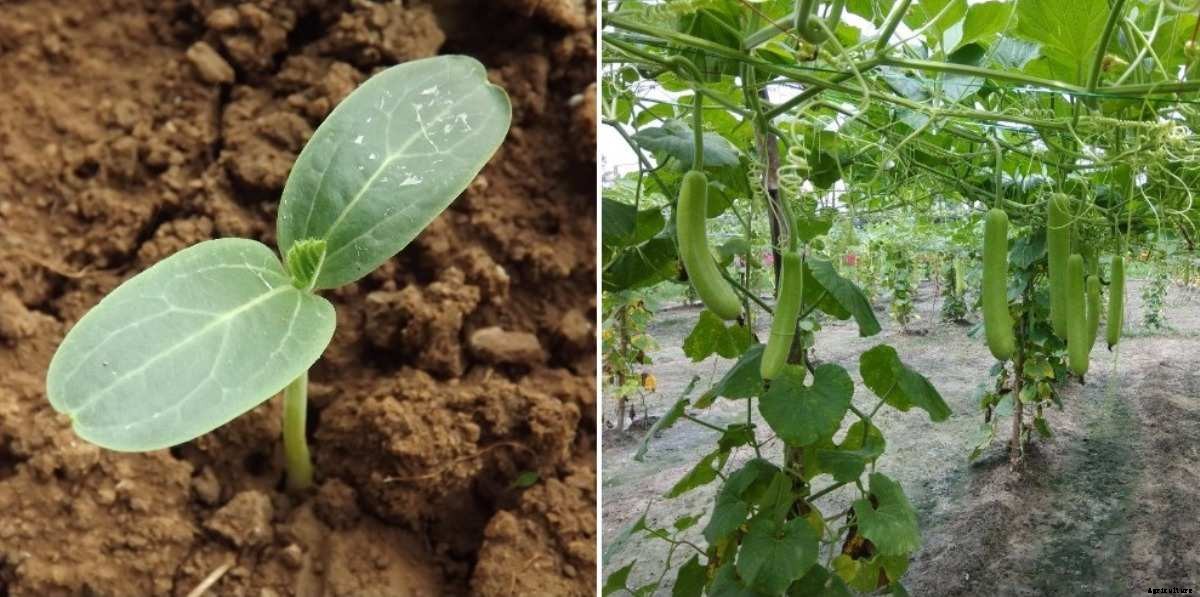
Bottle gourd plants can be attacked by the following pests;
Bottle gourd diseases are;
Diseases and pests are relatively few in Bottle gourd. Though, to prevent insects from laying eggs in the rind, mosquito netting may be draped over the vines. Then the flowers need insects for pollination, do not cover the plants until after the blossoms have dropped off. The main diseases of Bottle gourd are anthracnose during the wet months and powdery mildew during the dry season.
You should not miss the Vermiculture Advantages for Organic Garden.
Bottle gourd is free from problems, although slugs are fond of young plants. The mature leaves have a distinctive scent as well as being slightly furry, which repels some pests. They are liable to powdery mildew disease in humid summer conditions, with dry roots and warm moist air. If powdery mildew develops, soaking the roots regularly with water and removing the worst affected leaves, as does as seaweed feed to improve the plant’s immune system. Bottle gourd rampant growth squashes all weeds in their path, as well as other more desirable plants, and then keeps them restrained by snipping off tendrils or tying in rigorously every week.
Some of the pests and diseases in Bottle gourd can be given below;
Aphids of Bottle gourd
Aphids collect on the leaves of Bottle gourd plants and suck plant juices from them. These tiny, soft-bodied insects tend to congregate on the undersides of plant leaves. Temperatures between 65 and 80F create a particularly hospitable environment for aphids. Inspect Bottle gourd plants regularly. As aphids feed, they leave behind a sticky sap called ‘honeydew‘ that develops sooty mold and then turns black. Wash the plant leaves with cool water to remove the sticky sap. Release lady beetles in the garden to control aphid infestations naturally or use insecticidal soap or neem oil spray on infected plants. Controlling ants will help to control aphids, as ants act as guardians and even carry aphids onto choice feeding grounds like your gourds.
Squash bugs of Bottle gourd
Squash bugs target members of the cucurbit family, by feeding on the fleshy plant leaves. Look for small clusters of brick-red eggs on the underside of the plant leaves for early identification. The adults are very small, flat-backed insects 5/8 of an inch long with grey to brown back and wings. Manage squash bugs by keeping the garden clean and removing the previous year’s gourd plants and any other debris from the area. When you come across these insects in the home garden, destroy them manually. An application of insecticidal soap or neem oil on effected gourd plants can help to control squash bugs.
Whitefly on Bottle gourd plants
Whitefly is no stranger to the vegetable gardener and this tiny insect sucks sap from fleshy garden plants. Large infestations can deplete Bottle gourd plants of sap, leaving behind a sticky residue. Look for an infestation of tiny white insects on the underside of the plant leaves and the sooty black mold that develops on the honeydew left behind during feeding. There are numerous species of whitefly, but Banded winged whitefly commonly attacks gourds and other members of the cucurbit family. In the larval stage, whitefly is wingless and as the insects mature, they turn into a small moth-like insect. Wash plants as necessary to control infestations and remove insects. Placing aluminum foil on the ground under the plants can provide effective control of whitefly infestations.
Fruit fly on Bottle gourd plants
Cover the gourd with polythene or paper bags. Destroy the affected plants.
Powdery mildew of Bottle gourd
Some of the symptoms are;
Management
Downy mildew of Bottle gourd
Some of the symptoms are;
Management
Viral diseases of bottle gourd
Cucumber mosaic virus of Bottle gourd plants
Some of the symptoms are plants that are severely stunted, foliage is covered in distinctive yellow mosaic leaves curl downwards and leaf size is smaller than normal, flowers on infected plants can be deformed with green petals, and fruits become distorted and are small in size.
Management
Cucumber green mottle mosaic virus of Bottle gourd
Some of the seedlings symptoms are severe infections cotyledons may become yellow but more often symptoms are not seen until the 1st or 2nd leaf stage. Leaf symptoms are mottling and mosaic on leaves, fruit mottling and distortion. Early symptoms contain vein clearing and crumpling on young leaves while mature leaves become bleached and chlorotic. Fruit symptoms can be symptomless, at least externally, or can become severely spotted or streaked and distorted, especially during high temperatures.
Management
Seed treatment methods are;
Bottle gourd organic pest control methods
You may also like the How to Grow Sweet Potatoes on Terrace.
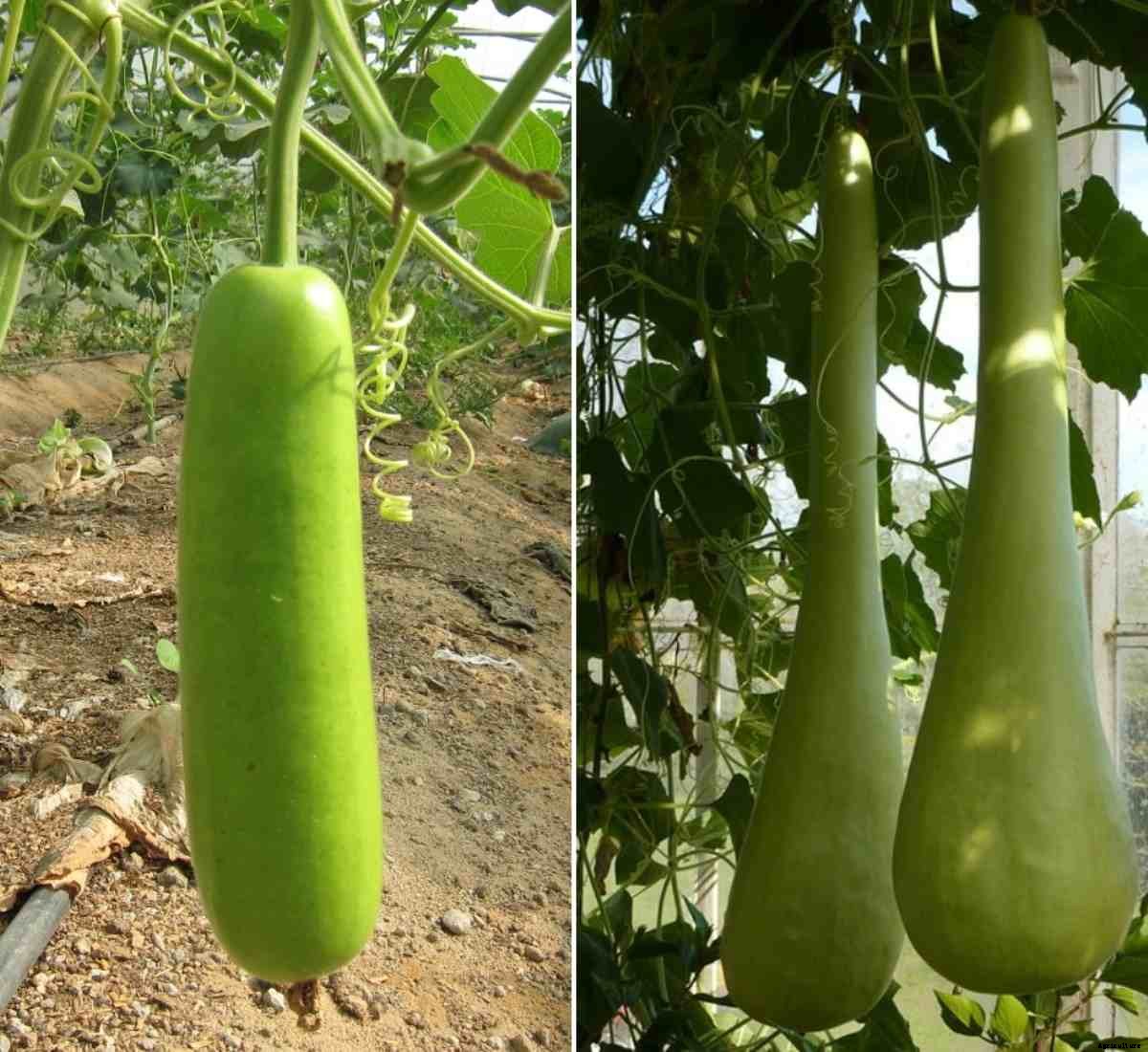
Once you have identified the troublemakers, you can control them with an assortment of organic pest-control methods in Bottle gourds. The following list contains some methods;
Controlling pests in bottle gourd plants will yield good quality of gourds. This pests and disease control information may be applied even if you are growing bottle gourd in backyard, growing bottle gourd in pots or containers, growing bottle gourd indoors, growing bottle gourd in poluhouse or greenhouse, growing bottle gourd on roof or terrace, and grwoing bottle gourd in apartment balcony. You may be interested in Low-cost Agriculture Business Ideas for Beginners.


