
Welcome to Modern Agriculture!

Introduction to bitter gourd gardening for beginners, tips, ideas, techniques, bitter gourd planting questions and answers (FAQs): Hello gardeners, we are here with one more topic today and the topic is all about bitter gourd gardening for beginners. Do you want to grow your bitter gourd plant and do you have any doubts about planting and growing bitter gourd? Well and then you will need to follow this complete article to grow your own bitter gourd. In this article, we are going to discuss some frequently asked questions about bitter gourd gardening.
Momordica charantia is a tropical and subtropical vine in the Cucurbitaceae family that is widely cultivated for its edible fruit throughout Asia, Africa, and the Caribbean. The shape and bitterness of the fruit vary greatly among its many variants.
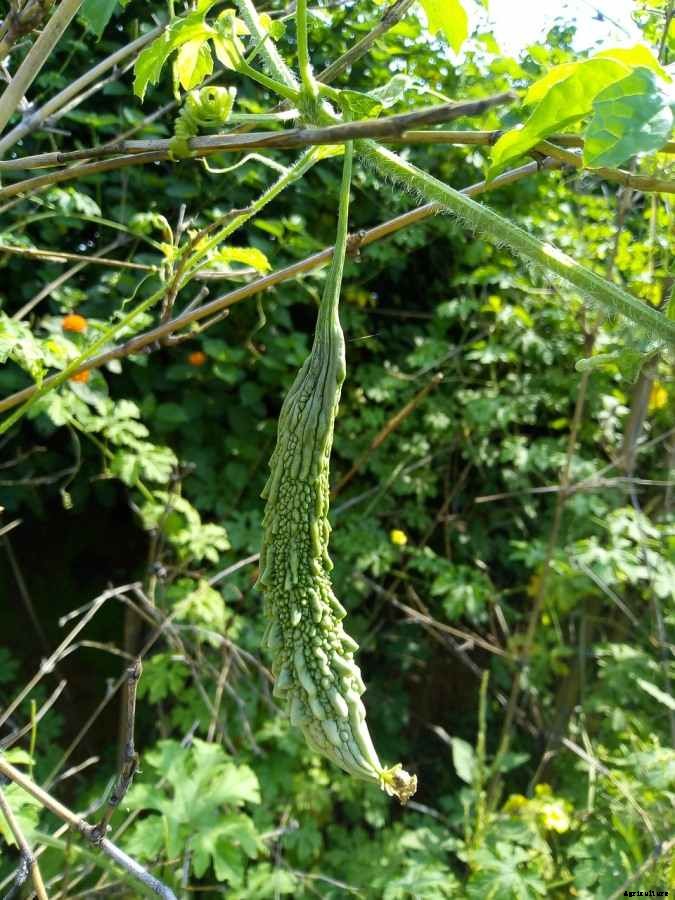
Seed sowing is used to grow Bitter Gourd. Bitter gourd seedlings do not transplant well, so sowing the seeds directly in the soil is recommended. Bitter Gourd seeds are planted in spherical pits in strategic locations to allow the plant to trail around poles, roofs, pergolas, stakes, and trellis.
Bitter gourd is fairly easy to cultivate in containers. 16 inches wide by 16 inches height is the ideal container size. The container should be filled with a high-quality potting mix, such as an Organic veggie mix.
Bitter gourds are not heavy feeders, but once they begin to flower, you should carefully consider adding organic manure to ensure rapid development and a good yield of fruits.
A trellis is required for a bitter gourd climber. It is recommended that the plant be grown in direct sunshine. This climber requires a lot of water, which is why it thrives during the rainy season. When your plant is young, you should use fungicides to protect it from powdery mildew.
Bitter gourds are ready for harvest 2.5 to 3 months after seeding. The harvesting season might last anything from six to twelve weeks. The bitter gourd should be harvested at the correct time when the fruit is neither too little nor too hard and fibrous.
Now, let us discuss some frequently asked questions about bitter gourd gardening.
From seed sowing to the first harvest, the bitter gourd crop takes roughly 55 to 60 days. Bitter gourd fruits mature quickly and turn red, thus additional pickings should be spaced out by 2 to 3 days.
In case if you miss this: Home Garden Ideas For Beginners.
Late spring or early summer is the best time to plant bitter melons. After all threat of frost has passed and the soil has warmed to at least 15 to 18°C, sow seed outdoors or transplants no sooner than two to three weeks. Bitter melons thrive in hot, humid environments.
Choose a sunny area in the garden that gets plenty of sun throughout the day. Bitter gourd grows in the late spring and early summer when the weather is warm. Until the seeds germinate, the plant should receive at least six hours of bright sunlight per day.
Even so, bitter gourd is a difficult plant to grow. Mulch is used by many farmers to keep soil moisture levels in check. Trellising will decrease infections and make harvesting easier because this is a fast-growing vine that produces numerous fruits that will decay if left in wet soil.
It is recommended that the plant be grown in direct sunshine. This climber requires a lot of water, which is why it thrives during the rainy season. When your plant is young, you should use fungicides to protect it from powdery mildew.
Bitter gourd is a vegetable that grows throughout the summer. However, in really hot weather, it is preferable to grow them in partial shade. Fruits tend to ‘cook’ in the sun at very high temperatures, becoming mushy and dry.
Bitter gourd is commonly grown throughout the summer and wet seasons. Vine growth is quite widespread in the latter season.
How about this: Easy Vegetables To Grow Indoors.
Even though bitter gourd seeds may grow in practically any environment, you should give them with well-drained sandy loam soil if you want to enhance output. Organic matter should be abundant in the soil, and the pH should be between 5.8 and 6.6. Adding compost to the soil to boost its quality and yield is a good idea.
Bitter gourd seeds can be soaked overnight to help them germinate faster. Cover the wet seeds with soil and plant them immediately in the garden. Between two plants, keep a gap of at least 12 to 15 inches.
Bitter gourd thrives in containers of modest size. Bitter gourd should be grown in containers that are 12 inches deep and 10 inches wide. Bitter gourd plants can grow up to 5 metres long and require a stout trellis to support them. Bitter gourd plants can be grown in plastic, clay, or ceramic containers with a good drainage system.
It is a fast-growing, early-maturing plant with a short lifespan (110 to 130 days), high yielding, and disease-resistant variety. Because most bitter gourd species are prone to interspecific hybridization and seeds are produced in the wild, inbreeding depression is a possibility.
Downy mildew, powdery mildew, Fusarium wilt, target leaf spot, and nematode-caused root-knot are the most prevalent diseases of bitter melon.
Bacterial Wilt is largely a Cucurbit disease, affecting cucumbers and melons in particular, although it can also affect Solanum crops (tomato, pepper, potato, eggplant) and maize. Cucumber Beetles are the most prevalent carriers (they transport the bacteria and create wounds for it to enter the plant).
Control: Three sprays of Karathane (6 g in 10 litres of water) or Bavistin (1 g /litre of water) at 5-day intervals after the onset of symptoms controls the disease. During spraying, fully grown vines’ leaves should be thoroughly soaked.
Control: During the seedling stage, spraying Carbaryl (4 g/litre of water) or Metacid (1 ml/litre of water) efficiently controls the pest.
The major fungicides that protect against downy mildew are chlorothalonil and mancozeb. Copper, on the other hand, isn’t as effective. Phytophthora blight is caused by a similar (oomycete) disease, and most fungicides labelled for downy mildew are also labelled for Phytophthora blight.
It is extremely difficult to eradicate, and it can swiftly take over an area. You can use RoundUp to kill the vines and roots if it’s growing alone along a fence, but you’ll still need to remove the seeds.
1 gallon of water, 1 tablespoon baking soda, 1 tablespoon vegetable oil, and 1 teaspoon dish soap in a gallon of water, combine 4 tablespoons baking soda and 2 tablespoons Murphy’s oil soap. 1 gallon of water + 2 to 3 teaspoons vinegar because vinegar can burn plants, makes sure to test this first.
As an organic pest repellant, neem oil spray is also used. The bitter gourd, which is high in nutrients, is excellent in preventing lifestyle disorders.
Climate – It’s a warm-season crop that’s mostly grown in sub-tropical and hot-arid climates. They are susceptible to light frost and benefit from some protection if cultivated in the winter. The temperature range of 24°C to 27°C is said to be ideal for vine growth.
Bitter melons can grow in less-than-ideal sandy or silty soil, but sufficient drainage is required. Planting and spacing guidelines: Sow seeds in half-inch or 1.25cm deep holes spaced 12 inches or 30cm apart. In each hole, sow two seeds.
Bitter gourd seedlings do not transplant well, so sowing the seeds directly in the soil is recommended. Bitter Gourd seeds are planted in spherical pits in strategic locations to allow the plant to trail around poles, roofs, pergolas, stakes, and trellis. In June and July, monsoon sowing takes place.
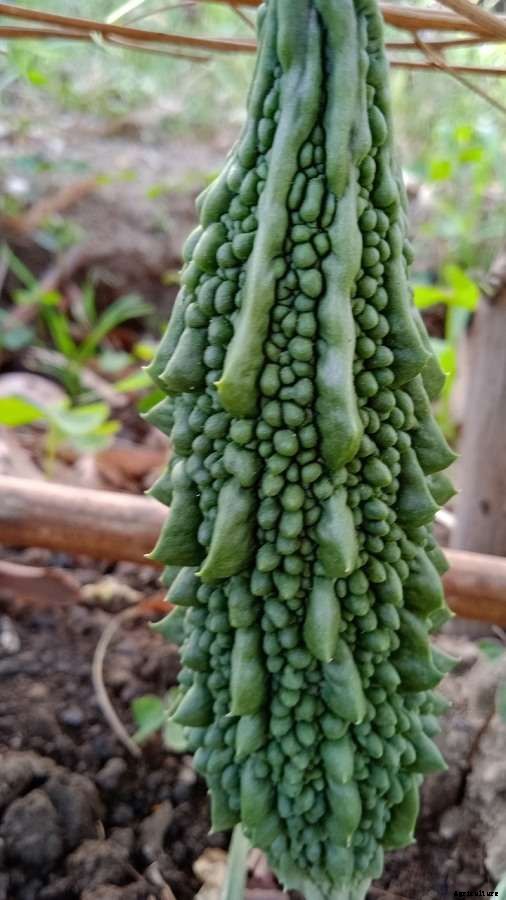
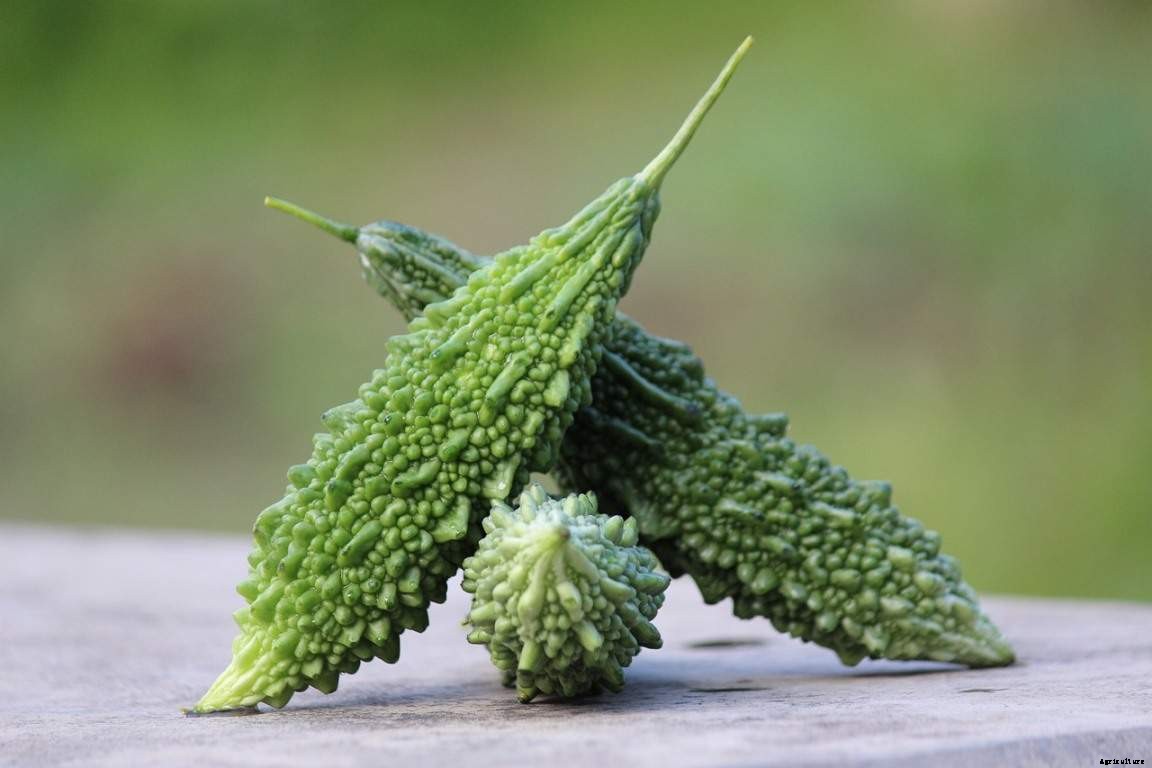
Soft lengthwise ridges and uneven pebbly textures distinguish bitter gourd pods. Immature pods range in colour from light to dark green and have an oblong or oval shape with a pointy tip at the blossom end, depending on the cultivar variety.
A noticeable indicator of nitrogen deficit is yellowing foliage or veins. Nitrogen shortage can have long-term consequences. In some circumstances, potassium deficiency can cause the leaves to turn yellow. Your plant will need nitrogen and potassium in this instance.
Fill drains with either boiling white vinegar or boiling water. This is a quick and easy approach to get rid of fruit flies.
Use an apple cider vinegar hollow dish. Apple cider vinegar is a natural way to kill fruit flies.
Fill a bowl with water and liquid soap.


