
Welcome to Modern Agriculture!

Introduction to Growing Potatoes in Balcony
Here, today we are going to know about how to grow potatoes on the balcony
In the balcony, you can grow potatoes in containers, grow-bags, and in big pots. Potato plants are one of the easiest vegetable plants to grow in your balcony. Just give the potato plant some light and water when it is necessary. You can grow these potatoes in a large, deep plant container also. Potatoes have clusters of pretty white flowers with yellow stamens. The Scientific Name is Solanum tuberosum
How to Grow Potatoes in Balcony?
There are many different ways to grow potato plants in your balcony and from them you can choose any one way according to the available space you have in your balcony. If you don’t have a large garden you can grow potatoes in pots, in a bag and if you have space you can plant potatoes in rows or raised beds also.
Potatoes are a cool-weather crop. so the monsoon season is the best time to grow them well. Starting with a ‘seed potato’ is better than the actual seed. Seed potatoes are themselves that have a sprout or buds coming out of the nodes in the potato tuber what is commonly called “eyes”. Seed potatoes are infection and disease-free.
Growing potatoes in the container can be a funny activity. A deep circular or rectangular pot or grow-bag is used. A larger container is better. Fill the container with 1/3″ of good potting soil. Place the potatoes on the top of the soil and cover them with soil. In a week, the sprouts will grow up, as the potato plant becomes larger, and then keep adding more and more potting soil until the entire pot is covered.
Fill the Small Pot container about 1/3 full with a 50/50 mixture of garden soil and compost. Plant one seed potato for every 3 gallons of Small Pot container. Plant only 1 or 2 potatoes in each 5-gallon bucket in your balcony.
There is no soil contamination- As you are using fresh potting soil; you don’t have to worry about pests, soil-borne diseases, and crop rotation.
These containers can be placed anywhere- Containers are easy to carry and easy to change their place where they receive full sun.
Harvesting is easy- Harvesting is easier than digging the potatoes, and there is less chance of damaging the tubers of potatoes.
When your plant starts making tubers after it flowers. Then gradually your plant dies completely. Then that is the time for harvesting.
Potatoes need full sun conditions with six to eight hours of light which will provide the best conditions for growing potatoes in containers
Some early potato varieties include sweet potato, Sangre, Red Gold, and Yukon Gold. Fingerling potatoes varieties are also suitable for growing potatoes in containers. Fingerling potatoes are small, 2-4 inches long.
The Fingerling potatoes often come in colors such as yellow, red, and even in purple.
It prefers well-drained, light, deep, loose soil, high in organic matter. Potatoes perform their best in acid soil with pH 4.8 – 5.5. Using heavy clay soil retains too much moisture and tends to become hard as it dries, and make it difficult for tubers to grow. Avoid wet and clayey soil. Use light soil they are rich in organic matter.
Fertilizing- After 20 days of planting, you should add any organic fertilizer, which is rich in calcium and potassium. This will help your plant to produce more tubers. Repeat the same process after 40 days.
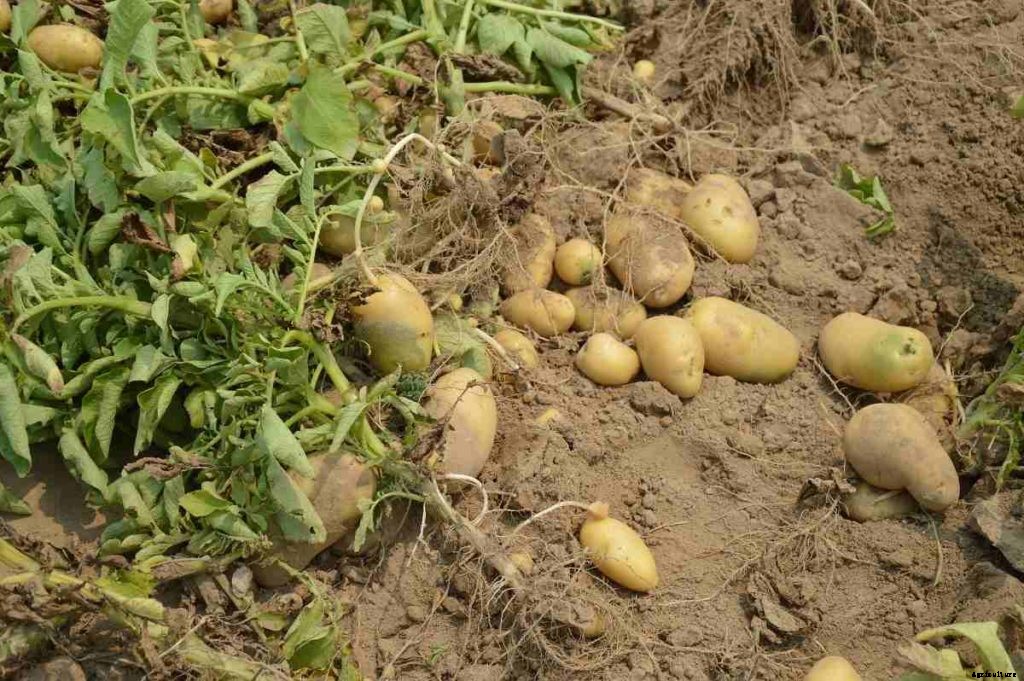
Pour enough water into a potato plant so that its soil is moist, but not so saturated. A potato plant doesn’t like wet feet. The general rule for potato plants is to provide it 1 to 2 inches of water per week, including rainfall. A consistent water schedule of once every four to five days is the same for a young plant. Potatoes need different amounts of water at different times to produce to the best of their ability in growing. Water the potatoes as evenly as possible. This helps the tubers to have a uniform shape and helps to make a better yield. Stop watering about 2 weeks before harvesting. This will help to cure the potatoes for harvest. Depending on the growing stage, overwatering can have different effects on potatoes.
Overwatering after the potato plants die back can cause the underground potatoes to rot. After the blossoms or flowers appear on potato plants, increase the water supply to 1 1/2 inches of water per week. Remember to take into account if any rain that falls in the area when determining how much to water. In general, if no rain falls, give them a good deep soak of water every 7-10 days. Water gently until puddles are formed in them. Watering potatoes is mainly to get good quality and quantities of potatoes. Potato plants need 1 inch of water per week to reach their maximum potential of growth. Without water, the potatoes will not reach full size and shape. Additionally, they may be deformed or have a hard and bad texture. It’s better to water your potatoes in the early morning hours. That way, the afternoon sun will evaporate all the water that may remain on foliage. Potatoes are susceptible to many diseases. Wet foliage will encourage the development and spread of these diseases. A long watering once per week is better than several short watering sessions. This will allow the water to penetrate the total soil and reach the roots of the plants.
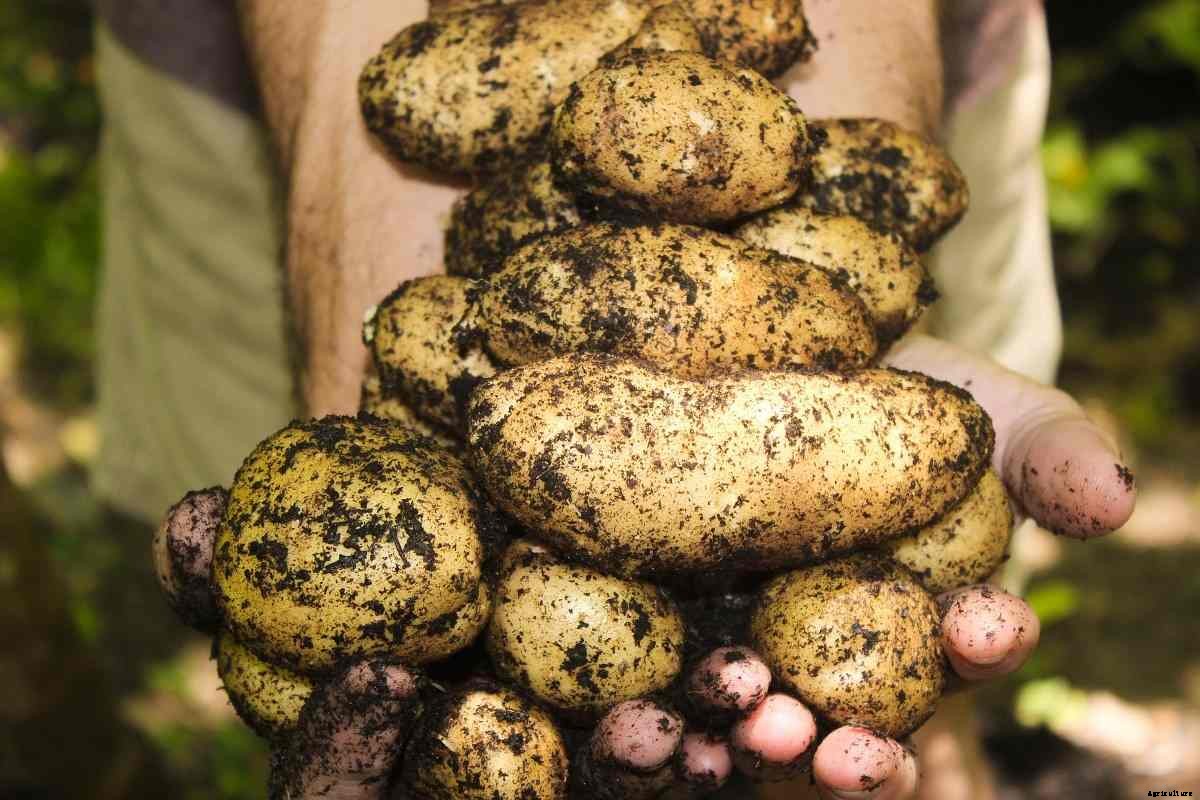
Use a homemade mixed fertilizer to improve the health and yield of your potato plants. To make homemade fertilizer Combine 8 pounds of cottonseed meal, 2 pounds of bone meal, 3 pounds of greensand, and ¾ pound of kelp meal in a large container; this will be enough fertilizer for better grow of potatoes on your balcony.
In case if you are interested in this: Growing Roses Organically.


