
Welcome to Modern Agriculture!

Chillies are produced seasonally but consumed throughout the year. The pods are marketed both in green and red or natural form. Its cultivation involves heavy labour and capital inputs. There exists a great scope for its export.Sowing tme of chilli is Oct- november.
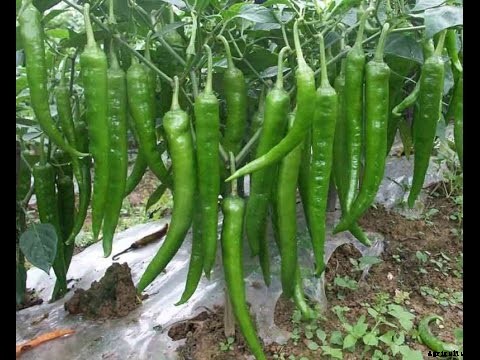
Chillies require warm and humid climate for growth and dry weather during maturity. The crop comes up well in tropical and sub-tropical regions but it has a wide range of adaptability and can withstand heat and moderate cold. It can be grown over a wide range of altitudes from sea level up to nearly 2,100 metres. Heavy rainfall leads to rotting of the crop. Unfavourable temperatures lead to bud blossom and fruit drops. Chillies are grown on soils with light sands to well drained clay. Silty and clay loam soils are better, while water-logged and alkali is not suitable.
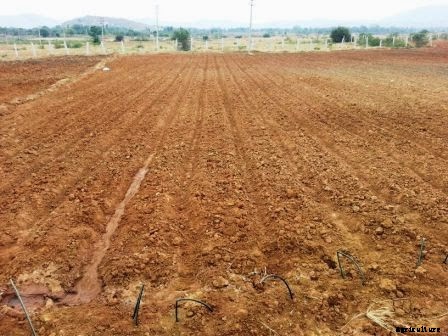
Soils selected are prepared thoroughly for getting good yields. As roots of chillies go one foot deep, therefore, deep ploughing is necessary. Two ploughing with mould board plow followed by global plow are done, levelling the soil for even distribution of water and fertilizer. About 30-40 cart loads of well rotten farm yard manure per acre are added one month before transplanting the chillies
Nurseries are raised on well prepared one meter wide and three meters long strip. Before broadcasting the seeds, straws or farm yard manure is burned on the strips after which seeds are broadcast and pressed in the soil and covered with a thin layer of soil. These are then covered with layers of straws supported by wooden sticks with water application in the morning and evening till the seeds germinate. After germination straw is removed and water is applied after every 4-5 days. Within six weeks seedlings become ready for transplanting.
After land preparation, ridges of one and half foot high and wide are prepared.Transplanting time Feb-April. Transplanting is done on both sides of the ridges and distance between each plant is maintained at one and a half foot. Care is taken to avoid plants on both sides of ridges to face each other as this leads to dense plant population causing hindrances in weeding, harvesting, spraying etc. Transplanting is preferable done in the evening, because in morning seedlings cannot withstand noon temperatures.
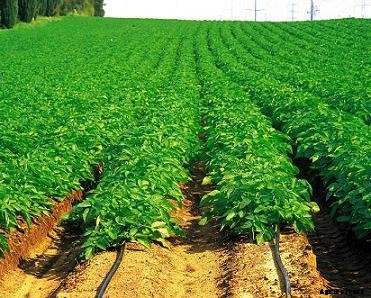
After transplantation two watering are applied so that plants develop roots. Subsequent irrigation is applied as per climatic conditions.
Chillies varieties grown are Ghotki, Longi, Talhar and Sanam, Peshawari Kola, skyline.
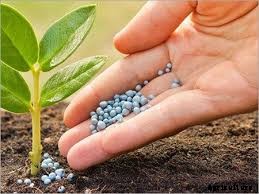
Recommended fertilizer dose for chillies is one bag of DAP and one of potassium sulphate before sowing, and two to three bags of urea, one bag is applied after 20 days of transplanting and the second at flowering stage, and third, if necessary, at fruit setting.
For checking weeds it is necessary that first interculturing is completed within one month after transplanting. Three to four interculturings are necessary for controlling the weeds. At flowering stage, earthling up is recommended which helps in the growth and development of the crop. It prevents the crop from lodging.
Rot and die back caused by Colletotrichurn capsici and bacterial wilt (Pseudomonas solanacearum) ) are two major diseases of chillies. Careful seed selection, adoption of phytosanitary measures, early removal of affected plants, seed treatment with vitavax help in control and prevention of diseases. Disease tolerant varieties are used, while rouging of the affected plants helps in checking mosaic virus.
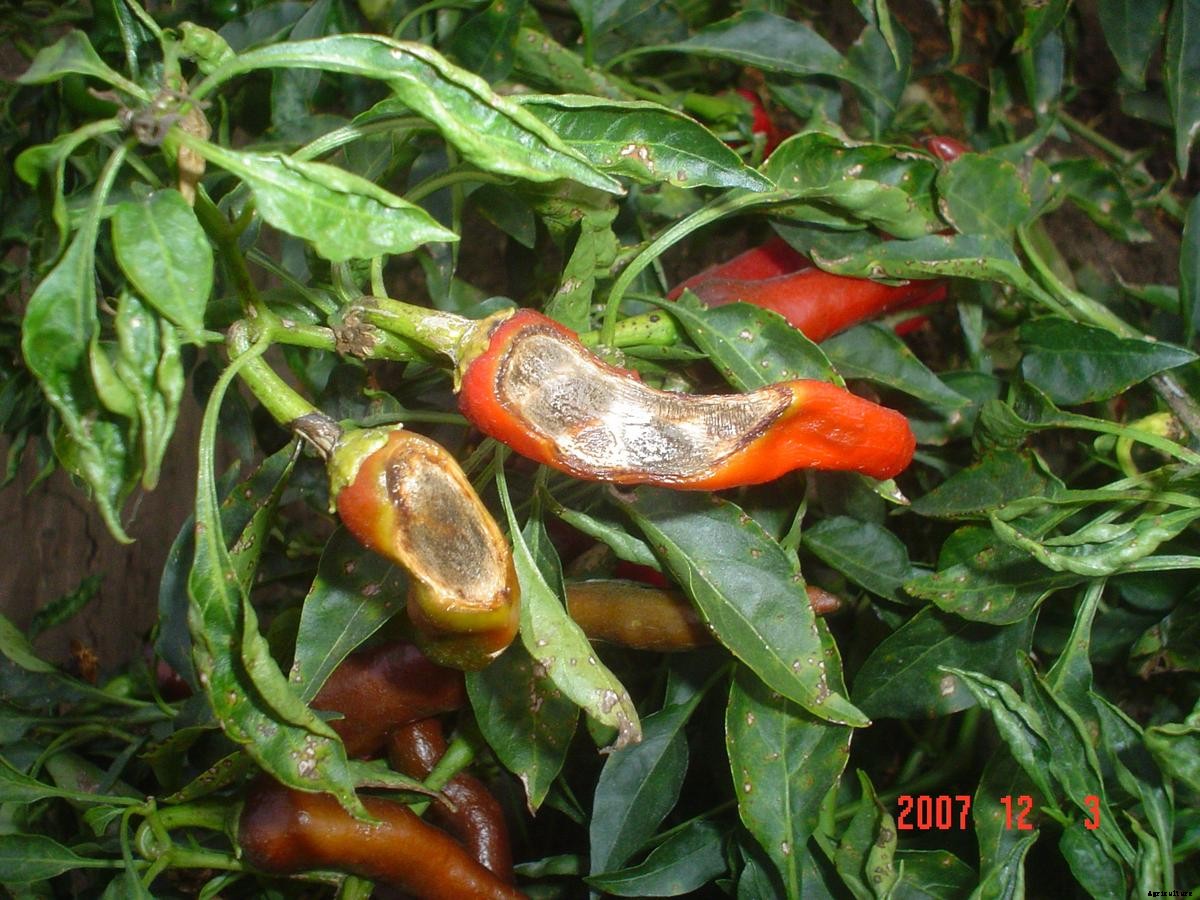

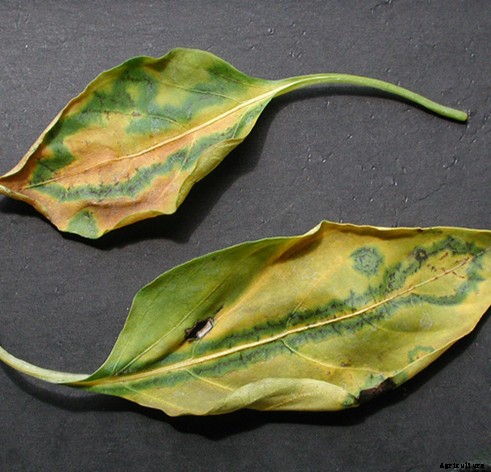
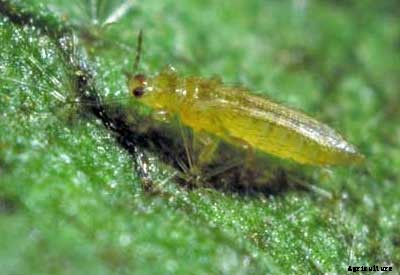
Chilli thrips and mites, characterised by relatively short life cycles, can complete several generations on a crop. Adults and nymphs of these pests suck sap from the leaves and growing shoots. Affected leaves curl upwards and downwards resulting in damage called chilli leaf curl or chilli murda complex.As a result of thrips infestation, leaves become smaller, thickened and brittle. Mite infestation is a characterised by elongation of leaf petiole and clustering of tender leaves at the tip of branches.
Seed treatment with imidacloprid at five grams per kg seed is effective.Spray with acaricides such as dicofol at five ml per litre or wettable sulphur three grams per litre or diafenthiuron at one gm per litre or Vertemic at 0.5 ml per litre. Utilisation of indigenous materials have confirmed that garlic chilli kerosene extract [GCK at 0.5 per cent] +nimbecidine (2.5 ml/lit) can effectively combat the problem.
\
Green chillies are picked early in the morning or in the evening. These are protected from the sun to avoid quality deterioration. Ripe fruits are harvested at frequent intervals. Retaining fruits for a long period on the plant causes wrinkles and colour fading. Soon after the harvest, the produce is heaped or kept in clean gunnies for one day for uniform colour development of pods. Sun-drying is necessary to ensure complete dryness. Levelled and compacted floor is made for drying. From the fifth day onwards, the produce is inverted on alternate days so that pods in the lower layers are brought up to ensure quick and uniform drying. To avoid microbial activity and aflatoxin production, the moisture in dried pods need to be brought down to 10 per cent.
Since the produce is exposed to sun for 10-15 days in open yards, it is likely to get contaminated with foreign matter. This also results in poor colour for the product due to the bleaching effect of sun-rays. The produce can be dried within a period of 18 hours by using air drier for maintaining the temperature at 44-46C. The method not only saves time of drying operation but also imparts deep red colour and glossy texture to the produce. Solar drier and tray drier can be used. While drying, the produce is covered with polythene sheets during night to avoid dew deposition and colour fading. Grading is done to remove defective and discoloured pods. Packing is done in gunny bags, or jute boras.

