
Welcome to Modern Agriculture!

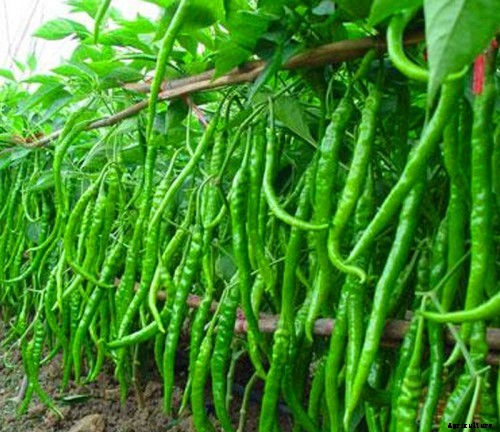
Introduction of Chilli Cultivation:– The chilli is a fruit of plants belongs to the family of “Solanaceae” and genus of “Capsicum”. The chilli is also being termed as “Chili Pepper” in many parts of world. Chilli is one of the most important and the largest produced spice crop in Asia. The fruit is actually called “chilli” and is used as a spice in a variety of cuisines all over the world in different forms as green chillies, dried red chillies as a whole or in the form of powder. Basically, chillies contain capsaicin, which gives a strong burning tangy sensation when eaten and the red colour is because of the presence of pigment capsanthin. Generally, chillies are valued based on their high pungency and colour. Production of chilli is very high in Asian countries due to high consumption. Commercial cultivation of chilli is very much successful and one can expect decent profits in chilli farming due to its market value in local areas and international markets (export market). Most of the people think that chilli is native to India but it is originated from ‘South America” and these were brought to Asia by Portuguese at the end of 15th century. India is the largest producer, consumer and exporter of chilli. Chillies can be grown in open fields, greenhouses, polyhouses, under shade nets, pots, containers, even in back yards. The quality and production would be high if they are grown in controlled environment such as greenhouses. Chillies can also be grown successfully in hydroponic system.
Major Chilli Production Countries:- Major chilli growing countries are India, China, Ethiopia, Myanmar, Mexico, Peru, Vietnam, Pakistan, Ghana, and Bangladesh. India tops among all of these in exporting chillies.
Health Benefits of Chilli:- The following are some of the health benefits of chillies.
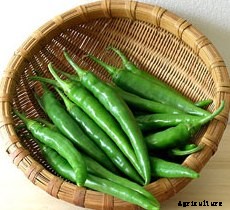
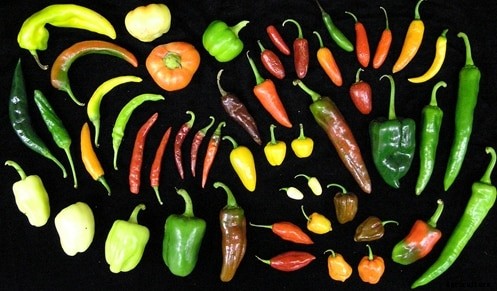
Chilli Cultivars (Varieties):- Green Cayenna, Yellow Cayenne, Red Cayenne, Green Ball, Red Ball, Jalapeno, Birdseye, Habanero are different types chillies cultivated. However, in these types, there are many improved hybrid varieties of chillies are available specific to each area. Find out the suitable cultivar for your region. You can get this information from your local horticulture department.

Famous commercial chilli hybrid varieties of India are: MI-1, MI-2, KA-2, Arunalu, MI-Hot, K 1, K 2, CO 2, CO 4, PKM 1, PMK 1,PLR1, KKM, NS 1701,NS 1101 F1,NS 1072,NS 230,NS 238, Pusa Jwala,Manjari,F1 Hybrid, VNR-21-7 ,Hybrid Chilli Trishul, Hybrid Chilli Sachin, Hybrid Chilli Red Devil, Hybrid Chilli Huero, Hybrid Chilli Amba, Hybrid Chilli Agni, Sanke-shwar, Agnirekha, Kankan Kirti, Musahvadi, Phule Mukta, Surkta, Pbiile Sai, Phule Jyoti, Suryamukhi, Jayanti, Parbhani Tejas Byadagi Kaddi, Byadagi Dabbi, G-3, G-4, G-5, Kiran, Musalwadi, Kashmiri double chilli,G-5, Byadagi Dabbi, Sindhur, LCA-206, Co.2, Kashmiri double palti, KDCH-2,Jwala, Aparsna, KDCH-2,LCA-206,S – 1182 of Punjab, Kadaralli of Karnataka, X-235, Jwala, NP-46A, KDCH-1, Jawahar 218 of Madhya Pradesh.
Chilli Names in other Parts of World Languages:- Chilli (English), Chilischote (German), Poivre de Guine (French), Capsicum Annum L. (Latin), Pimento, Chile (Spanish), Spaanse peper (Dutch), Peperone, Peperoncino (Italian), Pimento (Protuguese), Kovy pyeret,красный перец (Russian), Togarashi (Japanese), الفلفل الحار, Filfil Ahmar (Arabic), Hsiung – yali – chiao (Chinese), khursani (Nepali),улаан чинжүү (Mongolian), Papryczka (Polish), Basbaas (Somali), Tšilli (Estonian), τσίλι (Greek),고추 (Korean), чили (Serbian), Чили (Bulgarian), Sili (Filipino), 辣椒 (Mandarin), Chili (Norwegian), น้ำพริก(Thai),ớt phơi khô (Vietnamese), Nga Yote (Burmese), Latvian (Latvian), ardei iute (Romanian), මිරිස් (Sinhalese), Mah Tehs (Cambodian), Chladný (Czech), чили (Macedonian),acı biber (Turkish),Upelepele (Zulu), ჩილი (Georgian), Chili (Danish), Cili merah (Malay), گردفلفل (Persian), čili (Slovenian), 紅辣椒 (Taiwanese), стручковий перець (Ukrainian).
Local Names of Chilli in India:- Chilli is called with different names in different languages in India. Mirch, (Hindi, Punjab and Urdu), Morich (Bengali), Marcha (Gujarati), Menessina kayi (Kannada), Marstu,Waungum (Kashmir), Mulaku (Malayalam), Mirchi (Marathi), Lauka (Oriya), Miagai (Tamil), Mirapakayi (Telugu), Mirchan (Punjabi), Jeevisaang (Konkani), Jolokiya (Assamese), Morok (Manipuri), Gaarhaa Mirch (Sindhi), Marach wangun (Kashmiri).
Climate Required for Chilli Cultivation:- Basically chilli is a crop of tropical and sub-tropical region. It thrives best in warm/hot and humid climatic conditions. The ideal temperature for its growth is 20 to 30°C. Temperatures below 15°C will result in reduced crop yield. Constant moisture in soil during blossom development and fruit formation is very important for good yield. This crop requires an annual rainfall of 25 to 30 inches. Excessive rainfall or flooding will damage the crop.
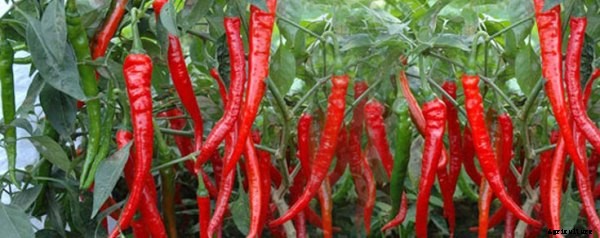
Soil Requirement for Chilli Cultivation:- Chilli can be grown in wide range of soils. However the sandy – loam, clay loam and loam soils are best suited for its cultivation. The soil should be rich in organic matter, well-drained and well aerated. The ideal soil pH value for best growth of chilli is 5.5 to 6.8. Avoid acidic soils as these are not suitable for chili cultivation.
Land Preparation for Chilli Cultivation:- Land should be prepared by giving 3 or 4 deep ploughings and followed by harrowing to bring the soil fine tilth stage. Make sure to crush any clods after each ploughing. After bringing the soil to fine tilth stage, level the land with the help of tractor blade. Making raised beds would be useful for rainy season to drain out the water and also helps good aeration. During the land preparation, it is recommended to supplement the soil with well decomposed farm yard like cow-dung of 25 tonnes/ha or any other equivalent compost. Application of manure should be done at least 2 weeks before of sowing. In order to protect the chilli crop from ants and soil borne pests, Heftaf @ 10-15 kg per acre should be applied in last ploughing. Form ridges and furrows at a spacing of 60 cm. Apply 2 kg/ha of Azospirillum and 2 kg / ha of Phosphobacteria by mixing with 20 kg of farmyard manure (FYM). Irrigate the furrows and transplant 40 days old seedlings, with the ball of earth on the ridges.
Season of Sowing in Chilli Cultivation:- Well, chilli can be grown all around the year provided enough irrigation facility is available. In some Asian countries, sowing will take place in January – February, June – July and September – October.
Seed Rate and Seed Treatment in Chilli Cultivation:- Seed rate depends on cultivar and soil type. However, on an average, 1 to 1/2 kg seed required to cover the 1 hectare land. Treat the seeds with Trichoderma viride @ 4 grams / kg of seeds and cover with sand. Drench the nursery with Copper oxychloride @ 2.5 grams/liter of water at 2 weeks interval against damping off disease. Apply Carbofuran 3 G at 10 grams/sq.meter at sowing.
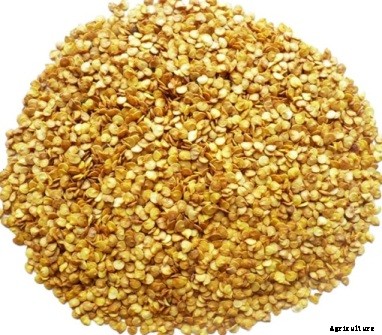
Propagation, Planting and Spacing in Chilli Cultivation:- Propagation is done by seeds. Chilli is a transplanted crop. Generally, seeds are sown in nursery beds and 40 to 45 days old seedlings are transplanted in the main field. Raised seed beds of 90 cm width and of convenient lengths should be prepared. Add well decomposed organic matter to the seed beds. To sterilize the soil, burn the rice straw on the seed bed which also helps in adding small amount of ‘P’ & ‘K’ to the soil. Once seeds are sown on nursery bed, green leaves can be used as mulch material. Irrigate the seed beds everyday morning. The soil temperature of the chilli seeds must be between 28°C and 32°C for quick and better germination. It can take up to 2 weeks to 5 weeks before first seedlings will pop up. Remove the mulch immediately after the seeds start germinating. Usually chilli seedlings will be ready 5 to 6 weeks after sowing. Irrigation should be restricted on the seed bed 1 week before actual transplantation and irrigate heavily on the previous day of transplanting in the field. Ridges and furrow type of layout is used. When it comes to plant spacing, for rainfed crops, a distance of 60 cm x 45 cm & for irrigated crops a distance of 60 cm x 60 cm should be maintained.
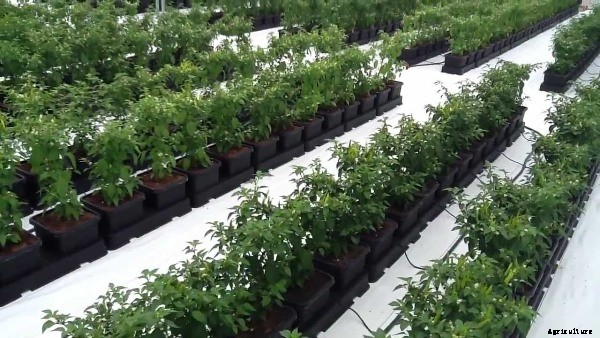
Irrigation in Chilli Cultivation:- Generally, chilli crop is grown as rainfed and irrigated crop. If the crop is grown as rainfed one, a well distributed annual rain fall of 80 to 100 cm is required for better growth and yield. Chilli plants are shallow rooted and cannot tolerate drought and flooding but need uniform and constant moisture in the soil. In water scarcity areas, drip irrigation method is advised. However, furrow method can also be adopted when enough water is present. Overhead irrigation should be avoided as this will promote diseases in chilli cultivation. In case of heavy rains, make sure to drain out the soil quickly. If the plants grown on raised beds, there is a good chance of draining of water quickly.
First Irrigation should be carried out after transplanting seedlings from nursery to main field. Subsequent watering should be provided once in 5 to 6 days in summer and once in 10 to 12 days in winter. Again, irrigation depends on soil type and climatic conditions. Flower and fruit drop occurs in chilli cultivation, if the uniform moisture level is not maintained.
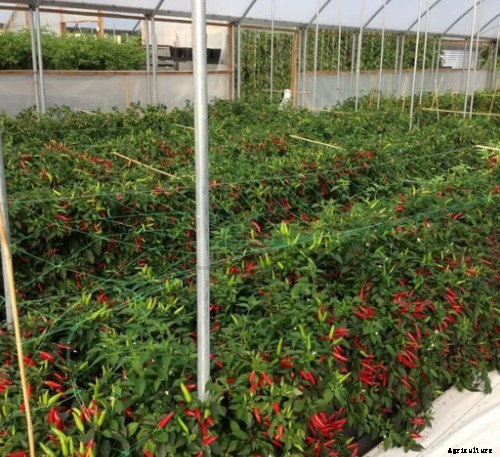
Manures and Fertilizers in Chilli Cultivation:- Chilli crop responds very well to manures and fertilizers. If the crop is grown on large scale, make sure to conduct soil test to find out the N:P:K values. Based on the results of test, any nutrient gap should be filled. During the land preparation, supplement the field with 20 to 25 tonnes of well decomposed farmyard manure (FMY)/ha. In case of rainfed crop, 25 kg of “P” in full dose, 50 kg “N” in 1/2 dose should be applied at the time transplanting seedlings in the field. Remaining 1/2 dose of ‘N’ should be applied 1 month after transplanting the seedlings. In case of irrigated crop, N:P:K should be applied in the ratio of 100 kg:50 kg: 50 kg/ha. Fertilizers should be applied in 4 equal doses. First applied at the time transplanting remaining doses are applied at fourth, eleventh, and thirteenth week after transplanting the seedlings.
Intercultural Operations in Chilli Cultivation:- Regular and proper intercultural operation in chilli cultivation results in higher yields. Weed control is a very crucial task for getting higher yields in chilli cultivation. As the chilli is a shallow root plant, 2 to 3 shallow hoeing should be given to kill the weeds without damaging the plant roots. Mulching the plants with rice straw will control the weeds and protect the plants from moisture loss. Weedicides also can be applied to control the weeds. Lasso @ 1.5 liter/ha with one hand weeding is an effective way controlling weeds. For higher yields in chilli cultivation one should carry out staking operation. Stake the chilli plants to prevent lodging especially when the plants have good load of fruits. Each plant should be staked before flowering starts.
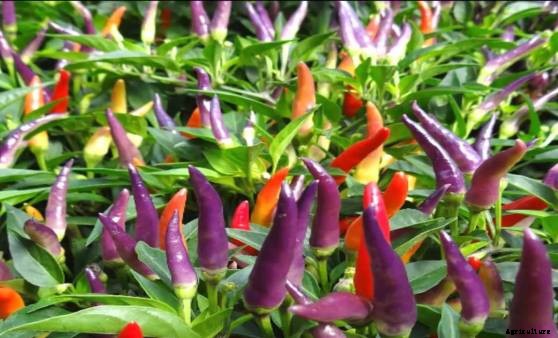
Mulching in Chilli Cultivation:- Mulching is the best option for weed control, soil moisture conservation and uniform root establishment. Mulching also prevents soil erosion and enriches the soil fertility. Mulching like rice straw of 5 tonnes/ha would be enough to cover the chilli crop.
Pests and Diseases in Chilli Cultivation:- The following are common pests and diseases found in chilli cultivation.
The following are the common pests found in chilli cultivation:
The following are the common diseases found in chilli cultivation:
Note: Contact your local department of Horticulture for pests and disease symptoms and their control. They are the best source for pest control solutions in Chilli cultivation.
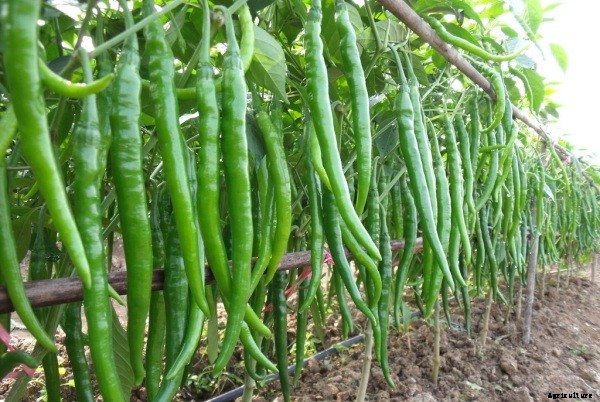
Harvest in Chilli Cultivation:- Maturity of the chilli depends on variety. Usually it takes about 60 to 65 days after flowering for fruits to fully ripen. Harvesting of chilli crop depends on the purpose and market demand. Immature and fully grown green chillies can be harvested for fresh markets and at red stage for canning purpose. For red dry chilli purpose, crop should be harvested at fully ripen stage. The harvesting can continue for several months and harvesting of chilli should be carried out weekly once or as market demands. For dry chilli, it is important to preserve the red colour of matured fruits.
Yield in Chilli Cultivation:- The yield of chilli crop depends on the cultivar (variety), soil type, irrigation and crop management practices.
In case of hybrid commercial varieties the following yield can be achieved in chilli cultivation.
The yield would be more in irrigated crop than in rainfed crop.
Marketing of Chilli:- Fresh green chillies can be transported to local markets based on market demand or weekly basis. However, if the crop is grown for red dry chillies, better contact a any chilli powder making company for bulk sale. There are huge profits in dry chilli cultivation as the demand is very for this produce.


