
Welcome to Modern Agriculture!

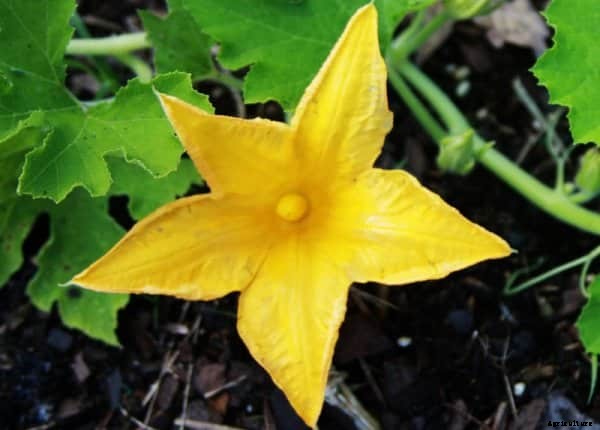
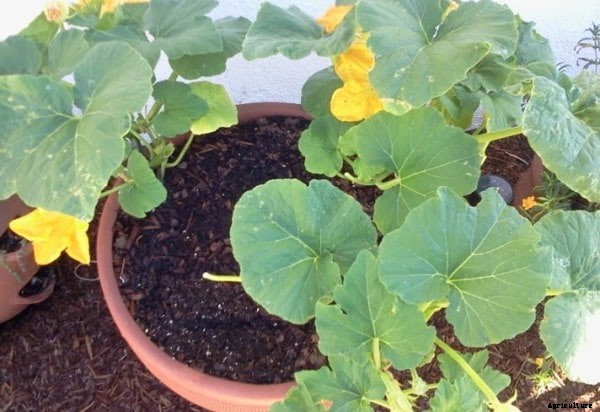
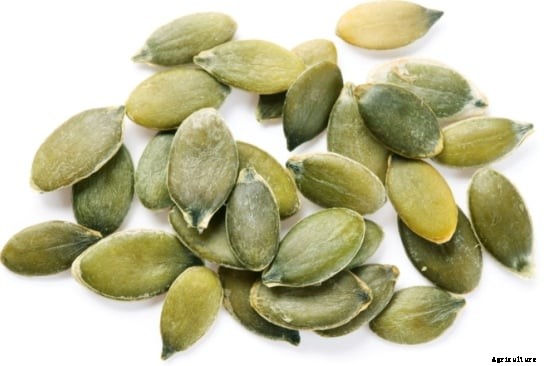
Introduction of Pumpkin Cultivation:- Pumpkin is very famous and is one of the most important cucurbitaceous vegetable crops grown across the globe. Technically pumpkin is a fruit and used in culinary items. The ripe pumpkins are used for culinary (cooking) purpose. Pumpkins grown in summer and rainy season have great demand in the market. Pumpkins may be grown in different shapes and sizes. Pumpkins are like other squash and these vegetable are native to North America and famous for thanks giving celebrations. Pumpkins are widely grown for commercial use for using both in food and recreation. Pumpkin and its seeds possess excellent health benefits. They are great source of calcium and phosphorus. When it comes to plant description, pumpkins have larger leaves and sprawling vines with coiled, modified leaves called tendrils and almost square woody stem as opposed to the rounded, less tough stem of winter squash. These vegetables have important feeder roots near the soil surface and usually roots grow to about the length as vines which are called lateral roots. Pumpkin roots may reach up to 1.6 meter deep in the soil. Pumpkins belong to the family of “Cucurbitaceae” and genus of “Cucurbita”. Pumpkins are called “Curcubita pepo” and “Cucurbita maxima” scientifically. When it comes to commercial production of pumpkins, it’s very important to procure quality seeds as seeds extracted from the vegetable crops are used for further sowing. Seed size may vary in size, depending on cultivar and type. Moreover the seed recovery potential from pumpkin fruits is very less and it’s about 1.0 – 1.5%. Growing pumpkins on large scale defiantly yield good profits, when best cultivation practices are put in place. Pumpkins can be grown in containers, pots, backyards, greenhouses and polyhouse. These fruits can also be grown hydroponically. If you are growing the pumpkin for seed crop, then it is entirely different from vegetable crop. In this conversation, let us discuss about vegetable crop.
Major Pumpkin Production Countries:- The top 10 Pumpkin production countries are given below.
1. China.
2. India.
3. Russia.
4. Iran.
5. USA.
6. Mexico.
7. Egypt.
8. Italy.
9. Spain.
10. Indonesia.
Health Benefits of Pumpkin:- The following are some of the health benefits of Pumpkins.
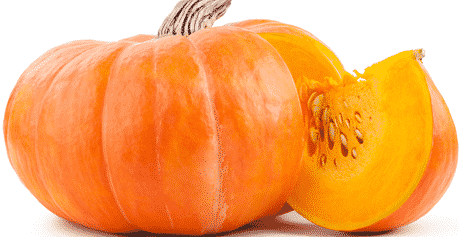
Pumpkin Cultivars (Varieties):- One of the major differences in pumpkin varieties is fruit size and there are three main categories of pumpkins available. However, there are many varieties fall under these categories. If the crop is grown is for seed purpose, growers should keep track of the many new varieties of pumpkins available each year, consider the market, and plant varieties that are best suited to their operations. Carving, Small/Pie type and Giant pumpkin are main types of pumpkins. There are many improved varieties of pumpkins grown around the world. However some of the cultivars of pumpkin are; Autumn Gold, Gost Rider,Amish Pie, Bushkin Frosty, Funny Face, Harvest Moon,Jack-o-Lantern,Small sugar, Big Max, Big Moon,Co.1, Co.2, Arka Suryamukhi, Arka chanada, HR 83-1-1, Ambili, Saras , Suvarna, Soorj, Sugar Treat, Winter Luxury, Baby Bear, Baby Pam, Spooktacular, Long Island Cheese, Lumina, Spirit, Young’s Beauty, Aspen, Big Autumn, Big Tom, Connecticut Field, Atlantic Giant, Big Max, Big Moon, Mammoth Gold, Prizewinner, Ghost Rider, Happy Jack, Hercules/Super Herc/HMX 3692 PMR, Howden Field, Jackpot, Jumpin’ Jack, Magic Lantern PMR, Pankow’s Field. Selecting appropriate pumpkin variety depends on region, soil, climate and demand. Contact your local horticulture department for hybrid/improved commercial variety that suits your region.
Pumpkin Common Names:- Pumpkin (English), litsanga (SiSwati), fhuri (Tshivenda), ithanga (isiZulu), pampoen (Afrikaans).
Pumpkin Names in other Parts of World Languages:- Pompoen (Dutch), Kürbis (German), Huluu (Mongolian), Dynia (Polish), Peapag (Scottish), کدّو (Urdu), Kungulli (Albanian), Bundeva (Bosnian), Kõrvits (Estonian), κολοκύθα (Greek), Puimcín (Irish), 호박 (Korean), Pharsi (Nepali),Abobora (Portuguese), Tikva (Serbian), Calabaza (Spanish), qovoq (Uzbek), Yaktin (Arabic), Tikva (Bulgarian), 南瓜 (Chinese), Kalabasa (Filipino), Zucca (Italian), Kundir (Kurdish), 南瓜 (Mandarian), Gresskar (Norwegian), Waluh (Sundanese), Fak thong (Thai), Bí ngô (Vietnamese), Gargaj (Armenian), kabocha / かぼちゃ (Japanese), Kirbis (Latvian), Dovleac (Romanian), වට්ටක්කා (Sinhalese), ល្ពៅ (Cambodian), dýně (Czech), Chitroule (French), Tikva (Macedonian), Тыква (Russian), Tekvica (Slovak), Pumpa (Swedish), balkabağ (Turkish), Ithanga (Zulu), Græskar (Danish), გოგრა (Georgian), tök (Hungarian), Labu (Malay), کدو تنبل (Persian), buča (Slovenian), Lamkoef (Taiwanese), Гарбуз (Ukrainian).
Pumpkin in Indian Languages:- Kashiphal (Hindi), Bhopla (Marathi), Gummadi Kaya (Telugu), பரங்கிக்காய் (Tamil),Mathanga (Malayalam), Dudde (Konkani), કોળું (Gujarati), Petha (Punjabi), Mairen (Manipuri), Kumbalakai (Kannada), Paa’rimal (Kashmiri), Kumra (Bengali).
Climate Required for Pumpkin Cultivation:- Pumpkins are warm season crop and it can also withstand cold temperatures. This crop is sensitive to frost and the ideal temperature of 18°C to 30°C is best for its growth. At higher temperatures, male flowers sometimes predominate, resulting in fewer fruit for that period.
Soil Requirement for Pumpkin Cultivation:- Pumpkins can be grown in wide range of soils with proper irrigation facility. However, loam, sandy loam and clay loam soils are best for pumpkin cultivation. Any soil micro-nutrient deficiency should be filled based on the soil test results. The pumpkin yield would be high in the soils having a pH value of 6.0 to 7.0.
Land Preparation for Pumpkin Cultivation:- Land should be well prepared by removing the any weeds from previous crops. Land should be given couple of ploughings with local tractor to get the soil to fine tilth stage. To make the soil fertile, add appropriate well-decomposed farm yard manure.
Planting Season for Pumpkin Cultivation:- Pumpkins can be grown round the year where sufficient irrigation is available. However, two crops are common in a year.
Propagation, Planting and Spacing in Pumpkin Cultivation:- Pumpkin plants are propagated by seeds. Usually, pumpkin seeds are directly sown in main filed. Planting on a raised bed promotes drainage, so the roots do not have to deal with constant wetness, which leads to disease problems. The pumpkin seeds can be planted directly in the field. Pumpkins are usually planted in hills. Plant 2 to 3 seeds per hill, about 2.5 cm deep and later thin to one plant per hill for better growth. Usually, spacing varies with variety and vine size. It is advised to plant bush or short-vined varieties of pumpkin at the spacing of 0.5 meter to 1 meter in the row and 1 meter to 1.5 meter between rows.
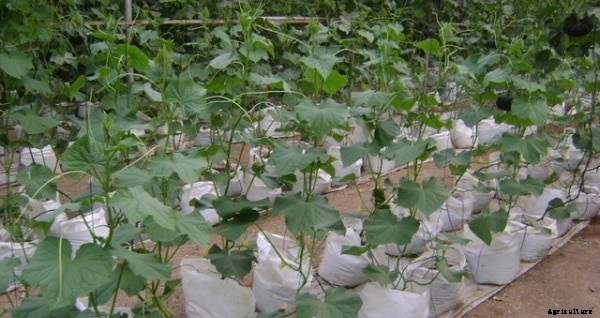
Irrigation in Pumpkin Cultivation:- Proper irrigation of any crop ensures the good plant growth and yield. In case of pumpkin cultivation, follow this irrigation schedule.
Manures and Fertilizers in Pumpkin Cultivation:- Balanced manures and fertilizer application is essential for high yielding. Apply 25 to 50 cartload well-decomposed farmyard manure (FYM) should be added at the time of land/soil preparation. 50 kg of ‘N’, 25 kg of ‘P’/ha should be applied. Half dose of ‘N’ and full dose of phosphorus should be given at the time of sowing and remaining half of ‘N’ should be given 1 month after sowing in the field.
Weed Management in Pumpkin Cultivation:- Weed Control is very important task that needs to be performed frequently to ensure healthy plant growth.
Mulching in Pumpkin Cultivation:- Usually, mulching is done on pumpkin crops grown on raised beds. Depending on availability, one can use plastic mulch or organic mulch. Mulch can be laid down before or after the transplanting and after sowing.
Trailing in Pumpkin Cultivation:- Pumpkins grow very fast and its vine elongate quickly within 2 weeks after planting/sowing in the field. Generally, pumpkin is grown trailing on the ground, for trailing these, spread dried twigs on the ground.
Pests and Diseases in Pumpkin Cultivation:- Pumpkin crop is attacked by many pests and disease. However, prevention of these pests and diseases are essential for quality and getting high yield in pumpkin cultivation. Proper crop rotation is essential in pumpkins to reduce potential pests and disease problems. Never grow pumpkins on land that has been planted to any other cucurbit crops previously.
The following are the common pests found in pumpkin cultivation.
The following are the common diseases found in pumpkin cultivation.
Note: Contact your local Horticulture department for pests and disease symptoms and their control. They are the best source for pest control solutions in Pumpkin production.
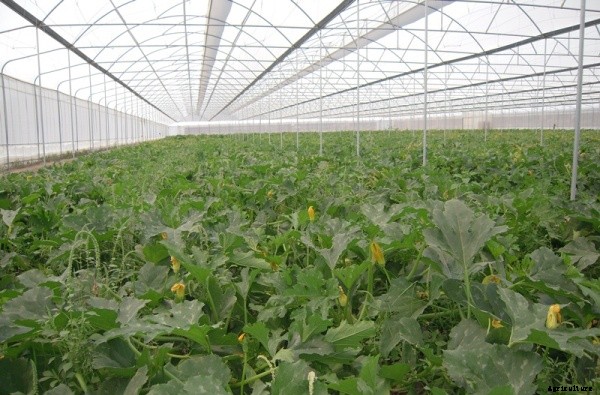
Harvest in Pumpkin Cultivation:- Maturity of the pumpkins depends on cultivar (variety). These fruits should be harvested depends on market demand. Maturity can be identified by change in fruit colour to orange or pale yellow colour. At this stage, the pumpkin seeds attain maturity with higher vigour and viability. They can be harvested either in green and mature/ripe stage. Usually, harvesting of pumpkin crop is done by hand; using secateurs or a sharp knife, and the fruit is removed with 5 cm of stalk attached. After harvesting, pumpkins can be stored for few months in well-ventilated rooms.
Yield in Pumpkin Cultivation:- Yield depends on many factors which may include soil type/fertility, cultivar, irrigation, age of plants and plant management practices. However, an average yield may range from 15 to 25 tonnes/ ha.
Marketing of Pumpkins:- Usually, Pumpkins are graded and transported to local markets.
For Indian Agriculture : Read here.
For Commercial Goat or Sheep Farming : Read here.


