Welcome to Modern Agriculture!

Livestock contribution to agriculture value added stood at 55.9 percent while it contributes 11.8 percent to the national GDP during 2013-14 compared to 55.5 percent and 11.9 percent during the corresponding period last year, respectively.
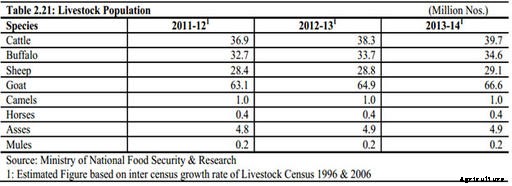
Gross value addition of livestock has increased from Rs. 756.3 billion (2012-13) to Rs. 776.5 billion (2013-14), showing an increase of 2.7 percent as compared to last year. The livestock population for the last three years is given below
About 58% of total goat population can be found in Asia and Pacific. Asia and Pacific goat population also contribute about 62% skin, 49% milk and 62% meat of total goat meat, milk and skin production. Goat farming in Pakistan is also playing a significant role in the economy of this country by producing about 275 thousand tons mutton, 21.4 thousand tons hair, 25 million skins and about 851 thousand tons milk annually. And this production contribute about 2.5% of total national income of Pakistan. The production rate is increasing day by day (see the chart below). This huge production is coming from millions of poor, marginal or landless people and some other commercial producers. The goat products, produced in Pakistan are of high quality and has a great demand in the international market.
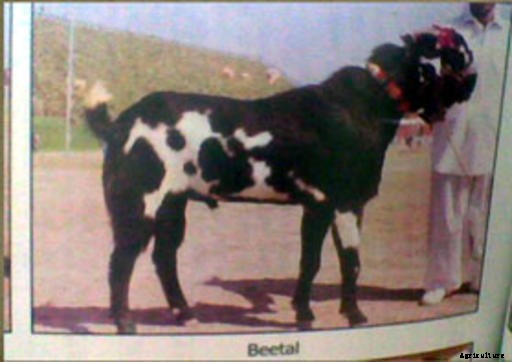
Multan, Sahiwal, Lahore, Faisalabad, Sargodha, Jhang, Okara, Jhelum, Gujranwala, Gujrat and Sialkot.
Massive head, Roman nose, long, broad & pendulous ears, spiraled horns
Type Milk & Meat
Milk Yield (Lit/day) 1.8-2.7
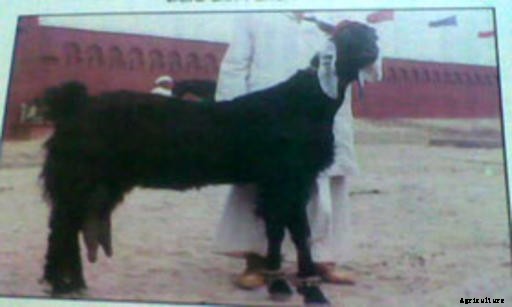
Bhawalpur, Multan, Sahiwal. Roman nose, small & thin horns, medium ears, dancing gait.
Type Hair & Meat, Milk Yield (Lit/day) 0.6-0.9
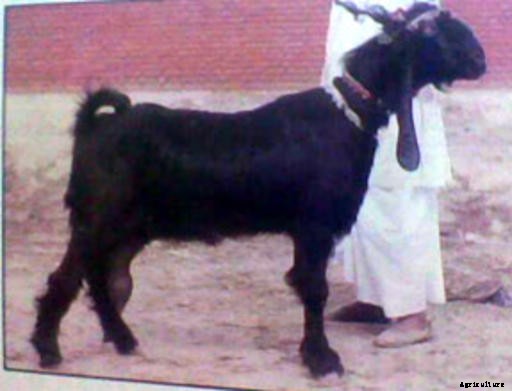
Muzaffargarh, Leiah and Multan
Roman nose, hair on the chin, long broad ears, cartilaginous appendages on sides of neck, long and thick spiraled horns.
Type Milk, Hair & Meat
Milk Yield (Lit/day) 1.3-2.2
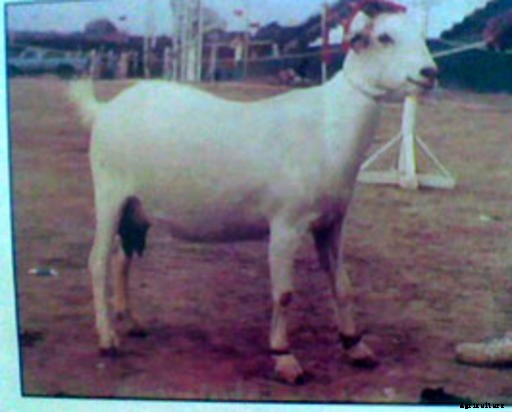
Gujrat, Jhelum, Sargodha and Rawalpindi.
Small size, Compact body, small droopy ears, slightly prominent nose, horns may spirals, high prolificacy
Type Meat
Milk Yield (Lit/day) 0.6
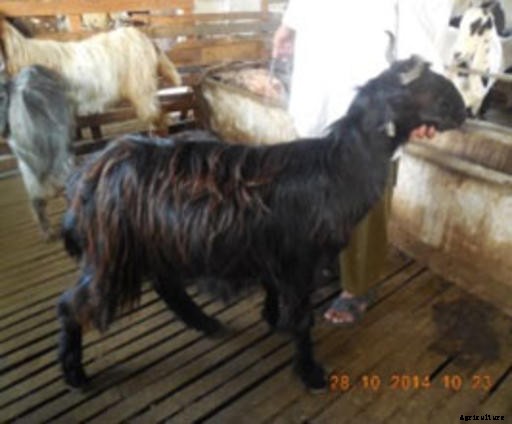
Kaghan Valley (Abbotabad, Mansehra,Kohistan and Swat)
Large size with a white, gray, brown or black body coat. Kaghani goats yield a good crop of long hair.
Type Hair & Meat
Milk Yield (Lit/day) 0.4-0.7
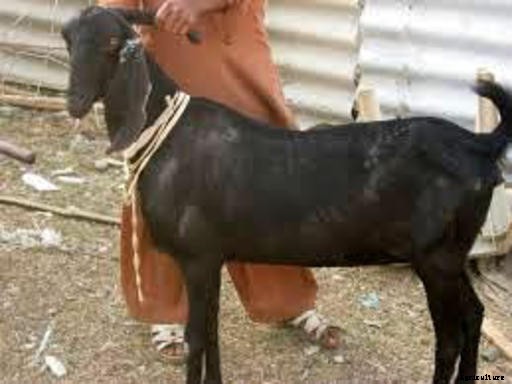
Dera Ismail Khan and Peshawar.
Long black hair coat and well developed udders
Type Milk Hair & Meat
Milk Yield (Lit/day) 1.1-1.4
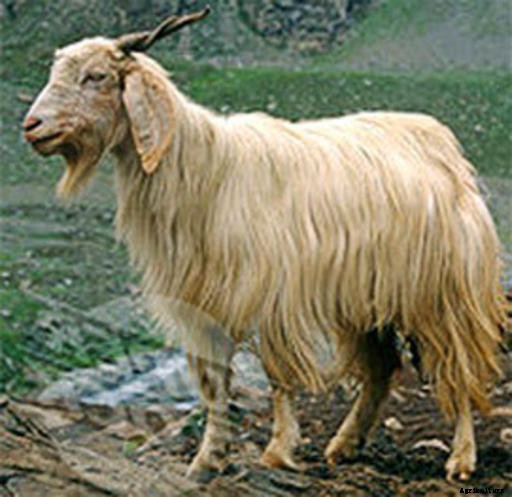
Habitat: Kaghan Valley,
Coat color is mostly white, but also black and brown, horns, directed upward and backward and occasionally twisted.
Type Milk , Hair & Meat
Milk Yield (Lit/day) 0.4-0.7
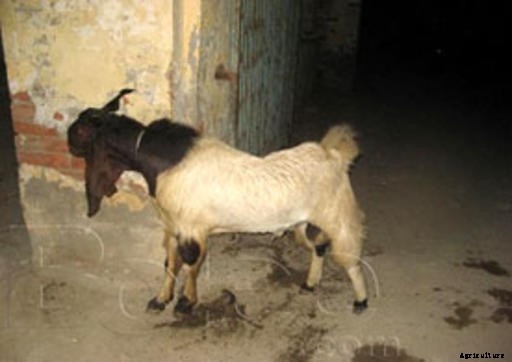
Habitat :
Loralai in Balochistan and D.G. Khan in Punjab.
Characteristics:
Head small, ears erect, horns thin, white or brown hair streaks run from base of horns to muzzle. Type Milk, Hair & Meat
Milk Yield (Lit/day) 0.9-1.3
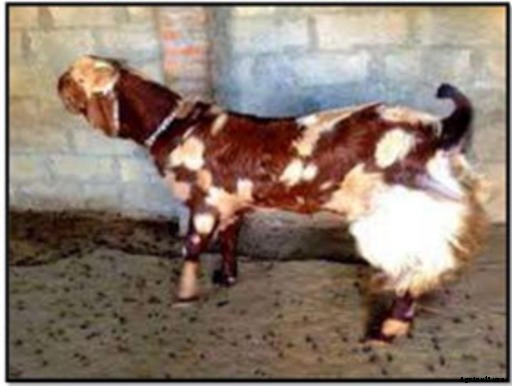
Habitat:
Potohar area in Punjab and Poonch
Characteristics:
Head & ears of medium size, hairy growth on chin, horns spiralled.
Type Meat
Milk Yield (Lit/day) 0.73
Habitat:
Bahawalpur, Bahawalnagar, Rahim Yar Khan, Multan and Muzaffarabad.
Characteristics:
Small & stubby ears (Buchi), sometime black or brown ring around base of ears, long tail. Type Meat and wool
Milk Yield (Lit/day) 0.3
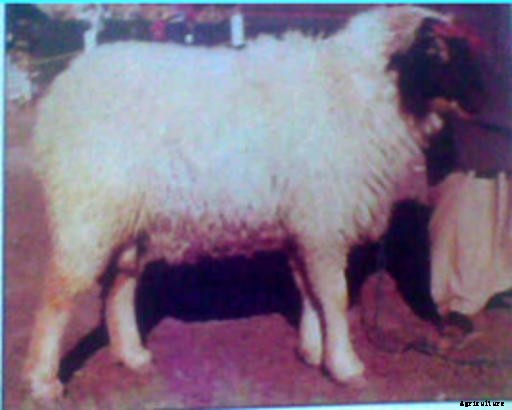
Habitat:
Sargodha, Khushab, Mianwali and Gujrat
Characteristics:
The body, neck, and legs are white, the muffle and lower one-third of the ears are often black, the black circles around their eyes
Type Meat and wool
Milk Yield (Lit/day) 0.1-0.25
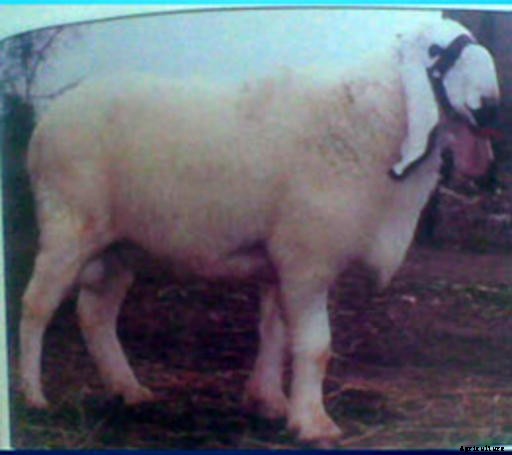
Habitat:
Tribal areas and adjoining areas in NWFP
Characteristics:
Large size with body color varying from black, tan, gray or their admixture, often extending to the head and legs as well
Type Meat
Milk Yield (Lit/day) 0.4
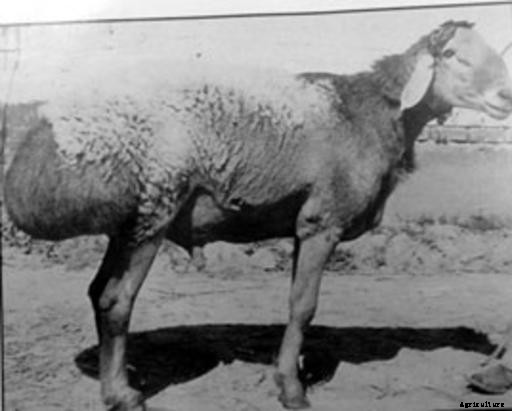
Habitat:
Cholistan and adjoining areas of Rahim Yar Khan, Khanpur and Bhawalpur
Characteristics:
Black to brown head and ears with a white body. They have stubby, small ears
Type Meat and wool
Milk Yield (Lit/day)
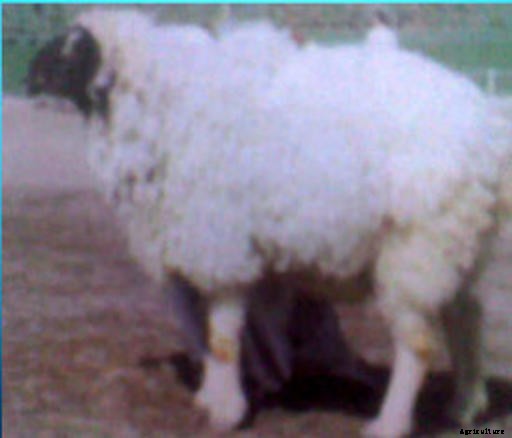
Habitat :
Jhelum, Rawalpindi, Attock, Mianwali and Sargodha
Characteristics:
White body with tan/brown/spottedhead, Small head, broad fore head, tapering muzzle, small hanging tail Type Meat and wool
Milk Yield (Lit/day) 0.25-0.5
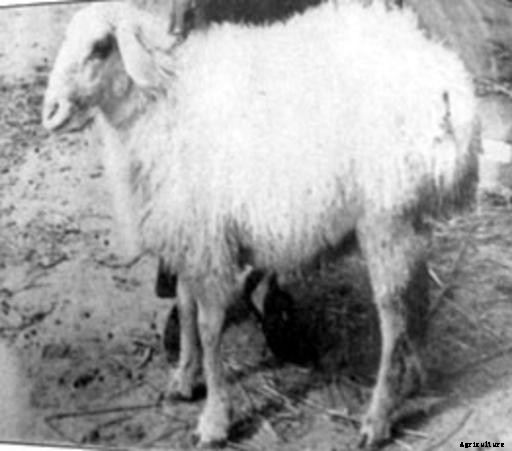
Habitat:
Bahawalpur and Bahawalnagar
Characteristics :
Head medium, nose flat, ears 15 cm long, back straight, tail long.
Type Meat and wool
Milk Yield (Lit/day) 0.2-0.4
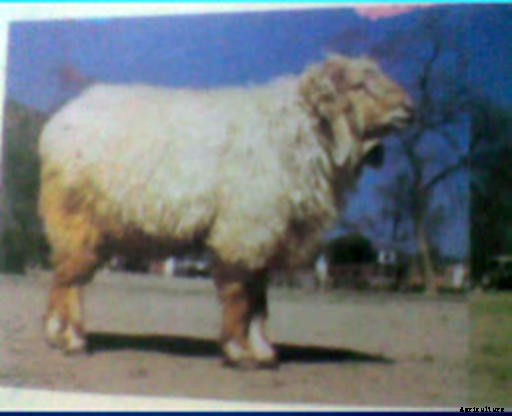
Habitat:
Bahawalpur, Bahawalnagar, Rahim Yar khan, Multan and Muzafargarh
Characteristics:
White with a black or brown head. Occasionally animals are black with white spots, Roman nose, and small tail
Type Meat and wool
Milk Yield (Lit/day) 0.3
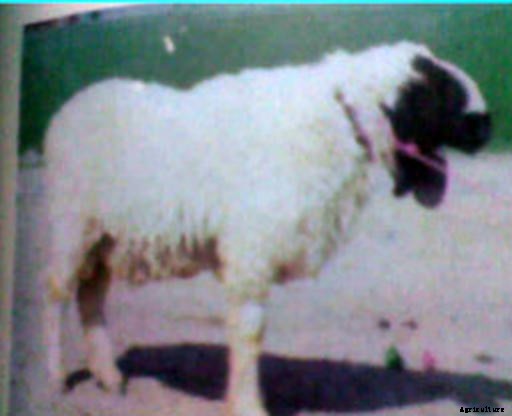
Habitat:
Waziristan and Bannu
Characteristics:
White body coat with a black or black spotted head small ears and a heavy fat tail reaching the hocks
Type Meat
Milk yield (Lit/day) 0.7″
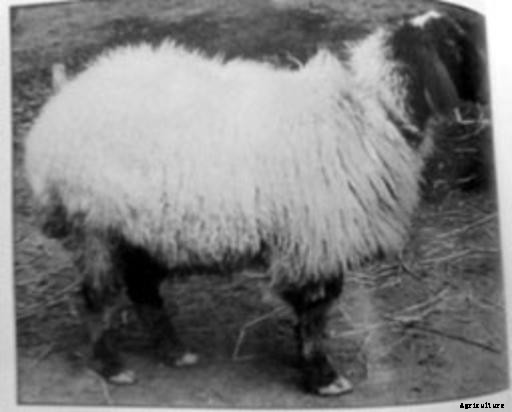
(Pleuropneumonia)
Sign and symptoms:
Cough, Dyspnoea, Lagging, Lying down a lot, Fever 105-106 F and in terminated stages, there is mouth breathing tongue protrusion and frothy salivation.
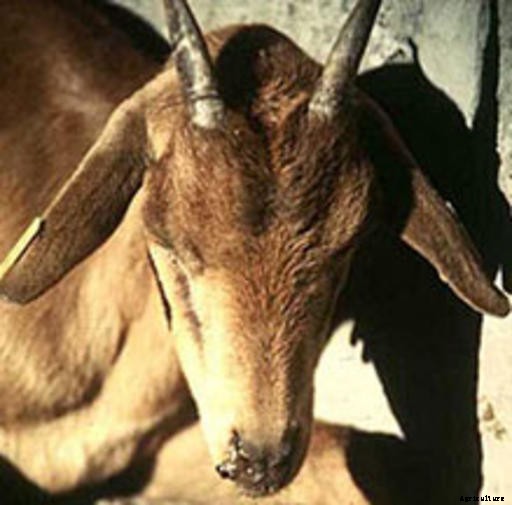
(Kata/Moosari /Nazla aur dast/Khooni dast)
Sign and symptoms
Temp 106-107 F, purulent nasal discharge, necrotic lesion in mouth, swollen lips, profuse diarrhea, coughing, dyspnoea & pneumonia. In Sub-acute cases sheep die in 24 hours, less signs are evident.
Treatment and Control
Sign and symptoms
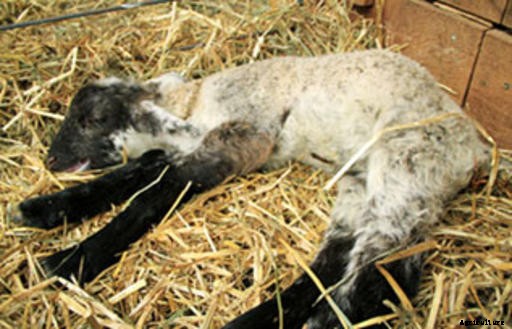
High fever, diarrhea (pasting of hind quarter), Mostly affects lambs, kids and calves. Lush green fodders, grains, highly milk feed are pre-disposing to this disease.
Treatment and Control
(Raij/Pait ka Kiara)
Sign and symptoms
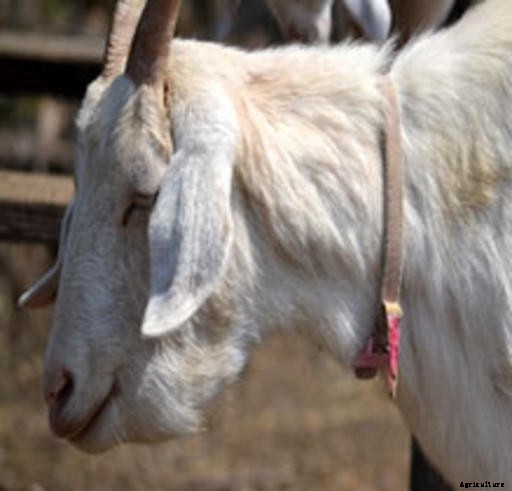
Acute fascioliasis sudden death with discharge of frothy Blood, through nostrils and anus. In chronic form, animal becomes lazy, mucous membranes become pale and skin becomes dry, subsequently edema starts developing particularly below the mandibles and the condition is known as bottle jaw condition.
(Aphara / Bharti)
Sign and symptoms
Sudden death, Abdomen is enlarged Dyspnea and grunting are marked and are accompanied by mouth breathing, protrusion of the tongue, extension of the head, and frequent urination
Treatment and control
(Chechak)
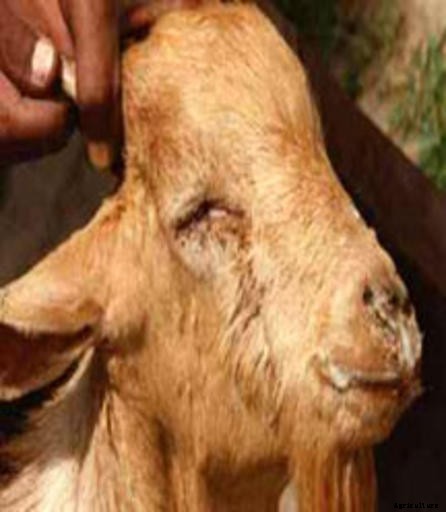
Sign and symptoms
Fever, Eyelids become swollen, and mucopurulent discharge crusts the nostrils. Widespread skin lesions develop and are most readily seen on the muzzle, ears, and areas free of wool or long hair. Acute respiratory distress
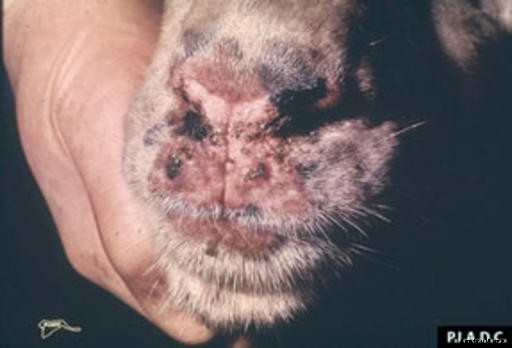
Treatment and control
Housing or sheltering doesn’t affect much in domestic sheep and goat rearing. But for commercial goat farming purpose making a suitable house or shelter for sheep and goats is a must. Always ensure a good drainage system and cleaning facilities inside the house. Ensure sufficient flow of light and fresh air inside the house. Always try to make south faced house.
Suitable goat housing or shelter is very important for goat farming business. Because goats also need house like other domestic animals for staying at night, security, preventing them from adverse climate, cold, sunlight etc. Some people used to keep their sheep and goats with other domestic animals such as cow, sheep etc. Even in some areas, people used to keep their goats under trees. But if you want to establish a profitable commercial goat farm, then you must have to build a suitable house for your goats. Before building house for sheep and goats, read the following tips very carefully.
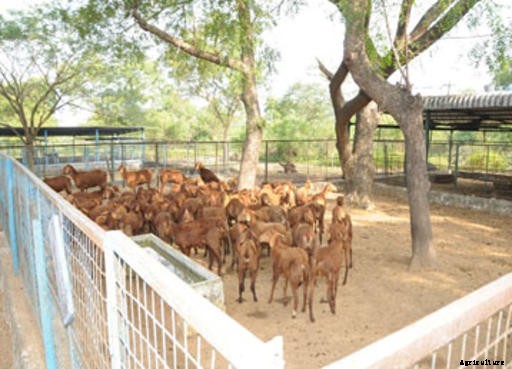
Sheep and goats are feared about cold and water. So take extra care in rainy and winter season. Otherwise they may caught by Pneumonia.
Sheep and goat house can be made by using various designs. And specific goat housing design is suitable for specific production purpose. Two types of house are most common for raising goats.
Generally this type of houses are made over the ground. This is the most common house for goats. You can make the floor of this type of goat house with brick and cement or simply with soil. It will be better, if you can spread some dry straw over the floor in this housing system. But you must have to keep the house dry and clean always.
This type of houses are made over pole. The floor of the house heights about 1 to 1.5 meters (3.5 to 5 ft.) from the ground. This type of house keeps the goat free from damping condition, flood water etc. The poles and floor in this housing system are usually made with bamboo or wood. This types of house is very suitable for sheep and goat farming, because it is very easy to clean. And you can easily clean the closet and urine of sheep and goat form the house. Diseases are also less in this housing system.
This types of goat houses are fully made with concrete, and slightly expensive. But concrete houses have many advantages. It is very easy to clean the house, and easy to always keep your goats safe from all types of predators. You can construct the house over ground or over concrete poles. Both types are easily maintained. Diseases are less in this housing system. But it is very expensive method of goat housing.
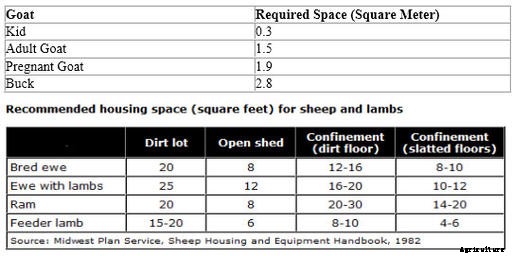
In accordance with increasing the body size and weight of sheep and sheep and goats, they require more space. It will be better, if you can keep the nursing and pregnant sheep and goats separately. You can extend or decrease the area of goat house according to the number of goat in your farm. But keep in mind that, every goat needs their required space for proper growing and better production. Chart of Required Space for Goats According to Their Age and Nature given below.
Well goat feed management is also very essential for commercial sheep and goat farming business. Goats are not carnivorous animal. They don’t eat other animals. Usually goats prefer to eat grasses, plants, shrubs, weeds and herbs. Besides those feeds, goat also need energy, portion, vitamins, fiber and water for proper growth and for making better profits from this business.
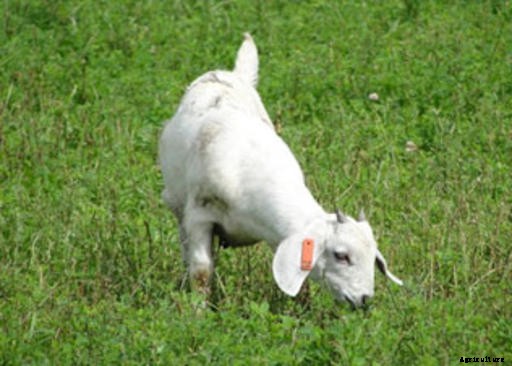
The most efficient source of nutrients which is urgent for sheep and goat is pasture and browse. Pasture contains a high amount of energy and protein. Pasture plants also increase the tastiness and digestibility. Sudan grass, millet, a mixture of a grain grass, sorghum, grass and clover are the most pasture of sheep and goats. Browse that helps to be advanced in protein than general pasture during the early part of grazing season. If sheep and goats browse freely, they will remain free from internal parasites. Pasture is high in energy, protein, and palatability when it is in a vegetative state. However, it can have a high moisture content when it is rapidly growing, and sometimes it can be difficult for high-producing animals to eat enough grass to meet their nutrient requirements.
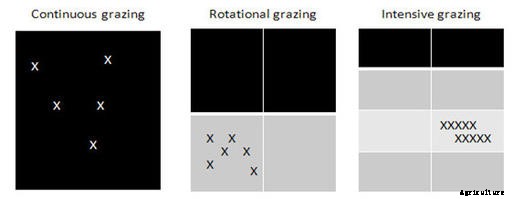
Grazing management is when you control the grazing habits of animals on pasture. What animals, how, when, and for how long they graze a pasture determines the species make-up of the pasture and its long term viability, how much forage it yields, and how well the animals perform. Overgrazing and under grazing pastures is detrimental to plant and animal health, as well as soil and water quality.
In the winter season, the most important source of nutrition is hay. Sheep and goat should feed qualified grass based hay that does not contain mold. Weedy hay is so beneficial because it is not only cheap, but also containing a large amount of nutrition. Different kinds of hays are found, among those legume hays berseem and Lucerne are enriched in protein.
Sheep and goats need a lot of minerals. Salt, phosphorus and calcium contain minerals which is useful for sheep and goats. Farmer should provide a pre-mix of loose minerals that sheep and goats prefer so much. Sheep and goats don’t need a lot of vitamins. Sheep and goats need vitamins A, D and E.
It is often necessary to feed concentrates to sheep and goat to provide the nutrients that forage alone cannot provide. This is particularly true in the case of high-producing animals. There are also times and situations where concentrates are a more economical source of nutrients than forages. Creep feeding and supplemental feeding of lambs has been shown to increase weight gains and market acceptability. The economics of supplemental feeding will vary by operation.
Small ruminants should have access to clean, fresh water at all times. A mature animal will consume between ¾ to 1 ½ gallons of water per day. Water requirements and intake increase greatly during late gestation and during lactation. Water requirements increase substantially when environmental temperatures rise and decline with very cold environmental temperatures. Inadequate water intake can cause various health problems. In addition water and feed intake are positively correlated
Simply defined, reproduction is giving birth to offspring. The survival of a species largely depends on its ability to reproduce its own kind. Reproduction is a series of events (gamete production, fertilization, gestation, reproductive behavior, lambing/kidding, etc.) that terminates when a young is born. Hence, reproduction is a vital function of all living organisms. Reproduction is a complex process. Sheep and goats are considered to be the most prolific of all domestic ruminants. Reproduction determines several aspects of sheep and goat production and an understanding of reproduction is crucial in reproductive management. A high rate of reproductive efficiency is important for:
Males and females play different reproductive roles, and in most animal species, the role of females is not completed until a viable offspring is produced. Even after birth, females play a significant role in the provision of post-natal care and, in mammals, must lactate to provide nourishment for their young. Understanding basic anatomy and reproductive physiology of sheep and goats is important in implementing appropriate reproductive management.
Once puberty is reached, large domestic animals such as sheep and goats display a polyestrous (repeated reproductive cycles) pattern of reproductive activity. The estrus cycle, defined as the number of days between two consecutive periods of estrus (heat), is on average 17 days in ewes and 21 days in does. The estrus cycle may be divided into two phases, namely the follicular phase (growth and expulsion of the ova or egg), and the luteal phase, which starts after ovulation and formation of the corpus luteum (yellow body).
Goat
The signs of estrus in the ewe are not obvious unless a ram is present. As in the doe, the vulva is swollen and redder than usual, and there is a discharge of mucus but is difficult to see in a ewe with a tail or fleece. All of the symptoms mentioned may not be exhibited by a doe or ewe in estrus. The best confirmation of estrus is when the doe or ewe stands when being mounted. This is commonly called ‘standing heat. ‘The duration of estrus is variable in that it is shorter in younger ewes and does but longer in older animals. Normal duration will be 24 to 36 hours.
Estrus in sheep and goats is relatively easy to detect compared to that in cattle as heat signs are well pronounced, particularly in goats. Still, where controlled mating or artificial insemination (AI) is used, regular detection of estrus is necessary through using a teaser ram or buck. Teasers are males that have been either vasectomized or epididymized. Tying an apron made of leather or canvas around the body of a ram/or buck to prevent the penis from entering the vagina of female using a teaser with a marking harness. When a ram/buck with a marking harness mounts a female in estrus, some of the marking pigment will be transferred to the rump of the female.
Artificial insemination is a technique in which semen is collected from a ram or buck and put into the reproductive tract of a ewe/doe. The standard procedure of inseminating does involves lifting up of their rear quarters with their front legs remaining on the ground. With the aid of speculum and pen light the cervical opening or ‘os’ is located and, under visual control, an insemination pipette is passed into or through the cervix for semen deposition. If difficulty is encountered in passing through the cervix, semen has to be deposited intra-cervically or caudal to the cervical os.