
Welcome to Modern Agriculture!

Being major player in the national economy, livestock sector is accepted as an economy engine for poverty alleviation in Pakistan. According to economic survey of Pakistan 2013-14, its contribution to agriculture value added is approximately 55.9 % and to national GDP is 11.8 % with Gross Value Addition of Rs.776.5 billion (2013-14), showing an increase of 2.7 percent as compared to last year.
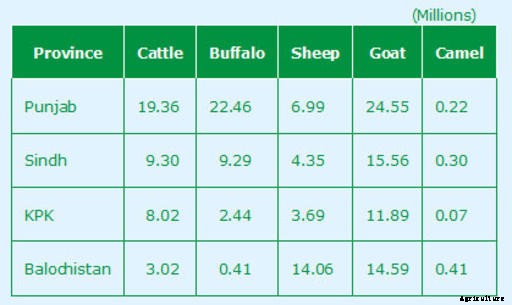
Estimated current Provincial Livestock Population based on National Livestock Census 2006 and Economic Survey of Pakistan 2013-14 is given below:
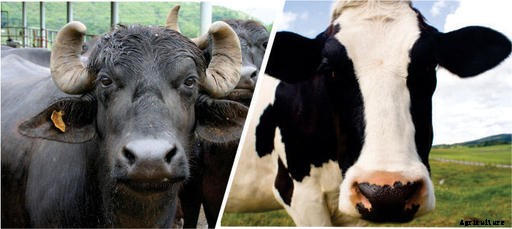
Livestock of Pakistan include cattle, buffalo, sheep, goat, camels, horses, asses and mules and they produce milk, meat, wool, hair, bones, fat, blood eggs, hides and skins among which milk and meet are the major products. Besides production, these animals are also used for draught purposes. As per IFCN (International Farms Comparison Network) Dairy Report 2014, Pakistan is 3rd largest milk producing country in the world. Milk is produced by buffalo, cattle, sheep, goat and camel but being major contributor in milk production, cattle and buffalo are considered as major dairy animals.
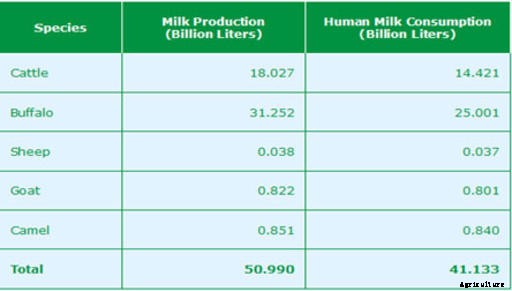
Buffalos found in Pakistan make up 47% of Pakistan’s major dairy animal’s population providing more than about 61% of the total milk produced in the country. Buffalo breeds found in Pakistan are Nili Ravi, Kundi and Aza Kheli. Nili Ravi is considered the best buffalo breed in world and known as Black Gold of Pakistan.
Cattle constitute about 53% of the national population of major dairy animals in Pakistan and contribute the share of almost 35% to the total milk production in country. The cattle breeds found in the country are Sahiwal, Cholistani, Red Sndhi, Achai, Bhagnari, Dajal, Dhanni, Gibrali, Kankraj, Lohani, Rojhan, and Thari. Out of these, Sahiwal, Cholistani, and Red Sindhi are main dairy breeds and well known internationally due to their distinct characteristics. Other than well-defined cattle breeds, there are a large number of nondescript and crossbred cattle in this country. Over last ten years, the importance of crossbred animals has been increased due to start of the development in dairy sector on commercial lines. The crossbred animals are mostly preferred for commercial dairy farms due to their higher production. Mostly cross of local cows (like Sahiwal and Cholistani) with imported cows (like Holstein Friesian and Jersey) is demanded by such farms. Besides our local and crossbred animals, imported animals are also the part of dairy cow family of Pakistan. Corporate Dairy Farms prefer dairy animals from other countries and run their farms on most modern lines with international expertise. Almost 95% of imported dairy animals in Pakistan belong to Australia while other 5% from Sweden. The breeds of these imported animals are Holstein Friesian, Jersey and Freisian Jersey Cross. Within few months, American Cattle will also enjoy the four weathers of our country.
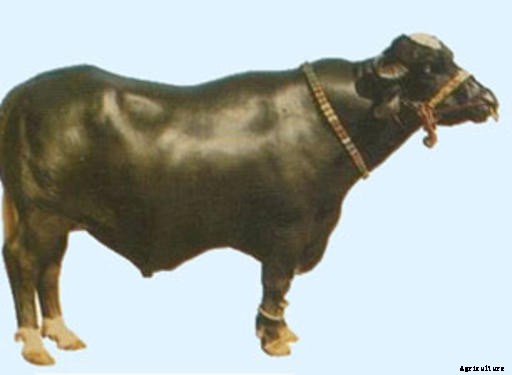
Habitat:Lahore, Sheikhupura, Faisalabad, Toba Tek Singh, Sahiwal, Okara, Multan, Vehari, Bahawalpur”.
Characteristics:
Punjkalyan, Curly horns, Wall eyes
Type Milk, Milk Yield (Lit/day) 7.93
Habitat:Dadu, Hyderabad, Karachi, Larkana, Nawabshah, Sanghar and Thatta
Characteristics:
Horn taper and inward like fish,Broad forehead with short neck.
Type Milk, Milk Yield (Lit/day) 6.89
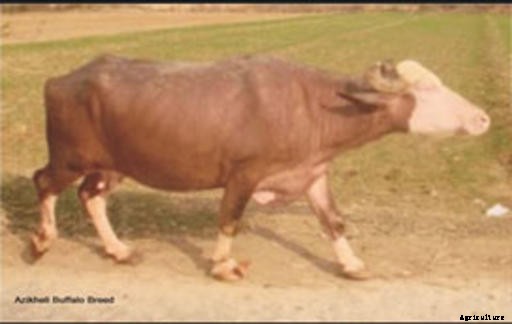
Habitat:Khwaza Khella and Madyan areas of Swat district and east of Peshawar in KPK.
Characteristics:
Color vary from complete albino animals to piebald to even black. Horns are small semi-sickle shape.
Type Milk, Milk Yield (Lit/day) 6.20
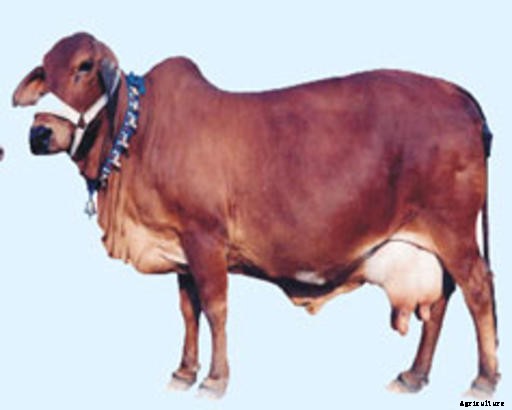
Habitat:Sahiwal, Okara, Multan and Faisalabad.
Characteristics:
Reddish dun colour, black muzzle ,eye lid and tuft of tail. Type Milk, Milk Yield (Lit/day) 6.07
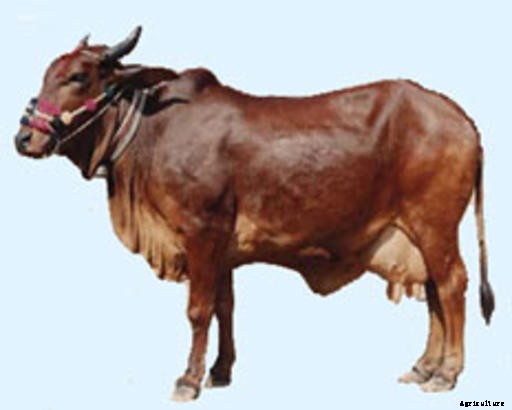
Habitat:Western Sindh and Lasbela in Balochistan.
Characteristics :
Red body color, Bulls Darker at shoulders, Stumpy horns
Type Milk, Milk Yield (Lit/day) 5.49
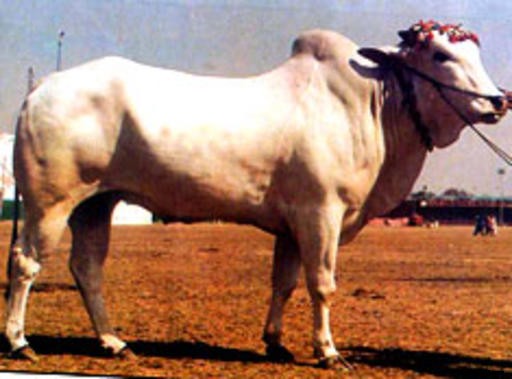
Habitat:Dajal area of D.G. Khan.
Characteristics:
Off shoot of Bhagnari breed, having almost similar points. However, Dajal cattle are comparatively smaller in size and lighter in color.
Type Draught Milk Yield (Lit/day) 2.95
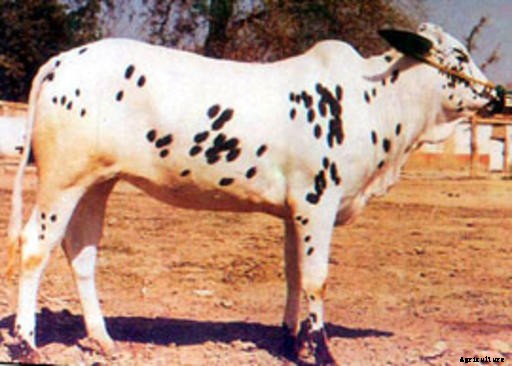
Habitat:Attock, Rawalpindi, Chakwal and Jhelum.
Characteristics:
Varying body colour (chitta burga, Kala Burga & Nukra), Hump compact, Muzzele and eye lashes black.
Type Draught , Milk Yield (Lit/day) 2.62
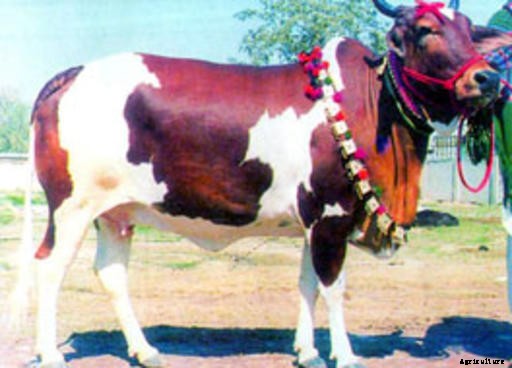
Habitat:Suleman Range of Mountains, D.G. Khan, D.I. Khan, Kohat and Bannu.
Characteristics:
Red and white spotted coat ,tight skin, Small and alert ears small pointed horn.
Type Draught Milk Yield (Lit/day) 2.40
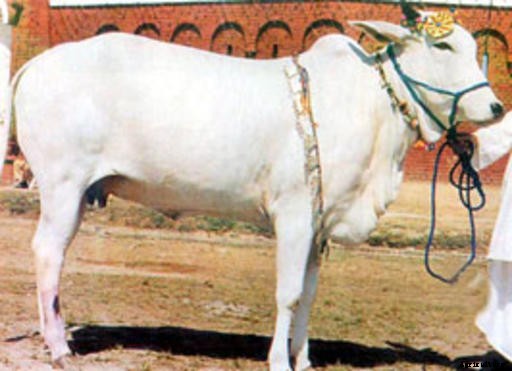
Habitat:Bhag Territory in Kalat and Northern Sindh.
Characteristics:
Body color white or grey depending to almost black in the neck region, shoulders small pointed ears, stumpy horns,striaght back,black tail.
Type Draught Milk Yield (Lit/day) 2.96
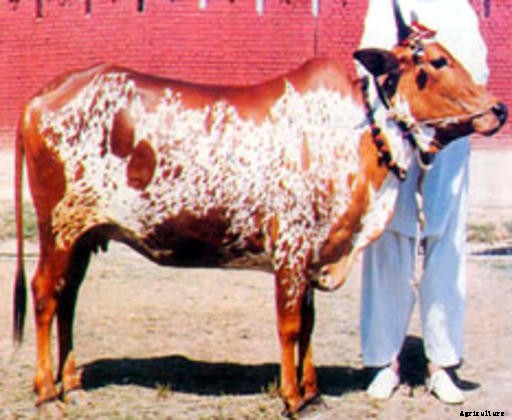
Habitat:Loralai and D.I. Khan
Characteristics:
Short structured, body color is red splash with white spots & well developed hump.
Type Draught, Milk Yield (Lit) 6.13
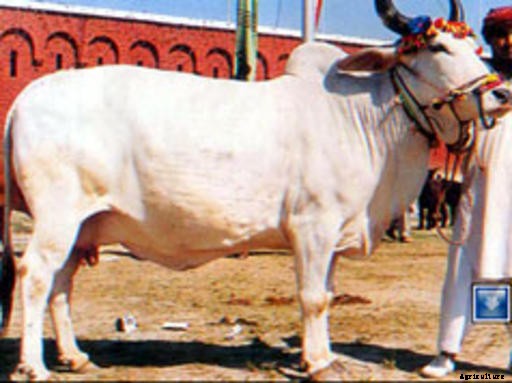
Habitat:Tharparkar and surrounding areas.
Characteristics
Large semi pendulous ears, Generally Light grey with deeper on legs, White strip on Back Bone. Type Dual Milk Yield (Lit/day) 5.19
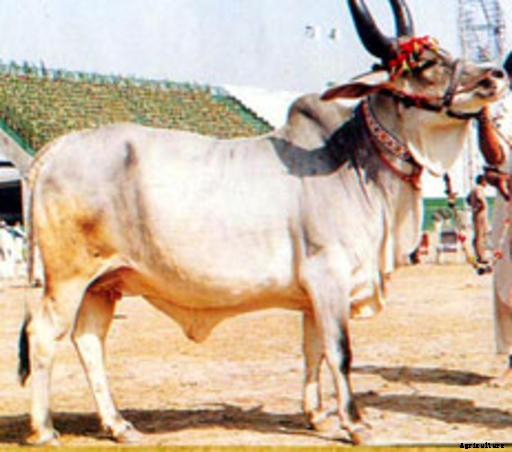
Habitat:South West part of Tharparkar
Characteristics:
Color silver to gray to iron gray or steel black, strong lyre-shaped horns, ears large, pendulous
Type Dual Milk Yield (Lit/day) 3.93
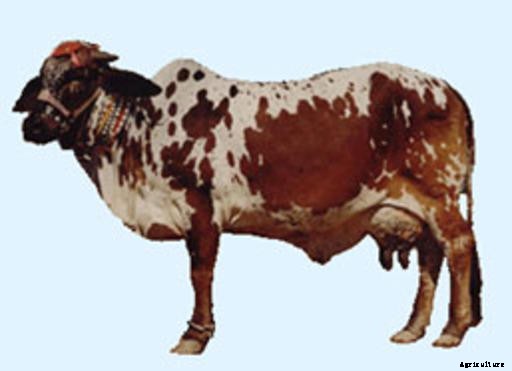
Habitat:Cholistan area
Characteristics:
Large sized, small horns, long ears, and speckled red, brown or black colour.
Type Milk, Milk Yield (Lit/day) 4.83
Syn: (Gulghoto/ Gand /Patghoto)
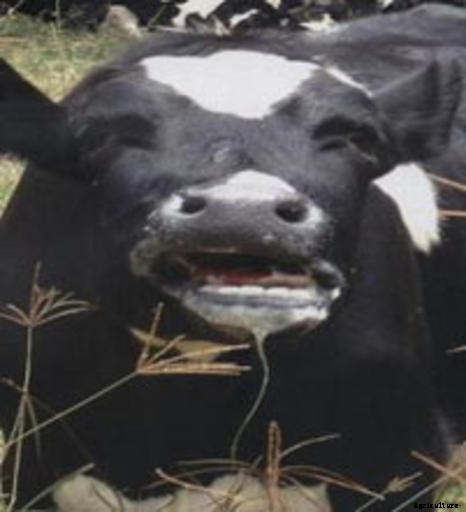
Sign and symptoms:
High temperature (106-107 F), Profused salivation, Warm Painful swelling around throat, Difficult breathing.
(Mookhar/ Moharo/ Samaro)
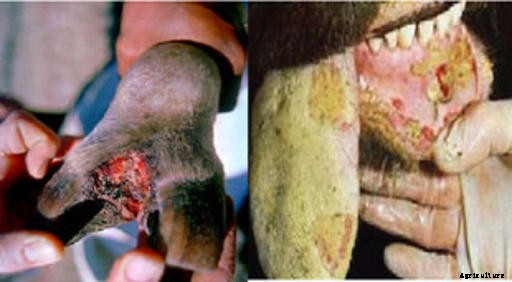
Sign and Symptoms:
104 to 106 oF, Characteristic vesicles appear in the oral mucosa, interdigital space, udder etc. Profuse salivation, and lameness, protrusion of the tongue. Suckling calf usually die as a result of myocarditis and myocardial degeneration.
(Choray Maar)
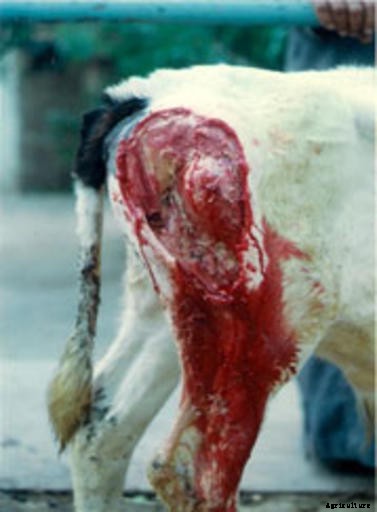
Sign and symptoms:
Swelling of the affected muscle tissue (legs, neck, hip, chest, shoulder, back or elsewhere) due to fluid and gas accumulation, acute lameness, rising fever, muscle tremors, and ultimately death of the animal. Autolysis proceeds rapidly.
(Lumpy jaw)
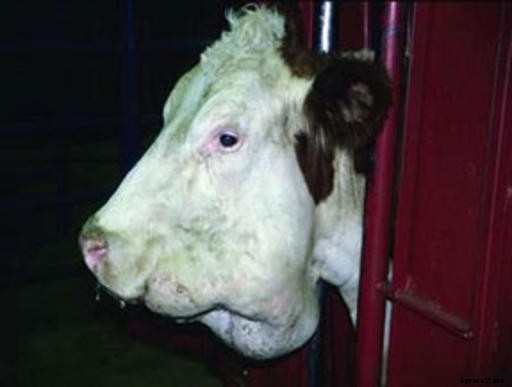
Sign and symptoms:
Initially pointless hard immovable swelling on mandible or maxilla usually at the level of central molar teeth. Eventually discharge small amounts of pus through one or more openings in skin.
(Paratuberculosis)
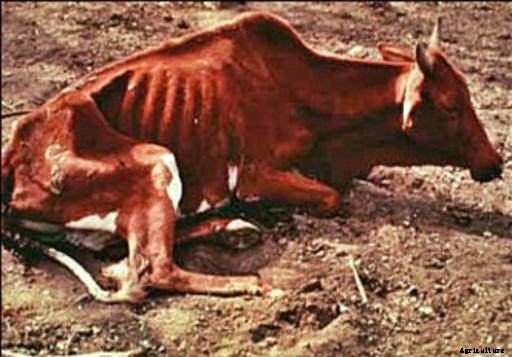
Sign and symptoms:
Progressive emaciation over several weeks, chronic intractable diarrhea which does not respond to any treatment. Infection occurs in animal at an early age, usually under 30 days of age.
(Rat mootra)
Sign and symptoms :
Anemia, Hemoglobinuria, Jaundice, Fever, Heavy case fatality rate.
(Pait ka Kiaray)
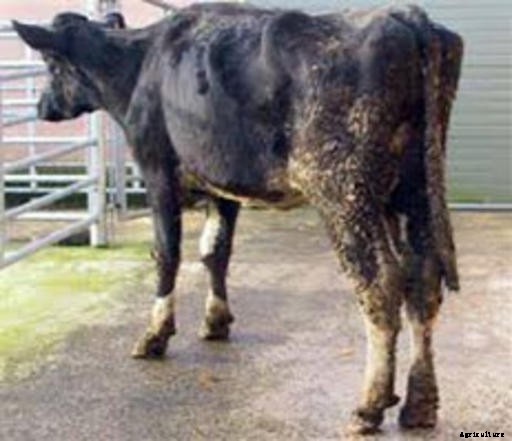
Sign and symptoms:
Mostly signs are rough hair coat, pica and diarrhea. Intermittent fever develops in parasitic infestation. Loss of hair, pot belly and phosphorus deficiency also occur.
(Flies, Mosquito, Tick (Cheechar))
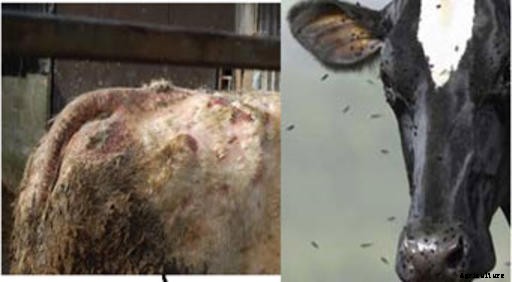
Sign and symptoms:
Rough hair coat, presence of Flies fleas, ticks or mites on the skin mostly under the legs and ears.
(Saru /Moosari/Chandri/Angar)
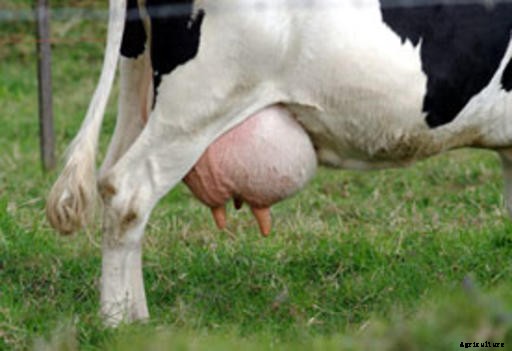
Sign and symptoms:
Characterized by changes in udder and milk composition (physical, chemical, bacteriological), neutrophils in milk increase.
Surf Field Mastitis Test:
Make 3 % surf field solution: add 6 teaspoons of surf in half litre water, mix it, filter the solution and heat it. Take milk and add equal volume of 3% solution, swirl this mixture for half minute and then examine for precipitation or gel formation (In case of mastitis).
Ground Test:
Take few streaks on ground. If the absorbance of streak is quick in ground then animal is –ve for mastitis but if the absorbance is slow then milk is mastitic. Late absorbance is due to pus as mastitic milk is pus containing milk.
(Aphara / Bharti)
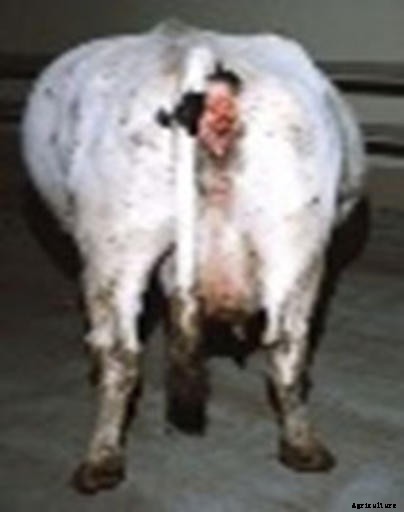
Sudden death, Abdomen is enlarged Dyspnea and grunting are marked and are accompanied by mouth breathing, protrusion of the tongue, extension of the head, and frequent urination
Animals unable to stand, Cow is sleepy, Turned head towards the flank, Increased heart rate, Pulse also weak and Ruminal stasis
Housing of animal is the most important factor in dairy farming. A good housing leads to good management practices and ultimately optimum production. The housing of dairy animals depends upon
Some general considerations which must be considered for housing are
The following structures/components/facilities are required at dairy farm:
Different types of housing of dairy animals are:
Among these, free stall is the only recommended type of housing for successful dairy farming.
Free stall is the recommended system of housing for successful dairy farming. Here cows are kept free except at the time of milking. Resting area is divided into stalls. Cows are not restrained in the resting area (free stall / cubicle) and are free to enter, lie down, rise up, and leave the stall whenever they desire.
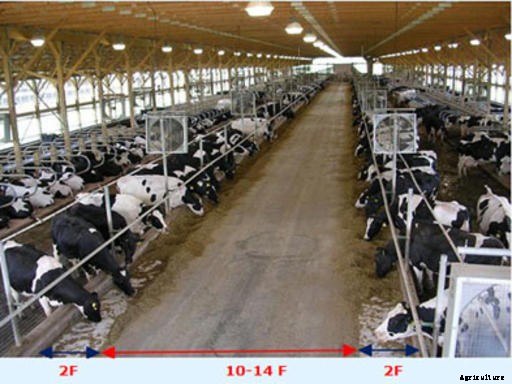
For free stall housing system area of shed is divided into two sides with a central space of 14-16 feet (depending upon the width of feeding trolley) as feeding driveway. On both sides of this central space 2 feet area is provided for feeding area/table.
Behind the feeding table, 10-14 feet walking area is provided for cow to move freely which is 4-6 inches lower than the floor of feeding table. This area is separated from feeding table through a curb which is 1-1.5 feet high from the floor of walking area and 1 feet high from the floor of feeding driveway. A rod is also fixed above this curb at the height of 3 feet from floor. The walking area should be grooved and non-slippery.
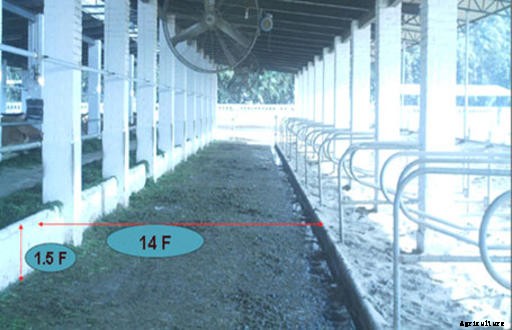
Behind the free area free stalls are provided either in single row or double row or more depending upon the number of cows. Bed of stall should be 4-6 inches higher than the floor of walking area. Stalls should have following dimensions:
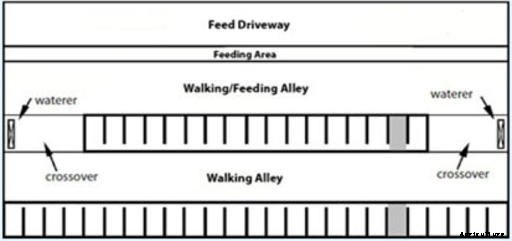
If stalls are provided into two rows, then arrange either tail to tail or face to face. In such case additional 10-12 feet walking are area should be provided behind the stalls. Layout of shed with two rows (tail to tail) free stalls is as follows:
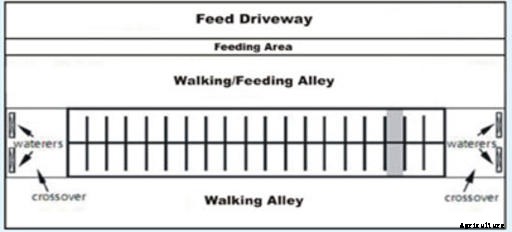
Layout of shed with two rows (face to face) free stalls is as follows:
As far as animal to stall ratio is concerned, there should be 10 more stalls than the number of animals. For example, for 100 animals we will provide 110 stalls.
Optional walking/exercising area with fencing may also be provided behind the last row of freestalls depending upon the availability of land.
At the both ends of the row of stalls, there should be crossover so that animal can move freely. The size of each crossover should be 8 feet. If stalls are higher in number, then additional crossover should be provided after every 15-20 stalls
For watering purpose, water trough should be provided within each cross over. In such case cross over should be 16 feet. Height of water trough should be 2-2.5 feet. Protect stalls adjacent to crossovers from splashing manure and water. This can be done with 4 feet high curb or solid partitions between the stalls and crossover. Water bowl with automatic supply of water can also be installed instead of water trough. When animal push inside the pot with its mouth, water comes out automatically. The distance between floor and water bowl should be about 18-20 inches.
For the ease of manure removal, it is better to elevate crossovers (3-6″). To promote drainage and self-cleaning, provide slope of 1/4″ to 1/2″ per foot of length toward each alley. The floor of crossover should be grooved.
Height of shed should be 18-20 feet in middle and 12-14 feet at corners with slopping roof.
For cooling of shed automatic sprinkling system and fans should be installed. Distance between fans should be 25 feet (variable depending upon the size of fan).
In tie stall most of the system components are contained in the same structure. This type of housing is not preferred in modern dairy farming. In this type of housing system there are two or more rows of tie stalls with a manure gutter, feed manger and service alley for each row:
The tie stalls may be constructed in a single row if the number of animals is 16 or less, or in two rows if the number is more, either with the heads of animals facing outside, the so-called tail-to-tail arrangement or with the heads of animals facing each other, the so-called head-to-head arrangement.
The floor should be free from dampness and non-slippery, reasonably above the outside ground, and having a slope of 2.5 cm in 1.5 m length from front to back towards the rear channel. It should be easy to clean and wash and should get dry quickly.
Dairy shed with Tie stall system of housing should have following dimensions:
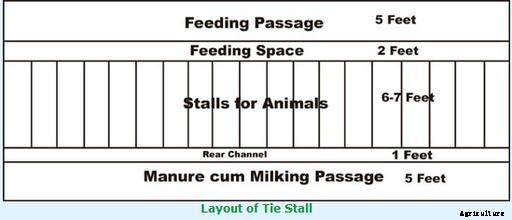
Stall should have following dimensions
For feeding purpose the space for feeding should be separated from stall bed with a 1.5 feet manger curb. Above manger curb fix a rod at the height of 3 feet from floor. For 24 hours availability of water each stall should have water bowl with automatic supply of water. Such bowls are attached with stall rails. When animal push inside the pot with its mouth, water comes out automatically. The distance between floor and water bowl should be about 18-20 inches.
The process through which large feed particles are broken down into smaller units that are absorbed and undigested material is excreted out of the body is called digestion. The process of digestion is carried out through digestive system. There are two types of animals on the basis of variations in structure and function of digestive system i.e. ruminants and non-ruminants. Ruminants which are also called polygastrics and include cattle, buffalo, sheep and goats while non ruminants which are also called monogastrics and include horses, donkeys, rabbits, dogs and cats. The key difference between digestive systems of ruminants and non-ruminants is the structure of stomach. Non ruminants have simple stomach while the stomach of ruminants consists of four compartments i.e. rumen, reticulum, omasum and abomasum.
There are two types of feed resources used for Livestock feed.
Roughages are plant material in a fresh dried or ensiled state which are bulky and fibrous in nature and normally contain higher percentage of crude fibre (18%) and low percentage of TDN (less than 60%). There are two types of roughages including green roughages and dry roughages.
Fodders, forages, range grasses, sugar cane tops, and tree leaves are the examples of green roughages. Green roughages are high in moisture content, easily digestible and are commonly used for the feeding of dairy animals. Pasture species which are naturally growing are called forages while those which are cultivated are called fodder.
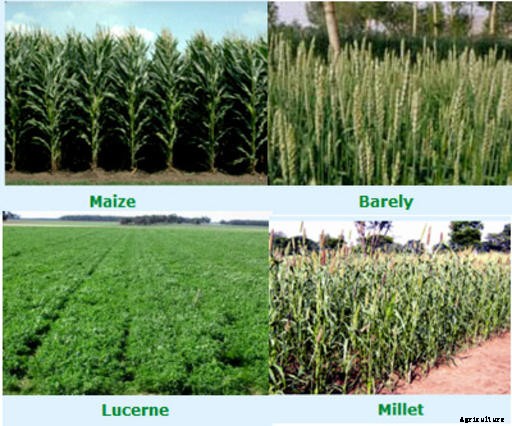
There are two types of fodders depending upon the amount of protein present. These include leguminous fodder and non-leguminous fodder. Leguminous fodders are higher in nitrogen/protein content because they have the ability to utilize the environmental nitrogen with the help of nitrogen fixing bacteria present in their roots. On the other hand non leguminous fodder have no such ability so they are low in nitrogen content. Important legume fodders are barseem, lucerne, shaftal, soyabean and cowpea. Non leguminous fodders include many cereal fodder crops such as maize, sorghum, millet and oats.
On the basis of growing season green fodders in Pakistan are classified as Rabbi fodders and kharif fodders. Rabbi fodders are grown in November and December and include barseem, oats, barley, mustard/rape seed, lucern and sugar cane etc. Kharif fodders are grown in May-June and include sorghum, millet, mott grass, sadabhar, guar, jantar, sugar beet tops.
Dry roughages include hays, straws, stovers and hulls. Hay is prepared by drying the fodder and then preserving it. In Pakistan farmers mostly prepare hay from lucerne, sorghum, millet, oats and grasses. Hay is used during the scarcity period of fodder.
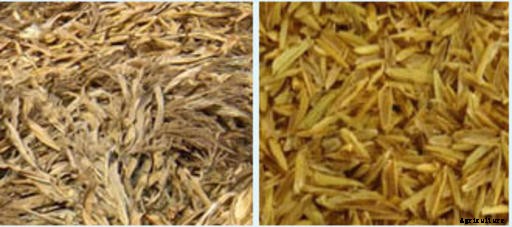
When the grain portions of the crops are removed, remaining dried plant material are straws and stovers. They consist mostly of stems and leaves. These may also be termed as crop residues. These are low in protein, high in fibre, less digestible, low in minerals and cannot be consumed in large quantities by the animals. Therefore they are classified as poor quality or low quality roughages. The commonly available straws and stovers in different areas of Pakistan are wheat straw, rice straw, barley straw, chickpea straw, moth and moung straw, and soyabean straw, maize stovers and sorghum stovers.
Hulls are the outer hard coverings of grains which are obtained as by product during seed processing. Cottonseed hulls are commonly used for livestock feeding in some parts of country. Seeds broken in processing are mixed in with the hulls to increase their nutritive value. Rice hulls are also abundantly available but they are of extremely poor quality.
Concentrates are high in energy and protein, low in fibre and highly digestible. Being the expensive part of feed these are used mostly in small quantities as supplement. Concentrates are of two types: energy rich concentrates and protein rich concentrates. Protein rich concentrates further differentiated on the basis of their origin as plant origin and animal origin.
Cereal grains (wheat, maize, barley, oats, sorghum, rice), wheat bran, rice polishing, molasses, and sugar beet pulp are characterized as energy rich concentrates. Although cereal grains are mainly used as human food and not included in the feed of dairy animals but their byproducts like rice polishing, maize bran and wheat bran are commonly used as animal feed.
Molasses is by product of sugar industry. It is a thick viscous material which is high insoluble carbohydrates and some minerals. Although molasses is a cheap and energy rich feed but still it is not commonly used by local farmers. Molasses can be included in the diet by mixing it with other concentrates, spraying it on dry roughages or providing it as a free lick or as solidified molasses urea block. The palatability and consumption of poor quality roughages are increased by the use of molasses. Fats and oils contain about 2.25 times as much energy as carbohydrates or proteins. Due to their cost, fats and oils are not routinely used for livestock feeding.
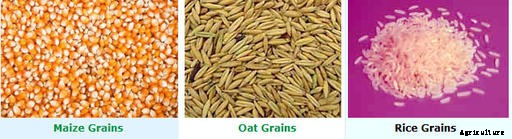
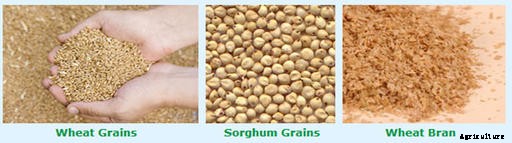
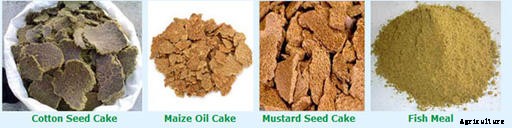
Protein rich concentrates are derived from plants and animals. Protein concentrates of plant origin are mostly by products of the oil extraction industry. Oilcakes are produced when oil from seed is extracted mechanically while oil meals are the byproducts of the solvent extraction process. Compared to oil meals oilcakes are low in protein and high in residual fat. They generally include the fibrous part of seeds. Among the available oilcakes, cottonseed cake and maize oilcake have high protein value for ruminants due to their low ruminal degradability as compared to mustard seed cake which is highly degradable. Generally all animal origin proteins are less degradable in the rumen and therefore are good sources of protein for ruminants. These include blood meal, fish meal, bone meal, meat meal, feather meal. But concentrates of animal origin are normally not recommended in ruminant’s feeding.
Water
Water is the cheapest nutrient. Animal get water from three sources:
Metabolic water is an insignificant source compared with the water ingested freely or in feed. The sum of Free water Intake and the water ingested in feed is the total water intake (TWI). Large amount of fresh and clean drinking water should be available to the dairy animals all the times. Three to four units of water is normally required by dairy animal for each unit of dry feed consumed. Requirement of water is governed by different factors like what is the physiological state of the animal, what type of feed consumed, and what are climatic conditions. Water requirement of a dairy animal when not in milk is 26 to 37 liters per day, and this requirement increases at a rate of four litres for each litre of milk produced.
Dry matter intake is quantity of dry matter which is consumed by an animal over a period for 24 hours. It is usually measured in %age. DMI is normally calculated as 3-4 % of body weight. An average size cattle DMI is 2.5 – 3% of body weight. A dairy animal may reach maximum daily DMI (4% of Body weight) not later than 10 weeks after calving.
The capacity to do work is called energy. It is the basic requirement of animal and essential to maintain normal body functioning. Energy is quantitatively the major nutrient required by dairy cattle after water.
Carbohydrates, fats and protein are the main sources of energy. Mostly the energy is supplied to the dairy cattle from carbohydrates being the most economical. Protein is also a good source of energy but it is usually 5 to 10 times higher in price as compared to carbohydrates and therefore its use is less as energy source. Fat is very good source of energy and supply 2.25 more energy as compared to carbohydrates and protein. It is mainly included in the rations of young calves but may also be added to the rations of lactating dairy animals.
Total digestible nutrients (TDN) is another method of expressing the energy content of feeds or the energy requirements of cattle. TDN is comparable to digestible energy. It has been in use longer than the net energy system and more values are available for feedstuffs.
TDN = Digestible NFE + Digestible crude fiber + Digestible protein + (Digestible ether extract x 2.25).
Protein is required in animal rations to provide the supply of amino acids needed for tissue repair and synthesis, hormone synthesis, milk synthesis and many other physiological functions. Amino acids are supplied by the digestion of microbial protein, and by feed protein that escapes microbial breakdown in the rumen.
Protein requirements are expressed as crude protein (CP), either in amounts or as a percentage of the dietary DM. Crude protein is determined by multiplying the nitrogen content in a feed by the factor 6.25 (feed protein averages 16 percent nitrogen). Feedstuffs that contain nitrogen in a form other than proteins or peptides are called non protein nitrogen (NPN) sources. Urea and ammonium slats are examples of NPN sources.
High producing cows being fed relatively high levels of total ration protein (14-15% of the DM). It can however be more effectively utilized by lower producing cows being fed lower levels of total ration protein (up to 12 to 13% of the DM).
Minerals are essential dietary constituents and required in relatively small quantities. On the basis of requirement minerals are classified as micro mineral and macro mineral. Macro minerals are those which are required in relatively large amounts while micro minerals are those which are required in small amount. Micro minerals are also called trace elements.
Vitamins are complex organic compounds that are required in traces by various farm animals for maintenance, normal growth, production, reproduction and health. Vitamins are classified as fat soluble vitamins and water soluble vitamins. Fat soluble vitamins include A, D, E and K while water soluble vitamins are vitamins B, (B1, B2, B6, B12), choline, pantothenic acid, folic acid and vitamin C.
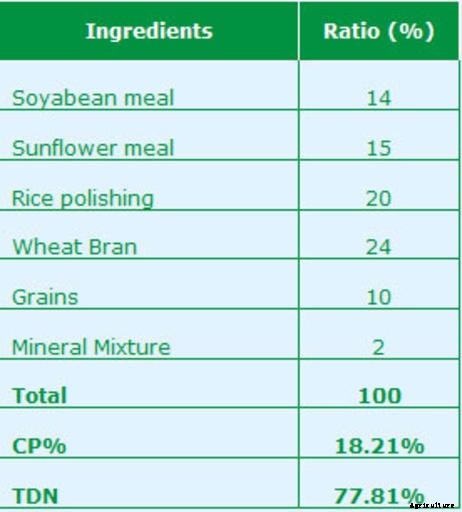
A balanced mixture is usually prepared in such a manner that 3.5 to 4 Kg of it may support 10 litres of milk production. Normally in dairy animals this mixture is fed at rate of ½ of the milk yield (one Kg of concentrate mixture for every two litres of milk).
Forage which has been grown while still green and nutritious can be conserved through a natural ‘pickling’ process. Lactic acid is produced when the sugars in the forage plants are fermented by bacteria in a sealed container (‘silo’) with no air. Forage conserved this way is known as ‘ensiled forage’ or ‘silage’ and will keep for up to three years without deteriorating. Silage is very palatable to livestock and can be fed at any time.
To get a good silage one should take care at every stage of ensiling.
There should be adequate amount of fermentable carbohydrates and more than 65% moisture in fodder selected for silage making. Commonly used fodder for silage making are maize, sorghum, millet, oat, and sorghum sudan grass. Leguminous fodder crops can also be used for silage making but they contain fewer amounts of carbohydrates hence molasses or mineral have to be sprinkled over them at the time of silage making. Most of the time maize is used for silage making as maize silage is considered the best silage throughout the world.
Crop should be harvested at the stage when there are maximum nutrients present in crop and 65-70% moisture content. In case of maize moisture reaches this level when:
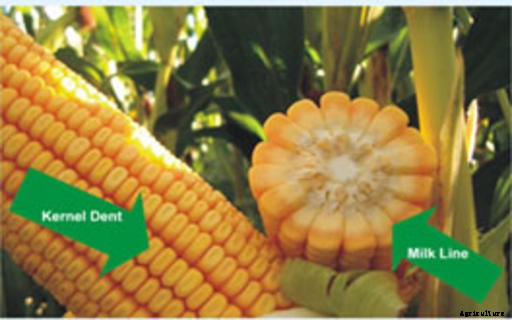
Grab test is used to measure the moisture concentration in fodder. To check the moisture, take a hand full of fodder and press it in hand for few seconds. On opening of hand, there will be a ball of fodder.
After chopping and adding additives silo is filled. Inside silo chopped fodder should be compressed with tractor or some other means so that it is packed tightly and there is no air left. If air left anaerobic condition will not be created. In case of baled silage, silage baler makes bale in well compacted form.
The air tight sealing is necessary to avoid the entrance of air in the silo. So after filling of silo, cover it with polythene sheet and put tires or sand filled bags over it or cover it with mud (Lepai). It is better to cut tires in small circular pieces for maximum usage. In case of baled silage baler automatically wrap the bale with wrapper.
After a period of 40-45 days the silage is ready for feeding to the livestock. After the removal of silage the open end of the silo should be covered in such a manner that contact with the air is minimum.
Good silage should have a milk, pleasant aroma, an acid taste and a slightly greenish color. It should be free from sliminess and mold and have sufficient acid to prevent further action of microorganisms.
Efficient and accurate estrus detection is the most important factor limiting reproduction in most dairy animals/herds. Efficiency defines the proportion of dairy animals seen in estrus of all animals eligible for showing estrus. Accuracy gives the percentages that were correctly identified as being in estrus. In a well-managed herd, the maximal estrus detection rate was found to be 60% of ovulations when dairy animals were observed two or three times daily. With continuous observations, the detection rate may increase to 95% in the second and later postpartum ovulations. Failure to observe animals in estrus delays first service, lengthens oestrus intervals, and is one of the primary factors lengthening projected average minimum calving to conception interval by increasing the number of days open. It contributes more to lengthy calving intervals than conception failure. In addition, inaccurate estrus detection lowers conception rate. Many animals are inseminated when not in estrus.
Efficient reproductive management depends on the ability to detect estrus. There should be a systematic program for estrus detection. Criteria of such a program:
Stand to be mounted, bellowing, restlessness, swollen and reddish vulva, mucous discharge.
Increased urination, low feed intake, rough hair on back and tail, isolation from other animals, low milk production
Collection of semen from male, processed, evaluated in lab and then transferred to female reproductive tract by artificial means for the purpose of conception is called artificial insemination. It is most widely accepted technique worldwide for the genetic improvement in animals.
