
Welcome to Modern Agriculture!

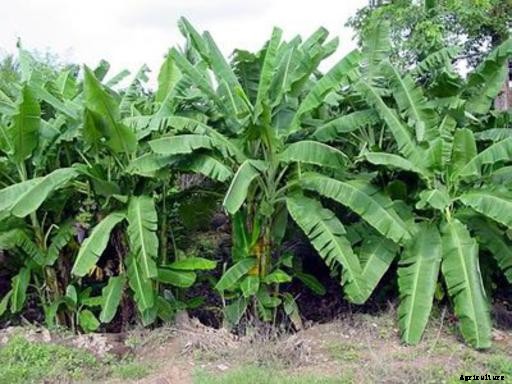
Pakistan is a land of promise and tremendous development possibilities by virtue of its unique geographical location, fast inquisitional talents of its people, and richness of natural and cultural resources. Agricultural sector of Pakistan is usually divided into four main sub-sectors: crops, livestock and forestry and fisheries, Banana is an important sector of Pakistan
Banana is extensively grown in the lower part of Sindh where the soil and climatic conditions are favorable for its successful cultivation. The total share of Sindh province alone in its cultivation in the area is 87 per cent and 89 per cent in production.
The area under banana at the time of independence was only 117 hectares and the production reported was 368 M. tons. The popular Hari chhal (Basrai) banana variety has been successfully acclimatized, then multiplied and spread all over the Sindh Province and it covers approximately 98% of total production area in sindh. Since then it seems that during that period till now, there have been no technical know-how ever established about better banana cultivation practices. According to “Pakistan Statistical Year Book 2011”, out of 34,800 hectares 32,200 hectares were grown in sindh province and sindh produced 127.4000 tonnes of banana out of 154,800 tones of total production of banana in Pakistan and the average yield per hectare was 3957 kg in sindh and overall production of Pakistan per hectare was 4448 kg. Average cost of production in sindh is RS 80,000 to RS 150,000.
Major districts in Sindh where banana is grown are:
Recently cultivation of banana has been extended from Khairpur to Sakkur. Mostly Basrai variety (Cavendish dwarf) and William Hybrid are grown in Khairpur,it is also being cultivated in Karachi.
Cavendish Dwarf (Barsai) 98% (conventional variety)
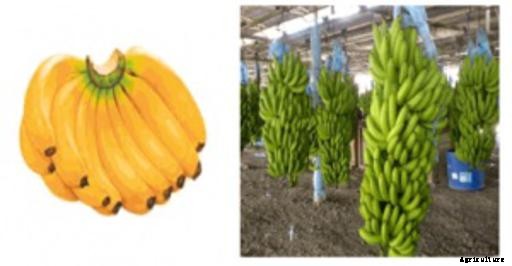
Grand Naine

William Hybrid
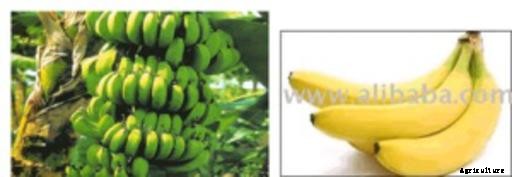
Work is being done on three Chinese cultivar in PARC, Islamabad.
Agronomic requirements are the requirements related with crop production.
The banana cultivated in humid tropic of south East Asia is mainly grown between 30o S and N on equator. A mean temperature of about 27°C is optimal for growth. Minimum temperature for adequate growth is about 16°C, below which growth is checked and shooting delayed. Temperatures below 8°C for long periods cause serious damage. Maximum temperature for adequate growth is about 38°C, depending on humidity and the radiation intensity. Bananas are day-neutral in their response to day length.
A humidity of at least 60 percent or more is preferable. Strong winds, greater than 4 m/sec, area major cause of crop loss due to the pseudo stems being blown down. Under high wind conditions windbreaks are desirable in order to banana plant from damages caused by high wind velocity. Wind velocity in lower Sindh is a great problem, as much as 15-20% plus losses are observed. In order to save banana from high wind velocities windbreaks are often planted around banana fields to provide some protection from cold and wind.
Bananas can be grown on a wide range of soils provided they are fertile and well-drained. Stagnant water will cause diseases such as the Panama disease. The best soils are deep, welldrained loams with a high water holding capacity and humus content. Optimum pH is between 5 and 7. Banana is very sensitive to salinity and soils with an ECe of less than 1 mmho/ cm are required for good growth. Soils which have potassium level above 300 ppm and phosphorus level greater than 15 ppm are ideal soils for its successful cultivation. Banana is a long duration, highly sensitive, nutrient consuming crop, before taking decision to plant banana on any soil it is advised to get the soil analysis done so that the future investment on it could be properly utilized.
The demands for nitrogen and especially potash are high in banana. Since the early stages of growth are critical for later development, nutrients must be ample at the time of planting and at the start of a ratoon crop. Short intervals between fertilizer applications, especially nitrogen, are recommended. Sindh is located in desert like hot climate and dry sub tropics fertilization program starts from15 February soon after winter. More N is required, before hot summer less K,P application full dose Zn application at vegetative phase. In reproductive phase reverse the dose k&N, at this stage more K is required almost 60% total dose along with boron.
According to DR KAZI SLUEMAN MEMON:
Other sources can be used to apply NPK are
In Sindh province, the annual rainfall is not sufficient to meet the requirements of banana plant (50 to 200 mm per annum). Whereas banana produce excellent quality crop where average rainfall ranges from 1200 to 2500 mm/annum. Banana is mainly located in the Indus Delta zone of Sindh, it perform extremely well in the coastal belts; recently its cultivation has expanded up to the much warmer north. There should not been more than 3 months of dry season. Cool weather and prolonged drought retard growth. Banana plants hardly produce only one leaf per month in winter, 4 per month in summer (maximum in the month of May). If a low temperature (at 13 degree C) in winter occurs, the bunch may not be able to emerge from the centre of crown, which is called „Choke Throating” a typical character of „Dwarf Cavendish‟ and the bud may not be able to emerge from the stem. This will have a major impact on yield and quality. If the temperature even lower than that of 13 degree C, the leaves and new suckers starts to burn. Smudging, by burning dry trash covered with green leaves to create smoke, can raise the temperature 2 to 4 degrees.
Banana being a long duration crop, the total water requirements of banana are high. Water requirements-per year vary between 1200 mm in the humid tropics to 2200 in the dry tropics. For rain fed production, average rainfall of 2000 to 2500 mm per year, well-distributed, is desirable, but banana often grows under less rainfall.
Regular water supply under irrigation over the total growing season as compared to rain fed production with seasonal differences in water supply produces taller plants, with greater leaf area, and results in earlier shooting and higher yields. Interval between irrigation has a pronounced effect on yields, with higher yields being achieved when intervals are kept short. Under conditions of limited water supply, total production will be higher when full crop water requirements are met over a limited area than when crop water requirements are partially met over an extended area.
Since a depletion of total available soil water in excess of about 35 percent during the total growing period is harmful to growth and fruit production, frequent irrigation is important. The irrigation interval will depend on ETm and the soil water holding capacity in the rooting depth and may vary from 3 days under high evaporative conditions and light soils up to 15 days under low evaporative conditions and high water retaining soils. When rainfall and irrigation water is limited, it is advantageous to reduce the depth of each water application rather than to extend the irrigation interval.
Overhead sprinkler systems with small application at frequent intervals are commonly used in commercial banana plantations. Surface irrigation methods include the basin, furrow or trench irrigation systems. The trench system also serves as a drain during the rainy periods. Also drip irrigation is used; with drip irrigation under conditions of high evaporation, low rainfall and particularly when irrigation water contains even a small amount of salt, accumulation of salts at the boundary of wet and dry soil area will occur. Under such conditions leaching will often be needed since banana plants are highly salt-sensitive and damage to the crop can otherwise easily occur. In sindh mostly flood irrigation is preferred.
Planting distances vary according to variety, climate, soil and management and are between 2 x 2 m and 5 x 5 m, corresponding to a density of 400 to 2500 plants/ha. On steep slopes contour planting is practiced. The crop is sometimes inter planted or is used as a nurse crop for crops such as cocoa.
Yields can vary enormously, under poor management yields are usually highest for the planted (first) crop and decline for the Raton crops. Under intensive management with correct de suckering and control of pests’ and. diseases, yields from the first Raton’s are usually higher than for the plant crop. Good commercial yields of banana are in the range of 40 to 60 ton/ha. The water utilization efficiency for harvested yield (Ey) of fruits, containing about 70 percent moisture, is 2.5 to 4 kg/m3 for the plant crop and 3.5 to 6 kg/m3 for Raton crops.
According to the united nation, there is no information available as yet regarding how many countries are following organic practices in banana cultivation. And there is no official data available that how many acres or hectares are under cultivation organically, or how many producers are currently doing organic practices or how many producers are willing to produce banana organically.
Less than 1% banana plantation is managed by owner themselves and all rest by contractors and traders because banana field soon after plantation is given to contractors said MR HADI. Desuckering is done after 4 or 5 months depending of season. Mostly conventional variety is preferred in Sindh for cultivation .Site selection, land preparation “primary & secondary tillage tools including lazar land leveling”, planting layout, intercrops, cultivars (new), healthy & disease free planting materials, time of planting, spacing, planting methods, plant establishment, followers, planting density, composting or manuring (time of application), chemical fertilization macro & micro (application timings each through soil and foliar feed on the basis of soil & leaf analysis and growth cycle), irrigation water application, earthing up, weeding, interculturing (timings and frequency), mulching, deleafing, cutting height of bunch harvested pseudostem, stool or mat management, trash management, winder breakers, debelling, propping and bunch harvest, are the cultural practices often followed by banana growers of sindh.
Black Sigatoka disease is considered the most economically important disease of banana worldwide, causing typical yield losses up to 50%. The fungus grows on the leaves producing dark spots and causes the fruits to ripen prematurely. Banana Xanthomonas Wilt (BXW) attacks almost all varieties of Musa, destroying the fruits and devastating the crop. It was first identified in Ethiopia in the 1970s, but spread rapidly to other parts of the Great Lakes region after reaching Uganda in 2001. Fusarium wilt has had a huge impact on the world banana trade and is found in every banana/plantain producing area. It is spread through corms used for planting. The major banana and plantain pests are the burrowing nematode and the banana weevil. Nematode species attack the plant’s roots, resulting in whole plant toppling or reduced yield. The banana weevil, Cosmopolites sordidus, attacks the plant’s underground corm, weakening the plant and causing stem breakage.
Symptoms of chilling injury include surface discoloration, dull or Smokey color, sub-epidermal tissues reveal dark-brown streaks, failure to ripen, and, in severe cases, flesh browning. Chilling injury results from exposing bananas to temperatures below 13°C (56°F) for a few hours to a few days, depending on cultivar, maturity, and temperature. For example, moderate chilling injury will result from exposing mature-green bananas to one hour at 10°C (50°F), 5 hours at 11.7°C (53°F), 24 hours at 12.2°C (54°F), or 72 hours at 12.8°C (55°F). Chilled fruits are more sensitive to mechanical injury.

It is caused from skin scuffing against other fruits or surfaces of handling equipment or shipping boxes. When exposed to low (<90%) relative humidity conditions, water loss from scuffed areas is accelerated and their color turns brown to black.
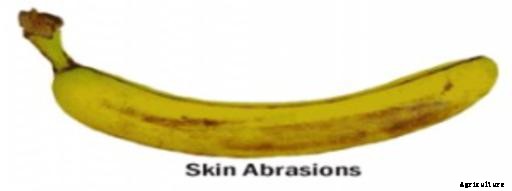
Dropping of bananas may induce browning of the flesh without damage to the skin caused by enzymatic oxidative degradation of phenolic compounds by polyphenol oxidase.
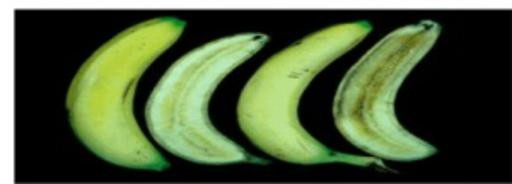
This disease is caused by one or more of the following fungi: Thielaviopsis paradoxa, Lasiodiplodia theobromae, Colletotrichum musae, Deightoniella torulosa, and Fusarium roseum–which attack the cut surface of the hands. From the rotting hand tissue the fungi grow into the finger neck and with time, down into the fruit.

It is caused by Colletrichum musae, becomes evident as the bananas ripen, especially in wounds and skin splits

It is caused by Lasiodiplodia theobromae and/or Thielaviopsis paradoxa, which enter through the cut stem or hand. The invaded flesh becomes soft and water-soaked.

It is caused by Verticillium theobromae and/or Trachysphaera fructigena. The rotted portion of the banana finger is dry and tends to adhere to fruits (appears similar to the ash of a cigar).
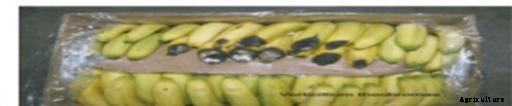
The harvesting standards may vary place to place, season, transport distance and the end use of the fruit. The fruit may be harvested fully matured stage for short distance transport; the fruit may be harvested at 90% maturity level for long distance transport. The fruit may be harvested at 75% maturity level again, the fruit are harvested for table purpose or for processed for value addition of the fruit for processing fully matured and yellow banana are preferred, in later case ,usually green banana is used which has yet to reach the climacteric stage. In cooler season, the fruit may be harvested after 105 days of flowering, but during hot season, the fruit even may be harvested between 98 to 115 days
Following are the major and basic reasons of post-harvest losses in banana sector.
Recommendations To Minimize Post Harvest Losses in Banana
Banana can be prevented from post-harvest losses by working on following recommendations.
Banana can be divided into following on the basis of its usage.
Desert banana are suitable for eating fresh because they are fleshy, sweet and they have some amount of flavor and many health benefits.
It is a miniature variety of desert banana, which has recently enjoyed greater popularity.
Cooking banana is bananas which have to be cooked before eating (mealy, starchy and plantains)
Fiber banana are used for obtaining fibers. (Abaca, Manila hemp)
According to estimation there are approximately 200 to 300 known varieties of banana exits in this world following are few known varieties of banana
Majority of above mentioned varieties are grown in India and G9 variety is gaining popularity all over the world because of its good quality bunches and tolerance to words Biological stresses.


