
Welcome to Modern Agriculture!

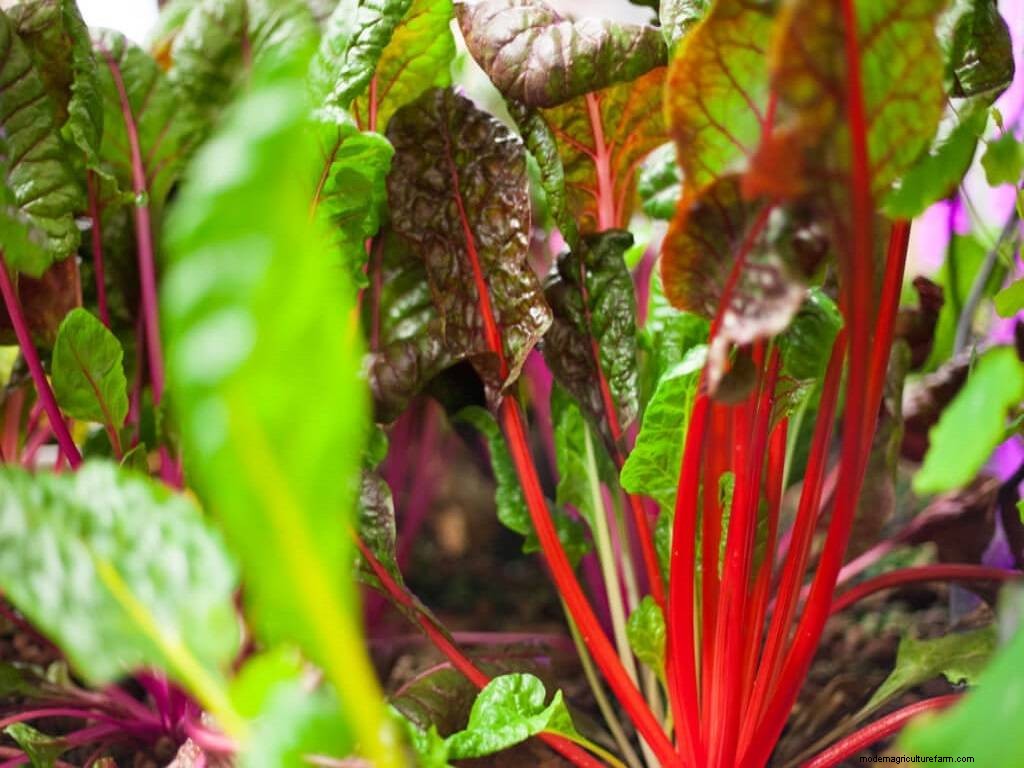
Swiss chard, also known as rainbow chard or 5-color silverbeet, is a hearty leafy green that got its name from its brilliantly colored stalks. Swiss chard is often red with green leaves, although the stalks can be of any color, including pink, orange, yellow, or white.
It's an extremely hardy crop that thrives in most hydroponic systems.
Swiss chard is an excellent choice for beginners due to its resilience and ease of cultivation. Here are some tips to consider while setting together with your Swiss chard hydroponic system.
It germinates in around 1-2 weeks from seed.
At this point, you'll want to give your chard plenty of room to develop because the plants can grow quite large.
Chard grows best in a pH range of 6.6-7.0 and an EC range of 1.8-2.3.
Keep the temperature between 55 and 75 degrees
After 4-5 weeks, start harvesting your plants, but only pick approximately a quarter of the yield at a time to enable the plants to regenerate many times.
Swiss chard is a beautiful and vibrant addition to any salad, but it has many other applications as well. This adaptable leafy green can be eaten raw or cooked, with the cooked version having a more delicate flavor. It goes nicely with citrus or garlic and may be used in place of spinach in most dishes.
Chard, like many leafy greens, is high in nutrients. It has a high concentration of vitamins C, E, and K, as well as beta-carotene, manganese, and zinc. The ingredient that distinguishes this leafy vegetable is betalain, an antioxidant that may aid in the body's detoxification of toxins.
Because boiling the chard breaks down its betalains, it's best to consume it raw if you want to get this benefit. Increased consumption of betalains in some people can create beeturia or red urine, which is harmless but can be disturbing to those who don't know the cause.


