
Welcome to Modern Agriculture!

The following information is of Vetiver Farming, Cultivation Practices, Vetiver Essential Oil Uses, and Benefits.
Chrysopogon zizanioides which is popular as Vetiver is a grass which is perennial. It belongs to the family of Poaceae and the native of this grass in India. In the west and northern parts of India, it is termed as Khus. Its maximum height would be 2 meters and the flowers of this plant would be brownish-purple. The leaves would be rigid and the stems would be tall and thin. This plant has wide cultivation in the tropical regions of the world.
The essential oil, which is derived from Vetiver and this is done through steam distillation of the plant roots. The aroma of this plant is very strong and is woody, spicy and smoky. The most important quality of the Vetiver essential oil is that it is deeply grounded and is very helpful in promoting sleep. This oil also helps people who suffer from restlessness which makes them deal with stress.
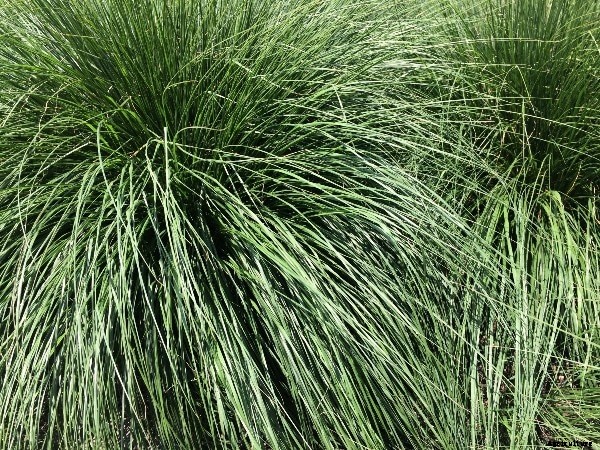
Any kind of soil is suitable for the growth of Vetiver. But it is important to remember that the soils which are light should not be used because the roots, when grown in lighter soils, will produce the least amount of oil. The soils which are well drained, sandy loam, red and rich in the organic content can be preferred for the plantation of Vetiver. Clay loam soil can also be preferred for cultivation, but again, clayey soil should not be used. The soils which are saline or alkaline can be preferred but the pH content should be between 8 to 10. The site which is flat can be used for cultivation, but it is very important to check the watering on a regular basis so that no clogging occurs which would stop the growth of the plantlets which are just growing. The Vetiver, which is a matured one can survive waterlogging and also has the capability to absorb heavy metals from the water which is dissolved.
The Vetiver plants can survive the temperatures from -14 °C to +56 °C and it is completely dependent on the region in which it is growing. The soil temperature, which is optimum for the growth of Vetiver is 25 °C. If the temperature is below 5 °C, then there would be an occurrence of dormancy in the roots of the plants. When the climatic conditions are frosty, them the shoots will become dormant and change their color to purple eventually leading to death. But the growing points which are underground will survive and will grow again quickly if there is any improvement in the climatic conditions. If the shading is partial, then it is preferred but if there is no shading, care should be taken as it affects the growth of the plant. The Vetiver herbal plants can survive in the drought, floods and it also grows very well in the climatic conditions which are humid in a moderate way and the average rainfall should be at least 1500mm. If the rainfall is scanty, it can also be grown as a crop which is irrigated.
Read: Lemon Grass Farming.
The propagation of Vetiver can be done by seeds as well as slips. But, slips are used in most common for the propagation. The accessions which are cultivated and whose propagation is done in a vegetative way will show less variation, whereas the propagation of seeds is used in the breeding of some new varieties. In the types which are grown in North India, the seeding would be profuse and the regeneration will be natural as they occur from the self-sown seeds. The yield of seeds will be between 450 to 600 kgs per hectare. The spikelet which is freshly collected will have dormancy and will need a period of 3 months after ripening. The removal of caryopsis from the husk which is enclosed will cause germination. The dormancy can be reduced by giving the treatment to the seeds by using potassium nitrate or gibberellic acid. In the plants which are grown in South India, the spikelets are not fertilized and the production of the seeds will be thin sometimes will less dormancy period. In the types of plants which are non-seeding, The slips are isolated from the clumps of the crops which are previously cultivated with a portion of rhizome intact and has 20 cms of the aerial portion for the propagation. The slips which are obtained through this should be moist and it is important to store them in shade. The leaves which are dry should also be removed from the slips before the transplantation occurs so that pests and diseases can be avoided.
The best time to plant Vetiver is between June and August. In the climatic conditions of South India, the fluctuations in temperature occur and it is not that significant. But the monsoon in South India starts early, so the perfect plantation time would be between February and April.
The land should be ploughed till 25 cms depth with 3 deep ploughing. Then the weeds which are perennial should be removed. The farmyard manure or compost should be applied at a dose which is recommended along with the fertilizers. These should be mixed well in the soil.
The parent clumps should be made into tiny pieces so that they would give any number of slips. These slips should then be separated from the clump with the rhizome portion which is intact and is also having 20 cms of the portion of the shoot. At the time of plantation of the slops, the roots which are fibrous and the leaves should be removed.
It is very important to make sure that the plantation of slips is happening on time. The slips which are taken from the clumps which are healthy and free of diseases should be planted between June and July as soon as the monsoon starts. This should be done at a depth of 10 cms with a space of 60x60cms or 60x40cms and again, this completely depends on the fertility of the soil, climate and the facilities of irrigation. If the plantation is done late, then the course roots will be produced which produce less quality oil.
The application of fertilizers is not encouraged in the soils which are fertile. But in the soils which are not that fertile, 12 tonnes of the farmyard manure mixed with 30 to 50 kgs of Nitrogen and Potassium can be applied. Nitrogen should be applied for only two to three doses.
When there is no rainfall, the status of moisture in the soil should be maintained by irrigation. This has to be done starting from the plantation to the establishment. If there are good rainfall and high humidity, then there would be no necessity of irrigation which is supplementary. In the areas which are dry, at least ten irrigation will be required to get a good yield. Mulch can be applied to the conservation of moisture in the soil. The irrigation should be stopped before a week of harvesting.
When the crop has been established recently, there should be three weeding and earthing-up with a gap of one month. This should be done mainly at the initial stage of growth of the plants. Once the establishment of the crop takes place, the weeds should be monitored carefully on a regular basis because of the thick and dense shoot cover of the Vetiver. The aerial portion should be trimmed up to 30 cms above the level of the ground, three times during the period of cropping of 24 months. Trimming should be first done after four months of planting. The second one should be done in the second year and it should be done just before the flowering starts and the third trimming should be done in the winter season of the second year, just one month before the digging of the roots starts.
Read: Bonsai Tree Care, Tips, Ideas.
Harvesting of the roots of Vetiver is very important. This is because of the yield and the percentage of oil change according to the climatic conditions. The harvest of roots is done after 18 to 24 months. If the harvesting is done at an early stage, the yield of essential oil would be higher. Though the yield is high, the early harvest leads to the oil, which has less specific gravity making it lack high boiling constituents. If the roots are in the ground for 24 months, the quality of oil improves but the yield decreases. The crop is harvested between the months of December and February by digging the clumps along with the roots. This is all done manually. A mouldboard plough drawn by a tractor is used to dig up to a depth of 35 cms. Harvesting which is done in a mechanical way will give 16% higher roots than the manual harvesting.
The yield of the essential oil of the Vetiver plants depends on various factors such as conditions of soil, the age of roots, time of harvesting and the methods of the distillation followed. Considering the average, the yield will be four tonnes per hectare from a plantation which has an age of two years. In the soils which are sandy, the yield of roots will be two tonnes per hectare, whereas, in the areas which are sail affected, the yield would be just one tonne per hectare. On an average 5 tonnes of roots on distillation give 14 to 15 kilograms of oil.
Read: Vanilla Farming, Planting, Growing Methods.

