
Welcome to Modern Agriculture!

Monocropping (or monoculture) is the planting of a single crop in the same patch of land year after year. For example, in 2020, two crops—corn (maize) and soybean—accounted for 70% of the planted farmland in the United States, according to the U.S. Department of Agriculture.
As a form of industrial agriculture, monocropping has some short-term benefits, but the downsides of monocropping make it far from sustainable.
The term monocropping can be used to describe other agricultural practices beyond crop production, like forestry, aquaculture (fishing), dairying, ranching, and even lawn care. For example, an individual lawn (which is in essence a monocropped landscape) might not take up much space, but collectively, turfgrass is the most irrigated crop in the United States.
Monocropping has its origins in the Green Revolution of the 1950s and 1960s, which (despite its name) introduced chemical fertilizers and pesticides, the development of new, high-yield cereal grains, and the growing use of large farm machinery such as tractors and irrigation systems.
The Green Revolution resulted in a reduction of labor costs, the doubling of grain yields, the more than doubling of the world's population, and a Nobel Peace Prize for its main proponent, Norman Borlaug, for lifting millions of people out of poverty and creating food self-sufficiency for nations such as Mexico and India.
Yet doubling food production through monocropping on the same amount of land results in depleting the soil of its micronutrients—starving the soil that feeds the people—a limiting factor in increasing yields any further as the world population continues to grow.
While the most biodiversity on the planet exists in the places with the highest levels of human diversity, monocropping reduces cultural diversity. With its economy of scale, monocropping means fewer family farms and increasing financial burdens on those that remain, resulting in a loss of numerous local cultures worldwide. That decline in diversity is accompanied by a loss of food diversity.
For example, industrial fish farms in the West African country of the Gambia have polluted rivers and the ocean, destroyed wild fish stocks, and deprived local fishing communities of their livelihoods and Gambians of their dietary mainstays. Worldwide, more than 50% of the human diet is composed of just three crops—rice, maize, and wheat—leading to diet imbalances and malnutrition. Despite its promise, monocropping did not solve the problem of food insecurity, as world hunger continues to rise.
While requires annual inputs of chemical fertilizers to counteract soil depletion. Those chemical applications (accompanied by annual plowing using heavy machinery) break down the biological relationships within soils that are necessary for healthy plant growth.
Chemical fertilizers and wasteful irrigation can lead to runoff that pollutes waterways and damages ecosystems. As a less diverse landscape attracts a narrower variety of birds and beneficial insects, monocropping also makes it harder to combat harmful pests and diseases and increases the need for chemical pesticides and fungicides.
Methane emissions (a potent greenhouse gas) from fertilizer manufacturing are an estimated 3.5 times higher than the U.S. EPA's estimate of methane emissions for all industrial processes in the United States.
Not only does monocropping contribute to climate change; it also makes it harder for agricultural systems to adapt to it, leaving them more susceptible to droughts, blights, extreme weather, pest infestations, and invasive species.
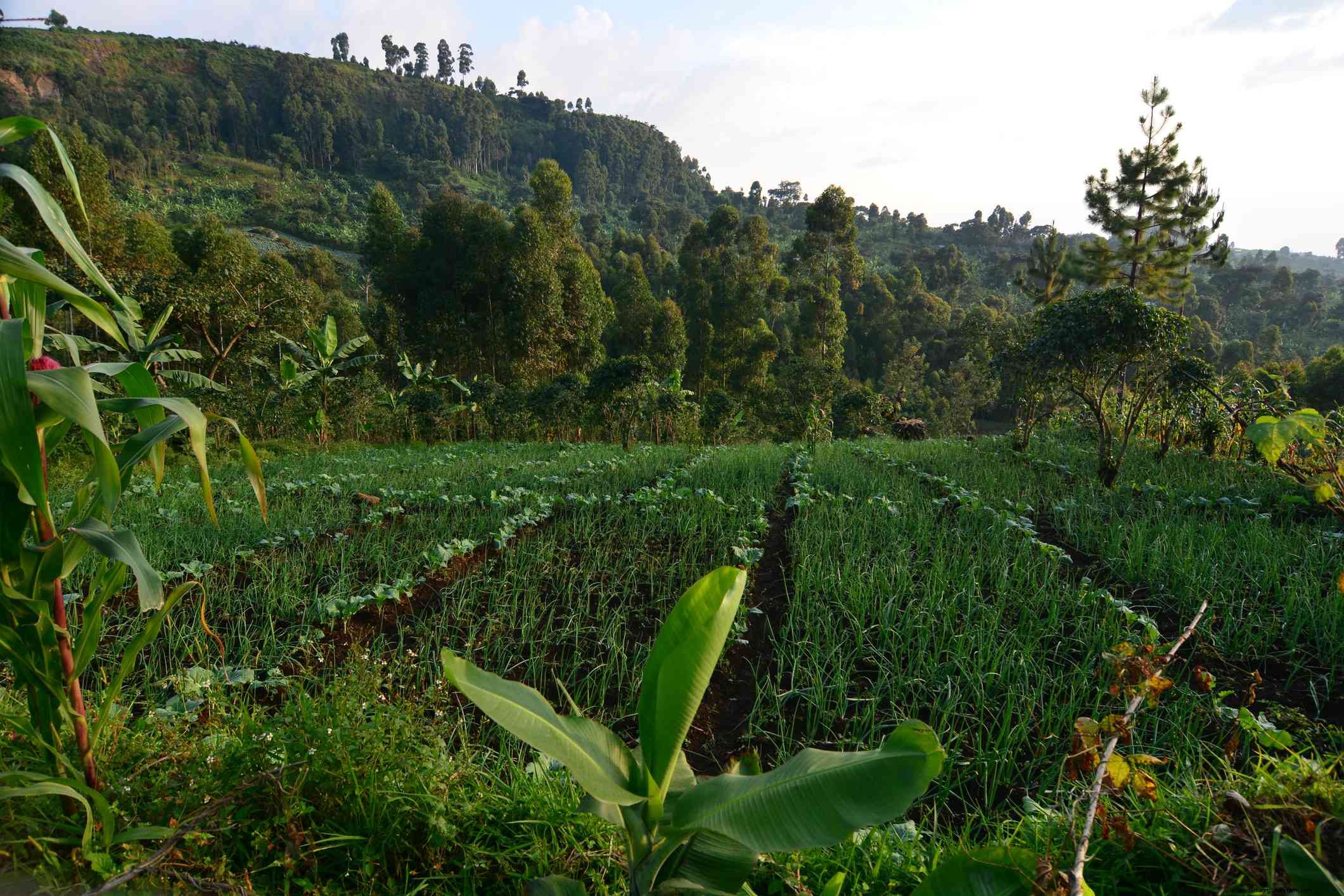
By contrast, sustainable practices like regenerative agriculture and agroforestry allow soils to retain moisture, allow croplands to attract beneficial insects and birds that prey on harmful ones, reduce soil erosion, increase food sovereignty, improve diets and nutrition, reduce reliance on expensive inputs, and allow farmers to stay on their land.
On a smaller scale, instead of a lawn, more sustainable practices as simple as a perennial garden or wildflower meadow give habitats to pest predators and pollinators and can be adapted to many more climates than a single crop can.
Crop diversity is also a key strategy in adapting to climate change, as a wider variety of crops returns carbon to the soil and increases the sustainability of the ecosystems we all depend on.
Just as crucial is preserving the many local and indigenous cultures and agricultural practices that can contribute knowledge about traditional and innovative alternatives to industrial agriculture, fostering millennial-old relationships to the Earth might end what Leah Penniman, a food justice activist and regenerative farmer, calls “our estrangement from the soil.” As Penniman so succinctly puts it, “Nature abhors a monoculture.”


