
Welcome to Modern Agriculture!

Well, let us learn today about Cat Grass Growing Process, Methods, and Steps involved.
Cat grass which is scientifically called as “Dactylis glomerata” is also termed as “Orchard grass”. Cat grass got its name as it is very well-known for its usage in terms of domestic cats. Cat grass is the species of grass which belongs to the genus Dactylis. Cat grass is a perennial species and also a which grows well in cold temperatures. This cat grass is a native of temperate regions of Asia, Europe and North Africa.
Cat grass is a term which is used for the description of several varieties of grass which are more popular with domestic cats. This grass is safe for the cats for eating as it is non-toxic.
Domestic cats will not have the digestive enzymes which are required to digest the grass completely. Because of this, they vomit the grass. In the process of vomiting, they bring the products which are indigestible such as bones of the prey, feathers, hair. etc.
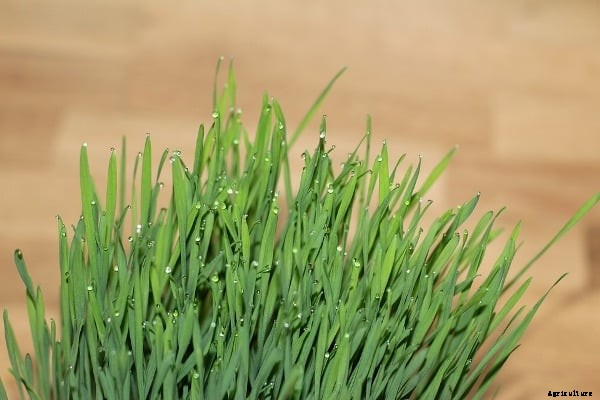
Requirements for Cat Grass Growing
In order to grow the cat grass, a perfect container is required. It would be good if the container is in the shape of a window box. The other things you will require are organic soil which is sterilized, plastic wrap, water, seeds of cat grass. Usage of organic soil is very important in order to provide your cat with grass which is healthy and also safe to dig. There is no need to use any sort of fertilizer as the grass grows and dies in a span of very few weeks by itself.
Sowing :
Germination and Growth of Cat Grass:
Read: Fish Farming Project Proposal.
Tips for Cat Grass Growing indoors:
Sowing method:
Growing methods:
Nematodes: These are microscopic pests which look like worms which will cause swelling so that the roots can be formed. This will lead to wilted plants.
To avoid this, make sure that you are not planting in the soil which is infested. You can also plant Nema-Gone marigolds around the plants in your garden. Also, prefer to choose to plant in containers.
Damping Off: This is a common problem at the starting stage of the plant when it is in the form of seed. The seedling will appear and it starts to appear healthy. After that, it gets wilt and slowly dies and there would be no specific reason for this. The reason for this is a fungus. This fungus will be active when there is more amount of moisture in the soil and when the temperature is 20°C. This is an indication that the soil is very wet or it contains nitrogen in large amount.
To avoid this situation, you need to keep the seedlings moisturized. But make sure that you are not over watering or over fertilizing them. Make the seeds thin so that overcrowding can be avoided. You need to ensure that the air is getting circulated in it. If you are planting in a container, you need tow ah them with soap water thoroughly and later rinse them in a solution of bleach.
Whitefly: These are very tiny insects which fly. These can be seen suddenly rising up when there is any sort of disturbance in the plants.
To avoid these, you need to make use of chemicals as they are very tough to control. You can use a soap which has insecticides in it or you can use pepper wax.
Wireworms: Wireworms are the insects which live in the soil causing death to the seedlings. They kill them encircling their stems at the line of soil, then by boring into the steps, tubers and finally roots. You can see them encircling the stems in the soil. These will be a ¾ inch in length. They are also thin and yellow-brown in colour and their skin will also be shining. The adult wireworms will have the length if a ⅓ inch and their colour is reddish-brown. They have a hard shell.
To avoid this, follow crop rotation.
Powdery Mildew: This is a disease caused by a fungus which usually occurs on the leaf tops when the weather conditions are humid. The appearance of the surface of the leaves will be grey or white in colour and they also curl.
To avoid this, provide the plants with a very good circulation of air. This would be possible with better spacing and pruning.
Smut: Smut is a fungus which leads to streaks on leaves which get matured into spores which are powdery and black. Smut will stunt the plant’s growth. The disease which is caused will stay in the soil for many years.
To avoid this, promote crop rotation and make sure that you are not planting in the same location for at least four years. Water the plants regularly to get the growth quickly and fertilize the plants to get them into the stage where they sustain. Few fungicides are very effective.
Aphids: Aphids are the insects which are in various colours including red, green, black and peach. These insects will spread the disease when they start feeding on the leaf undersides. These insects will leave a residue which is sticky. This residue is left on the foliage which later attracts the ants.
Armyworm: The holes which appear on the leaves will be single or you can see a group of holes together. The clusters of eggs will be seen on the foliage which appears to be fuzzy. The larvae when young will appear pale green in colour and the adults will appear dark along with a line which is light.
To avoid these, you need to add natural enemies to the growing area.
Rust: There are a number of diseases which are caused by a fungus which in turn result in spots which are rust coloured on the foliage.
To avoid rust, you need to first remove the plants which are infected.
Safe cat grass to eat for cats:
Read: Lemon Grass Cultivation.


