
Welcome to Modern Agriculture!

The following information is all about Lavender Cultivation.
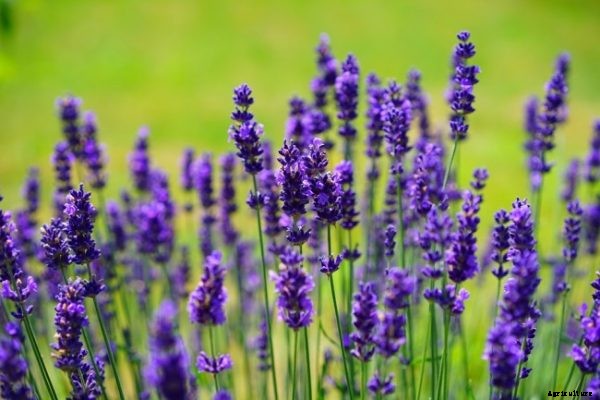
The Lavender plant is a perennial flowering aromatic herb or shrub that can reach a height of 40 cm to 80 cm. The leaves of the Lavender plant are opposite, oblong-linear with small flowers. The Lavender plant is originated in the Mediterranean region. To grow this plant you must have the right climate similar to the Mediterranean area. Lavender can be grown in backyards, pots/containers as well. Few dozens of lavender plants growing in the backyard can make you rich. The commercial cultivation of Lavender on large scale can fetch crores of rupees.
In India, the lavender crop is cultivated in low rainfall regions and on the slopes of hills of Himachal Pradesh(HP) and Uttar Pradesh(UP). The lavender crop is also successfully grown in the Kashmir valley region.
In the following sections, let us find more about Lavender Cultivation from seed and cuttings.
Scientific / Botanical name of Lavender: Lavandula spica.
Family Name of Lavender: Lamiaceae.
Genus of Lavender: Lavandula.
Economic Parts of the Plant: Flowers and oil extracted from the flowers.
Pollination System: Cross-pollinated.
There are various forms of lavender products available which are commercially made from lavender dried leaves and plant essential oils.
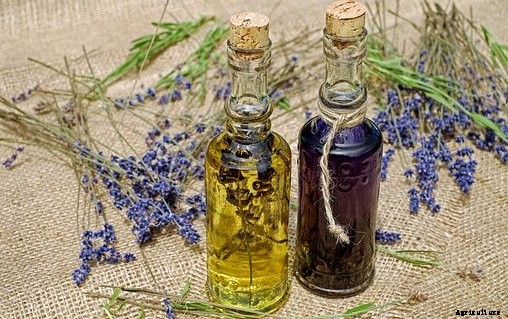
There are 4 types of Lavender plants grown in India.
True Lavender Variety
Spike Lavender Variety
Lavandin Variety
Sher-e-Kashmir Variety
The ideal climatic conditions are cool winters and cool summers. Lavender is a temperate plant and can tolerate drought and frost conditions. You can get more yields when cultivated at higher altitudes. The lavender crop requires good sunlight as well. In case of poor lighting conditions, one can observe less yield of flowers and reduced essential oil content.
Light well-aerated dry and calcareous soils with slopes rich in organic matter are best for lavender cultivation. Lavender is very sensitive to waterlogging. The ideal soil pH for getting higher essential oil ranges from 7.0 to 8.3. The best part of Lavender is, it can be cultivated even on poor soils and eroded soils. In commercial Lavender cultivation, soil testing helps to find out the suitability.
Prepare the land by giving 2 to 3 deep ploughings to remove any weeds, plants and to bring the soil to the fine tilth stage. You can add appropriate well-decomposed farmyard manure (FMY) during land preparation to enrich soil fertility.
Propagation of Lavender can be done by Seeds, Rooted Cuttings (vegetative method), Tissue Culture, and Layering.
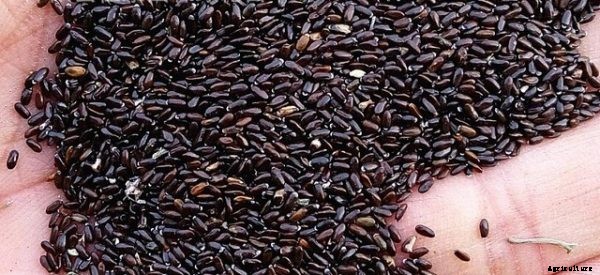
By Seeds: Seeds should be sown in prepared beds, 1 meter wide, in an autumn season either through broadcasting method or in row method with 10 cm to 12 cm apart for raising nursery. Small seeds should be mixed with fine coarse sand for uniform distribution. The seed rate of 2.grams is required to cover 1 square meter area. The sowing depth should be about 1 to 2 cm. The seeds should be covered with farmyard manure and should be left in this stage during the winter season. The seeds usually germinate in spring at 14°C to 15°C. Make sure to keep the nursery bed moist always by regularly sprinkling the water. Make sure to prune Lavender seedlings periodically to prevent follicle formation.
By Rooted Cuttings: Cuttings of Lavender should be taken from healthy mother plants grown outdoors. You can use rooting hormones to encourage rooting growth. 10 cm to 15 cm cuttings should be made from young top shoots of the plants. The bottom 2/3rd is stripped from leaves. 1/2 to 2/3rd of the cuttings should be inserted in a proper growing medium and propagated in trays or seedbeds. A mixture of 30% fine farmyard manure/garden compost and 70% sand works well. In the Kashmir region, black polythene covers are used to protect the seedbeds from cold weather.
By Tissue Culture: Lavender tissue culture propagation is very expensive and this method of propagation is done for the mass propagation of lavender from selected mother plants. The advantage of tissue culture is to produce disease-free, and genetically identical plants.
By Layering: In this method of propagation, select a long, healthy stem and remove 12 cm to 15 cm of foliage, leaving 10 cm of foliage at the tip of the branch. You should cover the 9 bare sections with moist soil and the branch will root at the soil level. You should cut the new plants from the mother plants after rooting. The plants should be replanted in the prepared field after the onset of roots usually from 6 to 12 weeks. A liquid organic feed should be provided on a weekly basis.
Planting Season for Lavender Cultivation
Autumn planting is best in mild climatic conditions. This ensures that plants can get established very well just before winter & in spring will grow quicker. Spring planting is the only option in cold winter areas. Planting should be done after the frost is passed.
Transplantation of Lavender seedling should be done either in autumn or in spring. Lavender is planted at a distance of 4 feet in between rows and 30 cm to 40 cm inside the rows. The plant density of 20,000 per hectare produces the highest yield. Earthing up of soil should be carried out around the seedlings for the root establishment.
In commercial Lavender cultivation, irrigation should be provided for the first 2 years until the crop has been established. In the case of lighter soils and low rainfall regions, irrigation should be provided at crucial stages of plant growth. During flower initiation, you must ensure proper irrigation. Avoid overhead irrigation such as sprinkler irrigation as it can increase disease problems. Adopt drip irrigation in Lavender crop as it can save water and control weed growth.
Lavender crop responds very well to fertilizers. The recommended N, P, K are 100kg, 40kg, 40kg per hectare. As a basal application, use 20 kg of ‘N’ full dose of P205 and K2O. The remaining 80 kg of ‘N’ should be applied in four splits 2 doses during each year.
Hand hoeing and mechanical weeding (with a tractor-drawn cultivator) should be carried without damaging the roots. You can also provide mulching to reduce weed emergence and increase soil moisture retention.
Flower buds of Lavender should be pruned off during the first two years period to help the plants to develop a strong framework.
Very few pests occur on lavender and no serious diseases reported in Lavender cultivation. You can contact the horticulture board for any observations of pests and diseases.
Generally, Lavender plants start flowering earlier in warmer and low altitude regions and flowering starts late in high slopes. As part of harvesting, flowers should be cut with a stem length of 10 cm. In the Kashmir regions, the Lavender crop would be ready for harvesting in August-September.
The oil quality and yield depend on variety, soil, agro-climatic conditions, and the process of distillation. Under optimal medicinal/herbal cultivation practices, one can obtain a yield of 15 kg per hectare with an oil content range of 1.2% to 1.5%.
In case if you are interested in this: Hydroponic Nutrient Chart.


