
Welcome to Modern Agriculture!

The following is all about Senna Plant Cultivation Practices.
Senna is a medicinal herbal plant grown for its economic part of leaves and pods. We can see that there is a huge demand for traditional medicinal plants, especially in Asian countries. However, the Senna plant is distributed throughout India, Africa, Somalia, Sudan, Southern Arabia, and Yemen.
With proper cultivation practices and marketing, one can expect decent profits in Senna plant cultivation. In the following sections, let us discuss more how to grow the Senna plant from seed.
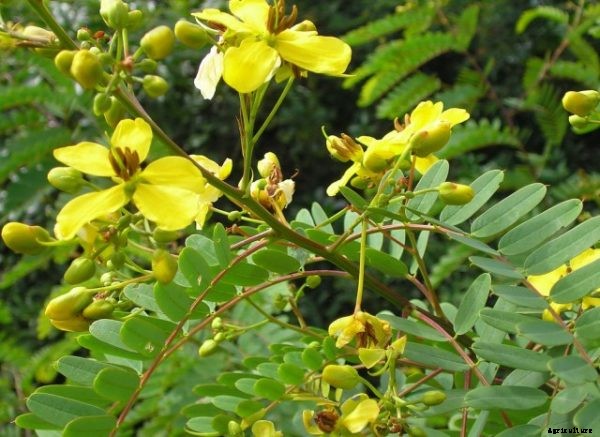
Senna plant is a perennial herb that can reach a height of 3 to 6 feet. The stem of the Senna plant is erect and smooth with a pale green to light brown color. Generally, the leaves of this plant will have 4 to 8 pairs of leaflets. The flowers of the Senna plant are in yellowish color. The pods of the Senna plant measure about 6 to 8 cm long and 2 to 3 cm broad. The pods are in greenish to brownish color.
Senna plant leaves and pods are the main parts of medicinal use.
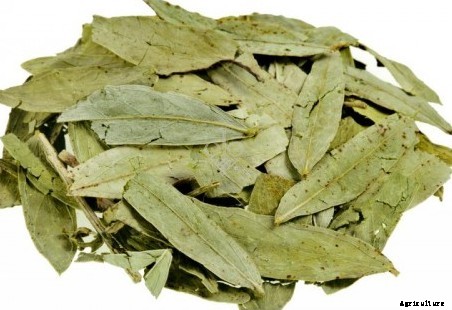
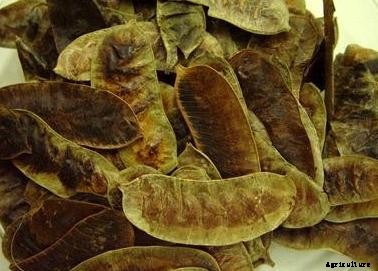
Caution: Never take this on your own, it may cause side effects. Consult primary care physician before taking any Senna herbal products.
This herb is mainly cultivated in Southern India, especially in districts of Madurai, Ramanathapuram, Tiruchirapally, and Tinnevelly of Tamilnadu. However, the commercial cultivation of Senna is also being carried in the states of Maharashtra, Rajasthan, and Gujarat.
Senna plants can be grown under rainfed conditions and very rarely with irrigated facilities. It requires good sunlight and occasional showers during its growth period. Avoid waterlogging conditions of the soil as this plant is very sensitive to water stagnation. It is a deep-rooted hardy plant that demands warm and dry conditions for optimal growth. Usually, on average 300 mm to 400 mm annual rainfall is good enough for an optimal yield of Senna plant leaves and pods.
Senna plants can be grown on a wide range of soils. However, the soils recommended for commercial cultivation of Senna are friable and well-drained sandy loam, red loams, coarse gravelly, and alluvial loams. This plant can tolerate the high salinity of the soil. For optimal growth, select soil with a pH value of 7.0 to 8.4. The Senna plant can also be grown in black cotton soils with good drainage.
If you are growing the Senna crop on large scale, it is not required to bring the soil to the finetilth stage but ensure the weed-free field. To remove any weeds, rocks, you can carry 1 ploughing and 2 harrowings followed by levelling. As we know this crop is sensitive to waterlogging, divide the field into suitable and convenient plot sizes with a considerable slope for water draining. To enrich the soil, 10 to 15 tonnes of well-decomposed farmyard manure like cow dung should be supplemented per hectare during the last ploughing of land.
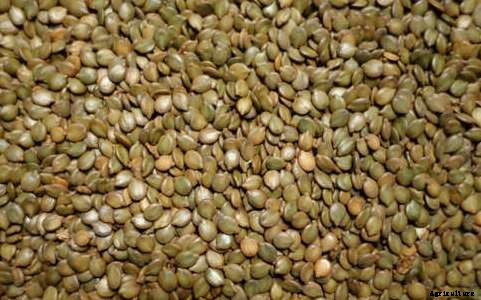
Propagation of Senna crop is done by seeds. As these seeds are hard-coated, they require 12 hours of soaking in the water for a good germination percentage. To prevent any seed-borne and soil-borne diseases, 1 kg of Senna seeds may be treated with 3 grams of Thiram before sowing in the field.
Seed rate depends on variety and planting method.
Generally, the first sowing of the Senna crop is advised from February to March, second crop sowing is advised from September to October.
In Senna cultivation, the common method of sowing is broadcasting. However, in areas where line sowing with 45 cm x 30 cm row-to-row and plant-to-plant is produced excellent yield. The intercultural operation would be an easy in-line sowing method. For better germination, seeds should be placed at 1 to 2 cm depth. You can give light irrigation after sowing.
Generally, the Senna crop is grown under the rainfed condition and does not require any special irrigation. It is not recommended to grow this medicinal crop in areas where heavy rainfall is expected. In limited areas, this is cultivated under irrigated conditions. In such scenarios, make sure to provide first irrigation immediacy after sowing and subsequently after 3 to 4 weeks of sowing. Maintain uniform moisture conditions in the field and avoid over-irrigation.
Application of fertilizers: A full dose of ‘P2O5’, ‘K2O’, and 1/2 (half) dose of ‘N’ should be applied as basal. The remaining half ‘N’ should be applied in 2 equal split doses 1 is 3 months after sowing (after first leaf picking) and 2nd would be after 4 months of sowing (after second leaf picking).
It takes 60 days Senna plant for the initial flower. Encourage plant growth by removing the first flush of flowering stalks. The first harvesting is generally carried out 3 months after sowing. Pluck the leaves whey they are fully grown, thick and bluish in color. Subsequently, a 2nd and 3rd harvesting should be carried 6 months and 7 months after sowing under irrigated conditions. Crop grown under irrigated conditions yield more than the crop is grown under rainfed condition. However, For a rainfed crop, cutting or uprooting of whole plants after 120 to 150 days is practiced for harvesting. The pods should be harvested picked before maturing to maintain greenish color. In the case of seed production, collect the pods when they turn a brown color.
After harvesting the leaves, they should be dried under shade for 7 to 10 days. Before marketing, grading should be done based upon the size and color of leaves and pods. Dried leaves of the Senna crop should be packed in bales for storage.
The yield of the Senna crop depends on the soil, variety, planting method, and other cultivation practices.
Type of crop Senna leaf yield Senna seed yield Rainfed crop 700 kg 100 kg Irrigated crop 1500 to 2000 kg 175 to 200 kgThe market price of Senna leaves is around 70 to 80 Rs/kg whereas Pods can be sold at 80 to 90 Rs /kg.
In case if you are interested in this: How To Grow Organic Lettuce.


