
Welcome to Modern Agriculture!

The following article talks about Toor Dal Farming techniques and cultivation practices.
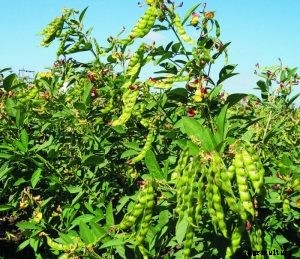
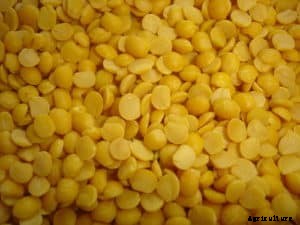
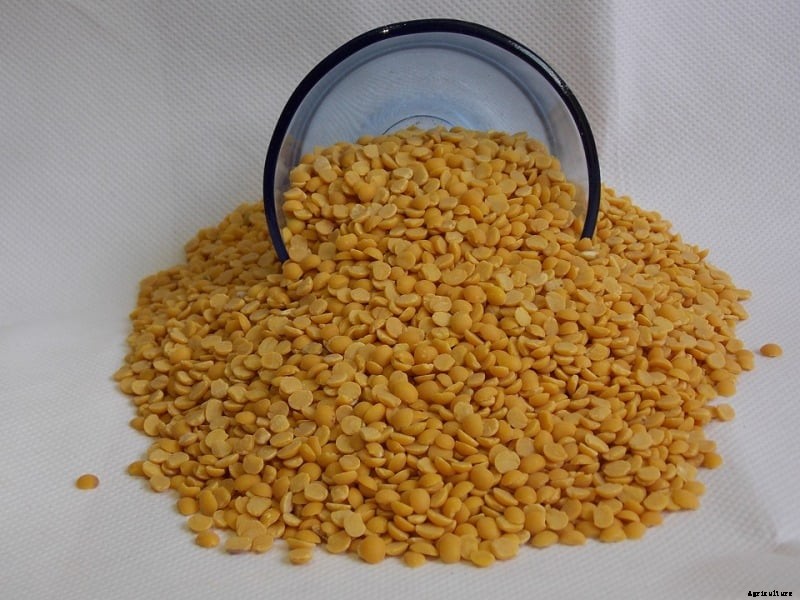
Scientifically known as Cajanus Cajan, Pigeon Pea belongs to the widespread family of pulses. In India Pigeon Pea is more popular than Arhar or red gram. In India, split pigeon peas (Toor dal) are one of the most popular pulses, being an important source of protein in a mostly vegetarian diet. In regions where it grows, fresh young pods are eaten as a vegetable. The split dried seeds are used as a lentil, in dishes such as sambar (lentil soup). Toor Dal is called in other languages as :
Arhar or Toor Dal crop requires average rainfall of 600-650 mm with moist conditions for the first eight weeks and drier conditions during flowering and pod development stage, this will result in a highly successful crop. Rains during the flowering result in poor pollination. Arhar crop grown successfully in summer, rainy and winter season, April-Summer, June-Kharif or rainy, September-Rabi or winter season. A crop of semi-arid tropics tolerant to dry conditions because of a well-developed deep root system. However, the critical growth stages are branching, flowering and pod filling where moisture stress causes adverse effect therefore in the absence of rains high irrigation are required.
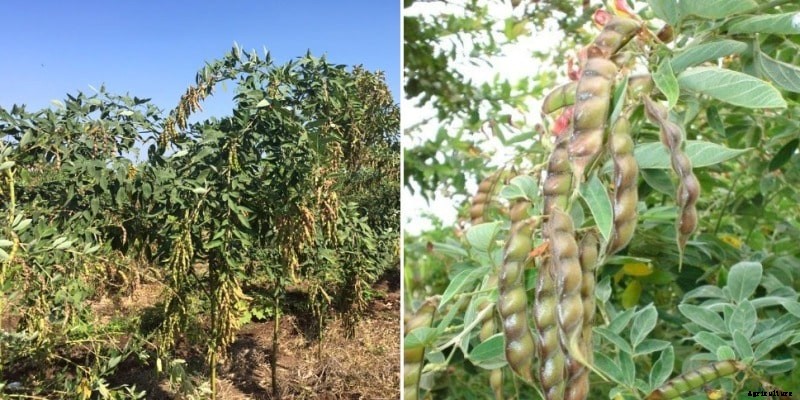
Toor Dal (Arhar) needs moist and warm weather i.e. 30–35°C during germination and slightly lower temperature (20-25°C) during active vegetative growth. During flowering and pod setting it requires 15-18°C temperature and at maturity, it needs a higher temperature of around 35-40°C. Waterlogging, heavy rains, frost are very harmful to the crop. Hailstorms or rain at maturity damages the entire crop. It has a good drought-tolerant capacity because of its deep tap root system.
This crop grows well on all types of soils but loam to sandy loam soil is suitable. This crop also does well in sloppy lands in the mid-hills. It can be grown successfully on neutral soils having a pH range of 6.5 to 7.5. Make sure there won’t be any water logging in the field.
Read this: Tiger Prawn Cultivation.
Red gram or Toor Dal being a deep-rooted crop responds well to a proper tilth. So land is prepared by at least one plowing during the dry season followed by 2 or 3 harrowings and disc plowing.
The seed rate is 15 kg/ha. Tall varieties of Arhar should be sown in rows at a distance of 50 cm while dwarf varieties like HPA-92 should be shown at 30-35 cm row spacing with seed to seed spacing of 15-20 cm. The crop gives a much higher yield if, it is sown in the last week of May. One row of each can also be successfully grown in between two rows of Arhar. In Zone-I, paired row planting of Arhar and sesamum gives a higher return. In the case of paired row planting, two rows of Arhar should be sown at 30 cm spacing followed by two rows of sesamum sown at 20 cm spacing. The seed rate and fertilizer doses to the sesamum crop should be reduced to half of the recommended for pure sesamum crop.
Intercropping is the growing of two or more crops of dissimilar growth patterns on the same piece of land, with a view to optimizing the total yield and net profits per unit area.
Traditionally red gram is intercropped with cereals, oilseeds, short-duration grain legumes (pulses), or cotton.
Most commonly red gram is intercropped with cereal crops like Sorghum, pearl millet, maize, finger millet, etc.
Red gram – Oilseed intercropping is becoming popular. Groundnut, soybean, and sesame are oilseed crops.
Red gram is also intercropped with short-duration pulse crops such as mung bean, cowpea, black gram, chickpea, etc.
15 kg of N and 45 kg of P2O5 per hectare is sufficient for this crop.
Pigeon pea grows very slowly during their early growth period of 45 – 50 days. This makes pigeon pea less competitive with weeds. If weeds are not controlled in time, it can cause up to 90% reductions in seed yield. Therefore it is advisable to keep the field free from weeds.
a weed-free condition may be achieved by giving two hand weedings once about 25-30 days and another about 45-50 days after sowing the crop.
Two weedings and hoeings are essential for the crop. Harvesting When nearly 75% of the pods get matured at a time, the crop should be harvested.
In Toor Dal Farming, Green pigeon pea pods are harvested for different purposes. Fully developed, the bright green seed is preferred for use as a vegetable. Hence, pods should be harvested just before they start losing their green color. For this normally handpicking is followed. Pigeon pea leaves, unlike other crops, remain green when the pods are ready for harvest. This may confuse the decision on optimum harvest time. Pigeon pea should be harvested when 75-80% of the pods turn brown and are dry. Delayed harvesting, during bad weather, may increase the risk of damage to the mature seed.
Traditionally pigeon pea plants are harvested by cutting the stem at the base with a sickle, but occasionally machines are used for cutting and followed by drying and threshing. The harvested plants are bundled and placed upright to dry for a week depending on the weather conditions. Pods and grain are separated by beating the dry plants with sticks or by using a thresher. In some places by cattle trampling seeds are separated.
Pigeon pea is usually stored for long periods to ensure availability of whole seed at the time of sowing, and as a dhal to meet consumer requirements.
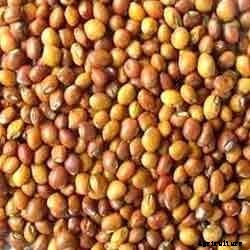
Cultivating Toor Dal or Pigeon pea is profitable as it has always a high demand in the market.
That’s all folks about the farming of Toor Dal’s wonderful crop. Keep farming!.
In case if you are interested in this: How To Grow Organic Lettuce.


