
Welcome to Modern Agriculture!

There is nothing quite like watching a new Monstera leaf start to emerge. That tiny, rolled-up spear of green is full of promise, and waiting for it to open can feel like forever.
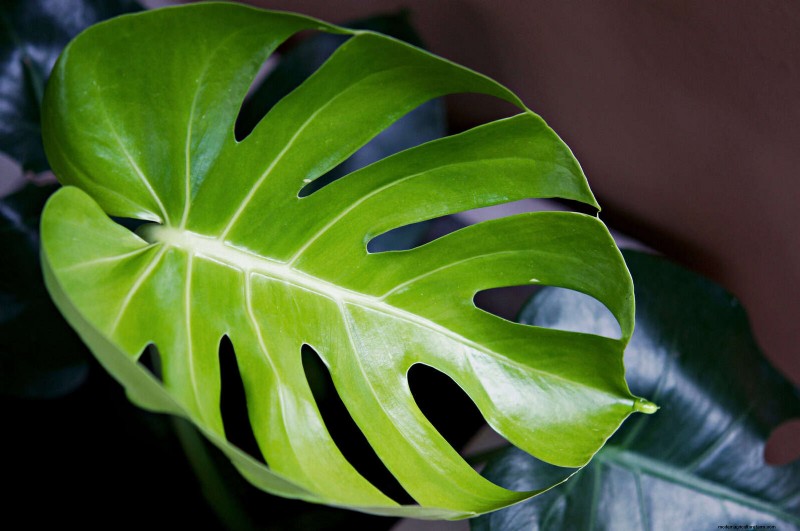
The good news is that a few simple changes to your care routine can actually speed things up. These five tips give your plant exactly what it needs to push out new growth faster and more consistently.
Monsteras are tropical plants at heart. In the wild, they grow beneath rainforest canopies where the air is thick and warm, and moisture is everywhere. When your home feels more like a desert than a jungle, your plant slows way down.
Low humidity causes new leaves to stay tightly furled longer than they should. It can even cause leaf tips to crisp up before the leaf gets a chance to fully open. Aim for humidity levels between 60 and 80 percent for the best results.
When the air around your Monstera is warm and humid, the plant does not have to work as hard to stay hydrated. That extra energy goes straight into pushing out new growth. A humidifier placed nearby is one of the most effective tools you can use.
Grouping your tropical houseplants together also helps. Plants release moisture through their leaves, so a little cluster of greenery creates its own mini humid zone. And that warmer, moister air signals to your Monstera that conditions are just right for unfurling.
Light is fuel. Without enough of it, your Monstera simply does not have the energy to produce new leaves at a good pace. A plant sitting in a dim corner will grow slowly, and new leaves may take weeks longer to open than they would in a brighter spot.
Bright, indirect light is the sweet spot for Monsteras. Direct sunlight can scorch the leaves, especially delicate new growth. But a spot near a large east-facing window, or a few feet back from a south or west-facing one, works beautifully.
Photosynthesis is how your plant makes food, and more light means more food production.
When your Monstera has plenty of energy to work with, it can focus that energy on developing new cells inside a furled leaf. That process speeds up noticeably when light levels improve.
If natural light is limited in your space, a full-spectrum grow light is a great option.
Place it about 12 to 18 inches above the plant for several hours each day. Even a modest increase in light exposure can make a real difference in how quickly new leaves emerge and open.
We'll email it to you so you can read it later!
By saving, you agree to receive occasional emails. Unsubscribe anytime.
Watering is one of those things that sounds simple but trips up a lot of plant parents. Too much water drowns the roots and cuts off the oxygen they need to function. Too little water stresses the plant and puts new leaf development on pause.
The key is consistency. Your Monstera thrives when it gets water at regular intervals based on what the soil actually needs. Checking the soil before every single watering is the most reliable way to stay on track.
Stick your finger about two inches into the soil before you water. If it still feels damp, wait a few more days.
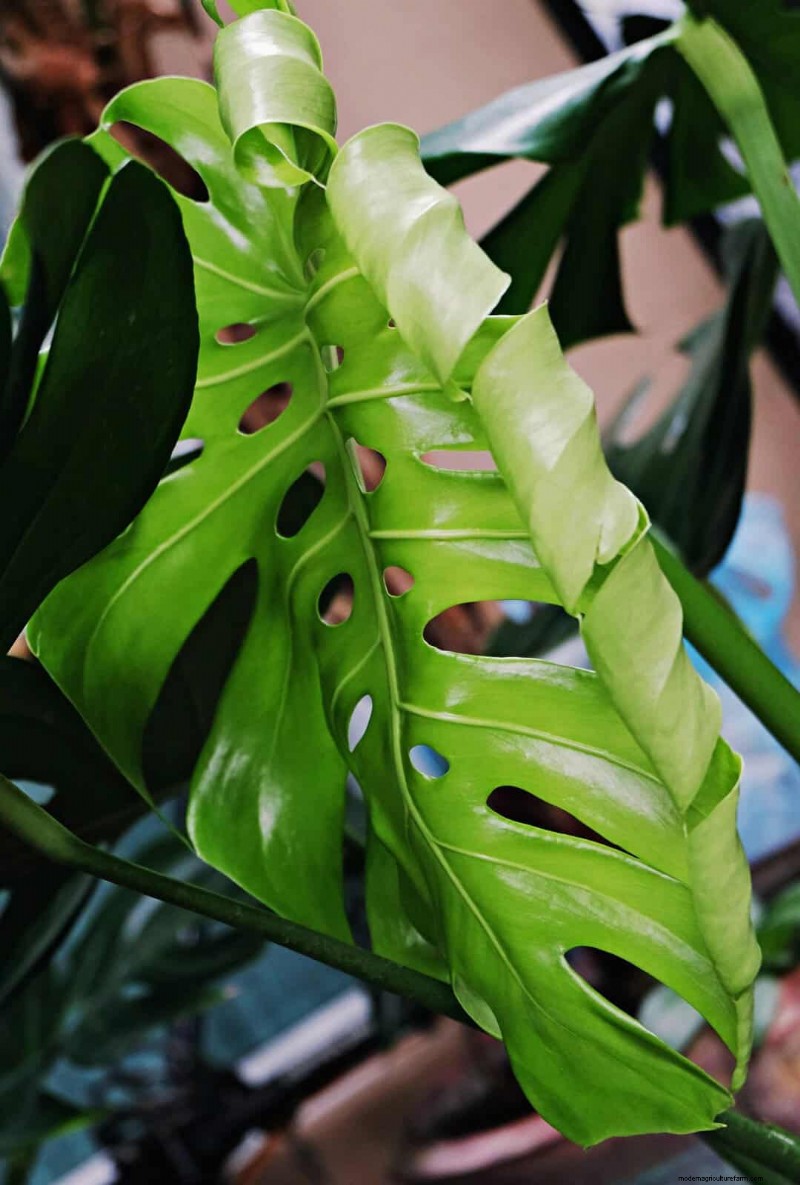
If it feels dry, go ahead and water thoroughly until it drains out the bottom of the pot. That deep watering encourages healthy root growth.
Healthy roots deliver water and nutrients up to the developing leaf efficiently.
When roots are stressed, either from sitting in soggy soil or drying out completely, that delivery system breaks down. Keeping the moisture level just right means the unfurling process keeps moving forward without interruption.
Spring and summer are when your Monstera is most active and most hungry. This is the time of year when the plant is pushing out new growth, and it needs extra nutrients to support all that cellular development. Skipping fertilizer during these months means your plant has to do more with less.
A balanced liquid fertilizer, something with equal parts nitrogen, phosphorus, and potassium, gives your plant a well-rounded nutritional boost. Look for a formula labeled something like 20-20-20 or 10-10-10. Apply it at half-strength every 2 to 4 weeks during the growing season.
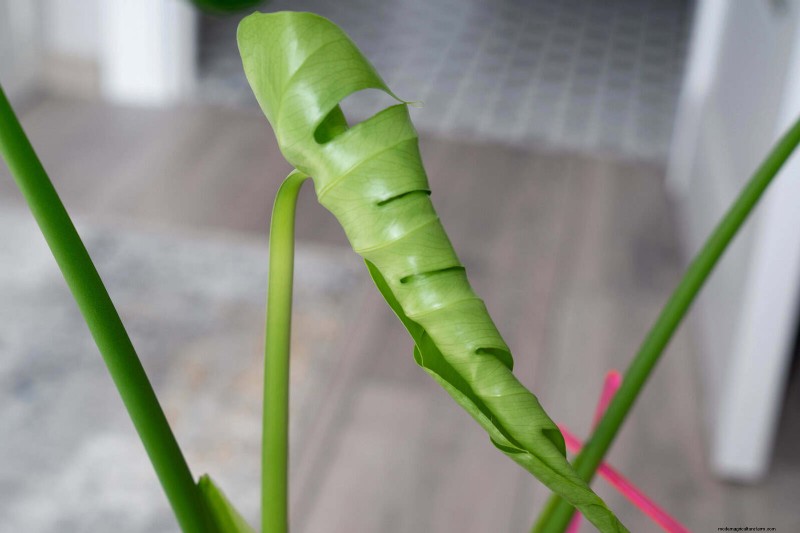
Inside that tightly rolled new leaf, cells are dividing and expanding rapidly. That process requires nitrogen for building proteins and phosphorus for energy transfer at the cellular level. Without enough of these nutrients, cell development slows down noticeably.
Fertilizing consistently during the growing season gives those developing cells the raw materials they need to work efficiently. The result is a leaf that unfurls more quickly and looks fuller and healthier once it opens. Stop fertilizing in fall and winter when the plant naturally slows its growth cycle.
That little waxy spear of a new leaf is incredibly fragile. Bumping it, bending it, or letting pests get to it can interrupt the unfurling process entirely. Sometimes a leaf that has been physically stressed will unfurl unevenly or not open all the way.
Give your new growth some breathing room. Try not to move the plant around too much when a new leaf is actively emerging. And take a close look at the spear regularly to make sure nothing is nibbling on it or pressing against it.
Pests like spider mites and thrips love to target new growth because it is soft and tender. Check the spear every few days by looking closely at the surface and the area right around its base. Catching a pest problem early means it is much easier to manage before any real damage is done.
Beyond pests, just being mindful of where the plant sits matters a lot. Keep it away from high-traffic areas where it might get bumped. And resist the urge to unroll the leaf manually, even when the wait feels unbearable. Let it open on its own, and it will reward your patience with a gorgeous, fully formed leaf.
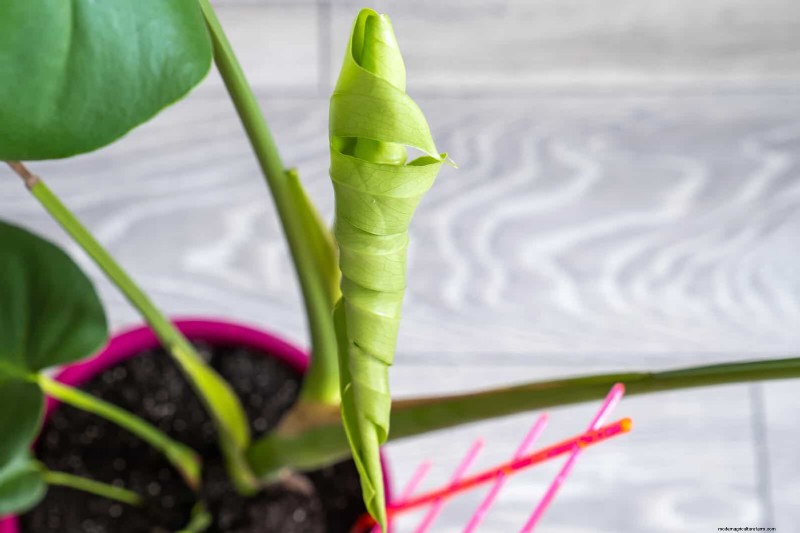
It is incredibly common for a new leaf to look like it is making steady progress, only to suddenly hit the brakes. If you have been nervously watching the same tightly rolled spear for two or even three weeks without any movement, do not panic!
A “stuck” leaf is a very normal hurdle, and it usually just means your plant needs a quick environmental boost to help it cross the finish line.
When a leaf refuses to open, the waxy outer layer has likely dried out. A popular insider trick is to use a warm, damp cloth to soften that dried tissue so the leaf can slide free.
The key here is being extremely gentle. Wring a soft cloth out until it is barely damp, never dripping wet, and lightly rest it against the stuck portion for just a few minutes. Alternatively, you can run a damp cotton swab right along the seam.
A quick word of warning: leaving a soaking wet towel on the leaf or letting water pool in the crevices is a fast track to bacterial rot, which can ruin the leaf before it ever sees the light of day. Always keep it brief and barely damp.
If you prefer a totally hands-off approach, you can skip the cloth entirely by running a humidifier right next to your plant. A humidifier provides a constant, gentle stream of ambient moisture that safely softens the leaf.
If you do not have one, bring your Monstera into the bathroom with you while you take a hot, steamy shower. Both methods provide that exact same softening effect to the leaf, but without the risk of accidentally trapping water in its delicate folds.
Next, do a quick soil check. If the top two to three inches feel dry, give your plant a thorough, deep watering. That rush of hydration provides exactly what botanists call turgor pressure, an internal hydraulic push that the plant physically relies on to expand its cells and pop that stubborn leaf open.
Most importantly, whatever you do, resist the urge to help the leaf unroll with your fingers.
The emerging tissue is incredibly fragile, and manually peeling it back will almost certainly cause permanent brown scarring or tearing. Soften the outside, hydrate the inside, and let nature take care of the rest.
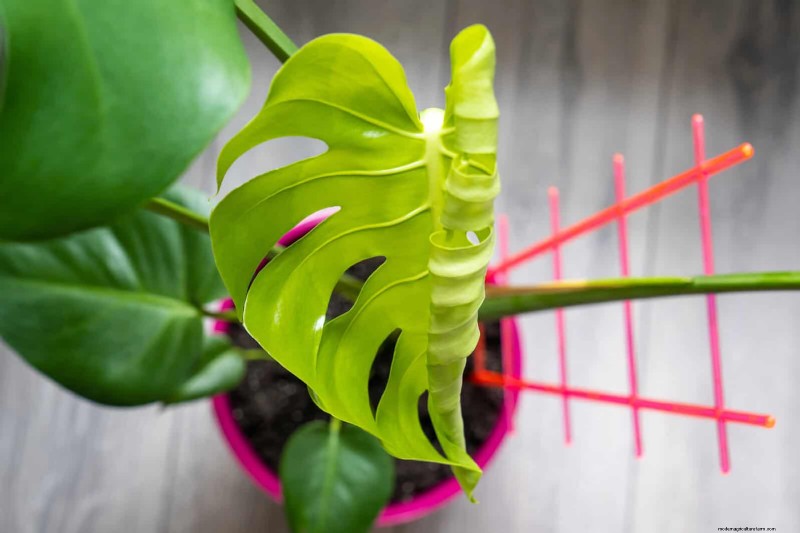
Speeding up Monstera leaf unfurling is really about creating the right environment. Warm, humid air, bright indirect light, consistent watering, regular feeding, and gentle protection all work together to keep your plant happy and productive.
Make even a few of these changes, and the difference can be noticeable within just a few weeks.
Every new leaf is a sign that your plant is doing well and growing in the right direction. With a little attention to these key care factors, those beautiful, rolled-up spears will open up faster and more reliably than ever before. Your Monstera has everything it needs to put on a great show.


