Welcome to Modern Agriculture!

Planning to add fresh sod to a lawn that borders concrete? You’ve come to the right place. We’ve examined the best practices for keeping your lawn healthy while protecting your concrete surfaces.
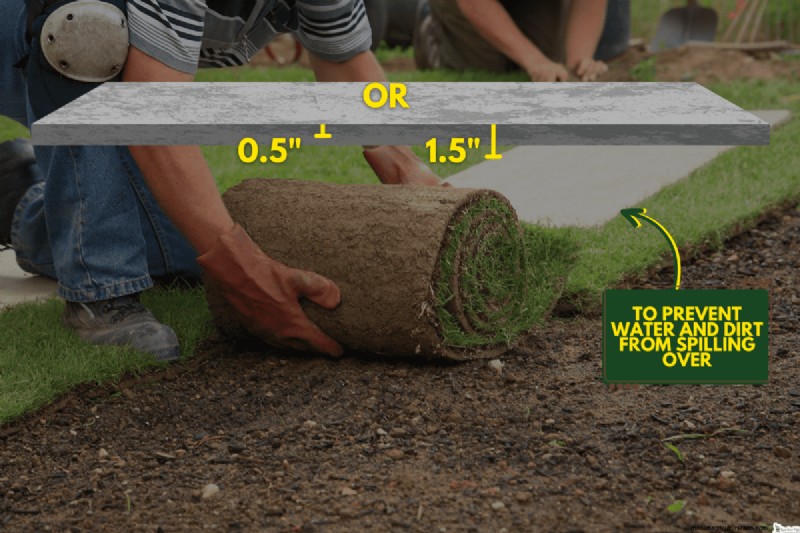
Keep sod a half to a full and a half inch lower than the concrete edge. This simple step prevents puddles, slips, and water damage.
Continue reading for a detailed guide on installing sod next to concrete—and why you should avoid laying sod directly on top of paved areas.
Many lawns pair concrete with grass for a balanced aesthetic and functional surface. The concrete can serve as a walkway, driveway, or patio, while the grass softens the overall look.
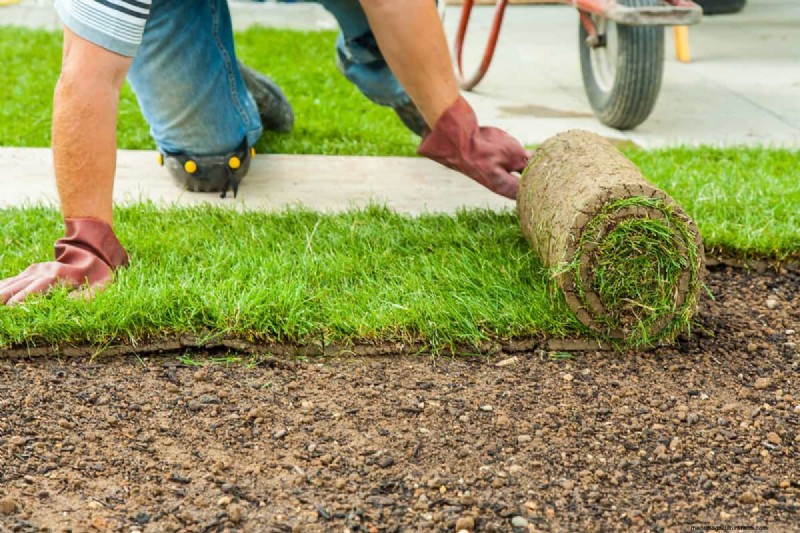
To maintain both appearance and safety, it’s crucial to manage the relative heights of these surfaces.
Some homeowners assume sod should match or exceed concrete level. That practice can lead to persistent puddles, slippery conditions, and eventual concrete damage. Grassy debris can also settle on the pavement, increasing maintenance.
Instead, the sod should sit slightly lower—ideally 0.5 to 1.5 inches below the concrete edge. This allows water to drain away from the pavement, keeping the concrete dry and safe, while the grass receives adequate moisture.
Save this article & also instantly unlock today's gardening deals!
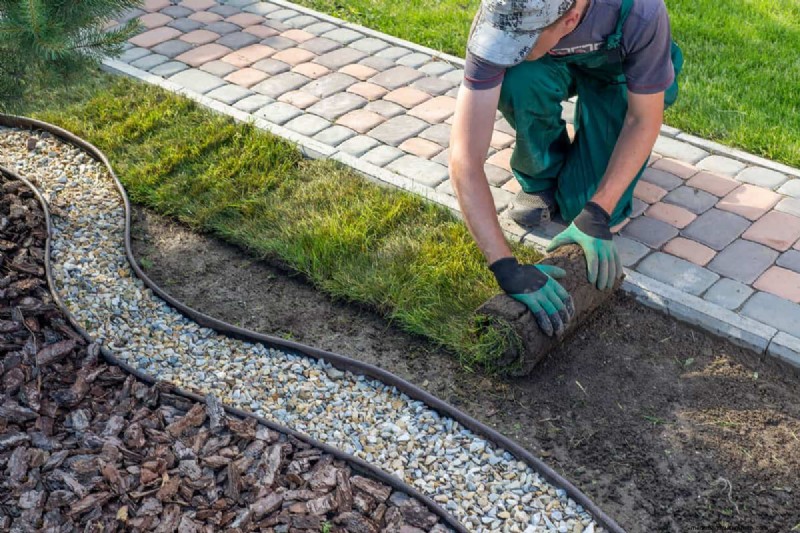
Once you’ve decided on the height difference, follow these steps to lay sod that stays lower than the concrete:
Clear the existing grass, weeds, and unwanted plants from the soil. Renting a sod cutter can make this easier by removing at least ¾ inch of topsoil and any entrenched vegetation.
When there’s no visible grass, apply a non‑selective weed killer to eliminate any hidden roots. This ensures your new sod has nothing to compete with.
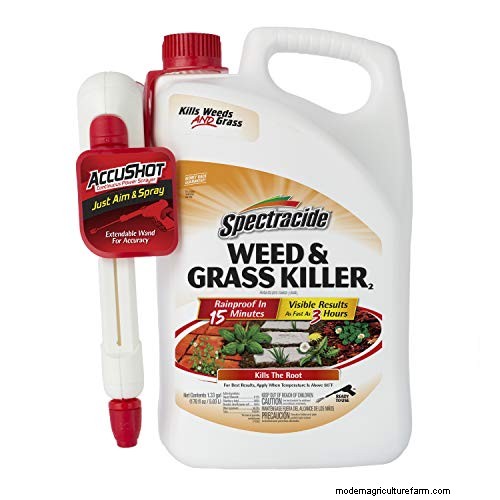
Follow up with a proven weed‑killer product from Amazon to guarantee a clean base for your sod.
Eliminating old vegetation is essential—otherwise, it will quickly reclaim the area and kill your new lawn.
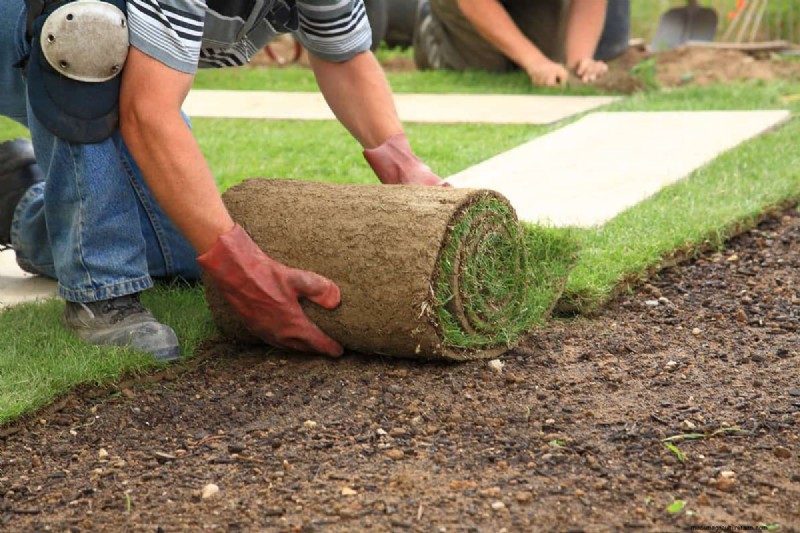
After clearing, prepare the soil to be 1–1.5 inches lower than the concrete. This allows the sod to sit slightly below the pavement, ensuring proper drainage.
If any spot is less than 1 inch lower, redistribute soil from higher areas to create the correct gradient. Conversely, if the depth exceeds 1.5 inches, add a thin layer of topsoil to bring it back into the optimal range.
A sod cutter’s adjustable settings can help you achieve this precise depth, especially if you used a weed‑killer to clear the area.
Finally, remove rocks and debris from the soil to avoid uneven settling and to improve aeration.
Compact the prepared soil with a roller to create a firm, level base for the sod.
Your lawn should not be flat; a gentle slope encourages water to flow away from the concrete. Aim for a 2–3 inch drop over every 10 feet.
This grade allows grass to absorb water while excess moisture naturally runs off the paved surface.
Place the sod right beside the concrete, leaving no gap. This ensures a clean transition and simplifies maintenance.
Maintain at least a 1 cm (about 0.4 inches) lower profile for the sod compared to the concrete edge. If the sod is higher, excavate to adjust the soil level.
Install the sod on the day you receive it to prevent desiccation. Trim the edges with a sod knife to match the concrete’s curves and outline.
Limit foot traffic on the new sod for at least two weeks to allow roots to establish. Use a starter fertilizer and a regular watering schedule to promote healthy growth.
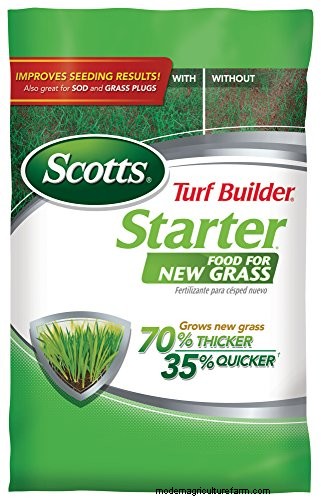
Purchase a starter fertilizer on Amazon to give your new lawn the nutrients it needs.
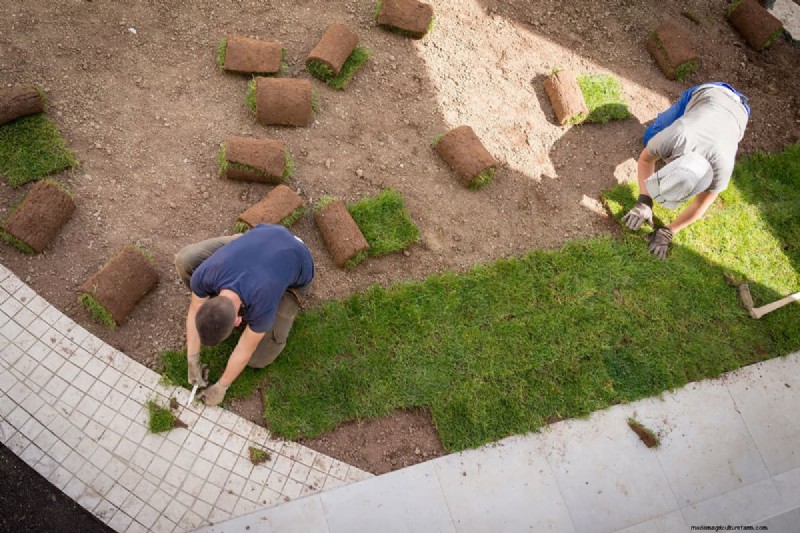
Some homeowners consider converting concrete into green play areas. Adding soil and sod directly onto the pavement is generally not recommended because the soil depth is insufficient for grass roots.
However, if you’re committed, you can create a small “green box” by following these steps:
Explore our recommended grass seeds on Amazon for more options.
Keeping your sod slightly lower than concrete maximizes drainage, keeps the pavement dry, and promotes a healthy, vibrant lawn. A well‑planned height difference protects both your concrete and your grass.
Thanks for staying with us! Check out our related articles:
How Long After Tilling Can You Lay Sod or Plant Grass?
How Much Topsoil Do I Need for Sod?
Written by
Jean Credo‑Figueroa
Jean is a dedicated homemaker and mother who balances a love for the outdoors with her writing. With a background in international banking and humanitarian work, she now channels her experience into insightful gardening content for fellow enthusiasts.
Meet the GardenTabs team →

Editorial oversight
GardenTabs content is reviewed by Steve Snedeker, a seasoned gardener with decades of hands‑on landscaping experience.


