Welcome to Modern Agriculture!

Greenfly/aphids are a sorely well-known nuisance for most gardeners, but they're not the only sap-sucking pest you need to worry about. Whitefly are a close relative of the aphid, and can cause similar problems when their numbers start to escalate out of control.
And in some ways, whitefly present an even greater difficulty than aphids. Unlike aphids, all adult whitefly have wings and are highly mobile, so infestations can take hold and spread extremely rapidly under the right conditions.
Luckily, it's possible to fight back and stop the insects from taking over completely. But first you need to spot a problem before it starts to run out of control.
The term whitefly can refer to many distinct species, with around 20 different ones found in Australia alone. Membership of the whitefly club has more to do with appearance and behaviour than strict biological classification.
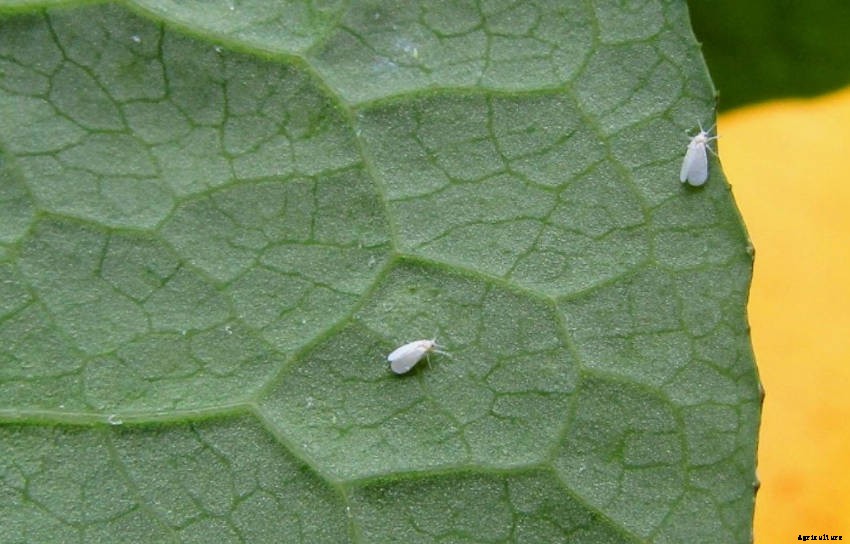
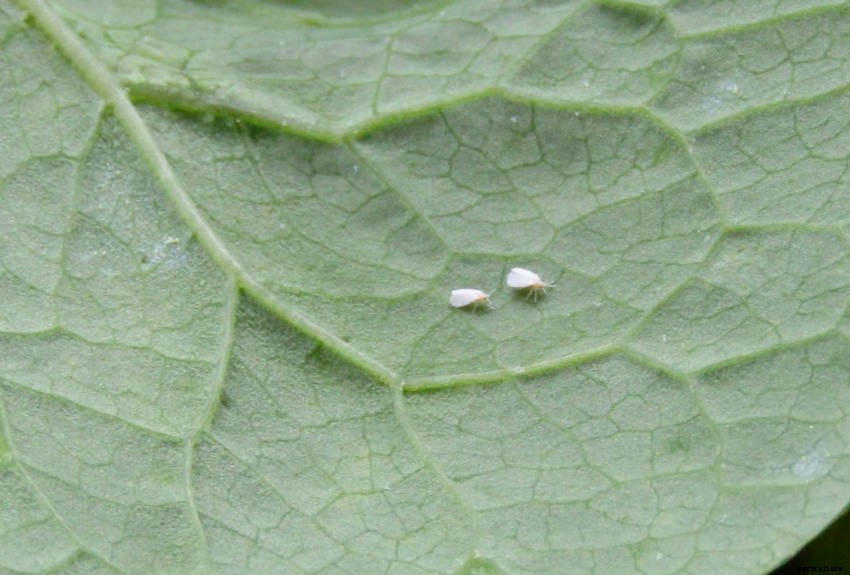
Adult whitefly are 1-2mm long, triangular, and with large wings swept back from the head. They're often described as resembling tiny white moths.
Whitefly nymphs are oval and a pale yellowish green, hairy, and can be mistaken for scale at first glance. In this stage of life, most whitefly species are largely immobile, feeding and developing in place.
The insects prefer warm and moist conditions, and are often called greenhouse or glasshouse whitefly because they thrive most easily under glass. However, they're just as happy to colonise outdoor plants in mild to warm areas.
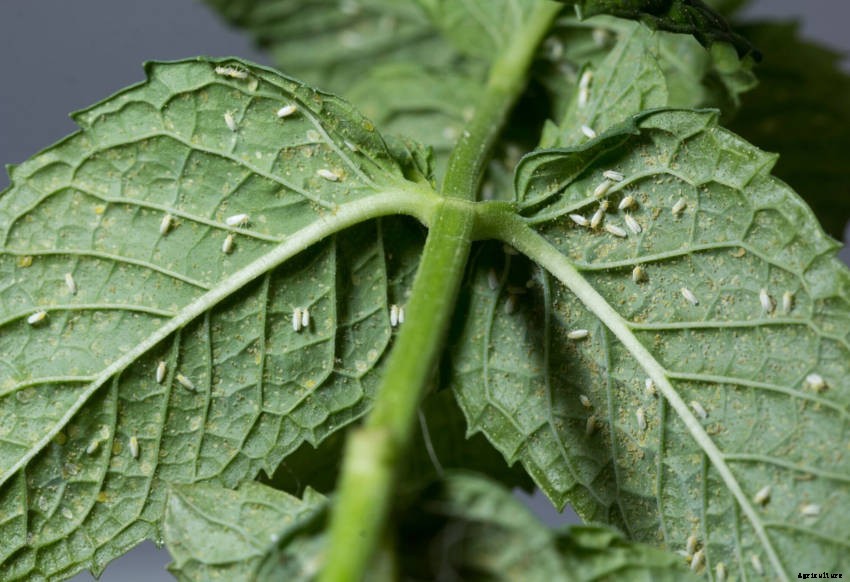
Just like aphids, whitefly tend to congregate on the underside of leaves, although in a full infestation they'll feed anywhere on a plant. One of the most distinctive behaviours of whitefly is their tendency to swarm in groups when you brush against their host plant, forming a short-lived cloud before settling back down to feed.
As with their aphid cousins, the main problems whitefly cause is down to their sap-sucking diet. As they feed, they add digestive enzymes to the plant's system. This directly weakens the plant, slowing growth and reducing resistance to disease.
To add insult to injury, the whitefly produce large amounts of honeydew as waste. This sweet, sticky substance builds up on the foliage below, blocking sunlight and further stunting growth. The honeydew also encourages the development of sooty mould and other fungal infections.
Lastly, whitefly often spread viruses and other pathogens as they move from plant to plant, and can even transport other pests such as broad mite.
All this activity combined can lead to yellowing plants, wilting, and eventual leaf loss. But even in less dramatic circumstances, infested plants will grow slowly, set seed less reliably, and ripen fruits slowly and unevenly.
This may seem a lot of damage for such a tiny fly to cause, but the problem is worsened by sheer numbers. A single adult can lay hundreds of eggs over its potential 4-6 week lifetime, and with up to seven generations a year, an infestation can quickly get out of hand.
While the many species of whitefly mean a large range of plants can be targeted, those most at risk are tomatoes and members of the cabbage family. However, almost any tender, sappy plant can be infested, including peppers, squash, cucumbers, okra, beans, and sweet potato.
In the flower garden, some whitefly species have a preference for orchids, begonia, chrysanthemums, and asters. With these ornamentals, the honeydew deposits will spoil the appearance as well as affecting growth.
Once an infestation begins, it can be an uphill struggle to contain it. Doing what you can to discourage whitefly from gaining a foothold should be your first priority.
However, despite your best prevention efforts, the chances are you'll be faced with a whitefly infestation at some point.
You may be tempted to reach for an insecticide spray, and while these are effective, they're a broad-brush solution that can also kill beneficial insects such as ladybirds and hoverflies.
What's more, whitefly have highly adaptable immune systems, and quickly build up a tolerance to many specific insecticides. Use chemicals too readily, and you may wind up strengthening the whitefly at the expense of other insects.
So in general, physical control methods are a surer bet than chemical ones. Here are eight effective routes to take.
As with so much in gardening, working to create and sustain a healthy and diverse eco-system will do the most to control whitefly numbers. Just keep a lookout for the early signs of an infestation, and you can keep their damage to an acceptable level.