
Welcome to Modern Agriculture!

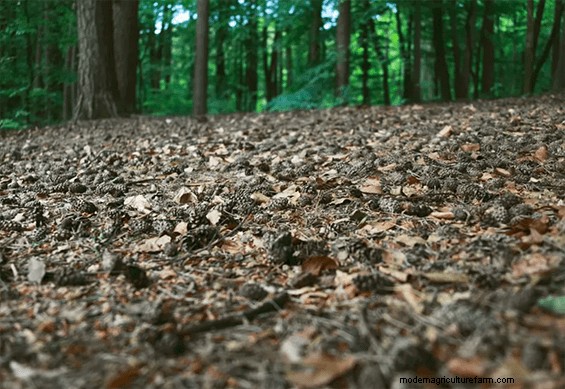
The soil in a grassland, a forest, a wetland and a desert is quietly working, transforming trace gases in the atmosphere.
New research led by Associate Professor Chris Greening from the Monash Biomedicine Discovery Institute has found that more than 70% of soil bacteria feed on the hydrogen, carbon monoxide and methane in the air we breathe. It was previously believed that only 1% of soil bacteria were active in this way.
The study examined soil that was in a “natural” state – in an uncultivated native grassland north of Melbourne, in the Wombat State Forest in central Victoria, in a desert north of Alice Springs, and in the Jock Marshall wetlands on the Monash University Clayton campus.
In each of these environments, trace gases were being transformed by soil bacteria at similar rates. The researchers also examined soils around the world, with the same results.
“So we looked at really different ecosystems, completely different types of soil,” says study co-author Dr Eleonora Chiri. “We found the common denominator was the majority of the bacteria were doing this process.
The study demonstrated that soils “filter out a lot of stuff from the air, much more than we previously thought,” she says.
For example, soils consume “much of the hydrogen in the atmosphere”, she says. If more hydrogen enters the atmosphere – as a result, say, of renewable hydrogen energy projects that will replace fossil fuels – it could reduce our atmospheric carbon dioxide emissions (a good thing) while also affecting the soil.
Atmospheric hydrogen is also “indirectly related to methane accumulation in the atmosphere”, Dr Chiri says. “Although hydrogen itself is not a greenhouse gas, it contributes to methane accumulation in the air, so it has an indirect greenhouse effect.”
But how soil bacteria will be affected by an excess of hydrogen remains unknown – more research is needed, she says.
The interactions of these bacteria with the atmosphere is complex. Until more is known about how soil bacteria function, “we need to preserve the states of our soils. We don’t want to alter the function that the soils worldwide provide us with.”
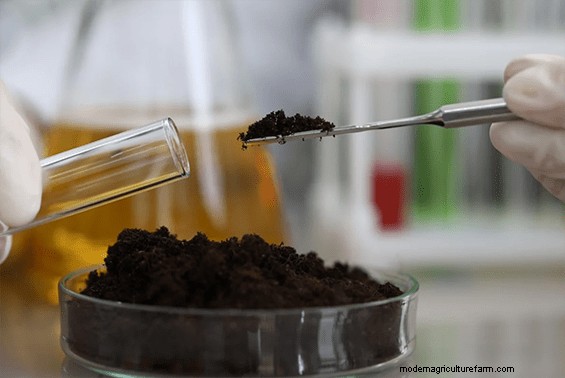
In a separate development, the Australian government-funded Soil Carbon Research Program is investigating the potential of Australian soils to store carbon, as a way of mitigating the effects of climate change.
The Monash soil bacteria research is not directly related to this research, but is relevant to it, says study co-author Dr Philipp Nauer.
“Most bacteria in soil, they’re actually living from soil carbon,” he says. “They live from organic substrates, organic carbon. This study is about other types of bacteria that were previously thought to be minor members (of the soil bacteria community).
“But now we’ve seen that these trace gas oxidisers are much more widespread than previously thought, and they can use both organic carbon and trace gases to gain energy.”
Some of these bacteria also feed on atmospheric methane, for instance – which is 25 times more potent as a greenhouse gas than carbon dioxide.
“They regulate the atmospheric concentration. It’s a favour they are providing,” Dr Nauer says. “And what we’ve seen, what is also an important part of this study, is that there are quite significant differences between the different types of these trace gas oxidisers.
“So in the case of those bacteria that utilise hydrogen and carbon monoxide, they’re much more widespread than those bacteria that utilise methane. And on a global scale, about 75% of all the hydrogen in the atmosphere is taken up by soil bacteria, by these hydrogen oxidisers, where that’s only about 5% for methane. So there’s this imbalance that we don’t quite understand yet.”
Read more: Carbon-capture breakthrough could be a game-changer in utilising CO₂
Agricultural soils are less effective at filtering trace gases than soils that have been left in their natural state, he says, because agricultural soils are more compacted and therefore less porous.
“Forest soils are stronger sinks because they’re more porous – there are more pores in these soils opening to the atmosphere. So I think that from a wider global perspective, it’s important to preserve these ecosystems and soils, and make sure we protect these sinks, because they regulate the gases in the atmosphere.”

This article was first published on Monash Lens. Read the original article.


