Organic Poultry Farming, Raising Methods For Beginners
What is Organic poultry Farming all about?
The following information is about Organic Poultry Farming.
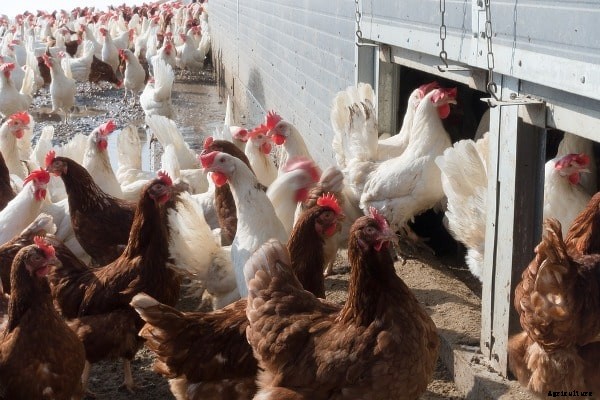
The most important feature of an organic production system is its relationship with different enterprises, where poultry is a part of a wider organic system. It is believed that poultry and agriculture complement each other. The interdependence of poultry and crop cultivation is such that, the crops are supplied with the manure left by the birds and crop cultivation serves as poultry ration and provides straw for bedding. Organic poultry systems are free range and are never kept in cages. So, to start an organic poultry farm one needs to have properly managed and suitable vegetation in the farm area. The organic farm should have proper shelter for the birds and other important features that encourage ranging in birds. If possible there should be access to natural water bodies like streams, ponds or lakes otherwise alternate arrangements could be made that comply with organic standards. It should be clearly noted that the flock size in an organic poultry farm is much smaller when compared to other conventional and free range farms. The main idea to maintain small numbers is to facilitate mobile housing units to move the birds around the farm as an integral part of rotation during farming.
In the organic poultry farms, efforts should be made to reduce all kinds (physiological and environmental) of stress on the birds to a minimum level. Slow growing birds and traditional breeds should be selected for the free range farms. If in case fast growing strains are being farmed, then they should not be slaughtered before 81 days old. In organic poultry farms beak trimming practices are not allowed and birds are free to express their natural behaviour and should have access to sufficient space, facilities and company of other birds. This way of farming birds is termed as positive welfare, where birds are treated with utmost care.
Organic poultry farms believe in the concept of preventing a disease from occurrence rather than curing it. This is done by using the bio-security measures such as cleaning and disinfecting the farms between batches and leaving it to rest for at least two months in a year. Better feeding and watering facilities are also adopted to prevent the spread of diseases. Only certain antibiotics complying with the organic standards are used in the farm during an emergency. Basic sanitation and disinfecting methods are practiced to prevent the spread of diseases in the farm by the visitors and workers.
Organic poultry management plan should be neatly and clearly drafted to be presented to the Accredited Organic Certifying Board for getting the farm registered and it should be noted that this plan has to be updated annually.
Scope and importance of Organic Poultry Farming
Increased awareness for health and well being has contributed to change in human preferences from conventionally produced food to organically grown food. The organic meat sector has increased rapidly in the western countries and is expected to increase further in the upcoming years. This increasing demand has encouraged nations to produce organic poultry products and currently 130 nations are producing certified organic products. India exports organic agriculture products of plant origin (worth Rs 72 crores), but has little contribution into the organic poultry sector. The poultry population in India is huge and a small shift from current conventional methods of poultry farming into organic poultry farming can create a huge market for domestic use as well as export. This would ultimately contribute heavily to the economy of the nation, improve the health of the consumers and would create a balanced ecology. There is a vast scope for the promotion of organic poultry in the country without compromising on the food security issues because of the favorable conditions present in the Country, but there are certain issues which need to be overcome before planning for an organic poultry development unit. These constraints are:
Scope and Importance of Organic Poultry Farming.
Lack of adequate knowledge about organic poultry farming both at the production and marketing levels.
Improper or actually no supporting infrastructure such as financial aid, certifying agencies etc.
Too many strict rules for sanitation and quality followed by the developed countries, which pose a problem for Indian farmers to export their products.
Less training facilities for poultry farmers in India.
Read: Broiler Chicken Farming Project Report.
Important considerations of Organic Poultry Farming
Before starting an organic poultry farm there are many issues that need to be addressed for being successful. Some important factors are:
The soil of the area should be free draining otherwise wet land can be difficult to access and becomes challenging for the birds.
A shelter is a must for poultry and exposed or open locations should be avoided.
Organic poultry farming needs much labour than other conventional farming systems.
Facilities like water and feed should be made available in the house all the time because during the rotation houses may be away from the farm and there could be a possibility of travelling long distances in less ideal weather conditions.
To establish a poultry farm of reasonable size, good capital investment would be needed.
An organic farm lays great emphasis on the feed of the poultry and it mainly concentrates on the home grown food.
Source and Origin of Breeds in Organic Poultry Farming
The breeding methods and strains should comply with the principles of organic farming and two important factors for consideration are their adaptation to the local climate and resistance to diseases. There are a few guidelines that should be considered before getting poultry from the organic farm. They are:
Birds should be brought from production units that follow organic standards or should be obtained from farms where parents are raised under organic conditions.
Poultry transfer between organic and non-organic structures is not allowed. It should be ensured by the certifying body that the poultry in the organic farm is in line with their standards.
Poultry obtained from non-organic farms could be converted into organic by following certain rules laid down by the accreditation body.
Non-organic poultry could be introduced into the organic farm only after obtaining permission from the accredited body under certain circumstances like non availability of organic strains, operating the organic poultry for the first time, introducing a special breed, renewal of the herd in the farm, introducing breeding males into the farm, etc. Before getting permission the poultry should be converted into organic as specified by the certifying body.
Identification and record keeping in Organic Poultry Farming
Organic Poultry are identified based on their batch, herd or flock number. It is important to maintain the record of each bird in a batch so as to make it available to the certifying body during inspection of the farm. The details required to be stored are:
Parental origin and source
Poultry details
Breeding details
Feed
Details of medicines, vaccinations, etc. used on the farm.
Production data
Sale data
Other management methods and materials used
Housing management of Organic Poultry Farming
Organic standards for housing the birds are a little different from the conventional methods and should follow the certain guidelines, such as:
Caging the birds is not permitted.
Poultry should have access to streams, ponds, lakes, etc. whenever the weather permits.
Floor of the poultry house has to be a solid construction and should be covered with litter material like straw, wood shavings (dust free and soft), sand and turf (initial thickness of about 10 cm). Organic standards also permit paper based bedding.
Artificial day lights are permitted in the brooding area for the manipulation of day length, but are restricted to only a few hours a day (16 hours a day).
The farm should have free area for the birds to move freely.
Vegetation on the farm areas is highly essential for the birds to have easy access to feed and water.
If in any case the birds are kept indoors due to certain restrictions, by the certifying agency, then there should be a permanent provision for sufficient roughage and other materials to meet ethological needs of the birds.
The minimum floor space (average space for a day old birds is 30 chicks/m² and for 4 weeks old birds is 10 chicks/m²) defined by the organic standards should be maintained and the aviary cannot have more than three levels above the ground.
When different flocks are introduced, the shelter or building has to be cleaned and disinfected thoroughly and the vegetation should be allowed to grow back by keeping the runs empty.
Other than the above guidelines, the selected are for building an organic farm should have prior permission from the certifying council. 6 to 8 weeks time is allotted for getting permission for the farm and typically the area selected for brooding should be:
Rat proof
Draught free
Well insulated
Easy to clean
Well ventilated
Conversion period
The rules for conversion set by the organic certifying council are as such:
There should be a simultaneous conversion of both the land and poultry, but conversion of land has special rules outlined by the organic council.
The poultry that is being converted into organic can be raised on a farm that should have already undergone a minimum conversion period of 12 months as specified by the organic council.
The conversion period starts with the date of the first inspection.
If the land and poultry conversion is not simultaneous then the poultry must be raised for a certain period of time as defined by the organic board before the products could be sold as organic (min time for raising meat poultry is from the 2nd day of hatching till the entire life span and eggs for 6 weeks).
Feed management of Organic Poultry Farming
Feed for the poultry could either be in the form of pellets or mash. Pellets are better utilized when compared to mash and should be in micro-sized. Processed agriculture food that is organic in nature like fermented grains, processed fruits and vegetables are all permitted as feed for the poultry. All the farm grown food should be organic in nature and the products obtained from the poultry would be certified organic only when they are fed with at least 85% for ruminants and 80% for non-ruminants (dry matter basis) with a feed from organic sources complying with the certifying council guidelines. There is a long list of permitted feed items for the poultry and these can be found on the website of the Organic Certification Board.
It should be clearly understood that supplements could be added to the feed only after getting permission from the organic council upon the advice of a qualified veterinarian. The feed that is being given to the poultry should never contain substances that have been genetically modified. Feed prepared from chemical solvents or chemically treated feedstuffs are not permitted for use in the organic poultry. Non-protein nitrogen compounds or substances with synthetic nitrogen are also excluded from the list of organic feed for the poultry.
Some important details for using additives and processed feed are given below:
Substances used for processing like emulsifiers, stabilizers, surfactants, etc. should have an organic origin.
Natural anti-oxidants are permitted.
Natural acids can be used as preservatives in feed substances.
Substances like colouring agents, flavours, odour masking agents and appetite stimulants, etc. should be organic in nature i.e. must have been produced naturally.
Antibiotics, medicines, growth promoters, etc. are not allowed to be fed to the poultry in the organic farm.
Additives for crop residues should be obtained only from sea salt, yeasts, enzymes, sugar, honey, lactic, acetic, formic and propionic bacteria (natural), whey etc.
Health care management in Organic Poultry Farming
Care in Organic Poultry Farming.
The main focus on poultry health is to prevent the occurrence of diseases by following the basic principles of health management. The entire flock or batch of birds is tested initially for any symptoms of diseases by a qualified veterinarian and a health care schedule is developed. The principles of health care are:
Choice of right breeds such that they adapt to the climate and environment.
The farm area should have proper requirements and should focus on sanitation.
The poultry birds should be provided with quality feed and should be able to have regular open-air runs to develop a natural immunological defense.
The main aim of treating a disease is to remove the pain and suffering from the animal, even if it may need the use of medicines that do not comply with organic standards.
All vaccinations used in the poultry should have prior permission from the organic council.
Under performing poultry or birds with diseases could probably be treated with homeopathic or Ayurvedic products and not with antibiotics (unless prescribed) only under the supervision of a veterinarian.
Prevention of diseases or enhancing productivity through the use of allopathic drugs or antibiotics is not permitted.
Hormonal treatments that are therapeutic in nature can be carried out under supervision, but growth stimulants are strictly prohibited from use.
Breeding management of Organic Poultry Farming
Organic farming procedures in poultry sector not only focus on feed and health, but give prime importance to respect the birds and protect them with care. Breeding principles for organic poultry farms as prescribed by the certifying council are:
Breed selection should be appropriate according to the conditions of the local area.
Reproduction should be natural (preferred), but artificial insemination can be sometimes used.
Breeding techniques that use genetic engineering should not be used in organic farms.
Hormonal treatments could be used only if they are therapeutic and aim to correct physiological problems.
Mutilation techniques like trimming beaks are not permitted unless they are authorized by the accredited body for safety reasons or for improving the health of the birds. Surgical procedures could be carried out only at the appropriate age to reduce pain and suffering.
Waste management of Organic Poultry Farming
The waste from the farms should be properly disposed such that:
There is minimum soil and water degradation.
No nitrates, phosphates or pathogenic bacteria are contributed to the ecology.
Optimum recycled products with nutrients are obtained.
Practices like burning are not recommended for organic farms.
Storing, composting and handling the manure from the poultry should be done in a proper way to prevent contamination of ground or surface water.
Application of manure on the farm should never contaminate it and the density or application rates are defined by the accredited certification body based on the local conditions of the farm.
Slaughter of birds
Slaughter of Chickens.
There should be minimum stress and suffering during the slaughter of birds, according to the organic standards.
The poultry should be cleaned and disinfected using the products prescribed by the organic council.
Packing of poultry products should be done in a hygienic way complying with the standards of the organic council. There should be no use of chemicals during packing.
There should be separate rooms for washing and disinfection. Slaughter and bleeding, feather removal, chilling and packing etc.
There is minimum age set for slaughter for birds of different breeds such as fast growing strains can be slaughtered after 81 days of age; slow growing birds after 70 days of age. Slow growing poultry indicates the fact that live weight gain per day is less than 45 g.
Transportation
The birds should be transported very carefully and there should be no stress, injury, hunger, thirst, malnutrition, fear, discomfort, pain or disease during transport of birds. Some rules for transport are:
Proper arrangements before the journey to meet the needs of the birds.
Birds should be healthy while transport.
Loading and de-loading should be designed in such a way that they are non-injurious to the birds.
Trained personnel should be appointed to handle the birds during the journey.
Birds should be regularly monitored during the journey.
Space for the birds should be sufficient to create comfort during transportation.
Water, feed and rest should be provided at regular intervals during the transportation of birds.
Stress in birds due to fatigue, disease, overcrowding, noise, different breeds, temperature change, etc. should be carefully handled while transporting the birds.
Tranquilizers or electric stimulators are not permitted while loading or unloading of stock.
Products used for cleaning and disinfection
Not all products can be used to clean the organic farms. Certain authorized products specified by the accredited certification body are:
Potassium and sodium soap
Milk of lime, lime, quick lime etc.
Alcohol
Formaldehyde
Natural plant essences
Caustic potash
Sodium carbonate
Water and steam
Hydrogen peroxide
Read: Rabbit Farming Business Plan.
Advantages of Organic Poultry Farming
There are some advantages with organic poultry farming:
Organic poultry farms are generally free range farms, so the birds have access to pasture.
Improves the ecology of the area where the farm is set up due to the methods involved in the farming.
Extremely less or no use of chemicals, which is the most important factor to influence the health of the consumer.
The taste of the birds or quality of the products is better than the other conventionally farmed birds.
Low investment because there is interdependence of cropping and poultry within the same farm.