
Welcome to Modern Agriculture!

Chickens & Flocks
by Grubbly Farms | 04.25.2025
Last updated: 09.22.2025
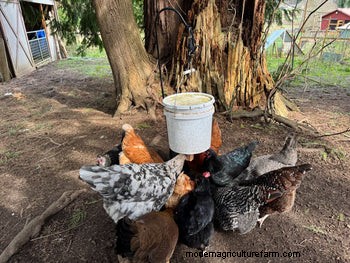
This post comes from our friend Bri. Follow her on Instagram @chickenchaserbr to follow her chicken keeping journey.
If you’ve kept chickens for any length of time, you may already know that rats love to tag along. They’re sneaky, drawn by the warmth of the coop and an endless supply of chicken feed. Often, they stay hidden, leaving behind only subtle clues: empty feeders that shouldn’t be empty, droppings that clearly don’t belong to the chickens, or small nests tucked around the coop.
When rats move in, they settle quickly, especially if there’s a steady food source and no predators to worry about. We learned this the hard way when we purchased our 2.5-acre farm. The previous owners had moved on nearly a year before, leaving behind an empty chicken coop filled with straw—an ideal hideaway for rats. By the time we moved our own chickens onto the property, the rats were already making themselves at home.
At first, I couldn’t believe it. Our chicken feeders, which typically lasted a week, were empty in less than a day. I tried scattering feed on the ground morning and evening, but it didn’t take long before the rats grew bolder. What started as the occasional sighting quickly turned into a full-blown invasion, with up to 20 rats comfortably dining alongside our chickens every day.
Clearly, it was time for a solution! We opted for barn cats, a fantastic line of defense against the rats. But if you don’t have cats (or just want a foolproof backup), a rat-proof feeder can be a game changer. And if you’re up for it, why not go for both? Today, I’ll walk you through how to build a feeder that keeps the rats at bay, no matter how determined they are.
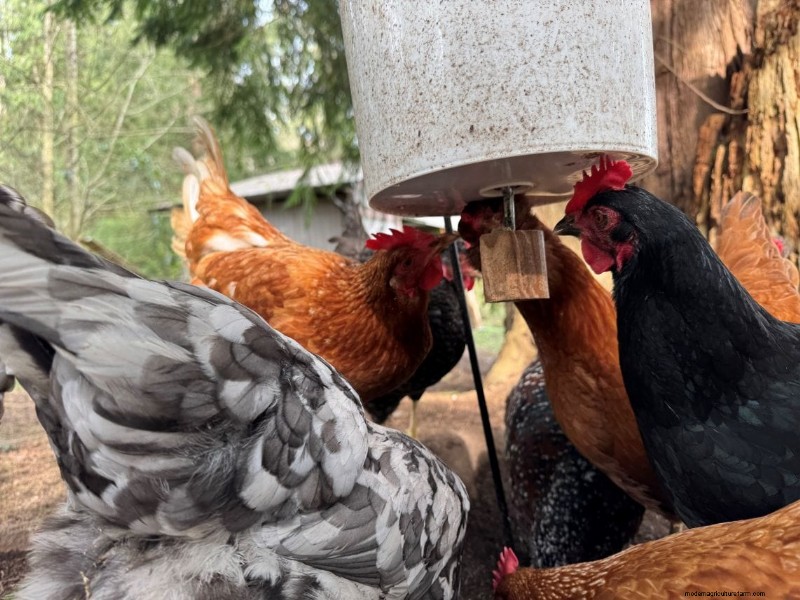
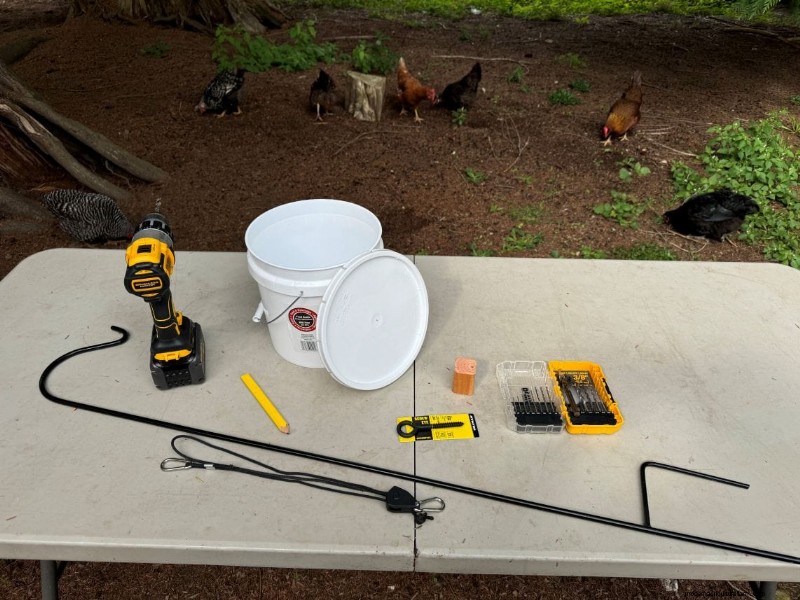
Here’s a list of everything you’ll need to make your own efficient and simple chicken feeder:
Shepherd’s Hook (Optional)
Rope or Pulley System (Optional)
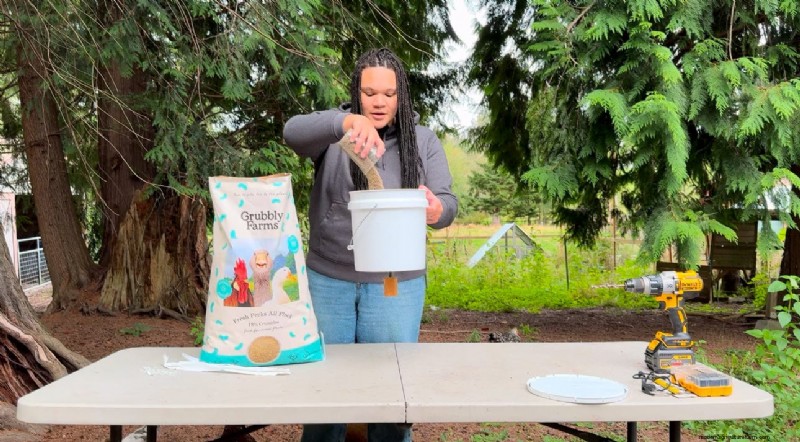
Step 1: Drill the Hole
Step 2: Add the Eyebolt
Step 3: Secure the Block of Wood
Step 4: Add the Lid
If you don’t have a fixed mount, here’s a simple solution:
By following these steps, you’ll have a functional and efficient feeder that works for chickens of all sizes!
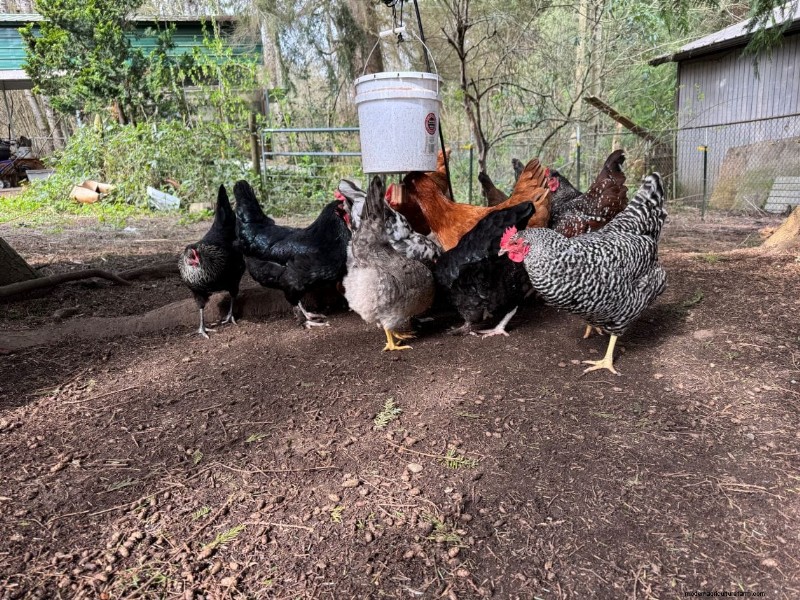
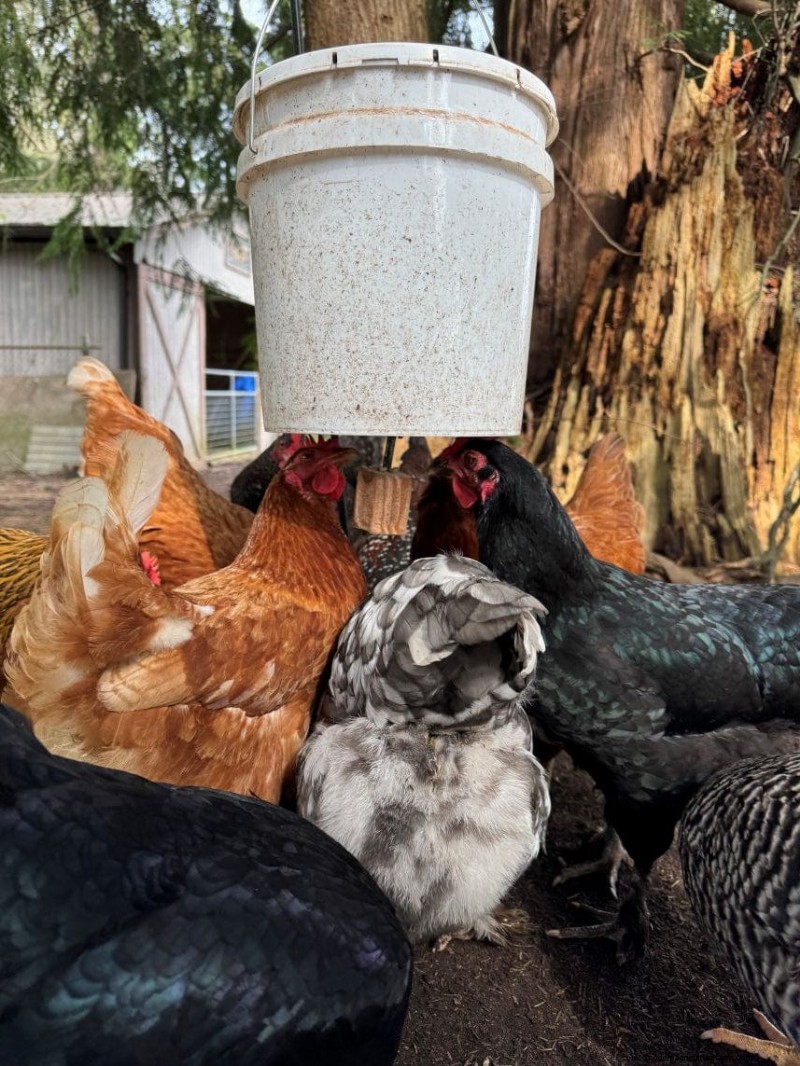
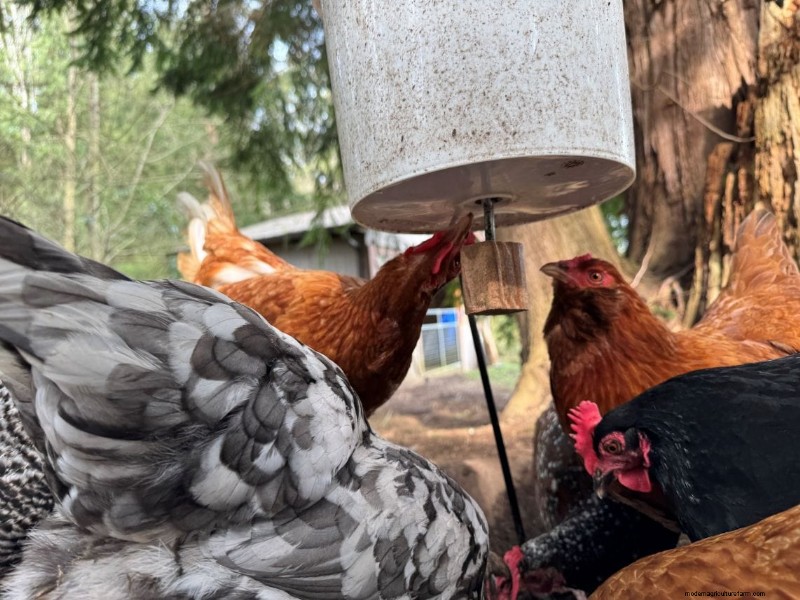
Share your DIY feeders with us on Social Media and tag @grubblyfarms so we can see your handy work!
Thank you so much for reading! I’m Bri, just a city girl who decided to get a few backyard chickens in 2021, and, well, the chicken math hasn’t stopped mathing since! I am now up to 17 chickens and 2.5 acres of farmland. You can follow my adventures, tips, and plenty of laughs on Instagram: @chickenchaserbri. Happy clucking! 🐔


