Hyacinths bloom in midspring, filling the garden with a burst of pastel colors when most of the garden is just waking up. Their fragrance is so intoxicating that they've been called "nature's perfume." Like most perennial bulbs, they're easy to grow and come back year after year! Hyacinths are also wonderful for container gardens. Here's a guide to growing and caring for hyacinths.
About Hyacinths and Grape Hyacinths
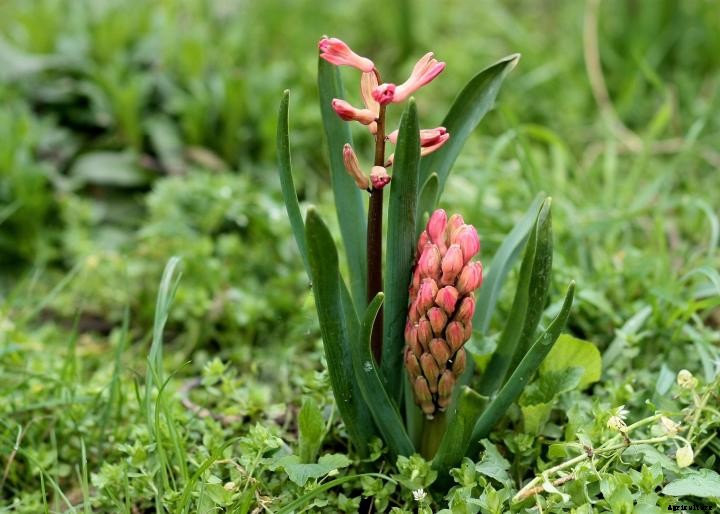
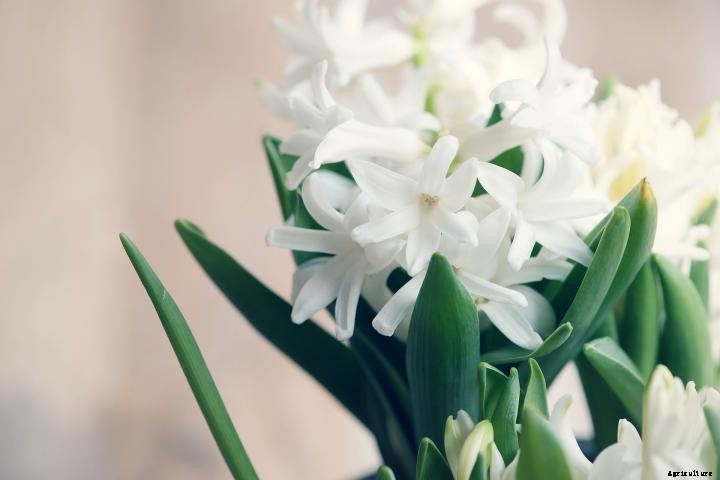
- Hyacinths (Hyacinthus): Originally a pale blue or violet flower, hyacinth now come in a rainbow of colors including lilacs, pinks, white, cobalt blue, cream, apricot and even a blood red hue. Each hyacinth bulb generally produces one flower stalk that stands 8 to 10" tall. The hyacinth's loose-to-dense racemes (clusters) of strongly fragrant flowers may be closely-packed single or double flowers.
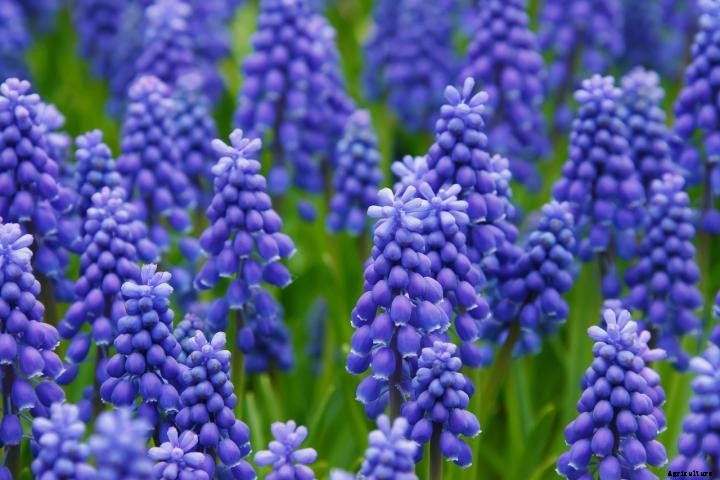
- Grape hyacinths (Muscari) are not directly related to true hyacinths, but also bloom in mid-spring and have the same care requirements. This tiny wonder has has small clusters of bell-shaped, cobalt-blue flowers.
On this page, we will refer to both Hyacinthus and Muscari plants as "hyacinths" for simplicity's sake!
As hyacinth are one of the first blooms, they look best at the front of a perennial garden, near the front door, along a walkway or in mixed borders. These beauties are also a great choice for pots and planters. Hyacinth make wonderful cutting flowers, too, and look stunning in bouquets. As the flowers are famous for their fragrance, you can bring the sweet scent of spring inside!
The Victorians revered hyacinths for their sweet, lingering fragrance, and carefully massed them in low beds, planting in rows of one color each. In general, hyacinths are said symbolize playfulness, sport, and rashness, though meanings are color-dependent. Learn more about the meanings of flowers.
Please note: Most hyacinths grow in zones 3 to 9. They must have cold temperatures of 40 to 45°F for at least 12 to 14 weeks. If temperatures in your area do not get this cold, you’ll need to pre-chill the bulbs in a refrigerator before planting them outdoors.
Planting
When to Plant Hyacinths
- Plant hyacinth bulbs in mid-to-late autumn, any time after your first fall frost and before the ground freezes.
Choosing and Preparing a Planting Site
- For the largest blooms and straightest stems, choose a site that gets full sun. The bulbs are tolerant of partial shade as well.
- Grow in loosened, moderately fertile soil that drains well. Avoid low areas where water collects; hyacinths will rot in wet soil.
- Before planting, loosen the soil and work in 2 to 4 inches of compost or bonemeal for fertility.
How to Plant Hyacinths
- Plant hyacinth bulbs 6" deep. Space 5 to 6” apart (grape hyacinth can be 2" apart). At the northern limits of their hardiness (USDA Zone 3), plant 1 to 2 inches deeper to ensure winter hardiness.
- If you wish to plant 5 or more bulbs at the same time, dig out a larger area. Hyacinths look beautiful in groupings of 5 to 9 bulbs.
- Grape hyacinth also look best in masses and loose drifts.
- Set the bulb in the hole with the pointy end up.
- After planting and covering with soil, water thoroughly.
- Apply a 1-to-2-inch layer of mulch around the plants to discourage weeds and disease.
- If you are transplanting, water sparingly and then do not water again until flower buds appear the following year.
- Warning: Hyacinth bulbs (and daffodil bulbs) contain a substance called oxalic acid, which can be irritating to bare skin. Use gloves when handling these bulbs for extended periods.
Forcing Hyacinth Bulbs Indoors
- Hyacinth bulbs may be forced into early growth for indoor display in the winter. Plant them with the tips just showing, in soil-based potting mix in containers with drainage holes.
- Keep in a dark place at temperatures above freezing but no higher than 45°F (7°C), for at least 10 weeks to allow roots to develop.
- When shoots are about 1 inch long, increase light and temperature gradually.
- Water carefully, avoiding wetting the shoots or waterlogging the soil. Soil should be moist, not wet.
- After flowering, forced hyacinths may be transplanted to the garden and they will flower again in subsequent years.
Care
Caring for Hyacinths
- Do NOT overwater hyacinth. They do not like stand water or to have "wet feet." Water ONLY if the soil is dry at a depth of 3 inches. If it is dry at that depth, it is time to water.
- Water deeply at soil level, not from overhead or with a sprinkler which encourages disease. Lay the hose end next to the plant, turn the hose on low and water for about 30 minutes or until the soil is moist. A soaker hose turned on low for a few hours will cover a larger area effectively.
- With the organic matter and mulch, you do not need to fertilize. However, it's fine to sprinkle a commercial organic fertilizer over the soil.
- Protect container-grown plants from excessive winter moisture by keeping them covered or moving them to a sheltered area.
Pests/Diseases
- Bulbs are prone to gray mold and bulb rot when kept too wet.
Recommended Varieties
- Hyacinth Orientalis Blue Jacket: One of the great blues of the flower world. These award-winning hyacinths display big columns of royal blue florets with crisp white edges.
- Hyacinth Orientalis City of Haarlem: A wonderful heirloom variety that's been popular since the late 1800s. The flowers are soft, primrose yellow, maturing to creamy white.
- Hyacinth Orientalis Gypsy Queen: Gypsy Queen is an heirloom hyacinth with salmon pink petals that have peach and buttery-yellow highlights.
- Hyacinth Orientalis Jan Bos: Intensely fragrant, this award-winning hyacinth has fuschia-pink florets that are tightly packed into large flowerheads.
- Hyacinthus Orientalis Miss Saigon: With a deep rich purple color, this fragrant hyacinth is covered with starry, violet florets. Gorgeous!
- Hyacinth Orientalis Pink Pearl: Rose-pink flower heads turn heads with their cotton-candy sweetness; Pink Pearl is favorite for spring containers to add a pop of color.
- Muscari Armeniacum: This Grape Hyacinth has small and delicate cobalt-blue flowers which look gorgeous when planted en masse.
Grape Hyacinths
Harvest/Storage
What to Do With Hyacinths After Flowering
Outdoors
- After your hyacinths have finished flowering, remove the blooms, but don't remove the foliage. The bulbs need their leaves to gather energy for next year's blooms. At the end of the spring season, the foliage will die back naturally. Remove when the leaves have turned brown to help prevent fungal diseases.
- Hyacinth bulbs can remain in the ground throughout the year in most planting zones. If you live a warm climate where temperatures do not get below 60°F, bulbs should be dug up in the fall and refrigerated in a cool, dry area for 6 to 8 weeks. Hyacinths require a period of colder weather to bloom.
Indoors
- Hyacinth bulbs that have finished flowering indoors can be transplanted to the garden. After flowering, they need time to gather energy for next year's blooms, so they should not be placed directly into storage.
- After their foliage dies back outdoors, hyacinth bulbs can be brought indoors and stored in a cool, dark, dry place until the fall or winter.
Wit and Wisdom
Frequently Asked Questions
Are Hyacinth Bulbs Poisonous to Cats and Dogs?
Yes, hyacinth bulbs are poisonous to pets. Many spring flowers, such as hyacinths and daffodils, contain a compound that may cause stomach and respiratory issues, as well as skin irritation. This substance—calcium oxalate—is most concentrated in the bulbs, but is also found in the foliage and flowers of the hyacinth plant. Keep hyacinths out of reach of curious pets and children, and wear gloves when handling hyacinth bulbs for long periods of time.
The one upside to the hyacinth's toxicity is that common garden pests, such as squirrels and groundhogs, often aren't as tempted to eat your hyacinth bulbs!
Will Hyacinths Bloom Again?
Yes and no. Hyacinths bloom just once per year (in the spring), but they will happily bloom again in subsequent years if provided with the proper care. They are a perennial plant.


