Welcome to Modern Agriculture!

Squash bugs can be the bane of a gardener's existence! Here are tips on how to identify, control, and get rid of squash bugs in your garden.
Squash bugs are very difficult to manage once their numbers get out of control and can cause a lot of havoc.
They are most commonly found on squash plants (hence the name) such as zucchini, winter squash, and pumpkins, but they may also affect other crops in the cucurbit family (like cucumbers, cantaloupe, and watermelon). Other pests that are commonly found on squash include squash vine borers and aphids.
Generally, they attack young tender plants and seedlings, causing them to wilt and die. However, they cause little damage to plants in late summer and fall.
Note: Squash bugs are often mistaken for stink bugs, as they are similar in appearance and both have a foul odor when squashed. However, stink bugs are wider and rounder than squash bugs.
IdentificationThe adult suqsh bug is a flat-backed insect that's fairly large (over 1/2-inch long). They are usually dark gray to dark brown.
The edges and undersides of the abdomen have orange stripes. They are able to fly, but they often simply walk around on plants.
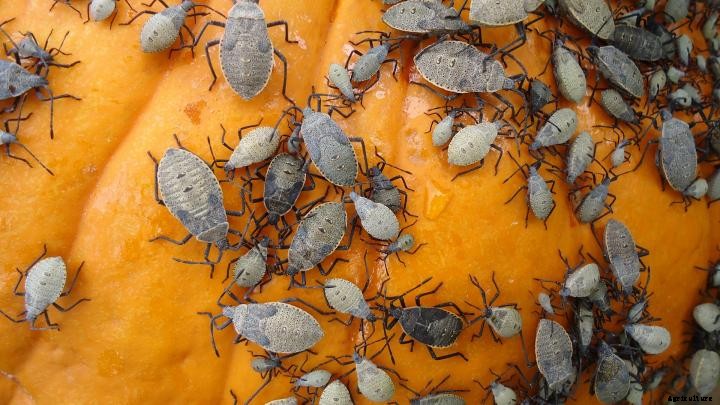
Young squash bugs, or squash bug nymphs, are gray and have black legs. They move quickly and often congregate in groups on the undersides of leaves.
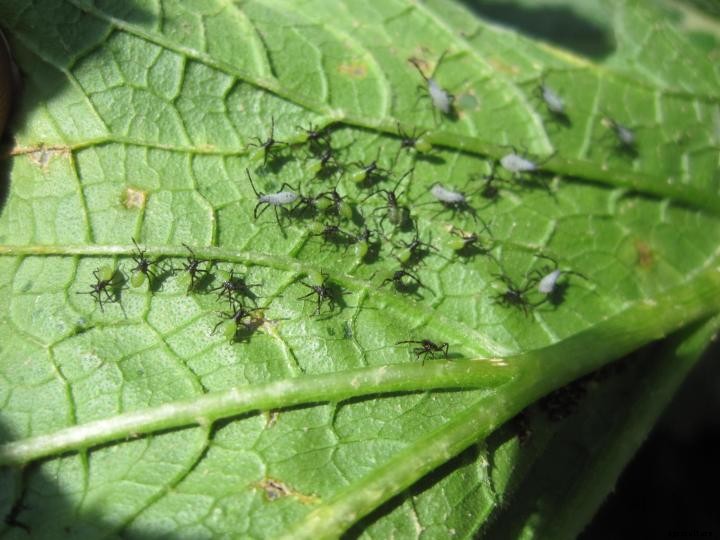
Squash bugs overwinter in dead leaves, vines, under boards, and even in buildings.
In early June, they mate, laying small clusters of eggs (about 20) on the undersides of the leaves and the females will continue to lay eggs through mid-summer. You'll find adults beneath damaged leaves and near the plant crown, where they use their piercing mouthparts to suck out nutrients from the plant.
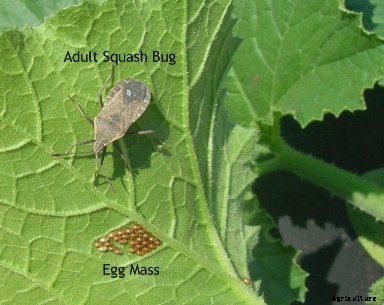
These bugs inject a toxin into the plant and suck the sap right out of it with their sharp, sucking mouthparts. This causes yellow spots that eventually turn brown. The leaves will wilt because the damage prevents the flow of nutrients to the leaves, and then they will dry up and turn black, crisp, and brittle. The leaves also sometimes have ragged holes. Smaller plants will die, and squash bug feeding can decimate young fruit.
The wilting can resemble bacterial wilt, which is a disease spread by cucumber beetles (yet another squash pest), so be sure to find the bugs or eggs and identify them correctly.
Control and PreventionUsing pesticides
Insecticides are not effective to manage squash bugs once they are adults, so don't bother trying.
In the event that you catch the squash is wilting very early in the season and you catch this when eggs are hatching, then insectide application is probably needed to manage it. See your local garden center or cooperative extension service for controls that are locally approved. The best time to apply pesticides is early morning or late at night (during minimum bee activity). Be sure to spray underneath the leaves, where most squash bugs are found.
It is not necessary to treat squash bugs found in the garden during late summer or fall.