
Welcome to Modern Agriculture!

Have you been thinking about setting up a hydroponic system in your greenhouse? If so, you are in the right place! Before rushing into hydroponic gardening, it’s a good idea to take the time to learn the basics and consider which option is right for you.
The good news is, starting a hydroponics system in your greenhouse can be easy and inexpensive. Most hydroponics systems can even be made at home with materials you already have available!
There are several types of hydroponic systems. In this article, you’ll find out which system is most suitable for you, what you’ll need to get started, and how much it might cost. We also provide a step-by step DIY guide on getting started with one of the simplest hydroponics systems!
Hydroponics might seem like a modern, inventive growing method, but in fact it has actually been around for centuries. Instead of growing plants in soil, hydroponics utilizes water (as the name suggests) to provide the plants with the necessary nutrients to grow.
Today, hydroponics is a great alternative solution to traditional agriculture. Not only is it becoming harder to find suitable land to grow, but there is a lot of potential for growing food using hydroponics, especially in urban areas. Plus, hydroponics uses less water than traditional agriculture and can grow more food in less space.
Since there is no soil to provide all of the nutrients a plant needs to grow and survive, the key to hydroponics is adding the right nutrients to the water. For this reason it is best to get complete liquid nutrients (also called plant food) and to follow the product’s dilution instructions.
Make sure to check out our guide on the pros and cons of hydroponics here!
Hydroponics can be used to grow all kinds of plants, though some plants are easier than others to grow using this method. Plants such as ornamental flowers, herbs, and greens are some of the most commonly grown plants in hydroponic systems.
Especially when you are starting out, it is a good idea to choose plants that have a higher tolerance for being grown without a traditional substrate (soil). Some of the easiest plants to grow using hydroponics include:
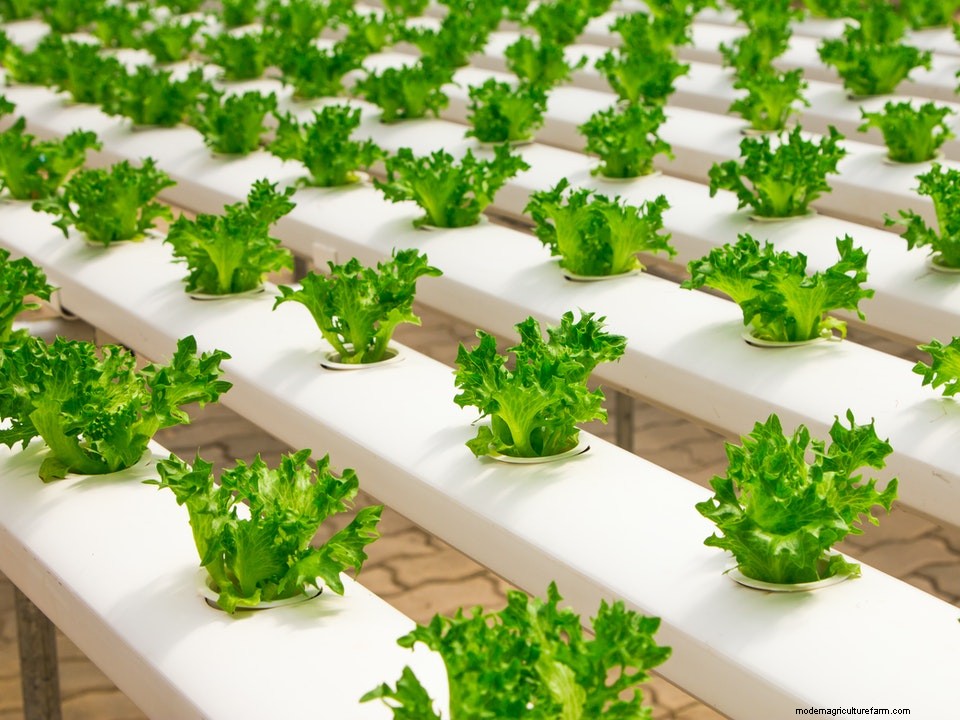
Most flowering and fruiting plants tend to be a little more difficult to grow this way because of their size and weight, but with the right hydroponic system they can also be grown with great success:
Finally, some plants to avoid when you are starting out with hydroponics include root vegetables like carrots, beets, and potatoes, as well as trees or shrubs. These have more requirements and are typically much more difficult to grow hydroponically.
There are six different types of hydroponic systems. They can be divided into two categories: those with roots in substrate and those with roots directly in water or without substrate. While some hydroponic systems are very simple to install, others can be quite complicated.
We will describe each system below so you can get an idea of which is best suited for you and your greenhouse. Of the six systems, the most beginner-friendly ones are: Deep Water Culture, Ebb and Flow, and Wick.
The wick hydroponic system is a beginner-friendly option you can easily set up in your hobby greenhouse. Unlike other hydroponics systems, it doesn’t require an electric pump to transport the water and nutrients to the roots of the plants.
Instead, a wick runs from the roots down to a reservoir of water and nutrients. The wick can be as simple as a string! The plants are usually grown in a substrate such as rocks, sand, or even wool.
This is one of the easiest DIY systems as you can set up. You just need:
This system works best with individual plants and is less efficient on a large scale. In addition, with this method it is recommended to use plants that require little water so that you don’t have to keep filling the reservoir.
Ebb and flow is a very efficient hydroponic system that’s easy to maintain. With this system, the trays holding the substrates and plants are temporarily flooded so that they absorb the nutrient solution. Once the substrates adequately absorb the nutrients, the solution is drained back to the reservoir.
This technique allows for different types of substrates and a variety of vegetables. However, this system relies on a pump to move the water, so you have to make sure it is always functioning to prevent the roots from drying out.
This system is similar to traditional drip irrigation but differs in that excess water can be collected for reuse, making it more efficient. This system consists of a separate reservoir with water pumps and small tubes that feed the pots at specific intervals using a timer.
Although this technique allows nutrients to be used more efficiently, it can be more difficult to control the pH and quality of the nutrient solution.
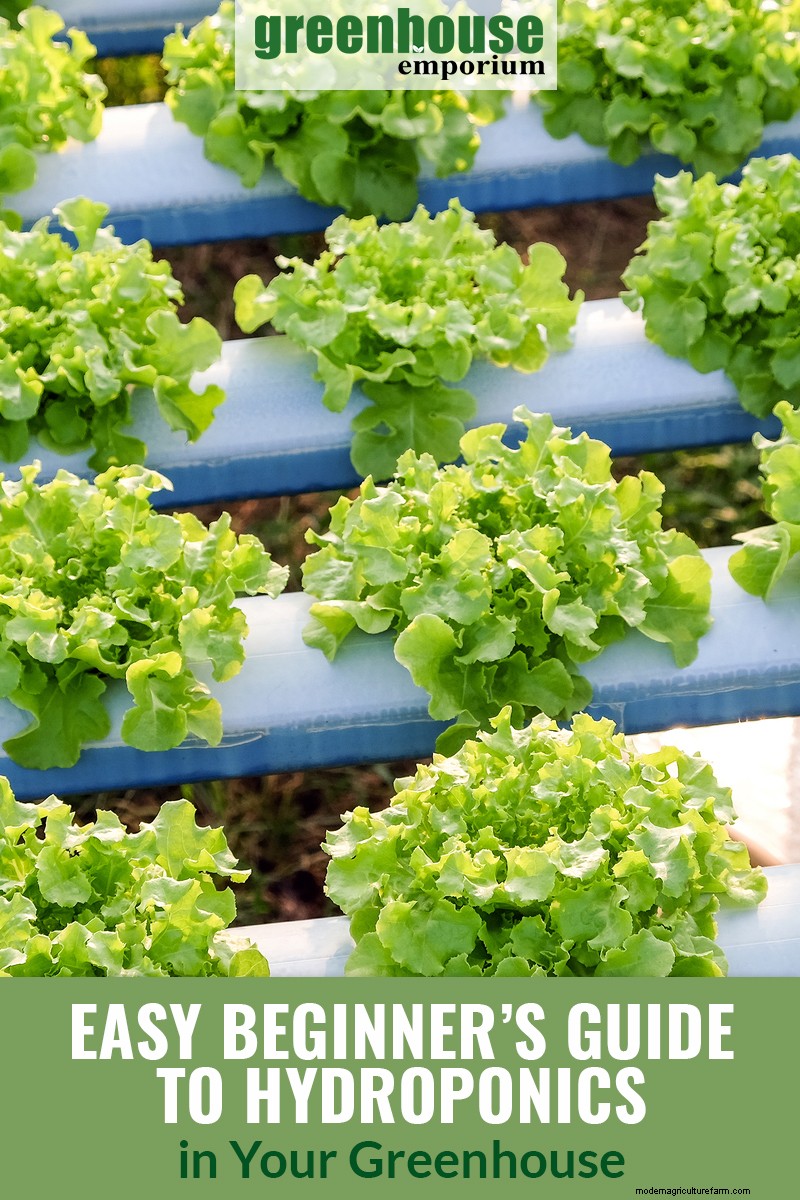
The nutrient film technique is one of the most widely used systems for herbs, flowers, and greens in the hydroponic industry. It requires a pump to transport the water and nutrients into the containers (typically large PVC pipes) where the plants are suspended in individual mesh pots.
The plants receive nutrients from water that is constantly being circulated through the tubes. If you decide to go with this method for your greenhouse, you’ll most likely want to install rows of PVC growing trays with removable lids.
Deep water culture is a floating root system that is ideal for small plants such as lettuce and some aromatic plants. This system is most popular with commercial growers. It entirely covers the roots with nutrient water solution, so they are never lacking for water or nutrients.
DWC is one of the simplest and lowest cost systems. It is often used in educational activities and in classrooms. It is not recommended for tall and heavy plants or for those with underground growth such as carrots, onions, or potatoes.
If hydroponic systems use less water than traditional agriculture, aeroponics is the technique that uses even less water! Since the roots are suspended in the air, the plants receive the nutrient solution through a sprayer and the oxygen is taken from the air.
Aeroponics systems use less nutrients but they can be a bit cumbersome. The plants need to be in dark containers and need to be sprayed with the nutrient solution every few minutes to prevent drying out. Furthermore, this technique is more expensive and is not recommended if you are just starting out.
Hydroponics requires perfect control of the entire system because if one element fails, more can malfunction. The following are the primary requirements for hydroponics:
In summary, your hydroponic greenhouse system will need: lighting, growing containers, air pumps, seeds or starts, and nutrients.
The cost of installing a hydroponic system in a greenhouse can vary greatly. It depends on the type and size of the hydroponic system you desire, as well as whether you choose to buy all of your materials or use items you have laying around your house.
If you are looking to buy a ready-made, small, budget-friendly hydroponic system for your greenhouse, you can estimate a cost of between $300-$1000. DIY solutions such as described below can be much less than that, and large-scale systems can be much more.
As you decide on which hydroponic system you’d like to implement in your greenhouse, don’t forget to consider the types of plants you’d like to grow. If you’ll be growing multiple crops, make sure to create multiple systems that can accommodate the different requirements.
It’s also important to consider the space you have available in your greenhouse. You could start with a small, DIY bucket hydroponic system, or install a vertical system that fits nicely on the wall. Whatever your situation, there is a greenhouse hydroponics solution for you!
Are you ready to give hydroponics a shot? Here is a basic step-by-step guide to get started. We’ve chosen a Deep Water Culture set-up, but keep in mind you can tailor these steps to other hydroponics systems, too!
That’s it! Now watch your plants grow before your eyes. Make sure to keep the reservoir filled with nutrient water, and don’t forget to monitor the Ph level, too.


