
Welcome to Modern Agriculture!

Herbs make the perfect partners to vegetables, whether they’re eaten raw, roasted, boiled, mashed or fried. Mint is delicious cooked or raw, with root vegetables, in salads or dressings and marinades. Chives, with their mild onion flavour, are very versatile and can be chopped and added to all types of salads. Chive flowers have a similar taste and are delightful scattered over baked potatoes.
Chopped celery leaf adds flavour and texture to salads and goes well with root vegetables. Rosemary is great with roast vegetables, especially tomatoes. Use purple shiso (or perilla) in stir-fries, add to salads or – in a similar way to vine leaves – stuff with pine nuts and chive flowers.
Place the pot in partial shade – avoid full sun, as the leafy herbs will suffer if the compost dries out in hot weather.
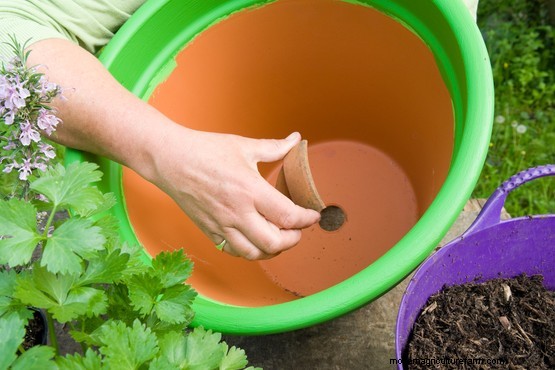
Place a piece of broken crock over the hole in the base of the pot to maintain good drainage. Add peat-free compost until the container is about two-thirds full.
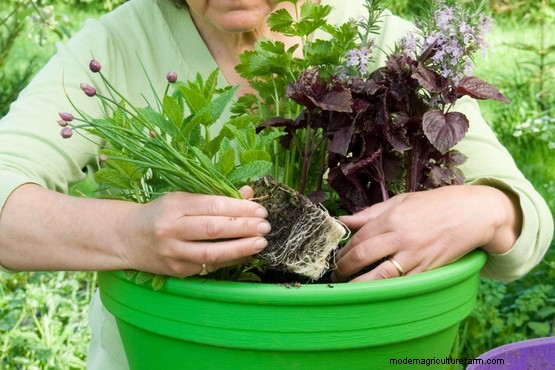
Knock out each herb plant from its pot and arrange in the container
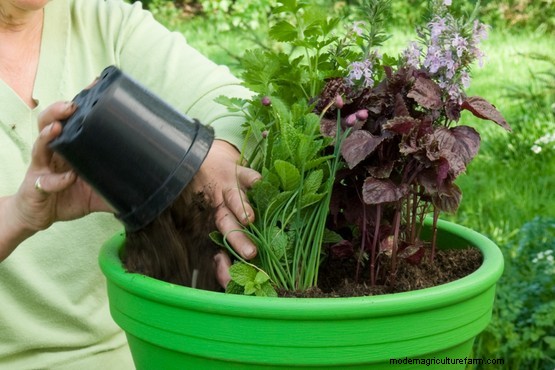
Once all the plants are in place, fill between the roots with compost. You can use an empty pot as a scoop, which will give you a free hand to hold the leaves out of the way.
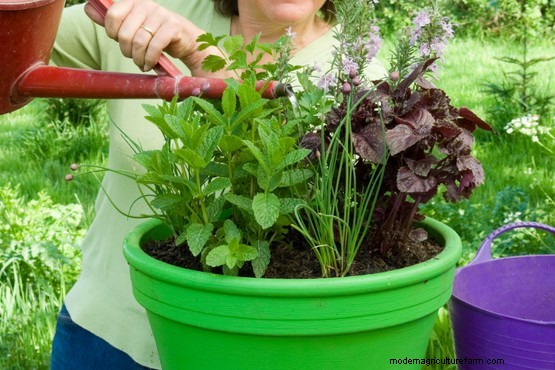
Once you’re happy with the look of your arrangement, water in the plants to settle compost around the roots. Remove the rose from the watering can and gently water around the plants, not over them. If any gaps appear between the roots of the plants, simply add a little more compost, then water again.


