
Welcome to Modern Agriculture!

Introduction: Hi vegetable gardener how about knowing the best fertilizers for vegetables? Well, you are at right place. Vegetable plants must have light, moisture and nutrients to grow. The sun provides light and moisture comes from rainfall or irrigation. And nutrients come from fertilizers, compost or manure. Choosing the right kind of fertilizer and adding the right amount depends on the soil and the plants you’re growing. If vegetable plants are not growing well, fertilizing them will help only if a lack of nutrients is the cause of the problem. Vegetable plants grown in poorly drained soils, in excessive shade, or competition with tree roots will not respond to fertilizer. What are we waiting for? Let’s jump in to the best fertilizers for vegetables.
Creating healthy soil with sufficient nutrients is the main key to a healthy harvest. Fertilization adds the necessary minerals to the soil to feed the vegetable plants, but getting the right balance of nutrients can be a challenge. Each season of growth has different fertilization requirements, but learning the basic cycle of garden fertilization pays off in several years of nutrient-dense vegetables.
Vegetable plants are composed primarily of carbon, hydrogen, and oxygen. These nutrients are absorbed from the air and water, but a fertile garden should have fourteen additional macro- and micronutrients for the healthiest growth. A soil test will help find out which, if any, additional nutrients need to be supplemented to the plants in the form of vegetable garden fertilizers. There are two types of fertilizer for veggie gardens they are inorganic (synthetic) and organic fertilizer for vegetable gardens.
Fertilizers for the vegetable garden are either organic or inorganic. Examples of organic fertilizers contain manure (poultry, cow or horse), bone meal, cottonseed, or other naturally occurring materials. Inorganic fertilizers are manmade products and they usually have a higher nutrient content.
You may also like the Vegetable Garden Layout, Design.
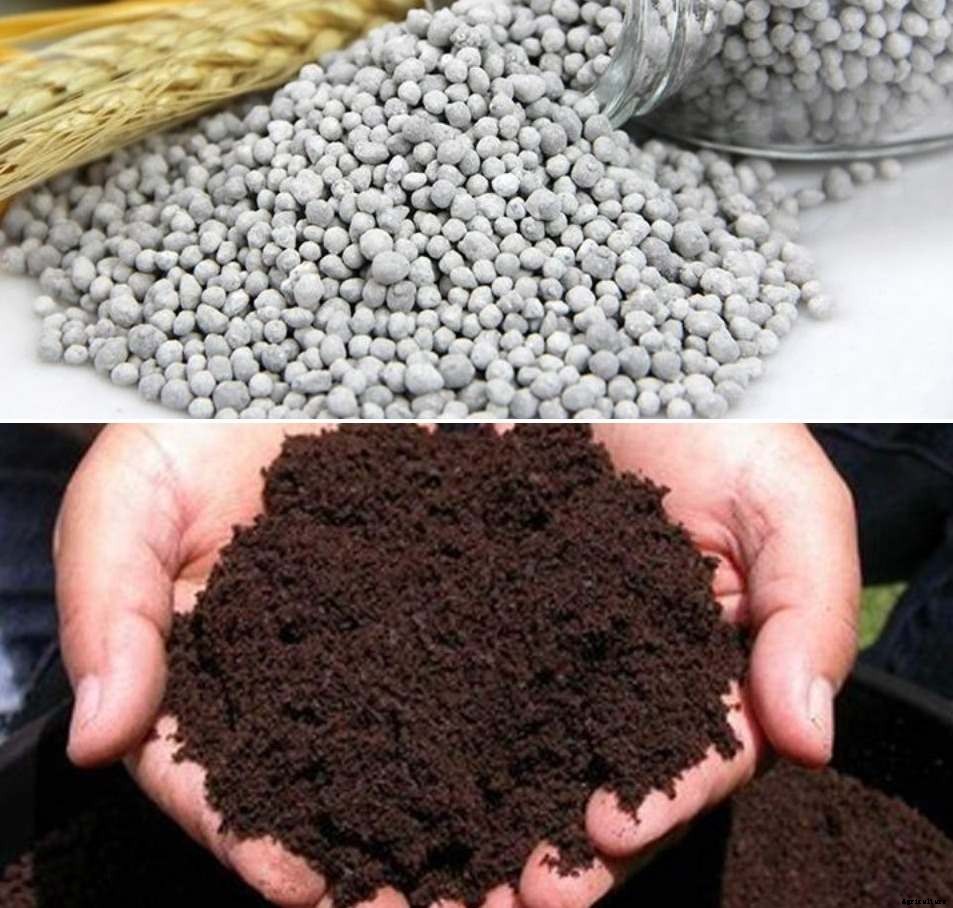
Choosing fertilizer options for veggies can be given below;
Inorganic fertilizers for the vegetables are made from materials that have never lived. Some of these fertilizer options have nutrients that can be immediately taken up by the plants, while others are formed so the nutrients are released over time. If this is the fertilizer option for you, choose an inorganic fertilizer for vegetable gardens that is very slow or controlled release.
When choosing an inorganic fertilizer, then you will notice there are numbers on the packaging. These are generally referred to as the NPK ratio. In these, the first number is the percentage of nitrogen, the second the percentage of phosphorus and the last number the amount of potassium in the fertilizer. Most veggies require a balanced fertilizer, such as a 10-10-10, but some need additional potassium while leafy greens often only require nitrogen. There are several types of organic fertilizers.
Fertilizing veggies with organic fertilizer doesn’t harm the environment, as the ingredients found within are naturally derived from several plants and animals. Fertilizing veggies with manure is a common organic fertilizing process. The manure is incorporated into the soil before the planting process. The downside to using manure as a fertilizer is that the vegetable garden will need additional fertilization during the growing season. A similar choice is to incorporate plenty of compost into the soil before planting. Because vegetables require nitrogen as well as other nutrients readily available, supplemental organic fertilizer is often applied for a quick feeding. This is often used in conjunction with another type of fertilizer.
For example, many gardeners supplement a compost or manure rich soil with the application of fish emulsion or manure tea. Fish emulsion is rich in nitrogen but low in phosphorus and it is sprinkled around the plants every 2-3 weeks or as needed. And manure tea is a simple decoction to make. Put a few shovelfuls of manure into a porous bag and steep the bag in a tub of water until it looks like weak tea. Use this manure tea when you water to add supplemental organic nutrients.
Another vegetable garden fertilizer is to side-dress your plants. Simply put, this means adding a nitrogen-rich organic fertilizer along the side of each row of vegetable plants. As the vegetable plants are watered, the roots absorb the nutrients from the fertilizer.
You may also consider the Summer Gardening Ideas, Tips, Techniques in India.
The degree of acidity or alkalinity of the soil, as measured by pH level, is an important factor in the availability of soil nutrients to plants. At pH extremes, some nutrients become partially or completely locked up in the soil and cannot be used by vegetable plants even though they are still present. For example, in a soil with a pH level near 8.0, phosphates, iron, and manganese-all become less available. At pH level 4.5 or below, the availability of calcium, magnesium, and phosphorus, for plant uptake is low. Other elements could become so readily available that they are toxic to plants, as happens with aluminum at very low pH. Most vegetables do best between pH level 6.0 and 7.0. Lime is often added to increase the pH level to a desirable level. Though, the addition of lime does not eliminate the need to add fertilizer.
Most gardeners must use a complete fertilizer with twice as much phosphorus as nitrogen or potassium. An example could be 10-20-10 or 12-24-12. These fertilizers generally are easy to find. Some soils have enough potassium for good plant growth and don’t need more. But since a slight excess of potassium will not injure plants, it is generally best to use a complete fertilizer. Do not use lawn fertilizers on vegetable gardens. They have too much nitrogen, and many have chemicals for lawn weed control that can injure or kill vegetables. Soils with pH levels below 5.7 need lime and lime add calcium to the soil and make it less acidic, raising pH to an acceptable level.
In general, all vegetable plants require nutrients in different proportions depending on the type of vegetable plant it is;
The frequency of fertilization mainly depends on the kind of fertilizer you are using. If this is a slow-release one, you need not apply very often. The use of this kind of fertilizer is further recommended, as it does not burn the vegetable plant. If soil is covered in mulch, apply the fertilizer on top of the mulch and then water it. You could use liquid fertilizers that can be applied to the foliage or the base of the root.
Observing the vegetable plant is the best thing you could do. If your plant leaves are wilting or yellowing, it generally means that the plant lacks nitrogen content. If your vegetable plant is just plain unhealthy, then all three potassium, phosphorus and nitrogen are lacking.
Nitrogen is necessary for healthy, green growth of foliage. It is part of every plant protein, so it is required for virtually every procedure and is even more so helpful for green leafy vegetables.
Phosphorous is required for good root development and improved flowering, so it is essential in abundance for root-vegetables. Being slow-moving through the soil, it is important to work it into the soil, where it can be easily accessed by the roots.
Potassium affects the plant shape, size, color, taste and is also very important in fruit formation and production and making it an essential nutrient in abundance for fruit-bearing vegetables.
Incase if you miss Peat Moss for Vegetable Garden.
Containers and pots supply one method for squeezing more space into a vegetable garden. Most vegetables grow well in a container set in the yard or balcony or even in a basket hanging over a deck. Unlike those vegetables grown in beds, the plants don’t have access to natural nutrients in the soil and need careful fertilization to grow and produce well. While specific fertilization requirements vary among vegetable types, the basic guidelines for application apply to most vegetables.
Fertilizing your vegetables at the appropriate time will keep plants healthy and producing fruit. There are several types of fertilizers to choose from as well as many natural fertilizers around the house. Be careful to not over-fertilize plants which can lead to heavy foliage without much fruiting.
You can also try the Growing Indoor Herbs and Edibles.
Fertilizer for different vegetables;
Apply plant to FYM 25 t/ha, Azospirillum 2 kg and Phosphobacteria 2 kg/ha, N 75 kg and K 25 kg/ha as a basal dose.
Apply FYM 25 t/ha and 50 kg P and 25 kg K/ha as a basal dose. 25 kg N and 25 kg of K/ha are applied between 20 to 25 days after sowing and application of another 25 kg of N are done between 40 to 45 days.
That’s all folks about the best fertilizers for vegetables and thier application procedure.
You should not miss the Home Fish Farming in India.


