
Welcome to Modern Agriculture!

Hardy kiwi is a unique and delicious fruit that can be easily grown in home gardens. If you’re considering adding this fruit to your garden, it’s important to understand how to care for it properly. In this article, we’ll cover everything you need to know about planting, growing, and harvesting hardy kiwi, as well as its various uses in the kitchen.
Before you start growing hardy kiwi, it’s helpful to understand what these plants are and the different varieties available. Hardy kiwi is a relative of the more well-known fuzzy kiwi fruit, but it’s smaller, smooth-skinned, and can be eaten whole. There are several varieties of hardy kiwi, including Anna, Geneva, and Issai, each with their own unique flavor profile.
Hardy kiwi plants are deciduous vines that can grow up to 30 feet long. They are native to parts of Asia and were first introduced to the United States in the 1800s. Unlike their fuzzy counterparts, hardy kiwi plants are more tolerant of colder climates and can thrive in USDA Zones 3-8.
These vines are known for their vigorous growth and can quickly cover a trellis or arbor. They have small, fragrant flowers that bloom in the spring and attract pollinators such as bees and butterflies. The vines produce fruit in late summer or early fall, which can be harvested and enjoyed fresh or used in a variety of recipes.
Hardy kiwi plants are also known for their nutritional benefits. They are a good source of vitamin C, fiber, and potassium, and are low in calories. Eating hardy kiwi regularly can help support a healthy immune system and improve digestion.
There are several varieties of hardy kiwi plants, each with unique characteristics:
When selecting a variety of hardy kiwi to grow, consider your climate, available space, and desired flavor profile. With proper care and attention, hardy kiwi plants can provide a bountiful harvest for years to come.
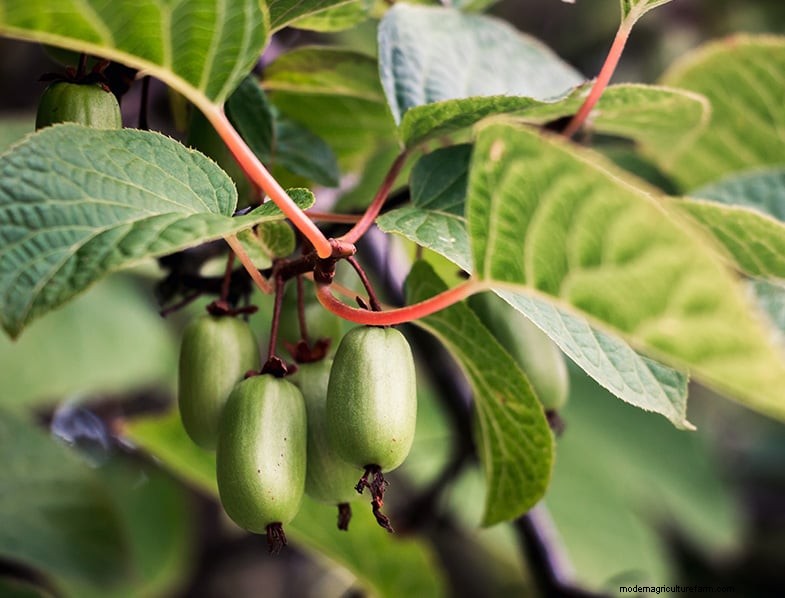 Hardy Kiwi
Hardy kiwi, also known as kiwi berry, is a delicious fruit that is gaining popularity among gardeners and fruit enthusiasts. It is a smaller, more cold-hardy cousin of the traditional kiwi fruit and is native to East Asia. Growing hardy kiwi is not difficult, but it does require some specific conditions and care.
Before planting hardy kiwi, it’s important to choose the right variety for your area. There are several different types of hardy kiwi, each with its own unique characteristics. Some popular varieties include ‘Anna’, ‘Ken’s Red’, and ‘Issai’.
Consider factors such as your climate, soil type, and available space when selecting a variety. Some hardy kiwi plants are more tolerant of cold temperatures, while others are better suited to warmer climates. Additionally, some varieties are self-fertile, meaning they can produce fruit without a pollinator, while others require a male and female plant to produce fruit.
Hardy kiwi plants need a full-sun location with well-draining soil. They should be planted in an area protected from strong winds, as their vines can be fragile and prone to breaking. It’s also a good idea to choose a location that is easy to access for harvesting.
Before planting, it’s important to prepare the soil properly. Hardy kiwi plants prefer a soil pH between 5.5 and 7.0. Amend the soil with compost, aged manure, or other organic matter to improve soil quality and drainage.
It’s also a good idea to have your soil tested to determine its nutrient content and pH level. This information can help you make more informed decisions about fertilization and soil amendments.
Hardy kiwi plants are typically planted in the spring, after the threat of frost has passed. Dig a hole twice as wide as the root ball and deep enough to plant the kiwi at the same level as it was in the nursery pot. Cover the roots with soil and water thoroughly.
After planting, be sure to provide support for the kiwi vines to climb. Trellises, arbors, or fences can all work well. It’s also important to keep the soil consistently moist, but not waterlogged, especially during the first year of growth.
Pruning is another important aspect of hardy kiwi care. Regular pruning helps to control the size and shape of the plant, as well as promote healthy growth and fruit production.
With proper care and attention, hardy kiwi plants can produce delicious fruit for many years to come.
Hardy kiwi plants, also known as Actinidia arguta, are a great addition to any garden or orchard. These plants are native to China, Japan, and Korea and have been grown for centuries for their delicious fruit. Hardy kiwis are smaller and sweeter than the more common fuzzy kiwi, and they have a smooth, edible skin. Once your hardy kiwi plants are established, it’s important to care for them properly to ensure a good harvest:
Hardy kiwi plants need regular watering, especially during hot, dry weather. These plants require a lot of water, so be sure to water them deeply and frequently. A layer of mulch around the base of the plant can help to retain moisture and regulate soil temperature. Fertilize your kiwi plants with a balanced, slow-release fertilizer in early spring and mid-summer. This will provide your plants with the nutrients they need to produce healthy, delicious fruit.
Pruning is an important part of caring for your hardy kiwi plants. Prune the vines during the winter while they are dormant, removing any dead or damaged wood. During the growing season, train the vines by tying them to your trellis or support structure. This will help to keep the vines from becoming tangled and will promote healthy growth. Hardy kiwi plants can grow up to 20 feet long, so be sure to provide them with plenty of support.
When pruning, it’s important to keep in mind that hardy kiwi plants produce fruit on new wood. This means that you should prune your plants to encourage new growth each year. Pruning will also help to improve air circulation and reduce the risk of disease.
Hardy kiwi plants are generally resistant to pests and diseases. However, if you notice any signs of damage or disease, take action immediately to prevent further harm. Regularly inspecting your plants for signs of damage or pests can help you catch any issues early on.
One common pest that can affect hardy kiwi plants is the Japanese beetle. These beetles can cause significant damage to the leaves and fruit of your plants. To control Japanese beetles, you can use a pheromone trap or handpick the beetles off of your plants. Be sure to dispose of any beetles you collect in a bucket of soapy water. This will prevent them from returning to your plants.
Another common issue that can affect hardy kiwi plants is powdery mildew. This fungal disease can cause a white or gray powdery coating to appear on the leaves and fruit of your plants. To prevent powdery mildew, be sure to provide your plants with plenty of air circulation and avoid overhead watering. If you do notice signs of powdery mildew, you can treat your plants with a fungicide spray.
Caring for your hardy kiwi plants requires some effort, but the rewards are well worth it. With proper care, your plants will produce delicious fruit year after year. So, be sure to water, fertilize, prune, and inspect your plants regularly to keep them healthy and productive.
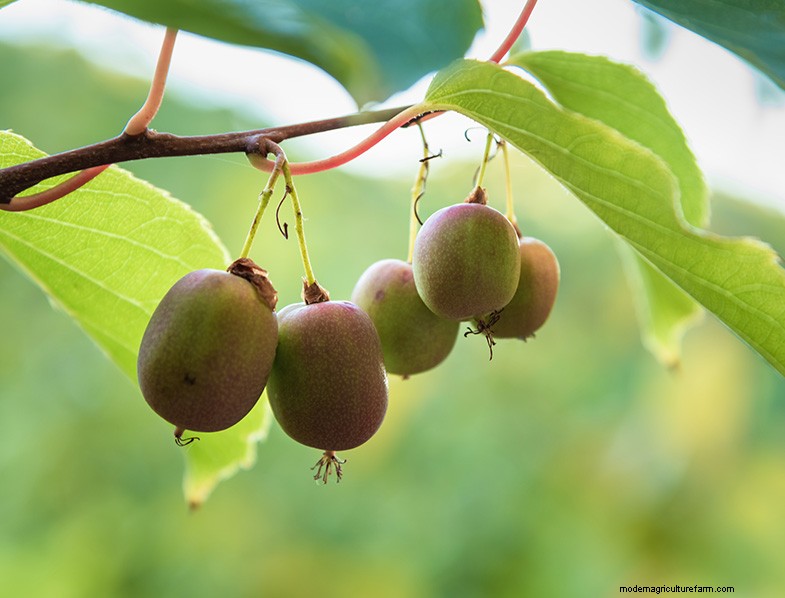 Hardy Kiwi
After all of your hard work, it’s time to harvest your kiwi fruit. Here’s what you need to know:
Hardy kiwi fruit can be harvested in late summer or early fall, once the fruit starts to soften and turn slightly yellowish-green. Don’t wait too long to harvest, as the fruit can become too ripe and mushy.
It’s important to note that harvesting kiwi fruit can be a delicate process. You want to make sure that the fruit is ripe enough to be picked, but not so ripe that it will spoil quickly. The best way to determine if a fruit is ready for harvest is to gently squeeze it. If it gives slightly, it’s ready to be picked.
To harvest, gently twist the fruit off of the vine. Be sure not to bruise or damage the fruit, as this can encourage rot. It’s also important to wear gloves while harvesting kiwi fruit, as the vines can be prickly and can cause skin irritation.
Once you’ve harvested your kiwi fruit, it’s important to handle it with care. Kiwi fruit is delicate and can easily become bruised or damaged. If you plan on storing your kiwi for any length of time, it’s best to store it in a single layer to prevent bruising.
Hardy kiwi fruit can be stored in the fridge for up to a week. They can also be frozen or canned for longer-term storage. Try using them in smoothies, salads, or as a topping for yogurt or ice cream.
When storing kiwi fruit in the fridge, it’s important to keep it away from other fruits and vegetables that produce ethylene gas, such as apples and bananas. Ethylene gas can cause kiwi fruit to ripen too quickly and spoil.
If you’re freezing kiwi fruit, it’s best to remove the skin first. Once the skin is removed, slice the fruit and place it in a single layer on a baking sheet. Freeze the fruit for several hours, then transfer it to a freezer-safe bag or container.
Canning kiwi fruit is another great option for long-term storage. To can kiwi fruit, start by washing and peeling the fruit. Slice it into small pieces and pack it tightly into sterilized jars. Add a simple syrup made from sugar and water, leaving 1/2 inch of headspace at the top of the jar. Process the jars in a boiling water bath for 10 minutes.
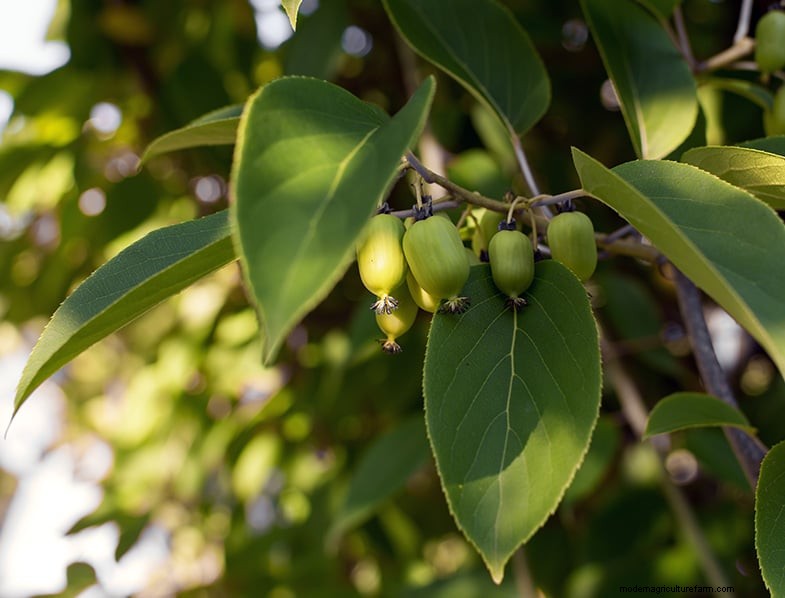 Hardy Kiwi
Growing hardy kiwi plants in your home garden can be a rewarding experience, both for the delicious fruit and the beauty of the vines. With proper care and attention, you can enjoy a bountiful harvest and a new addition to your culinary repertoire.
Hardy kiwi is not only delicious but also packed with nutritional benefits. It’s a great source of Vitamin C, fiber, and potassium, and low in calories. Eating hardy kiwi regularly can support a healthy immune system and improve digestion. Moreover, its vigorous vines and small, fragrant flowers can add beauty to your garden, making it a great choice for home gardening.
Yes, hardy kiwi is a variety of kiwi that’s more tolerant of colder climates compared to its fuzzy counterparts. It can thrive in USDA Zones 3-8, which makes it a great choice for areas with cooler temperatures.
Hardy kiwi, as its name suggests, is quite resilient. It’s capable of surviving and thriving in climates that can go down to -25 degrees Fahrenheit, which aligns with USDA hardiness zones 3-8. It can withstand harsh winter conditions better than its more familiar relative, the fuzzy kiwi.
Yes, hardy kiwi plants need a full-sun location to grow well. However, they also need to be protected from strong winds as their vines can be fragile and prone to breaking.
Absolutely. Hardy kiwi plants produce small, smooth-skinned fruits that are typically harvested in late summer or early fall. However, it’s important to note that some varieties of hardy kiwi need a male and a female plant to produce fruit, while others are self-fertile.
Hardy kiwi plants typically begin to produce fruit around 3 to 4 years after planting. With proper care and maintenance, these plants can provide a bountiful harvest for many years.
70


