
Welcome to Modern Agriculture!

Introduction to how to start sweet potato gardening for beginners, sweet potato planting questions and answers (FAQs): Hello gardeners, we are back with one more article and the article is all about sweet potato gardening. Do you want to grow your own sweet potatoes? Well and then you will need to follow this complete article to grow your own sweet potatoes. In this article, we are going to discuss some frequently asked questions about sweet potatoes.
The sweet potato is a dicotyledonous plant that belongs to the Convolvulaceae family, which includes bindweed and morning glory. Its tuberous roots are big, starchy, and sweet-tasting, and are used as a root vegetable. Greens can be made from the young branches and leaves.
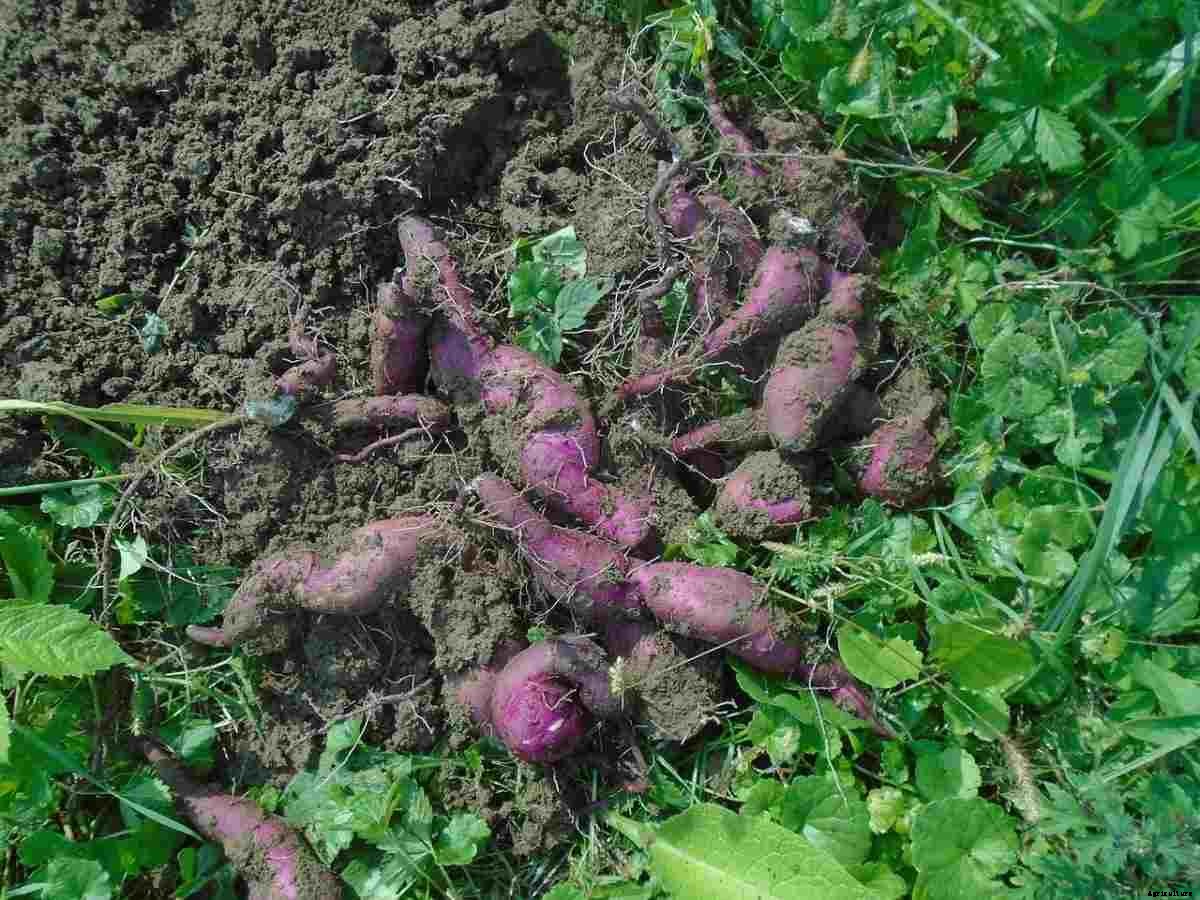
Sweet potatoes are grown from cuttings rather than seeds. They’re made from “slips”—sprouts taken from already-grown sweet potatoes.
Plant slips 3 to 4 weeks after the last spring frost when overnight temperatures have reached at least 13°C. The trick is to plant them early enough for them to grow properly, but not too early for a late spring frost to kill them.
Make sure you have a long enough growing season before you start planting. The majority of cultivars will mature in three to four months, or 90 to 120 days. Check your frost dates and growing season length.
When the soil temperature reaches 15°C, plant the slips on a warm, gloomy day.
Remove the lower leaves and just save the upper ones.
Set the slips 12 to 18 inches apart, deep enough to cover the roots and stem up to the leaves.
To ensure that the plants root effectively, water with a high-phosphorus liquid fertilizer and then water generously for 7 to 10 days.
Choose a location that is sunny and has well-drained soil. Sweet potatoes aren’t finicky about their soil, although they do like sandier soil and need enough air space for their roots to stretch down. Consider raised beds if your soil is clay, rocky, or compacted.
Make sure there’s enough room for the vines to grow (3 feet between rows so the vines).
8 to 10 inches of organic materials should be mixed in. Use soil that is fertile and well-drained. To assist build loamy soil and keep moisture, add compost, perlite, and/or coconut coir. Animal manure, including pelleted chicken manure, should be avoided since it can cause spindly and/or discolored roots.
Now, let us discuss some frequently asked questions about sweet potato growing;
You can start your slips, which are sprouts from an existing sweet potato, by purchasing “seed” sweet potatoes from a nursery, or you can start slips from grocery store tubers. Because some sweet potatoes are treated to prevent sprouting, consider organic tubers.
In case if you miss this: How To Grow Organic Lettuce.
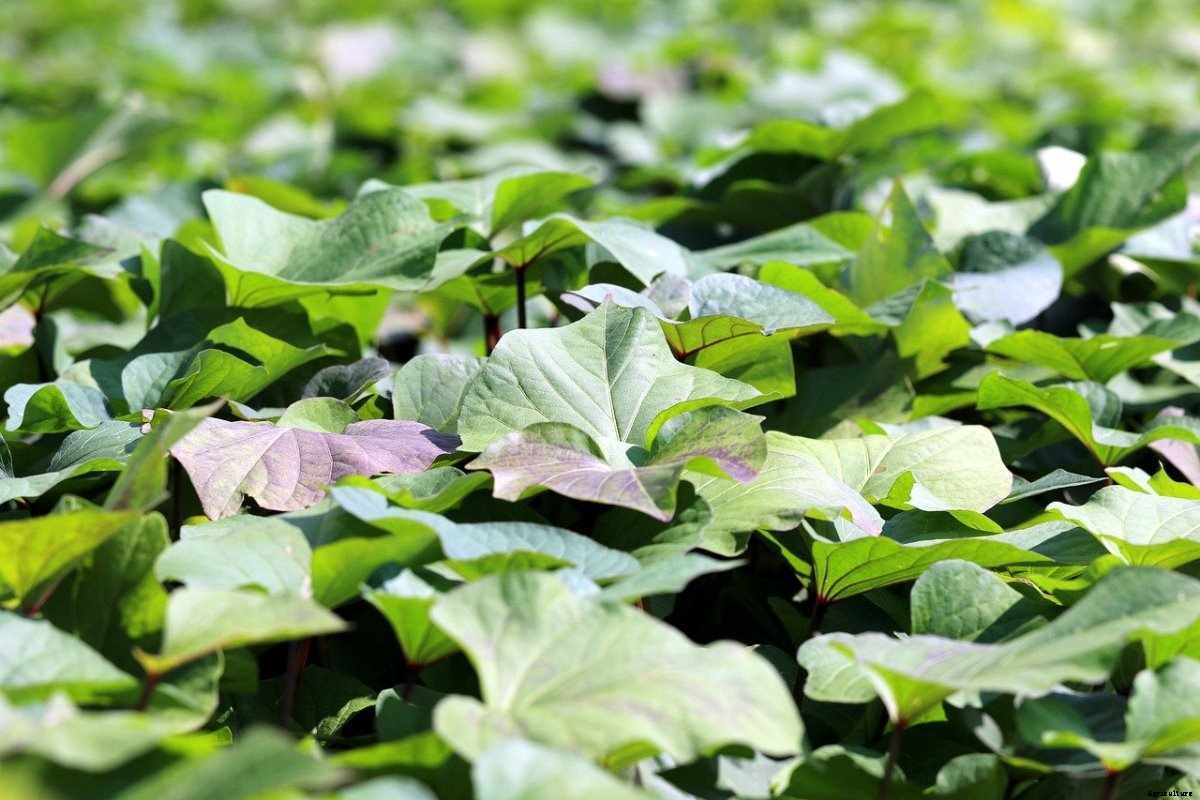
In the spring, after all, the danger of frost has passed, around 4 weeks after the last frost, plant sweet potato seedlings in the garden. Sweet potatoes are particularly vulnerable to frost and require up to 150 days of warm, moist growing conditions.
Place the sweet potato in a water-filled jar. Place toothpicks into the sides of the potato to keep the top third uncovered. The pointed end of the stick should be submerged in the water. A vine with multiple stems will develop in a few weeks.
How About This: Easy Vegetables To Grow Indoors.
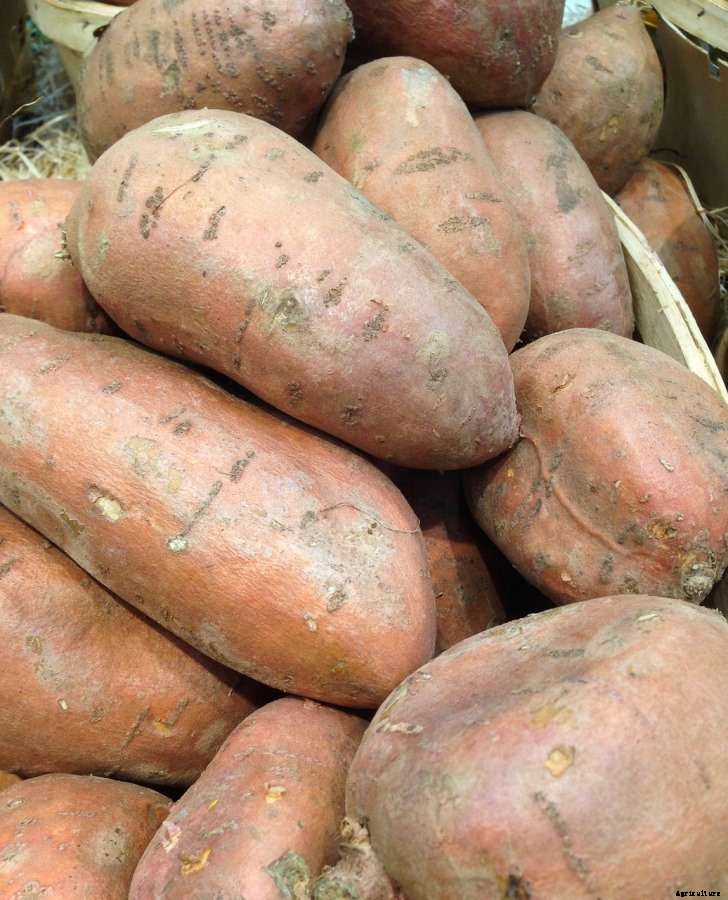
Root able cuttings, also known as slips, are used to cultivate sweet potatoes. Growing your slips from little or medium-sized sweet potatoes purchased at the store can be a lot of fun if you’ve never grown sweet potatoes before. Three to five slips can be made from one sweet potato.
The exact ratio of nitrogen, potassium, and phosphorus to add varies according to experts. However, depending on the findings of your soil test, a 1-2-4 or 5-10-10 fertilizer combination should give the correct balance for young sweet potato growth.
Plant sweet potatoes 12 to 18 inches apart, with 3 feet between rows to give the vines plenty of room to spread out.
They prefer full sun (at least 6 to 8 hours each day throughout the growing season) and prefer loose, well-drained, nutrient-rich soils; however, they will grow in practically any location. Choose and arrange a planting place that will benefit your sweet potato plants so that you may harvest a bumper plant.
Sweet potatoes need full sun and a warm temperature to grow well. They require well-drained, fine sandy loam soil with a slightly acidic pH of 5 to 7.5 for planting. This permits the sweet potato to grow quickly while avoiding a wet environment that promotes rot and disease.
Sweet potatoes prefer light-textured, well-drained soil, although heavy soil can be modified with 6 to 8 inches of organic matter such as compost, rotting cow manure, or peat. They can also be planted in raised boxes with a height of 10 to 12 inches.
Water – Sweet potatoes may grow in dry soil once they’ve been planted. It’s ideal to keep it uniformly moist by watering it once a week with 1 inch of water. To prevent the mature tubers from splitting, don’t water your sweet potatoes in the final three to four weeks before harvest.
Once the overnight temperatures in the spring are above 10°C, plant beautiful sweet potato vines in a garden bed.
The main advantage of training sweet potato vines to a trellis is that you will conserve garden space. Sweet potato vines can grow up to ten feet in length and develop roots anywhere they come into contact with the soil. You can always prune back sweet potato vines if you still feel like they’re out of control when growing vertically.
Sweet potatoes should be mulched as soon as possible after they are planted. It’s a good idea to maintain them well mulched or weeded until they’re large enough to prevent weeds from taking over.
Growing edible tubers might take anywhere from 100 to 140 days, depending on the planter. To have a long enough growing season in some parts of the country, that requires starting your plants six to twelve weeks before your area’s estimated last frost date in the spring.
In the spring, after all, the danger of frost has passed, around 4 weeks after the last frost, plant sweet potato seedlings in the garden. Sweet potatoes are particularly vulnerable to frost and require up to 150 days of warm, moist growing conditions.
Make sure there’s enough room for the vines to grow (3 feet between rows so the vines). 8 to 10 inches of organic materials should be mixed in. Use soil that is fertile and well-drained. To assist build loamy soil and keep moisture, add compost, perlite, and/or coconut coir.
Sweet potatoes are ready to harvest when the vines’ ends start to turn yellow, or shortly before frosting in the north. To avoid harming tubers, locate the primary crown of the plant you want to dig and loosen an 18-inch wide circle around it using a digging fork.
Root vegetables like parsnips and beets, for example, make excellent sweet potato partners. Bush beans make excellent sweet potato companions, and certain pole bean species may be trained to grow alongside sweet potato vines on the ground.
They require well-drained, fine sandy loam soil with a slightly acidic pH of 5 to 7.5 for planting. This permits the sweet potato to grow quickly while avoiding a wet environment that promotes rot and disease.
Because dry soil helps weevils to reach the target roots, minimizing soil cracking is a key technique for preventing infestation. This can be accomplished by irrigating the sweet potato plant frequently or hilling a small area around the plant to keep weevils out of the roots.
Fusarium surface rot and Fusarium root rot are both caused by Fusarium species. On roots that have been stored for any amount of time after harvest, fusarium surface rot is frequent. In the Southeast, fusarium root rot is a major sweet potato disease.
Sweet potato leaves becoming yellow may also be caused by nutritional deficits. Lack of nitrogen is the most prevalent shortage, which can be remedied using a nitrogen-rich fertilizer. Because magnesium is necessary by the plant to create chlorophyll, a magnesium deficit will result in yellowing leaves.
A rise in soil pH above 5.2 and grassy, light, dry soils are the most typical circumstances that encourage the disease. The pathogen can live in the soil for years and also infects morning glory weeds. On contaminated equipment, the disease can spread from field to field.
Sweet potatoes will continue to thrive as long as soil temperatures average above 18°C or the tips of the plants are not damaged by frost. If you can’t dig the roots right away after a frost, cut the dyed tops off just above the soil line and leave the roots in the ground for a few days.


