
Welcome to Modern Agriculture!

Introduction on how to Start Pineapple Gardening for Beginners, Pineapple Planting Questions and Answers (FAQs): Hello gardeners, we are here with another interesting topic today. Do you want to grow pineapple and do you have any doubts about growing pineapple? Well and then you will need to follow this complete article to grow the perfect pineapple plant. In this article, we are going to discuss some frequently asked questions about planting pineapple.
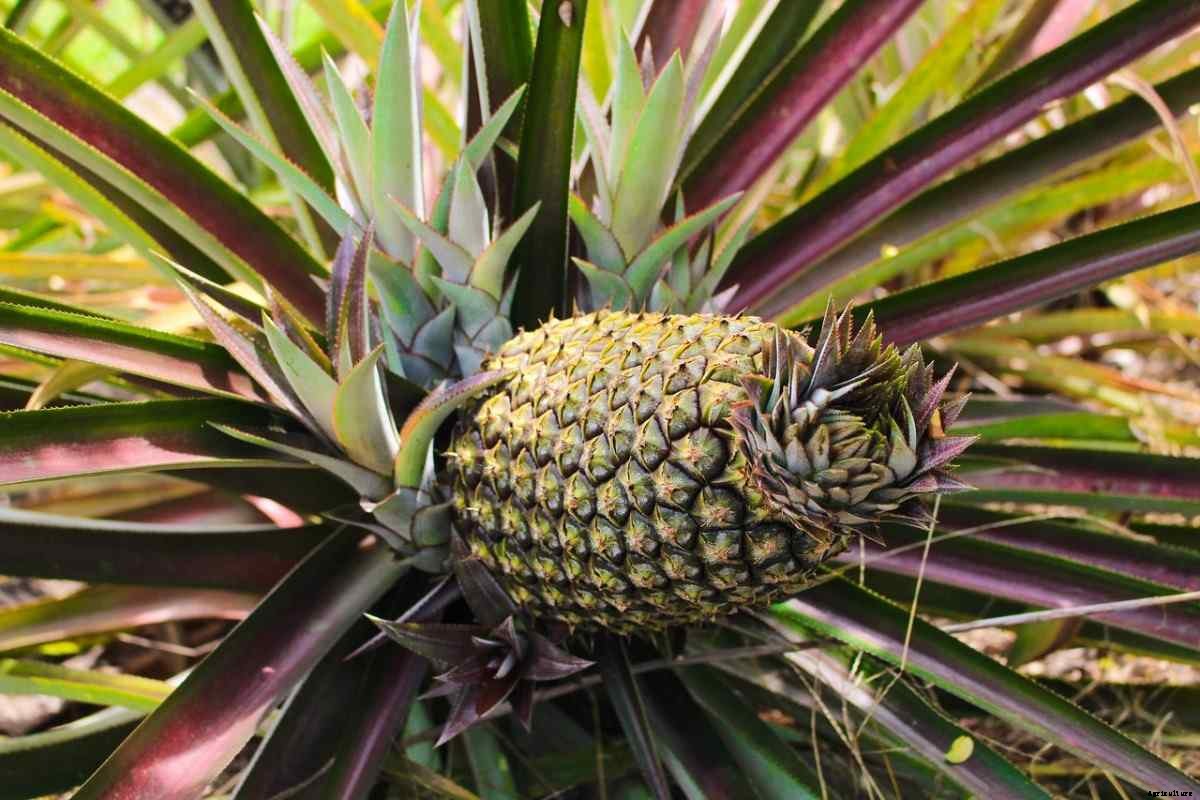
The pineapple is the most economically important member of the Bromeliaceae family and is a tropical plant with edible fruit. The pineapple is a South American native that has been planted for hundreds of years.
All you need is a fresh pineapple to start growing a pineapple plant. Get one the next time you’re at the grocery store, and then separate the leaves from the fruit and soak the base in water. Roots will develop in a few weeks, and you’ll be able to place your pineapple plant in a container and enjoy it for a long time. Continue reading to learn how to produce your own pineapple.
If you want to plant pineapple tops, you’ll need at least six hours of bright sunlight. Allow your plant to dry out between watering and water it as needed. During the spring and summer, you can treat the pineapple plant with a soluble houseplant fertilizer once or even twice a month.
During the late spring and summer season, you need to place the pineapple plant outside in a semi-shaded location if preferred. However, for overwintering, bring it indoors before the first frost in the fall.
Because pineapples are slow-growing plants, expect to wait at least two to three years for blossoms, if at all. It is, however, possible to stimulate mature pineapple trees to blossom.
Now, let us discuss some frequently asked questions about planting pineapple
In case if you miss this: Potato Seed Germination.
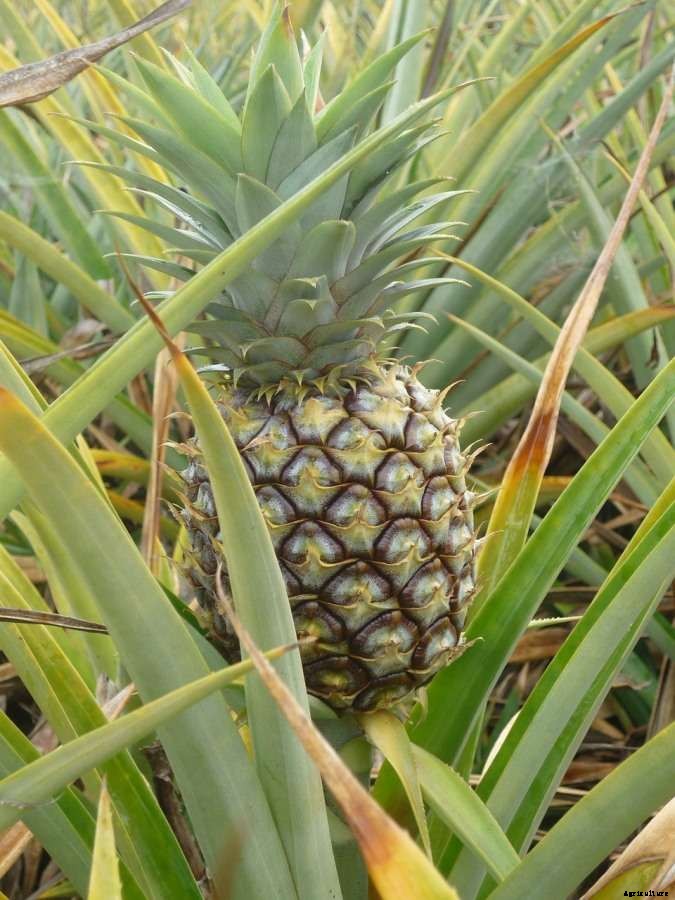
Commercial pineapple plants have a two- to three-year fruiting cycle, which takes 32 to 46 months to complete and harvest. Pineapple plants die after this cycle, but while they are flowering and fruiting, they develop suckers, or ratoons, surrounding the parent plant.
A single pineapple is produced by a pineapple plant that only blossoms once. Then it passes away. It does, however, create progeny before it dies. Suckers, also known as pups, are small plantlets that sprout between the mature pineapple’s leaves.
Even though the mother only produces one primary fruit plant before dying, it produces babies who will continue to produce additional fruits. Taking care of the mother plant ensures that the babies are healthy and will eventually produce more fruits.
Pineapple plants require a lot of room, roughly five feet in the ground or three to five feet in pots. They also thrive in a lot of sunlight (at least 6 hours).
Not only is it extremely simple to grow pineapples. Pineapple plants can be grown in almost any place on the planet. That’s because the pineapple plant is one of the few tropical fruits that grow well in containers, allowing you to plant pineapple plants indoors.
The pineapple plant is water-wise, requiring only nearly around 20 inches of natural rainfall each year if distributed properly. You just need to water the soil once a week, and it’s better to soak the soil completely when the plant is indoors.
New leaves will grow from the middle of the pineapple crown two or three weeks after planting. Be patient—it could take up to two years for the plant to begin blooming, and another few months for the fruit to appear.
Fertilizer – One of the most important building blocks for early pineapple plants is nitrogen. It’s best to use a dry fertilizer that contains 6 to 10% nitrogen, 6 to 10% potash, 6 to 10% phosphoric acid, and 4 to 6% magnesium.
When the entire outer skin develops a yellowish tint with a pineapple smell, and the flesh is an orange-yellow colour, pineapples are ripe and ready to pick. It’s better to let the fruit fully ripen on the vine because it won’t get any sweeter once picked, even if the outer peel continues to ripen.
How About This: How To Grow Plants From Cuttings.
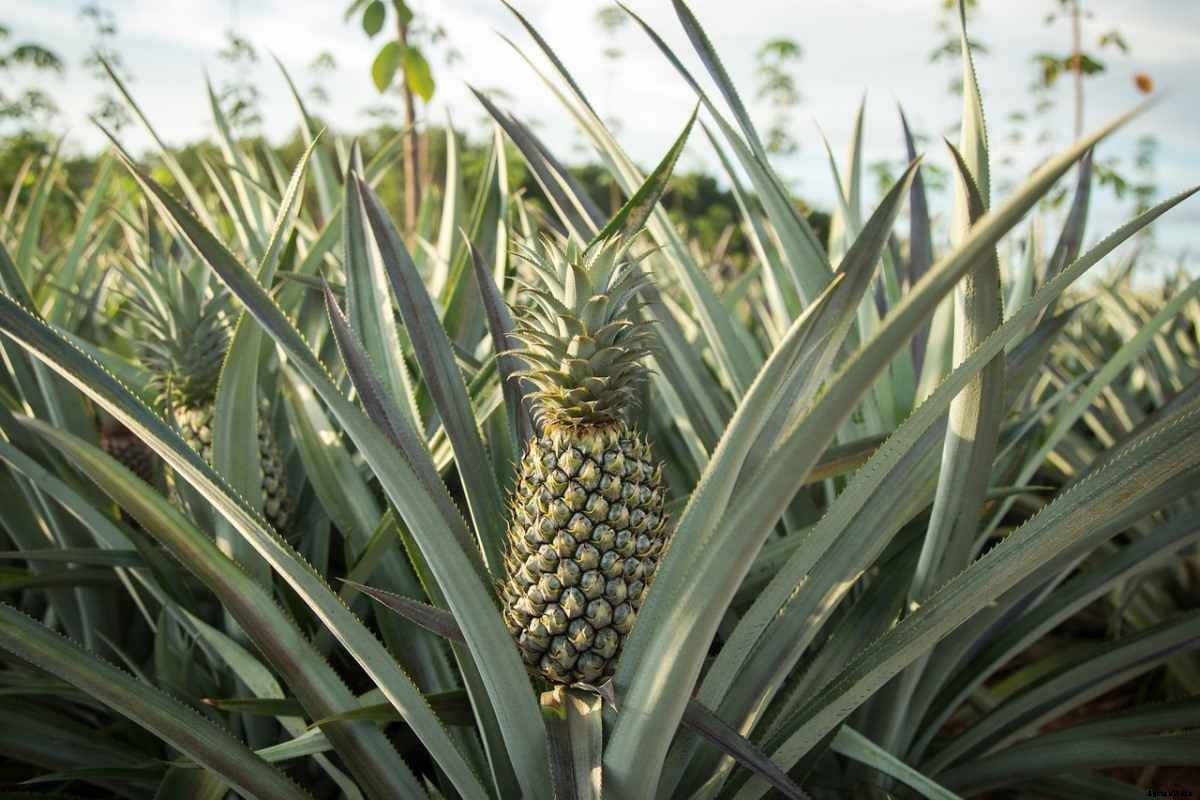
It will take 18 months for rooted crowns to bear fruit. The prime fruiting season for pineapples is from April through May. The fruiting seasons for pineapples are December through February and August through September.
Pineapples usually prefer warm and sunny weather. Keep it at a comfortable room temperature of 22°C to 28°C. The leaves of pineapple plants can absorb some water. They don’t require a lot of water, so wait until the soil is completely dry before watering the leaves and soil.
Its leaf-tips may brown and curl if the surrounding saturation is too low or the heat is too high, especially in direct sunshine. Hose down the foliage from time to time to keep the leaves hydrated and the dust levels low.
Long, sword-shaped leaves grow circularly from the center of the plant on pineapple plants. Lower leaves turn brown and wilt while new leaves grow at the top of the plant. Cut the dead leaf from the plant where it joins the stalk with a sharp knife. Make sure you don’t cut the stalk.
Overwatering is the quickest way to harm your pineapple plant. Pineapple root rot is caused by too much water, which causes yellowing leaves and can be fatal. Before watering again, water just enough to evenly saturate the soil surface and allow it to become dry to the touch.
During the rooting period, keep the rooting medium moist but not soggy. Finally, shine a bright, indirect light on the pineapple top. In 6 to 8 weeks, rooting should be complete. Carefully remove the pineapple from the rooting medium once it has grown a solid root system.
Absolutely! Coffee grounds have high nitrogen content, while pineapples adore and require nitrogen. Pour some water over the coffee grounds and sprinkle them on top of the soil.
The pineapple has three main phases: The vegetative phase, which lasts from planting to inflorescence differentiation (flowering);
The fruiting phase, which lasts from differentiation until fruit harvesting;
From fruit harvesting until plant destruction, this is the sucker growth period.
Because pineapple is a tropical epiphyte that demands a hot, humid environment in full sun to thrive and if it needs water every two days, it is in dry air and will be miserable until the condition changes.
In the winter, keep it just damp. Remove any dry leaves with a snip and dust with a fine brush now and then. Rotate the plants now and again to ensure even growth. In the spring and summer, feed every two weeks with a weak liquid fertilizer, and once a month in the winter.
While pineapples abhor wet soil, they are drought-tolerant. They do, however, require consistent hydration for fruit production. Pineapples require about 1 inch of water each week, which can be obtained through rainfall or additional irrigation.
Reddish pineapple leaves are mainly due to a lack of nitrogen or stress from being root-bound in a compact pot. Pineapple root rot is caused by too much water, which causes yellowing leaves and can be fatal.
Pineapples are a rosette of long, sword-like leaves placed around a short stem when fully mature. Plants mature to be between 3 and 6 feet tall and broad. Some types have spines on their leaves, whereas others do not.
Spray the plant with soap water frequently to protect it from mites, beetles, and nematodes. Pouring water over the plant while watering it is an easier way. The insects will be flushed out as a result and will fall prey to their respective predators.
A soft rot bacterium causes diseases such as bacterial heart rot and pineapple fruit collapse. Blister-like leaf lesions appear on affected pineapple trees, and soft rot appears in ripe fruit. Symptoms may not appear until 2 or 3 weeks before ripening.
It’s not fully dead, but there are some dead spots at the tips of the leaves, as well as one leaf that appears to be completely dead. Trim away any dead patches or leaves, but don’t prune. These plants develop from the center, and if you’re in the northern hemisphere, they’ll be resting and doing nothing for the time being.
Too little water and excessive sun exposure result in curled leaves and faded brown margins. Although Pineapple Plants thrive in sunny environments, those that have not yet acclimatized to the harsh sunlight will display signs of sunburn and environmental shock.
Pineapple plants are sensitive to temperatures below -2.0°C, and temperatures below 15.5°C and above 32°C can stifle growth. Temperatures between 20 and 30°C are ideal for pineapple development.


