
Welcome to Modern Agriculture!

Introduction on how to start apple gardening for beginners, planting questions and answers (FAQs): Hello gardeners, we are back with another article today. Do you want to have your own apple tree and do you have any doubts about planting and growing apple trees? Well and then you will need to follow this complete article to have a perfect apple tree. In this article, we are going to discuss some frequently asked questions about the apple tree.
An apple is a fruit that grows on an apple tree and is eaten. Apple trees are the most extensively grown species in the Malus genus and are grown all over the world. The tree is said to have originated in Central Asia, where its wild parent, Malus sieversii, can still be found.
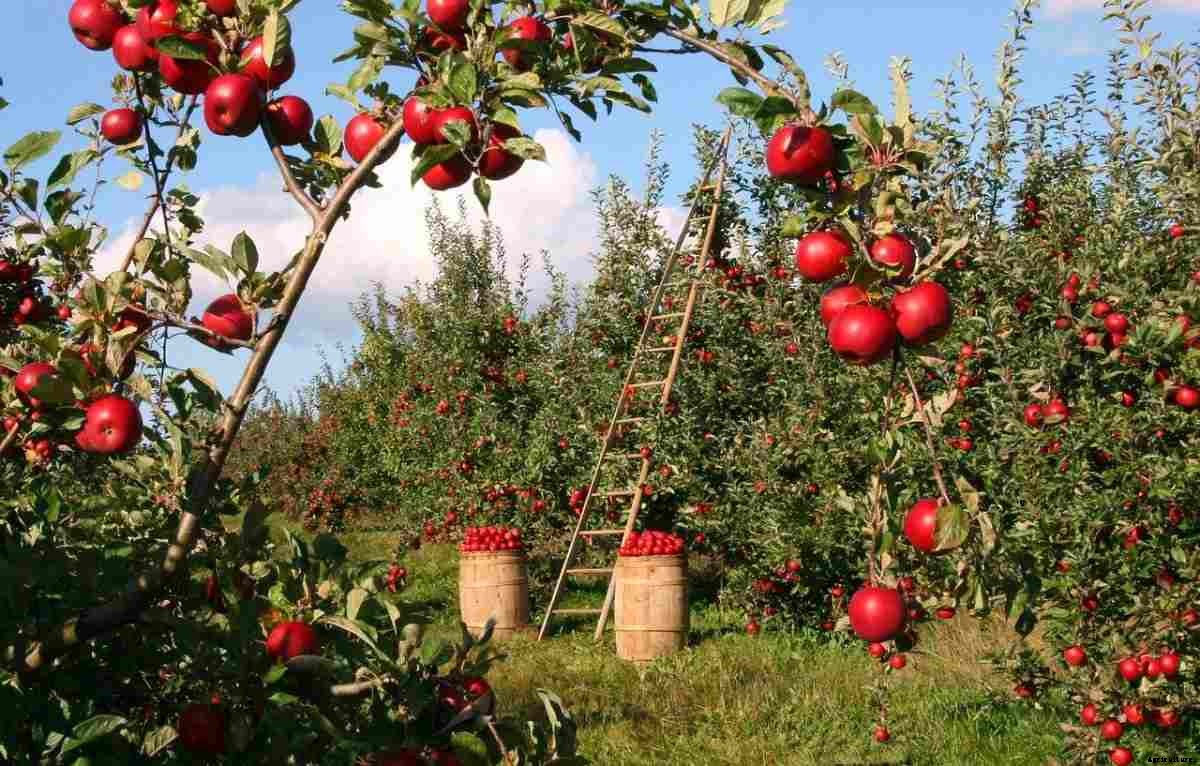
Take apples, for example, full-sized trees, often known as “Standards,” take 6 to 10 years to develop and provide fruit. Semi-dwarf rootstock trees normally bear fruit in 4 to 5 years after planting, while dwarf rootstock trees bear fruit in 2 to 3 years.
With your fingertip or the tip of a pencil, make a small hole in the earth, drop the seed in, cover it with soil, and water thoroughly. Keep the soil gently damp, and move the pots to a sunny location after the leaves sprout. When the seedlings are a few inches tall, plant the strongest seedlings in the ground.
Apple trees need to be planted between late fall and even early spring when they are dormant.
Apples, like most fruits, thrive in full light, which implies six or more hours of direct summer sun every day. Instead of the south, the ideal exposure for apples is on the north side of a house, along a tree line, or on a rise.
Apples will grow in surprisingly small containers if you pay attention to watering and feeding. A larger container, on the other hand, does not dry out as soon and will be more stable while the tree is in full bloom and bearing fruit. If you like, pick a large, hefty pot made of ceramic or plastic.
While there are a few things to bear in mind, even if you’re a novice gardener, apple trees are simple to grow. Plant your apple trees in nutrient-rich soil in the broad sun. To avoid illness, keep your apple trees in good shape. Early in the growing season, thin your apple plant and prune your tree to promote the fruit.
Some fruit trees, notably apples and pears, have an issue with biennial bearing, where they produce a large harvest one year and then produce little or nothing the next. Some planters are biannual by nature, but weather and soil fertility can exacerbate the problem.
Apple trees are classified as standard, semi-dwarf, or dwarf. Standard or full-sized trees can reach 30 feet in height and take up to six years to bear fruit. Apple trees that are semi-dwarf or dwarf can grow to be 6 to 20 feet tall and yield full-sized apples in three years.
When apple trees are put in well-drained soil that does not become too wet, they will thrive. They should never be planted in low-lying or rainy areas; willows and bald cypress are better for that. A northern or eastern slope, with the apple tree planted at the top in a sunny spot, would be excellent.
Containerized plants can be planted at any time of year, though winter is recommended. Bare-root plants should be planted from late autumn to early spring.
Apple trees may thrive in a variety of soils, ranging from medium-textured clays to gravelly sands. Poor soils, on the other hand, will yield poor results, while the best plants will grow on fertile sandy soils and loams. Well-drained soils are ideal.
In case if you miss this: How To Grow Plants In Hydroponics.
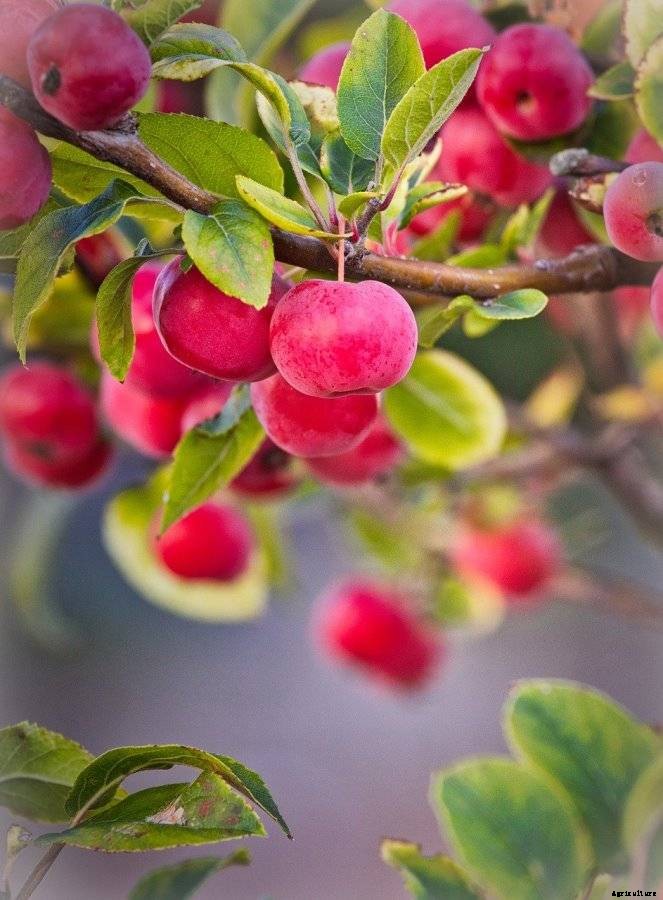
There are a few things you can do to help your young tree grow and produce fruit more quickly: Make sure you pick trees that are hardiness zone specific.
Morning light is preferred by apple trees. It aids in the drying of morning dew that develops on the leaves and blossoms, reducing the risk of fungus and illness. An area that receives the strongest afternoon sun may get by with only 6 hours of sunlight every day.
Pruning should be done between leaf fall and bud burst when the tree is dormant (usually between November and early March).
An Apple tree’s roots can grow to be twice as wide as the canopy and compete with surrounding plants for nutrients, water, and oxygen. An Apple tree roots, on the other hand, are neither invasive nor aggressive, and they lack the strength to destroy homes’ foundations or infiltrate sewer lines.
Coffee grounds are high in nitrogen, phosphorus, magnesium, and even copper, all of which are essential for a plant’s health. They also raise the soil’s acidity, which is beneficial to apple trees because they like acidic soil with a pH of 5.8 to 7.0.
Apple trees require sunlight to bear fruit. Branches that are exposed to sunlight remain fruitful and produce larger fruit than those that are not. When a branch is shadowed, it stops producing fruit.
Apple scab, cedar apple rot, powdery mildew, and fire blight are the four principal apple diseases seen in various parts of the country. Hopefully, planters (cultivated varieties) like ‘Freedom’ or ‘Liberty’ are resistant to some or all of them.
Venturia inaequalis is the fungus that causes apple scabs. Apple scab begins with yellow and brown marking on the leaves, which progresses to dark, olive-brown dots on the leaves and fruits, unlike fire blight. Because of the badly blemished fruit, apple scab can result in significant harvest decreases.
Apple scab, like other illnesses, usually occurs in the spring. Pruning and picking up any affected leaves and fruit is the best strategy to avoid and manage apple scabs. Pruning, clearing up leaves in the fall, and planting apple scab-resistant trees are all treatments for apple scab.
Powdery mildew rusts, leaf spot disease, and black spots can all be controlled with three oil fungicides: neem oil, jojoba oil, and horticulture oil. Horticultural oil is created from highly refined petroleum, whereas neem and jojoba oil are obtained from plants.
Blossom wilt and wither tip is a fungal disease that affects your apple tree. The blossom leaves and shoot/spur tips wither as a result of this ailment. The fungus will cause the fruits to shrink later in the season. Brown Rot, an airborne fungal disease that targets damaged fruits, can also be a result.
How About This: Growing Organic Spinach At Home.
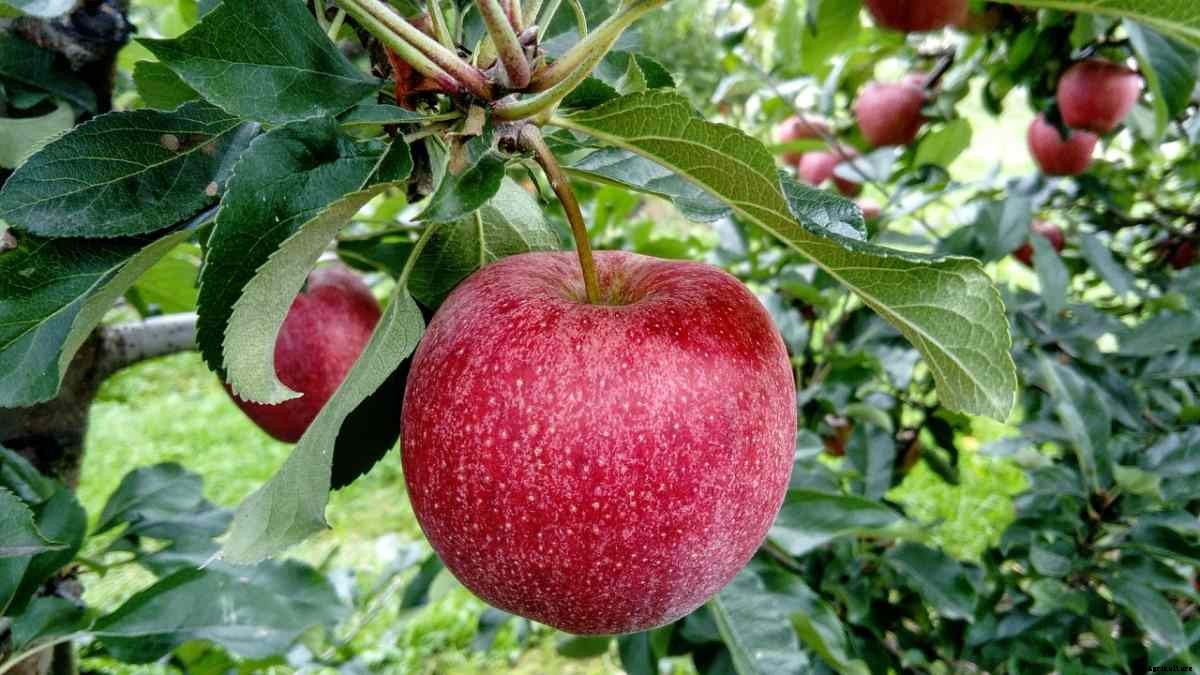
Standard apple trees live for 35 to 45 years on average, whereas semi-dwarf trees live for 30 to 35 years, and dwarf trees live for 30 to 35 years. The care you give your apple tree, as well as any illness or pests it may contract, will affect its lifespan.
Apple trees do not require a lot of water every day and nevertheless. If you find that your soil or the environment in your region requires more frequent watering to minimize drought stress, adapt your watering schedule appropriately.
Too much water depletes soil oxygen, hinders roots from receiving essential minerals, and renders a tree susceptible to decay and illness. Irrigation for apple trees should include a deep soak of the roots. You may be overwatering if you detect standing water.
Spinosad – Some apple tree fruit pests, such as the codling moth, apple pandemis, leaf rollers, and apple maggot, are resistant to spinosad compounds (Rhagoletis pomonella). It’s a microbial substance that kills insects through two methods: contact and ingestion.
If the tree is infested with insects or other pests, use neem oil, insecticidal soaps, or Bt (Bacillus thuringiensis). Pests that consume leaves, such as caterpillars and webworms, are resistant to Bt. When the bugs are visible on the tree, spray.
After your apple or pear tree has done flowering and the fruit is starting to set, spray it with a Spinosad-based solution. Spraying should be done every two weeks for a total of three to four applications.


