
Welcome to Modern Agriculture!

Introduction to lettuce planting questions and answers (FAQs): Hello gardeners, we are here with a helpful article today. Do you have any doubts about planting lettuce? Then you will need to follow this article to clarify your doubts about planting lettuce. In this article, we are going to discuss some frequently asked questions about lettuce planting.
Lettuce is an excellent annual plant of the daisy family, Asteraceae. It is often grown as a leaf vegetable but sometimes grown for its stem and even seeds. Lettuce is commonly used for salads, although it is also seen in other kinds of food, such as soups, sandwiches, and even wraps and it can also be grilled.
The Overview Table Of Lettuce Is Given Below:
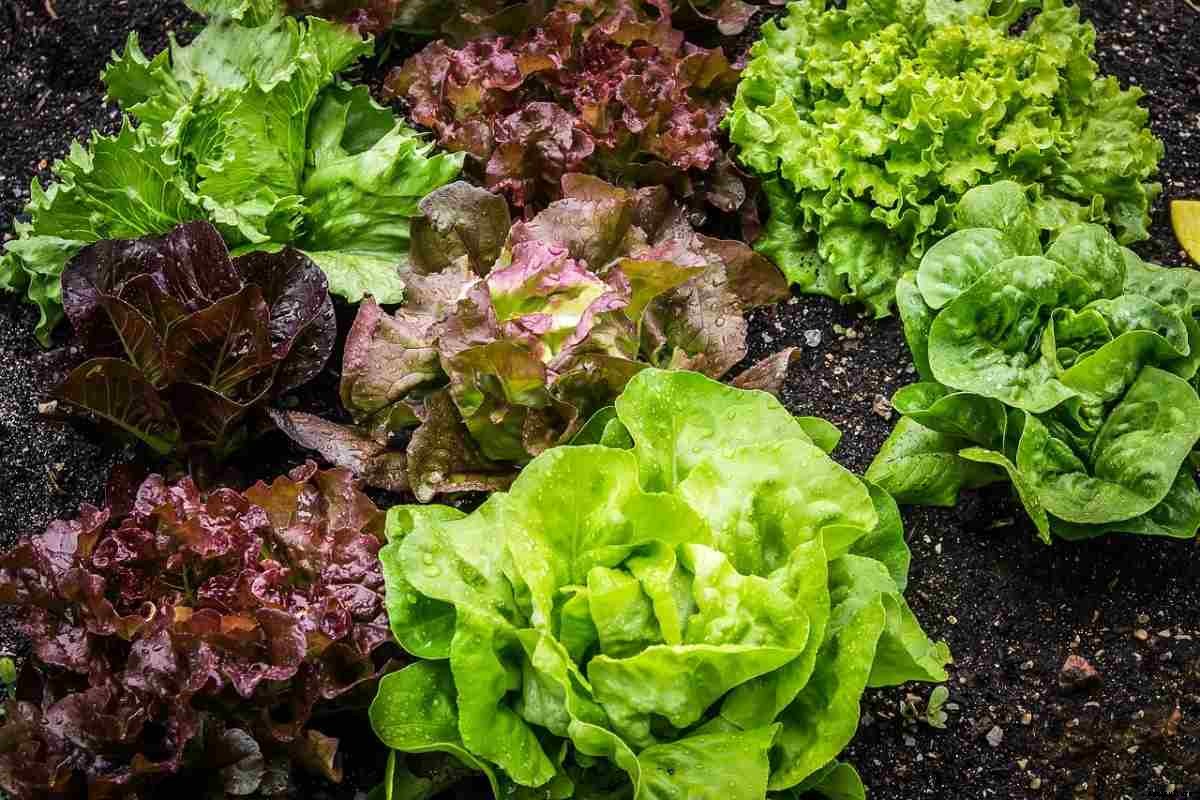
Lettuce is a very easy-to-grow annual vegetable. Considered as a spring and fall plant, lettuce thrives when temperatures are between 15°C to 21°C. Many varieties reach maturity in 30 days, and some can even be harvested much earlier as microgreens. This article includes:
Now, let us discuss some frequently asked questions about lettuce planting
Although lettuce grows fastest in full sun, it is one of the few vegetables that tolerate even some shade. A spring plant often lasts longer if shaded from the afternoon sun as the season warms. You can even grow lettuce in a very small space, even a container.
All lettuces are very easy to grow; however, loose-leaf lettuces – any of the varieties that don’t form a firm heart – are probably the easiest to grow. Although it takes around 40 days for the plant to reach the maturity stage, you will need to thin the seedlings out to allow more space for the mature plants.
Lettuce can be sown after soils reach 4°C, though seeds germinate best at 13 to 18°C. Seedlings will emerge within 7 to 10 days. Nursery-bought transplants need to be planted near the last frost-free date for the growing area.
Good Companions for Lettuce are Beets, Broccoli, Bush and Pole Beans, Carrots, Cucumbers, Dill, Onion, Radish, and Strawberries.
Unless there is regular rainfall, lettuce needs to be watered deeply at least once a week- more frequently during periods of drought. You need to mulch with a layer of compost or even clean straw to help the soil retain moisture. A drip-irrigation system is good and ideal.
Green Star, Magenta, Bronze Arrow Lose Leaf, Red Salad Bowl Oakleaf, and Oakleaf Loose-leaf Lettuce are all heat-tolerant varieties that do very well in late summer. Romaine lettuce is sometimes tricky to grow in the heat, although it is relatively good heat tolerant.
Yes, lettuce leaves will grow back after cutting but only if proper care and even technique are used when cutting as all vegetable lettuce follow similar annual vegetable growth cycles.
Imbibing or even soaking the seeds in cool water for 16 to 24 hours in a well-lit area before planting will gradually increase the germination percentages greatly.
Lettuce seeds are very tiny, and they usually require light to germinate, so you need to cover the seeds lightly never more than 1/4 inches with potting medium. Then spray with water until thoroughly moist and then mist every morning to keep the medium moist at all times. Seeds will germinate within 7 to 10 days, depending on the type you choose.
You need to use water-soluble fertilizer for an immediate boost when lettuce seedlings are 2 to 4 inches tall. Then dissolve fertilizer crystals in water, generally 1 tablespoon per gallon of water. After that, pour the solution into the potting mix to soak the roots. Reapply it every two weeks.
Almost all varieties/types of lettuce are short-day plants. They need about ten to twelve hours of sunlight per day for their good and healthy growth. However, the term ‘full sun’ means any place or region that receives at least six hours of dappled or even direct sunlight daily.
Try to avoid growing and planting lettuce next to Brussels sprouts, Cabbage, Cauliflower, Kale, or Kohlrabi.
Too much or even too little water can spell disaster for lettuce plants at every stage of growth. Insufficient moisture will lead lettuce seeds and seedlings to fail, while too much water will contribute to fungal and even bacterial growth that can kill young seedlings.
In case if you miss this: How To Make Compost From Chicken Manure.
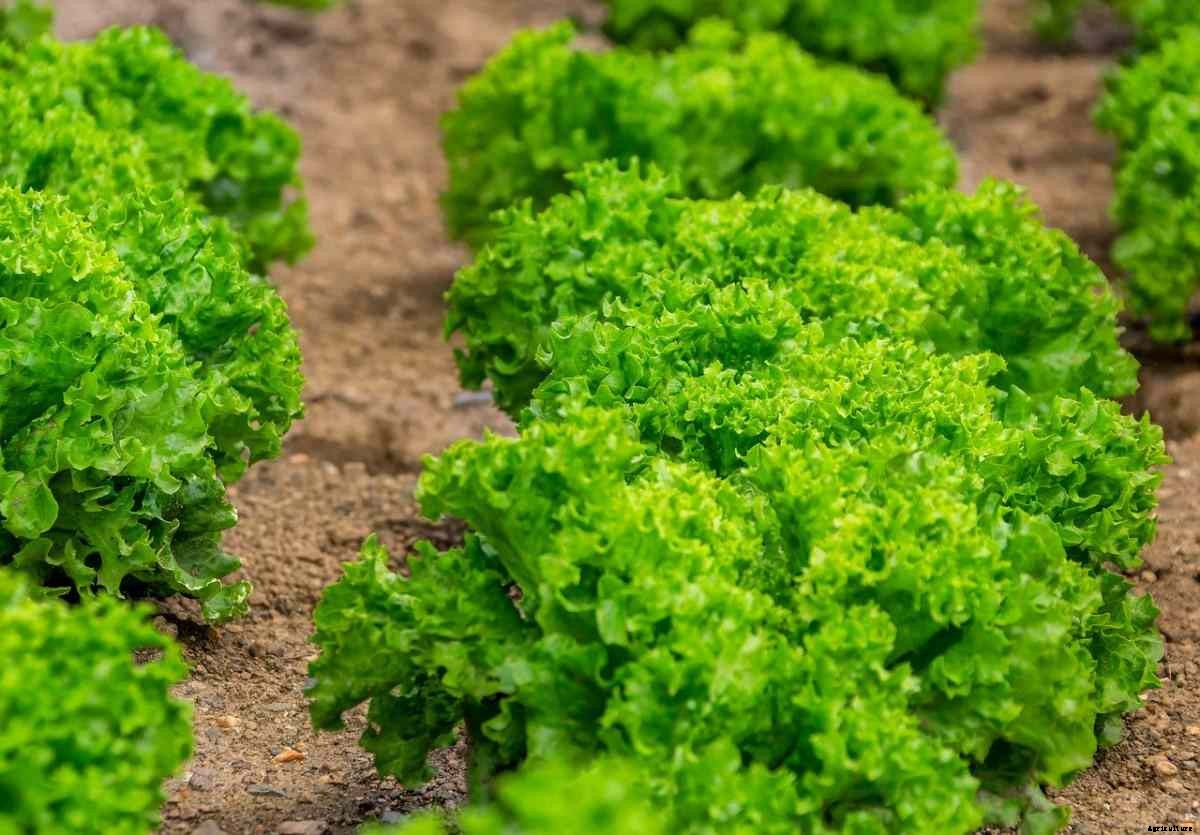
Lettuce is usually adapted to cool growing conditions with the optimum temperatures for growth of 15°C to 18°C. At 21°C to 27°C, the plants flower and even produce seeds.
Lettuce plants usually thrive in nutrient-rich soil. Once the seedlings emerge, then a single dose of fertilizer can be applied to maximize lettuce leaf production. You need to choose a well-balanced fertilizer with equal parts nitrogen, potassium, and even phosphate. If using a granular type fertilizer, better look for 10-10-10 or 5-5-5 mixtures.
Lettuce grows well and best in loose and cool soil with good drainage. The addition of organic materials, such as compost or even manure, will increase drainage, provide essential nutrients and improve your lettuce growing conditions. If you’ve had trouble with lettuce growth, then consider purchasing a soil test kit.
You need to water your lettuce plants every day—and even more often if it is extremely hot and even dry. Lettuce roots tend to be shallow, so frequent watering is more and more important than deep watering.
Your lettuce plant will start to die if it’s getting either too much or even too little water. If soil is too moist, then the plant can get fungal disease, and if the problem persists, the root system can be easily damaged by root rot.
To prevent bolting, planting leafy lettuces in the spring and continually harvesting that means cutting them back during the year will likely prevent bolting and then provide lettuce leaves for most of the summer. For head lettuce, such as iceberg, you need to consider planting them as a fall plant so they mature as the weather is cooling.
You need to mix no more than 1 to 2 tablespoons liquid soap (better use a biodegradable, plant-based liquid soap such as Dr. Bronner’s Liquid Castile Soap) and even 1-quart water. Pour mixture into a spray bottle and then spray pests as needed.
Mulch the area around your lettuces to seal moisture into the soil and then feed your plants. Early- and late-season sowings are very less inclined to bolt. You need to keep the area around the plants weed-free and then protect young plants from slugs and snails.
Lettuces diseases are given below:
Lettuce is a cool-weather plant and it is best grown in spring and even fall. The seeds germinate in temperatures as low as 4°C but their ideal germination and growing temperature are between 16°C to 18°C.
Lettuce needs rich and fertile soil that holds moisture, so you need to work in plenty of well-rotted organic matter in advance. To prepare for sowing or planting, remove all weeds, fork the ground over, and then sprinkle with a handful each of pelleted poultry manure and even general-purpose fertilizer such as blood, fish, and bone.
Ways to stop slugs eating young lettuce plants:
Too little of a very good thing is far better than too much. You should not spray fertilizer or even water on lettuce when the container is in direct sunlight. All of these actions will burn the plants. You should not harvest lettuce immediately after fertilizing.
As with anything in the garden, lettuces benefit from a very good layer of mulch. You need to install two to three-inch layers of organic mulch, such as wood chips, straw, leaves, or even grass clippings around the lettuce, make sure to leave some space around the plant to prevent rot.
Fertilize as often as every two weeks, with a help of liquid fertilizer from a watering can, or granules scattered around the plants and watered in. Fertilizer will help to plump up the leaves and then chase away the bitterness so often found in garden-grown lettuce. And it helps to keep it growing.
How to mulch lettuce:
You need to lay two or three sheets of newspaper around the base of the lettuce plants and in between the rows.
You need to spread mulch by hand on top of the newspaper.
Continue to spread the mulch until it is approximately 3 or 4 inches deep.
Then check the mulch depth two or three days later.
You need to place sown trays in a cold frame or on a greenhouse bench. Lettuce doesn’t need high temperatures to germinate, in fact too high and it can also inhibit germination.
Place your trays in your greenhouse, polytunnel, cold frame, or even on the windowsill to germinate. They need to be ready to plant out in about 4 weeks. It is important to harden off lettuce raised indoors before planting out.
When sowing seeds directly into the soil, you need to plant approximately 10 seeds per foot. You need to space your rows 12 to 18 inches apart. Thin leaf lettuce seedlings to 4 inches apart. Then transplant head lettuce in rows 12 to 18 inches apart with 10 to 12 inches between each plant.
You may also check this: Cucumber Seed Germination.
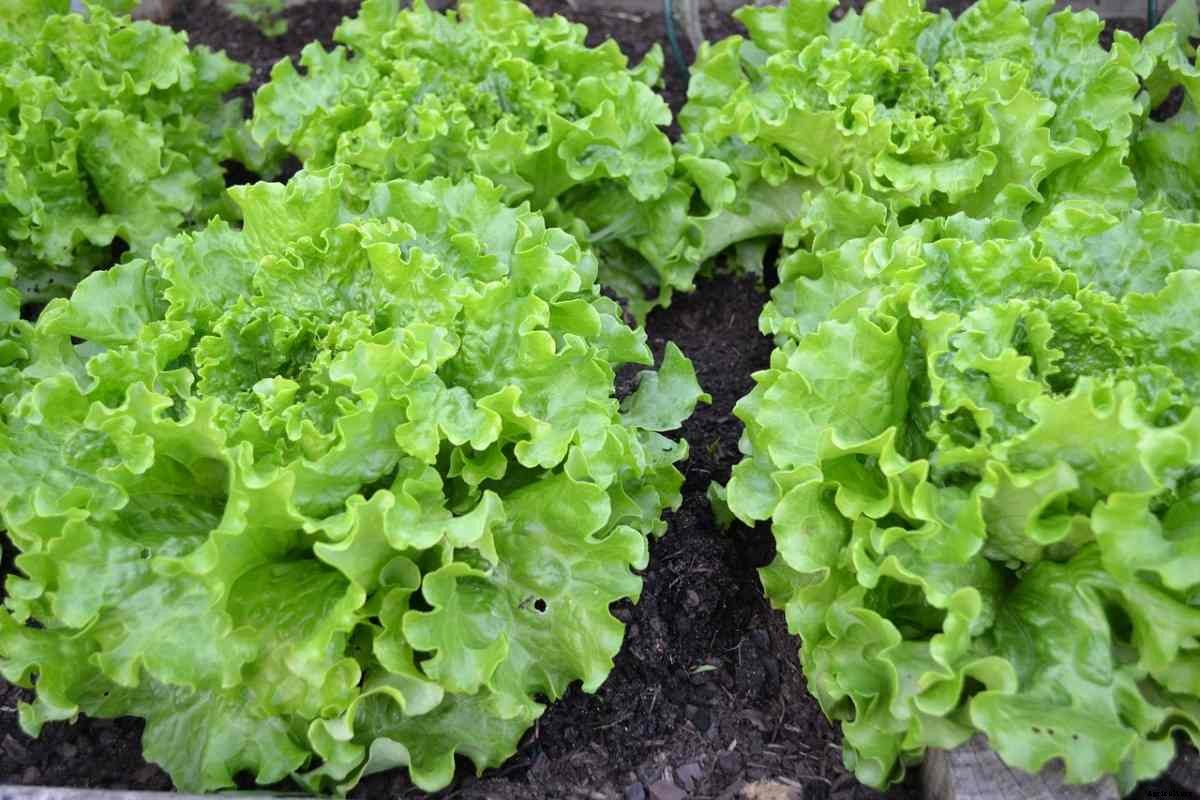
Once leaves begin to appear and when they are about 4 inches or 10 cm long, you can begin harvesting leaf lettuce. Simply snip either single outer leaves or grab a bunch of them and then cut them with shears or scissors an inch or 2.5 cm above the crown of the lettuce plant.
Lettuce is adapted to cool growing conditions with the ideal and optimum temperatures for growth of 15°C to 18°C. At 21°C to 26°C, the plants flower and produce seeds. Lettuce can tolerate a few days of temperatures from 26°C to 29°C, provided that nights are cool.


