
Welcome to Modern Agriculture!

Growing Croton Plants At Home
Hello gardeners, we are back with another topic. Do you want to grow croton plants at home? Well, in this article, you can know about how to grow croton plants at home. In this article, we also cover related topics.
Introduction to Growing Croton Plants in Pots from Cuttings At Home
Croton is known as an extensive flowering plant. This genus belongs to the spurge family, Euphorbiaceae. The plants of this genus were introduced and described to Europeans by Georg Eberhard Rumphius. There are common and different names for this genus. They are rush foil and croton, but the latter is also referred to as Codiaeum variegatum. You can use this information for growing croton plants from cuttings in pots or containers in the Balcony, Plant Nursery, Backyard, Indoors, Outdoors, Terrace, even in the Greenhouse or Polyhouse.
Croton plants are also known as “garden croton,” They are native to the tropical forests of Southeast Asia and Oceania. In the wild area, they grow as large shrubs and they reach up to 10 feet tall. In the home or small garden, they stay a lot smaller.
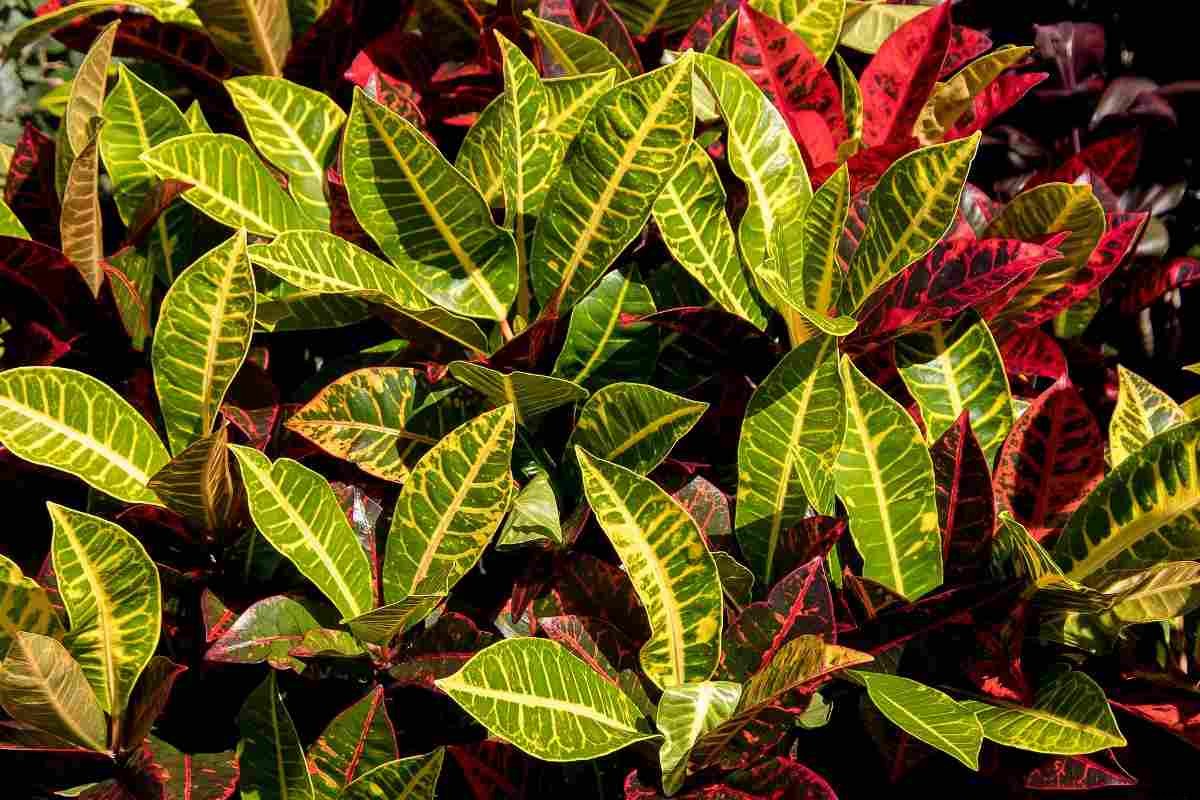
Croton plants come in more than 100 different varieties. It may vary in the shape of leaves, it can come in all colours like red, yellow, green, copper, orange, brown, pink, and ivory also. The colours spread all over the entire leaf to create a visually pleasing plant. Most of them need brightly lit locations and moist soil to survive well. Here is some of the popular variety of these beautiful plants listed below:
This croton plant has dark green leaves sprinkled with shiny yellow gold dots on them. This requires very low maintenance, it is defined as evergreen, it is easy to grow and can reach a height of three to six feet.
Like other crotons, ‘Mammy’ is very easy to take care of and features a display of bright yellow, red, green, purple, and brown in colours. Its leaves are very large, thick, and shinyPetra
This plant is native to Southeast Asia. It can and will reach a height of four to five feet. Its is very large, wide leaves can come in different colours like burgundy red, yellow, orange, green, and bronze colours. It can be grown indoors in large containers in a sunlight location.
This plant has probably the most exotic-looking leaves of all croton plants. They are very long and narrow and end with a spike that holds a small leaflet also. Its leaves feature in deep green to deep purple colour with speckled with small yellow or ivory splashes. To keep this croton plant healthy, a minimum three-gallon container would be the most suitable and you need to use.
Like other crotons, ‘Red Ice ton’ is very easy to grow and it is low maintenance plant. Its leaves can display a variety of colours from green, to gold, and orange. This plant doesn’t have splashes on it but has brightly colour veins. In outdoors it can grow up to 20 feet tall.
Magnificent croton plant has similar leaves shape to ‘Gold Dust’. They are very large, broad, and colour with shades of green, pink, yellow, orange, and deep purple. When you grow out the door it can reach up to a height of seven feet, though the average height of the plant is about three to four feet. This plant can maintain its colour even in shade.
It is a beautiful shift from other croton types or varieties, they have broad leaves. It has long narrow, green to purple, leaves that splattered with patterned golden yellow colour. It can reach up to a height of four to six feet.
Croton plants require very rich soil. You need to use a combination of organic compost and peat moss in the soil. These plants require well-drained soil; they don’t like to sit in a pool of water though, so the pot you selected also needs to be able to drain as well.
When choosing or selecting a container for your croton, you need to keep in mind that the plant will grow upright, which may eventually cause it to become top-heavy. You need to pick a container that won’t easily tip or break over when the croton gets larger. Or, you need to plan to pot up to larger pots over time.
Croton plant can be propagated easily by two methods
Propagation by rooting a stem from a healthy, mature plant may be a method commonly wont to propagate croton and lots of other houseplants. Rooting involves cutting a stem with a minimum of three sets of leaves. Choose a stem 3 to 4 inches long. A wound is made by removing rock bottom set of leaves, and new roots form at the wound site. Propagate croton from a leaf by placing the stem during a container crammed with a light-weight potting mixture. Cover the container with plastic to make a greenhouse atmosphere.
Air layering may be a propagation technique during which a stem is rooted while it’s still attached to the plant. the method involves making a diagonal traverse one-third to one-half the diameter of the stem. The wound is treated with rooting hormone and then kept open with a bit of matchstick. Damp sphagnum is filled around the area, using the moss carefully covered with wrapping. When the stem roots, it’s planted during a container crammed with lightweight potting soil or a mix of ingredients like perlite, sand, and sphagnum.
Watering the croton plant the day before propagation can facilitate rooting and may minimize stress to the plant. Keeping the rooting medium lightly moist is critical. A stem cutting during a container covered with plastic often remains moist for several weeks. However, the potting soil is checked two or 3 times weekly and misted if it begins to feel dry. For a stem that’s propagated by layering, the sphagnum turns a tan color when it becomes dry. When this happens, the plastic is temporarily removed then replaced after the moss is misted. Indirect sunlight is most important for either propagation method.
A propagated croton plant is then prepared to transplant when the croton rootage will take hold and new plant growth is very clear.
You need to place the croton plant in a sunny location such as an eastern, southern, or western window. If the croton plant is getting too little light, then its newer leaves will be less colorful.
You need to keep the soil evenly moist, but you need to let it dry out between watering.
If the humidity is low in your home, you need to mist around the leaves with water once a week or you need to keep a tray of wet gravel near the plant.
Croton plant leaves are dust magnets. You need to frequently wipe the leaves of the plant with a moist cloth twice a month to keep them clean and dust-free.
You need to fertilize the croton plant in spring and summer when the plant is actively growing.
New croton plants can be started with 4to 6 inches stem cuttings. You need to remove the bottom leaves and need to place the cutting in a glass of water. After roots have formed, you need to plant them in a small pot.
You need to water regularly with lukewarm water to keep the soil moist. You need to use lukewarm water to avoid shock to the roots, and water when the top ½ inch or 13 mm of the soil dries out. You need to stick your finger into the soil, and if the top feels dry, then it is time to water. You need to continue watering until the excess flows out the drainage holes in the bottom of the pot.
These tropical plants like plenty of water, but it is very important to have moist, damp soil rather than soggy or wet soil.
In dormancy periods like late fall and winter, you need to cut back on watering and you need to let the soil dry out to a depth of 1 inch or 2.5 cm.
You need to keep the plant around 24°C. Croton plants are native to tropical areas, and they won’t survive in temperatures below 16°C. The ideal temperature for these croton plants is between 21°C and 27°C in the daytime and 18°C at nighttime.
It is also possible to grow croton plants outdoors, but only in warm and hot climates with high humidity levels. If you live or stay in a cooler or drier climate, you need to grow your croton inside where you can control the environment.
You need to maintain a higher humidity around the plant. The ideal humidity range for the croton plant is between 40% to 80%, with the optimal level being around 70%. You can also achieve this by misting the leaves every 1 to 2 days, or by growing the croton plant in a bathroom that is used often for showers and baths.
Another way to generate humidity for the croton plant is, you need to place the pot on a tray filled with pebbles that are covered in water. You need to replace the water as necessary to keep the pebbles wet. You can use a device called a hygrometer to measure the humidity around the croton plant. These are available at garden department stores.
You need to fertilize the plant monthly in active growth periods. Your croton plants need lots of nutrients to grow their colorful leaves. During their active growing periods in spring, summer, and early fall, you need to feed the plant every month by adding a liquid fertilizer or powder fertilizer to the water before watering them.
The best fertilizer for the croton plant is one that is very high in nitrogen and potassium, like 8-2-10 mix, using these chemicals can help the plant to grow strong stems and leaves. The numbers need to refer to the amount of nitrogen, phosphorus, and potassium in the fertilizer.
You should not feed the plant in dormancy periods during the late fall and winter months.
You need to re-pot the plant in spring when it outgrows its current pot. You need to choose a pot that is 1 to 2 inches or 2.5 to 5.1 cm larger than the current pot. You need to look for a pot with plenty of drainage holes. Then, you need to fill the pot halfway with rich potting soil. You need to carefully remove the croton plant from its original pot and then place it gently into the new one. At last cover the roots with additional potting soil and then water to set the soil in place.
Repotting of the croton plant will be able to result in leaf downfall, you can only minimize this shock to the plant by only repotting in mid-spring or late spring. Instead of potting soil, you need to use a half-and-half mixture of peat moss and aged compost in the soil.
In case if you miss this: Growing Organic Lettuce At Home.
Is Croton plant easy to grow?
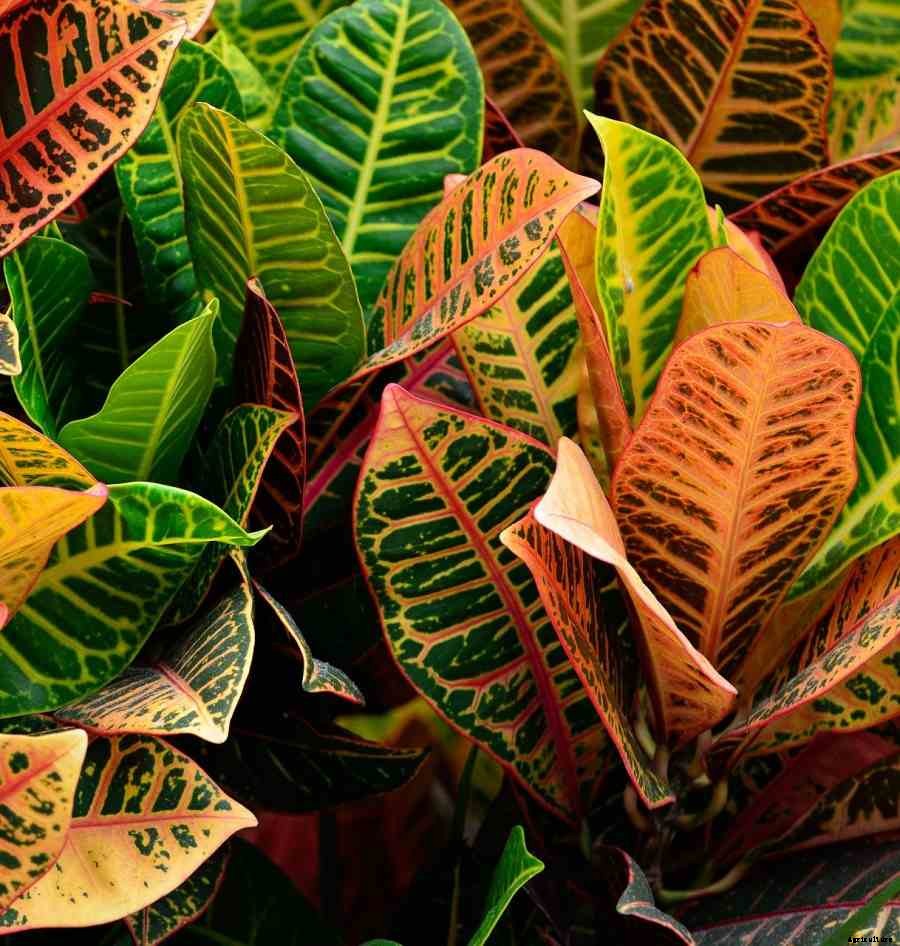
The croton is a very easy-to-grow plant. It has variegated foliage so it is very well known and it is covered in green, scarlet, orange, and yellow splotches.
How can I make my Croton plant bushy?
Croton in a container can be maintained as a very small, bushy shrub by pinching or pruning it back frequently. The leaves will be in their normal size even though the plant is kept very small.
Do Croton plant-like lots of water?
The croton plant requires frequent watering, but you need to be sure not to over-water. Too much water can also cause root rot, but too little water can also dry the humidity-loving plant out.
Why Croton plant leaves fall off?
It’s natural for the croton plant to drop leaves as it adjusts to environmental changes. Heat and humidity – Croton plants are tropical plants, which means they survive in warm and humid conditions. If your croton plants leave downfall off, it is just because it is exposed to cold or hot extremes such as open doors or air ducts.


