
Welcome to Modern Agriculture!

Introduction to growing Hibiscus plants in pots
Hibiscus plants are a genus of flowering plants in the mallow family, Malvaceae. These plants are some of the most common plants found in the world. Growing Hibiscus indoors allows you to show off these bright, tropical flowers in a home from spring to fall. This evergreen Hibiscus shrub has upright branches densely covered with glossy, dark-green ovate plant leaves. Hibiscus is a plant that requires a lot of suns. You want to plant your Hibiscus in an area that receives most of the sunlight regardless of whether you plant Hibiscus inside or outside. In this article we also discuss below topics;
Container-grown Hibiscus plants are often grown in a soilless potting medium to prevent compaction. Soil keep moist but don’t let it stand in water. Hibiscus grows best in slightly acidic soil that has a pH level between 6.5 and 6.8. For container-grown Hibiscus, use potting soil that drains well and designed for acidic plants. Make sure the container drains well. Loamy soil provides good drainage, but it’s also important to grow Hibiscuses in containers that have plenty of drainage holes.
Hibiscus will grow well with no direct sunlight, but they won’t bloom. They will have glossy dark green plant leaves, produce beautiful foliage, and stay strong and healthy if they are clear across the room from a sunny window. A good nutrition program minimizes the amount of sun they will need to bloom, so even just an hour or two of the sun will work just fine if you use our suggested nutrition program. If you have a very sunny window with several hours of daily sun, then you’ll get even more blooms. No amount of sun is too much, but in a sunny window try to give the plant an inch or so of space between its leaves and the window because the heat that builds up right next to the glass can be hard on the leaves that touch the glass.
You should not miss this: Growing Cluster Beans in Pots from Seed.
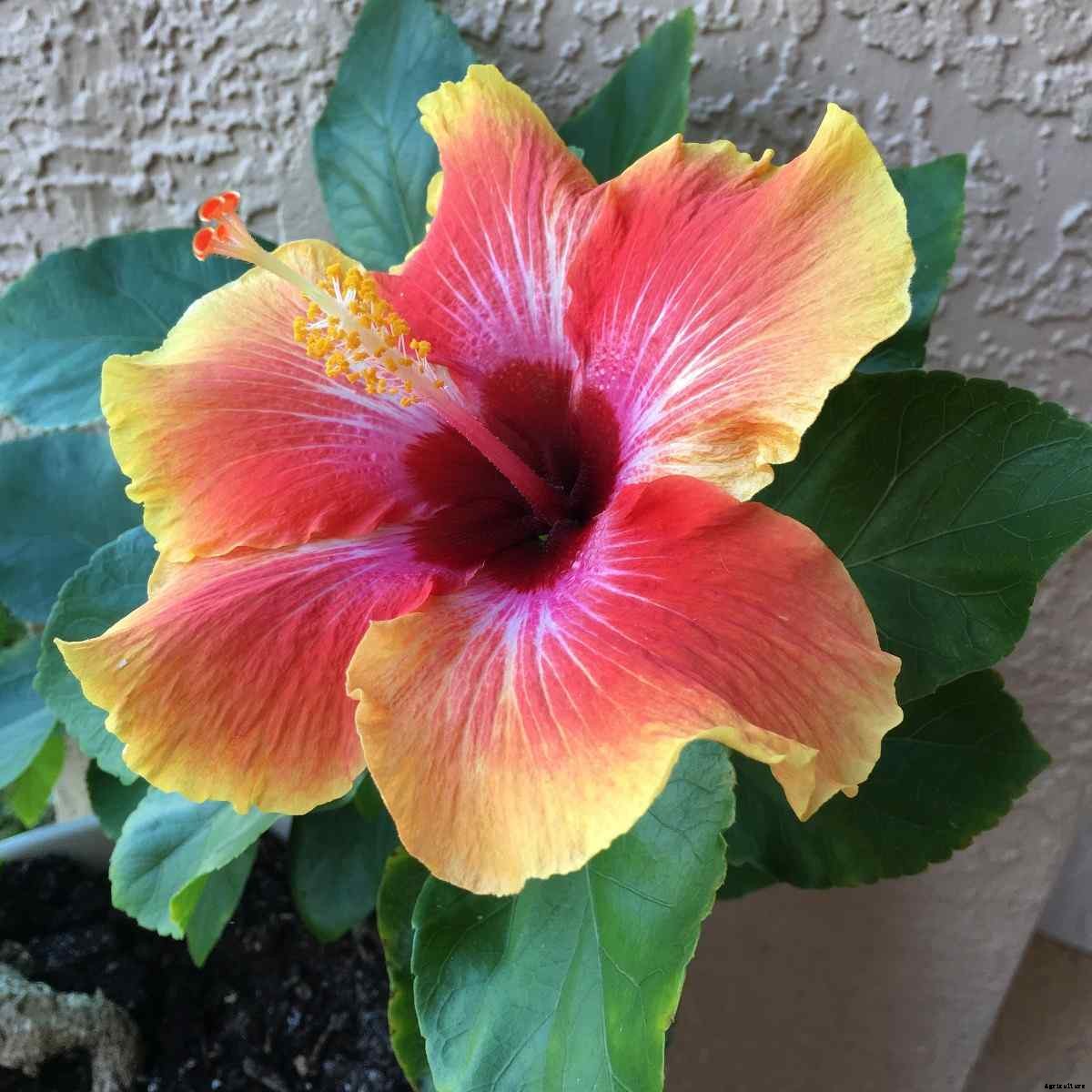
Select a site in full sun and Hibiscus requires 6 to 8 hours of direct sun daily in order to thrive. If you live in an area prone to windy conditions, place Hibiscus plants in protected locations, as flowers are delicate and tear easily.
Hibiscus does very well in containers and a good solution when you wish to enjoy the plants in areas where ground planting isn’t possible, such as around swimming pools and on decks. Tropical Hibiscus requires temperatures above 7°C. Therefore, container growing indoors in the winter is also an option.
Although the size of the best pot depends to some degree on the size of the plant, the Hibiscus tends to produce a wide root ball rather than a deep one. For this reason, use a pot that’s at least about 10 inches wide for a young, nursery-grown specimen. If your plant is already large and you want to repot it from a nursery pot into a decorative container, one that’s at least a few inches larger in diameter than the choose a current pot to allow for new growth. Always make sure that the growing Hibiscus plant has excellent drainage.
When you care for a Hibiscus plant, you should remember that Hibiscus flower best in temperatures between 16-32 °C and cannot tolerate temps below 0°C. In the summer, your Hibiscus plant can go outside, but once the weather starts to get near freezing, it’s time for you to bring Hibiscus indoors.
Keep the soil surrounding the Hibiscus plant moist but not soggy. Indoor Hibiscus, like an outdoor Hibiscus plant, will need a lot of water in hot weather and much less water in cold weather. When you water your Hibiscus plant, water until you see water come out the bottom of the pot into the plant tray, but after 12 hours the water in the plant tray should be gone. If there is still water standing in the tray, and pour it away. Hibiscus can drown in standing water and their roots need air, and water prevents them from getting any air. Fungal root diseases thrive in soggy soil, and standing water definitely makes the soil soggy if it stays too long.
You may also check this: Growing Succulent Plants in Pots.
Fertilize your Hibiscus plants every 2 weeks during the blooming period. Use a water-soluble or liquid fertilizer for best results and a balanced 10-10-10 fertilizer will work just fine. Select an organic variety that contains trace elements like potassium, iron, and magnesium. Apply the fertilizer at the base of each Hibiscus plant every 2 weeks. Don’t use chemical fertilizers on plants. Avoid over-fertilizing since too much phosphorus can kill the Hibiscus plants.
Hibiscus plants attract Aphids, thrips, whiteflies, and spider mites. Spray frequently with a mild solution of warm soapy water to prevent insects and some disease problems. Leaf Spot and several other types of fungi could cause brown or black circular or irregularly shaped spots on the leaves of Hibiscus plants.
Pruning will keep your Hibiscus plants looking healthy and stimulate blooms. Hibiscus plants grown in a container requires pruning to keep it to the right size and shape. Pruning, though, carries with it inherent dangers. Incorrectly pruning the plant could mean the removal of buds. The best method to encourage new blooms is to allow new stems to grow to 2 inches in length and then pinch the tips off of them. This mainly causes new stems to grow underneath the pinched stem. Pinch the tips of these when they grow to 2 inches in length and if you repeat the process throughout the growing season you’ll have flowers all year long. When shaping the Hibiscus plant, use sharp pruning shears and make all cuts just above a node. New growth from these cuts should bloom within 3 months of pruning.
The Hibiscus leaf turns yellow as a way of signaling a specific need. There are many factors contribute to Hibiscus leaf yellowing.
Nutrient deficiency causing Hibiscus yellow leaves – If your Hibiscus is suffering from a nutrient deficiency, the leaves will turn partially yellow but remain on the Hibiscus plant. This problem can be easily corrected by adding fertilizer or amending the soil.
Temperature causing Hibiscus yellow leaves – When temperatures are extremely hot, particularly in summer, the Hibiscus requires additional watering. Otherwise, the Hibiscus plant will dry up quickly and succumb to heat stress. This can affect the Hibiscus leaf turning yellow and eventually dropping off. Likewise, when temperatures get too cold, the Hibiscus will respond with yellowing of its leaves. Ensure that the Hibiscus plant is kept away from drafty locations and excessive wind. And, be sure to bring the plant indoors when outside temperatures reach freezing.
Light causing Hibiscus yellow leaves – Too much sunlight can result in Hibiscus leaves turning yellow as well as the development of white spots, which signal plant burn. Remove the damaged plant leaves and change the location of the plant. If the Hibiscus plant is not getting enough light, the plant may also react with yellow leaves, which will begin dropping in order to make up for the lack of light. This can be easily remedied by moving the Hibiscus plant to an area receiving more sunlight.
Too much water or not enough can result in Hibiscus leaves turning yellow – Failing to give Hibiscus plants enough water can cause the Hibiscus leaf to yellow. Check the soil with a finger to ensure the plant is getting enough water. Self-watering pots are also a good method to alleviate these problems.
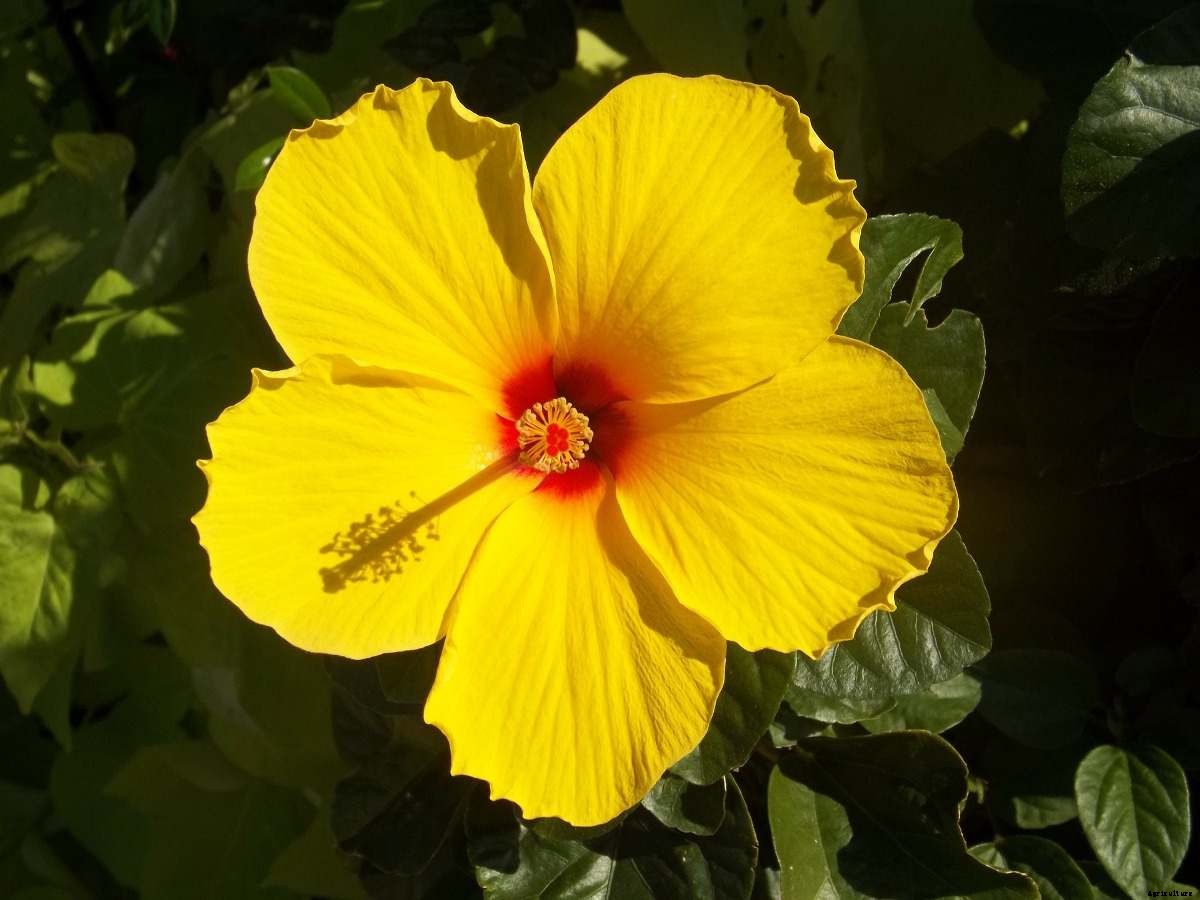
Depending on heat, wind, and humidity, your Hibiscus plant may need to be watered daily, or even twice a day in extremely dry conditions. It may need 1 to 2 inches of water per week.
If you select to grow Hibiscus in containers rather than directly in the ground, a number of potting mixes will yield better results than pure garden soil. A mixture of two parts potting soil, two parts peat moss and one part vermiculite or perlite is good for Hibiscus plants.
Hibiscus plants will resprout in the springtime when the temperatures get warmer. Look for new growth on the Hibiscus plant, both branches, and leaves. If the entire plant seems brown and does not start to regrow at the same time other Hibiscus plants you have in your yard do, it is likely that the plant is dead.
For optimal growth, the Hibiscus plant requires rich soil. Enrich the soil prior to planting by amending with homemade or bagged compost and earthworm castings. Also, Hibiscus grown with worm compost grew bigger and had better blooms.
Hibiscus is susceptible to a wide range of pests and diseases. A Hibiscus with black spots or brown spots on the undersides of leaves is suffering from an infestation of black scale insects or a leaf spot disease.
In case if you miss this: How to Make Money from Vegetable Farming.


