
Welcome to Modern Agriculture!

Introduction to growing Crossandra (Kanakambaram) in pots
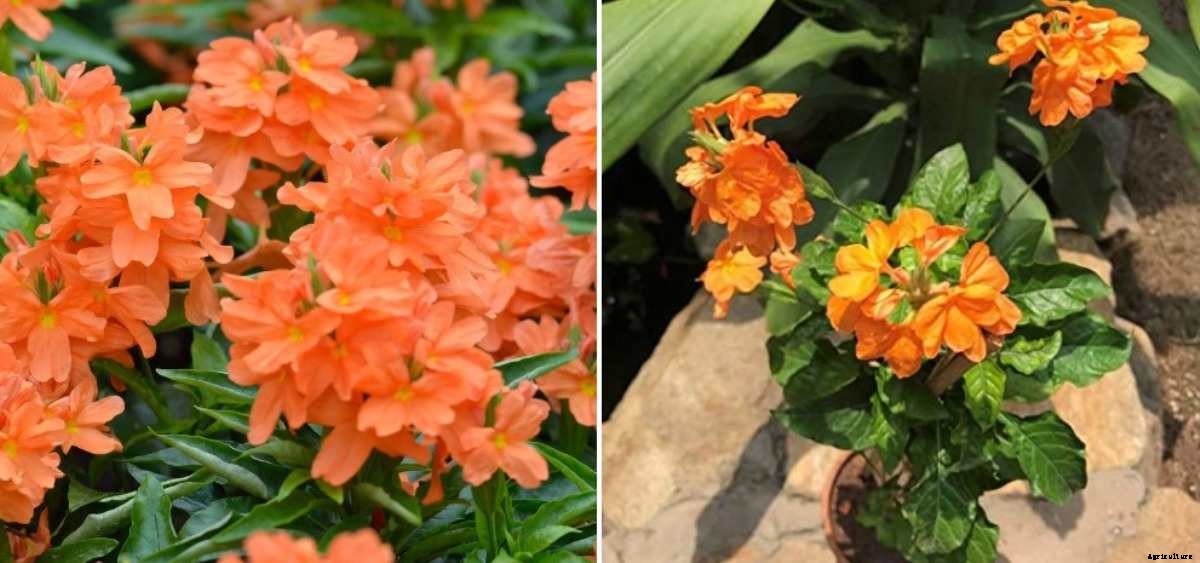
The Crossandra flower is commonly called as ‘Kanakambaram’ is known for its beauty and color. Its scientific name is Crossandra infundibuliformis and it is also called Aboli. Crossandra plants with their bright orange flowers are grown as an annual or perennial, planted in the home garden or as wonderful flowering windowsill houseplant depending on where you live.
Crossandra is an evergreen plant that grows up to a height of one meter. About 30-35°C atmospheric temperature is ideal to ensure better growth of the Crossandra plant and the attractive color of the flowers. The flowers are found in varieties of yellow, orange, and red. But white and purple color varieties also are found nowadays. Though flowers are not fragrant like jasmine flower, Crossandra flower is noted for its attractive color. In this article we also discuss below topics;
Crossandra is prized for its constant show of bright orange flowers and shiny green foliage. Crossandra plant care includes keeping the soil moist and applying a balanced fertilizer every month, spring through fall. For indoor use, mist the plant leaves regularly. Start Crossandra from seeds indoors at any time. Very lightly cover the flower seeds with a sprinkling of soil and maintain warm temperatures for the best germination. Blooms can appear 4 months after seed sowing. Plant treat as an annual or a container plant in areas with frosts. Bring container indoors, and the Crossandra plant will brighten up your interior during the winter months. Crossandra is a versatile plant grown as an annual, perennial plant, or flowering houseplant, depending on where you live.
Local types (Orange, Dark Red (Ratan aboli), Yellow, Delhi Crossandra, Arka Ambara, Arka and Kanaka, etc
Crossandra grows to a height of about 12 to 18 inches tall, producing dark green foliage with the glossy leaves resembling Gardenia plant leaves. When orange marmalade Crossandra plant reaches the desired height it is a good idea to pinch out the tips helping the plant to branch nicely. A bushy appearing plant, the foliage is stalkless, and the leaves attach directly to the stem.
Crossandra plants thrive best in bright, indirect sunlight. During the summer season, do not expose them to direct sunlight. In the winter season, provide as much light as possible. Indoors, your Crossandra plants can do well with bright artificial light.
A rich, peat-based potting soil with excellent drainage is beneficial for Crossandra. If grown outdoors, it wants to be in a well-drained spot and will enjoy having compost provided for nutrients.
Crossandra enjoys the heat and high humidity. When they bloom, a temperature ranging from 70 to 75°Fis most recommended.
In case if you miss this: Growing Marigolds in Pots.
Crossandra is easily raised from seed germinated on sphagnum moss or soil containing vermiculite, and equal parts of perlite and peat moss. Crossandra seeds need temperatures between 21 to 26°C for the best germination. Transfer the seedlings to individual pots and pinch them back when they are 4 inches high. If grown in rich, moist soil at a temperature of at least 18°C, the seedlings will bloom in about 7 months from seed.
Crossandra can be propagated by sowing sprouted seeds or planting rooted stem cuttings. Finely crush soil and then mix it with an equal amount of cow dung powder, neem cake, and sand. Moisten the soil and sow the Crossandra seeds in it. Seeds will sprout within 5 days. Try stem cuttings for the varieties that cannot be propagated through seeds. Only well-rooted stem cuttings must be planted. After 45 days of planting or 4 to 5 pairs of new shoots emerge, replant the saplings. Saplings can be planted in flowerpots or flowerbeds at a distance of about 1.5 feet.
Keep the soil moist with warm water in summer, reduce water during winter. Coldwater triggers a state of shock causing the plant to die. Always water the plant with warm water as it can be easily shocked by the cause of its death. Crossandra hates cold water and not receive frequent watering.
While replanting, ensure the soil is properly fertilized and the sunlight is obtainable aplenty. Add cow dung powder in the soil at the bottom of the Crossandra plant every 15 days. Do not let the water make a puddle at the bottom of the Crossandra plant.
Water the Crossandra plant on alternate days during summer and pile up soil at the bottom during monsoon. Feed it using a liquid fertilizer for houseplants every 2 weeks from April to August and mist lightly when having challenges with humidity. Maintain the soil in the pot moist but never muddy-wet.
You should not miss this: Bitter Gourd Seed Germination, Time Period, Procedure.
Here are some issues that will prevent you from achieving good results when growing and caring for the Crossandra plant.
This means that the air is too dry or the sunlight is too strong. Move the Crossandra plant to a spot with better protection and mist frequently.
These brown spots indicate that Crossandra received cold watering. If this happens frequently, the Crossandra plant will surely die.
Crossandra plant is a bushy plant and shows glossy leaves with the best care. If the plant shows otherwise, it can be due to overwatering.
If the growth is stagnant and the plant leaves drop, the plant is too cold. And provide the right temperature and humidity for your Crossandra plants.
You over-watered the Crossandra plant. Repot your Crossandra plant and provide fresh soil.
Crossandra plants affected by a spider mite. If water is supplied excessively, its leaves, inflorescences, and stems cause problems of rotting, often in the cold when excess water and moisture become stable. Due to excessive water, the plant leaves can also be soft.
With a strong supercooling, the plant left the leaves. If the environment is hotter and dry, the plant leaves turn twist. With a strong draft, the Crossandra plant can wilt, and the leaves begin to fall. The production of Crossandra flowers is affected by insufficient lighting.
Normally, the Crossandra plant is resistant to diseases and insect attacks. It is ideal to use organic pesticides and fertilizers for pest control and disease prevention. Neem-based pesticides are good for Crossandra plants. Apart from being an ornamental plant in the garden, Crossandra can give the farmers an attractive turnover as well.
Prune Crossandra plants in the spring right before they begin active growth. This encourages the Crossandra plant to develop new, healthy stems. You can use the trimmed stems for propagation if you’d like.
Pinch back Crossandra flowers once they start to fade to keep the plant blooming. If you want to prevent Crossandra seeds (especially indoors), cut the spikes back before seeds fully form. This keeps them from popping into your house.
Flowers bloom within 3 months of planting. The Crossandra flower bunches emerge from the end of leaves. Pluck the Crossandra flowers in the early morning on days. Only a low harvest will be obtainable in monsoon. Flowers have 4 petals and the seeds are yellow or black in color.
You may also check this: How to Make Money from Dried Flower Business.


