
Welcome to Modern Agriculture!

Introduction to growing Chrysanthemums in pots
Chrysanthemum is a member of the Compositae family and is available in a wide range of brilliant colors, shapes, and sizes. Chrysanthemum plants are perfect for front porches, patios, balconies, and terraces. Growing Chrysanthemums in pots is extremely popular. In this article we also discuss below topics;
Growing Chrysanthemums in pots is a perfect garden solution for small gardens. Most garden mums grow to 2 to 3 feet in size and need at least a 12-inch container for the best support. Rich potting soil with good drainage is essential and to encourage root growth, water container mums from the bottom of the container. Add a water-soluble fertilizer on a weekly basis and because mums require the proper sunlight to set blooms, placing your plant in a south-facing window and away from artificial light produces the best results. Storing in a protected garage during the winter months can help plant rest for new spring growth.
Chrysanthemum belongs to the aster family and about 50 species. There are many colors, shapes, and sizes of Chrysanthemums- from tiny spheroids to starry and stately, giant single flowers. Chrysanthemums are the most famous flowers after roses.
The popular variety is Chrysanthemum x Grandiflorum. And this includes the hardy Chrysanthemums that are frost-resistant or partially resistant to frost. Pot mums or Florist’s mums are best if you want to grow Chrysanthemum in pots.
Choose a spot in your yard that gets a sunny location and a little bit of shade is okay. Chrysanthemums like the morning sun, so try to put them in a spot that gets sunlight in the earlier hours of the day. Chrysanthemums don’t like being constantly wet, so make sure the soil is able to drain easily and there’s plenty of air circulation.
If you’re unsure whether or not your soil is able to drain efficiently, then dig a hole using a shovel that’s roughly 1 foot deep. Fill the hole with water and see if all of the water is able to drain out in less than 10 minutes. If it’s not, your soil isn’t well-drained.
A warm, bright room with south- or west-facing windows provides the ideal conditions for germinating Chrysanthemum seeds. First, arrange the pots within 3 feet of a window. Unless temperatures stay reliably above 21°C, warm the pots with a heating coil or propagation mat and keep them covered with plastic wrap. Keep the top 1 to 2 inches of the soil moderately moist during the seed germination. If the room receives less than 6 hours of bright, natural sunlight each day, suspend a fluorescent grow lamp 12 to 15 inches above the pots to supplement the obtainable light. Then, closely monitor the moisture level in the soil when using a heating coil or fluorescent lamp because artificial heat will cause it to dry out faster.
Propagating Chrysanthemum is fast and easy when done through division. Mums benefit from division every 3 to 4 years to enhance the form and flowering of the plant. Then, this is done in spring and yields a spare plant or two. The centers of mums can begin to get leggy and even die out when they get older. In spring when the Chrysanthemum begins to show signs of sprouting, dig out the entire root ball of the plant. Use a sharp soil knife or spade and use it to cut the root ball into 3 to 5 sections. Each one of these sections can be planted to make a new Chrysanthemum plant.
In case if you miss this: Growing Marigolds in Pots.
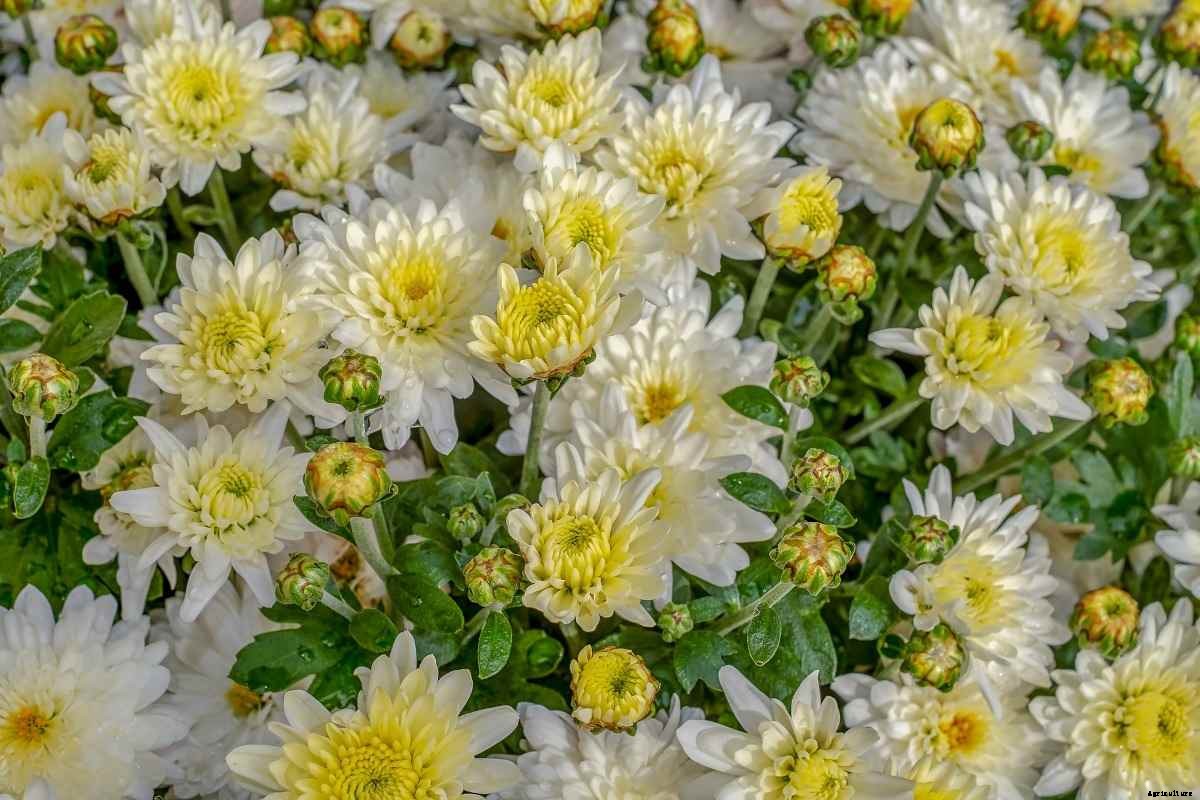
As Chrysanthemum plants have a shallow root system, they are exposed to fast-drying that’s why regular watering is recommended. Then, keep the soil slightly moist but not wet.
Feed the Chrysanthemum before the flower buds form to promote healthy roots, bud development, and a vigorous plant. You can apply 12-6-6 slow-release fertilizer during the beginning of the growing season or balanced liquid fertilizer according to the product’s instructions once in a couple of weeks.
Pests such as leaf and stem miners, Chrysanthemum eelworm, aphids, caterpillars, worms affect the mums. Some diseases like gray mold, powdery mildew, and root rot infect it.
You should not miss this: Growing Crossandra in Pots.
Chrysanthemum plants are short-day plants. In autumn, days become shorter, resulting in a change in light. Chrysanthemum shifts away from vegetative growth to generative and then starts to bloom.
To grow Chrysanthemum from seed, sow at least 2 months before the first frost, or start indoors over the winter. The planting medium should be kept at 21-23°C, and seeds should germinate in 1 to 3 weeks.
Chrysanthemums or mums are one of the most popular flowers. Most plant varieties are easy to grow with their basic needs being the full sun, rich soil, good drainage, and good air circulation.
Chrysanthemum plants are not annuals, they are herbaceous perennials. An herbaceous perennial plant has stems that die back at the end of the growing season.
The Chrysanthemum flowers may wilt and die quite suddenly. These diseases live in the soil and attack the plant roots, so they are hard to avoid. Lastly, poor environmental conditions such as overly wet or dry soil weaken the mums, which can lead to the plants becoming more susceptible to fungi, diseases, and insects.
The main reasons for mums turning brown are heavy rain damage, insufficient water, and the natural flowering cycle. Deadheading brown blossoms and cutting back damaged Chrysanthemum plants will help keep mums looking their best and blooming profusely.
Chrysanthemum plants are not annuals, they are herbaceous perennials. An herbaceous perennial has plant stems that die back at the end of the growing season. New growth emerges from the rootstock every spring and creating a larger plant every year until it reaches its maximum size.
Garden Chrysanthemum that is planted in heavy soil or soil that drains poorly is not happy plants. The Chrysanthemum plants need well-draining soil to thrive. If the soil doesn’t release water, the mum’s roots drown and you see Chrysanthemum plant yellowing.
You may also check this: How to Make Money from Dried Flower Business.


