
Welcome to Modern Agriculture!

Introduction Bitter gourd seed germination Process
Bitter gourd is also known as Karela or Bitter melon. Bitter gourd is a unique vegetable that can is used for both culinary and medicinal purposes. This oblong-shaped vine variety showcases a warty exterior with its size, texture and also has a bitter taste. In this article we also discussed below topics;
Bitter gourd is popularly known is a vegetable that is an excellent source of Vitamin C and Vitamin K. Bitter gourd is a climber plant, and hence you want to have trellis arrangement for it to grow. Though, the plant and fruits are quite light in weight and hence can be grown on any kind of trellis system. The Bitter gourd plant quickly germinates from seeds and then fruits practically all year round. Some important varieties of Bitter melon to try are;
Provide full sun to this vine, and then it will produce heavily. Also, as it is a tall vine, you will want to support it. A tall trellis or a garden fence. If you want to grow Bitter gourd on your patio, terrace or balcony grow it near the wall so that it can go up along with it. Plant Bitter gourd where it receives at least 6 hours of sunshine.
In case if you miss this: Growing Sugarcane in Pots from Cuttings.
It tolerates a wide range of soils, but prefers permeable, sandy loam soil that is rich in organic matter. It grows slightly acidic to the slightly alkaline soil. The pH level of around 5.5 to 6.7 is ideal. Soil should be fertile, but well-drained, with a pH level of 5.5 to 6.7. Adding composted manure or compost to enrich soil results in good plant yields.
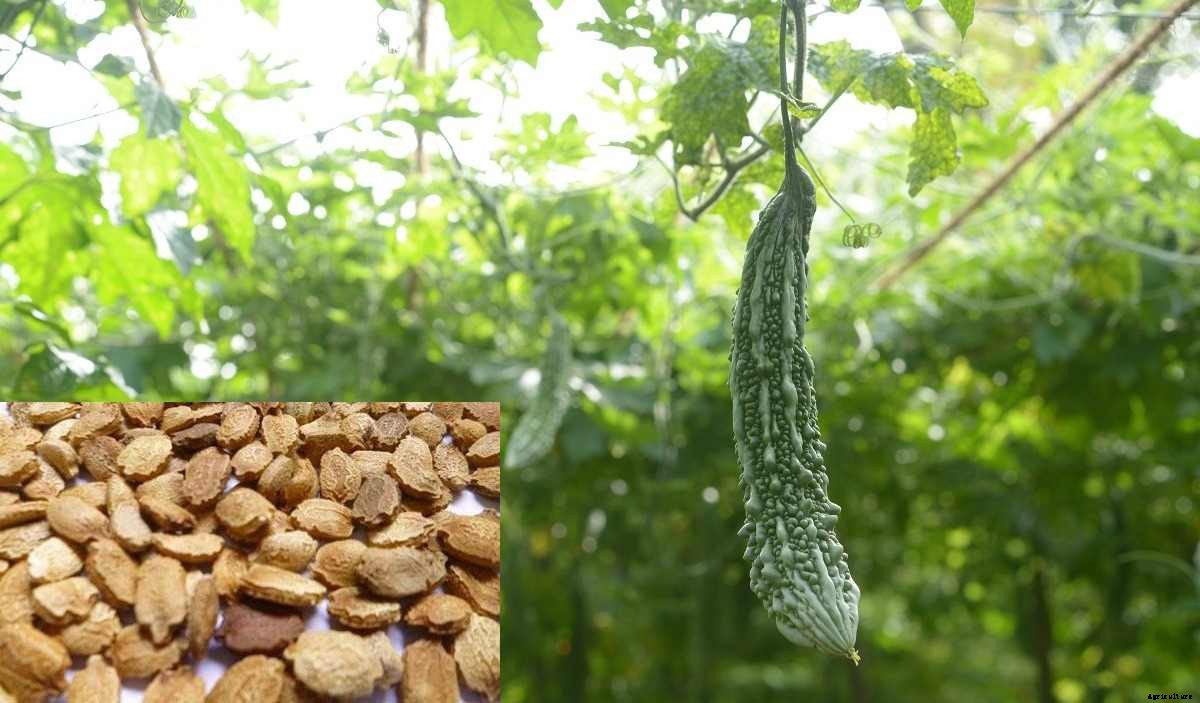
Bitter melon or Bitter gourd seeds germinate best when sown very fresh. Fortunately, there is no mistaking when bitter melon seeds are ready for the sowing process because the fruit dries out, splits open and reveals the shiny, crimson seeds against a golden yellow background. Wear gloves when gathering and handling the Bitter melon seeds or fruit because they are toxic if ingested.
Soaking the Bitter gourd seeds before sowing helps them to germinate faster. Make about ½ inch deep holes in the land to sow Bitter gourd seeds. Then, space them 10 cm apart to ensure the creepers won’t eat into each other.
Bitter gourd seeds can be purchased online or in garden shops. Also, you can use seeds you get from ripe yellow fruits. Ripe seeds have a crimson red color coat and germination is not difficult, but there are some tricks to make it faster.
Seeds will germinate slowly in 7 to 12 days if you directly sow them without pre-treatment, especially at low temperatures. But to increase seed germination rate and for the faster germination, you have to scarify them to remove the seed coat. For this, rub the Bitter gourd seeds from one side without doing any damage to endosperm inside the seed coat. Soaking Bitter gourd seeds for 24 hours in water before sowing will also help.
Bitter gourd germination is usually within 7 days but can take up to 12 days. Seed germination is much better when a heating seed mat is used as the temperatures need to be at least 30°C for the bitter melon to grow. Some people nick the seed coating at the thinner end of the seed with a pair of nail clippers then sow the Bitter gourd seed to help seeds germinate faster.
Pre-wet your Bitter gourd seed starting mix with water before you start sowing seeds. Fill seed trays with the seed starting mix then sow about 1 Bitter melon seed per module with the pointed of the seed end down into the soil. Then cover the Bitter gourd seeds with more seed starting mix. Mist the top of your seed tray and water from the bottom to keep the soil in seed trays moist.
Bitter gourd germination temperature – 30-35°C Ideal
Bitter gourd seed germination time – 7-12 days.
While beautiful to look at, the red coating covering Bitter gourd seeds is detrimental to germination and must be partially removed before sowing. Rubbing one side of the seed with a rasp will remove enough of the seed coat to allow the germination process while limiting damage to the seed. Once scarified, the seeds should be dunked in boiling water for no more than four seconds, and then drained on a sheet of paper towel for a few minutes before sowing.
While Bitter gourd seeds can be planted straight into compost, many gardeners find better results from first soaking the Bitter gourd seeds overnight. This “kick starts” the seed germination process, allowing the seeds to immediately absorb large volumes of water. Once planted in soil, such Bitter gourd seeds tend to get off to a better start.
Bitter gourd plants put on growing rapidly, so no more than one seed should be sown in each pot to allow adequate room for the roots to spread. Fill about 5 inch deep biodegradable starter pots with potting soil, leaving the top 3/4 inch empty. Set the Bitter gourd seed in the center of the pot, and then cover it with a 1/2 inch layer of soil, gently firm it and water deeply to settle it.
You should not miss this: Fenugreek Seed Germination, Time, Process.
Bitter gourd seeds have a hardcover and pre-soaking the seeds overnight before sowing those help in faster germination. To decrease the germination time even further you can first germinate the seeds in a bottle before sowing them. To sow the seeds make about 1/2 inch depressions in the soil, place the seeds on their side and cover them up with loose soil. Water gently so that the soil is not disturbed to expose the seed and keep the soil moist all the time. You can plant 4 to 5 seeds in a 15-liter pot. Keep 1 to 2 plants in a 15-liter pot and remove the others when seedlings have developed at least four true leaves. Young Bitter gourd plants are sometimes susceptible to cutworms and it is a good idea to wrap the base of the plant with aluminum foil when Bitter gourd plants are young. This will make a physical barrier between the plant and the cutworms.
Bitter melon seeds are best started indoors in a pot of sandy, well-drained compost. Once seeds germinate, the plants grow rapidly, so try to choose a rather more generous pot than you might for other plants or you risk having to repot them continually.
Plant the seeds about 1 cm deep in the compost. Water the pot thoroughly, while simultaneously avoiding soggy, waterlogged conditions which can stunt growth. When it comes to Bitter gourd plants, excellent drainage is vital.
High temperatures and adequate moisture hold the key to successfully germinating Bitter gourd seeds. Position the pots within about 3 feet of the west- or south-facing window where they will get direct sunlight during the day. Warm the pots to 29°C using a germination mat and keep the pots covered with a plastic wrap to hold warmth and moisture near the bitter melon seeds. The Bitter gourd seeds need constant moisture, but the soil should be allowed to dry out slightly in the top inch between watering to prevent rot and mildew. The first seedlings may emerge in just 4 days with most of the seeds germinating around day eight.
Here are some tips for growing Bitter gourd;
Here to germinate the Bitter gourd seeds, we are using the Paper towel methods or tissue paper or toilet paper method. This saves us many days, and the Bitter gourd seeds sprout within 3 to 5 days with this method.
The right time to harvest your Bitter gourd is when the fruit’s skin is green with slight specks of yellow, at which point they are normally around 6 inches in length. Once fruiting begins, it can become a routine job to keep on picking, which helps to avoid the Bitter gourd plant becoming overwhelmed.
You may also check this: Organic Hydroponics Gardening, Advantages, Problems.
Bitter gourd starts to fruit quickly in 2 months. Harvest Bitter gourd fruits when they are green, little pale, and unripe and about the size of 3 to 6 inches (depending more on the variety and type). Within 6 to 8 weeks after the germination, you’ll see the blossoms, and in the next 2 to 3 weeks, fruits will appear and are ready to be picked.
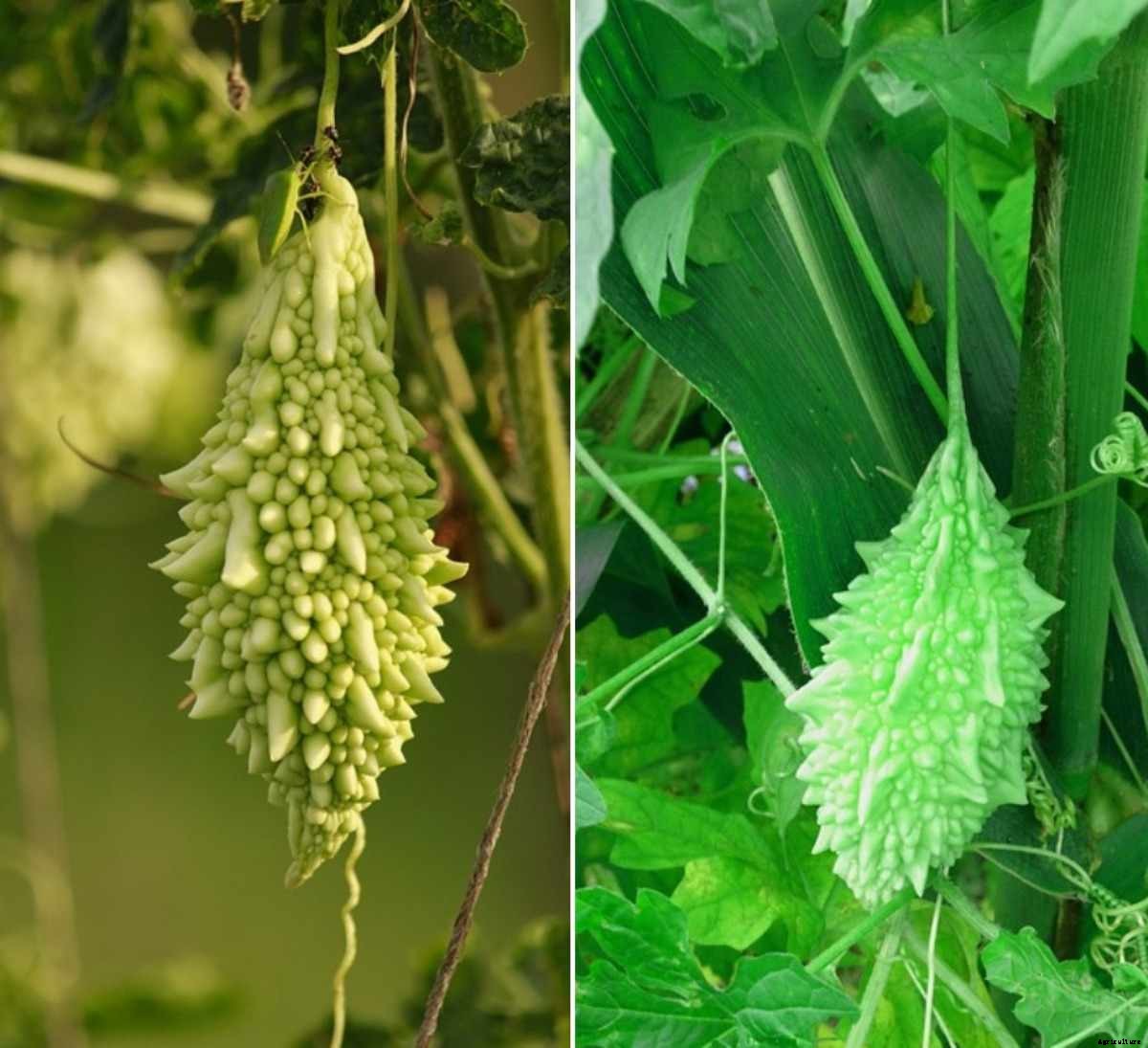
You can also plant Bitter gourd in a container. Bitter gourd usually takes a long time to germinate almost about 7 to 12 days.
Growing Bitter gourd in pots is easy. You’ll need about 12 inches deep pot and a sturdy trellis. However, the Bitter gourd vine can grow more than 5 m (16 feet) long.
Bitter gourd plant is a cross-pollinated crop. Insects, particularly bees, pollinate flowers. Pollination can be a problem during the wet season because bees are less active during overcast conditions.
The plant roots are not affected. In older Bitter gourd plants, leaves wilt suddenly and vascular bundles in the collar region become yellow or brown. The Bitter gourd Mosaic virus disease is mostly confined to the leaves. Symptoms are appearing on the leaves in the secondary branches produced at the apical end of the plant.
Bitter gourd plant thrives in late spring when the summer is just picking up. The plant should receive a minimum of 6 hours of bright sunlight every day until the seeds germinate. Sow the Bitter gourd seeds near the trellis so that the plant doesn’t spread on the ground and rot.
Growing bitter gourd or bitter melon is commercially viable and profitable. You may also Start Fruits and Vegetable Export Business.


