
Welcome to Modern Agriculture!

Introduction to Walnut seed germination
Walnuts are fast-growing trees that develop broad canopies reaching 18 meters wide and 30 meters in height. Walnut is a light-demanding species, requiring full sun to grow well. Walnut trees belong to the genus Juglans, which includes about 20 species grown for their edible nuts and attractive foliage. Walnut (Juglans sp.) is the important temperate nut fruit of the country. Walnut in India is found in different sizes and different shapes. The Indian Walnuts are categorized into 4 categories that are paper-shelled, thin-shelled, medium-shelled, and hard-shelled. Walnut is an important temperate nut crop with delicious kernel and it belongs to the family Juglandaceae and genus Juglans. In this article we also discussed below topics;
Walnut trees can produce flavorful nuts and durable, attractive timber, but home gardeners must be aware that they often kill nearby plants. Also, keep in mind that trees don’t start producing nuts until about 10 years after they have been planted and the nut production will peak at about 30 years after planting.
The best locations for Walnut trees are sunny, and relatively sheltered sites. The ideal soil is a deep, fertile, well-drained loam with a pH level between 6 and 7 (4.3 – 8.3 tolerated), although growing in heavy clay on the river banks and trees tolerating a wide range of soil conditions.
Walnut trees commonly reproduce in the wild and are easy to grow from seed. A tree grown from seed will start to produce fruit in 8 to 12 years, it’s not certain that it will share the characteristics of the parent trees. Walnut cultivars are grafted and start to fruit in the fifth year. Seeing as most cultivars are 2 years old when you buy them, the trees can start to bear fruit in the 3rd year after planting.
Proper spacing mainly depends on whether trees are being grown for nut production or timber products. For timber production, no fewer than 300 trees per acre (12 feet by 12 feet) must be planted. A 10-foot by 10-foot spacing provides about 436 trees per acre. Spacing less than 10 feet by 10 feet will provide even more trees to select from when selecting crop trees, which will increase growth and stem quality, shortening the time it takes for canopy closure and reducing the period required for weed and grass control.
In case if you miss this: Drip Irrigation for Vegetables.
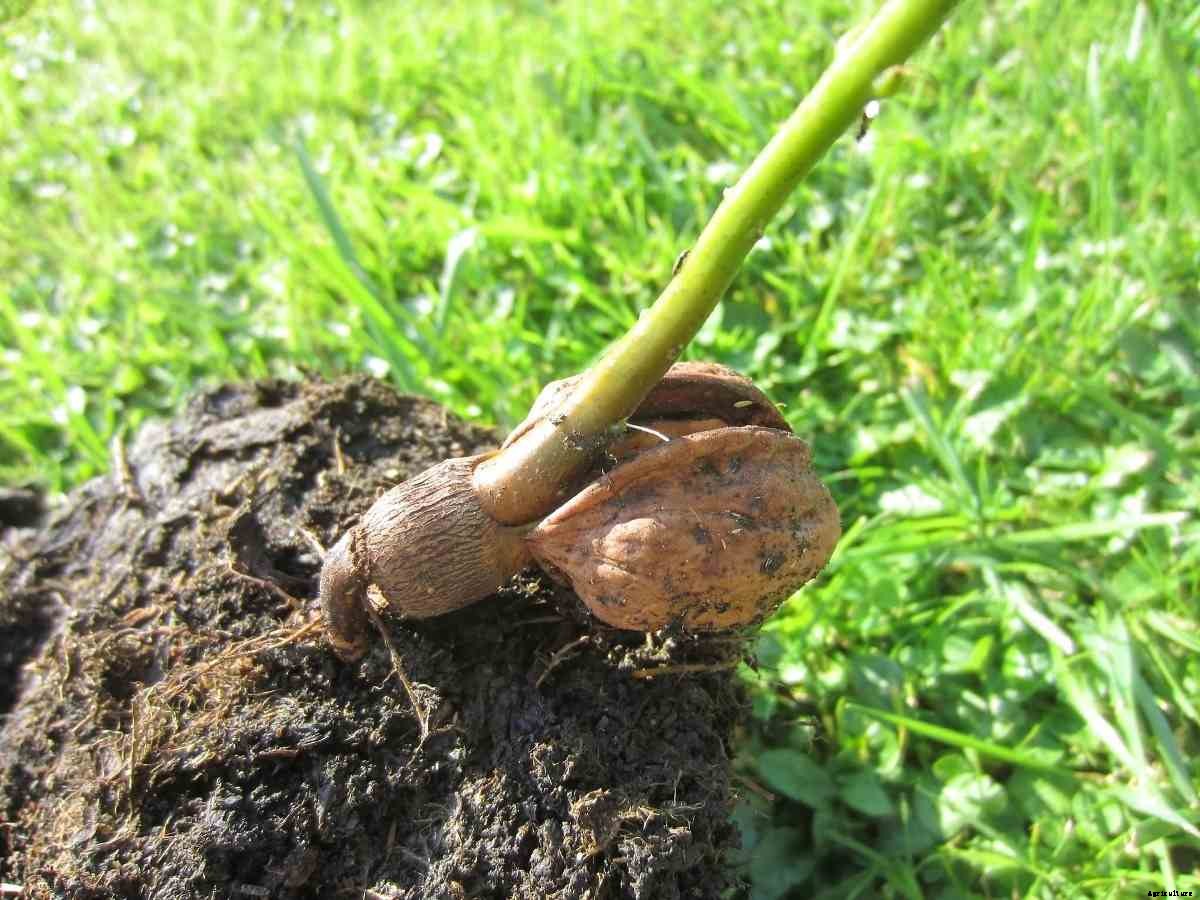
Walnut trees can be easily grown from seeds by following steps;
Seeds can be planted early in the fall so that the necessary chilling occurs naturally, or they can be planted in the spring if they are fully stratified. Improper stratification or dry soil can delay germination until the second year. Fully stratified seeds can be taken out of cold storage about 1 week before planting to accelerate seed germination. Make sure they do not dry out and handle seeds carefully to protect the emerging radicals.
Plant each Walnut seed about 2 to 3 inches deep with the nut laying on its side. If more than one seed is planted per seed spot, put them at least 8 inches apart to make it easier to remove excess seedlings at a later date. If you plan to strip spray with herbicides in the future, and plant nuts within a seed spot in a single file parallel to the rows. If you plan to spot spray, use a triangular pattern for 3 seeds or a square pattern for four seeds within each seed spot. Using clustered patterns helps to keep rows straight, minimize the size of herbicide circles, and minimize the number of materials required if you erect mechanical barriers to predation.
Protect Walnut seeds from squirrels and other predators by using mechanical barriers or chemical repellents. The cheapest and effective repellent is a generous portion of fresh cow manure over each seed spot.
You should not miss this: Flaxseed Germination, Temperature, Process.
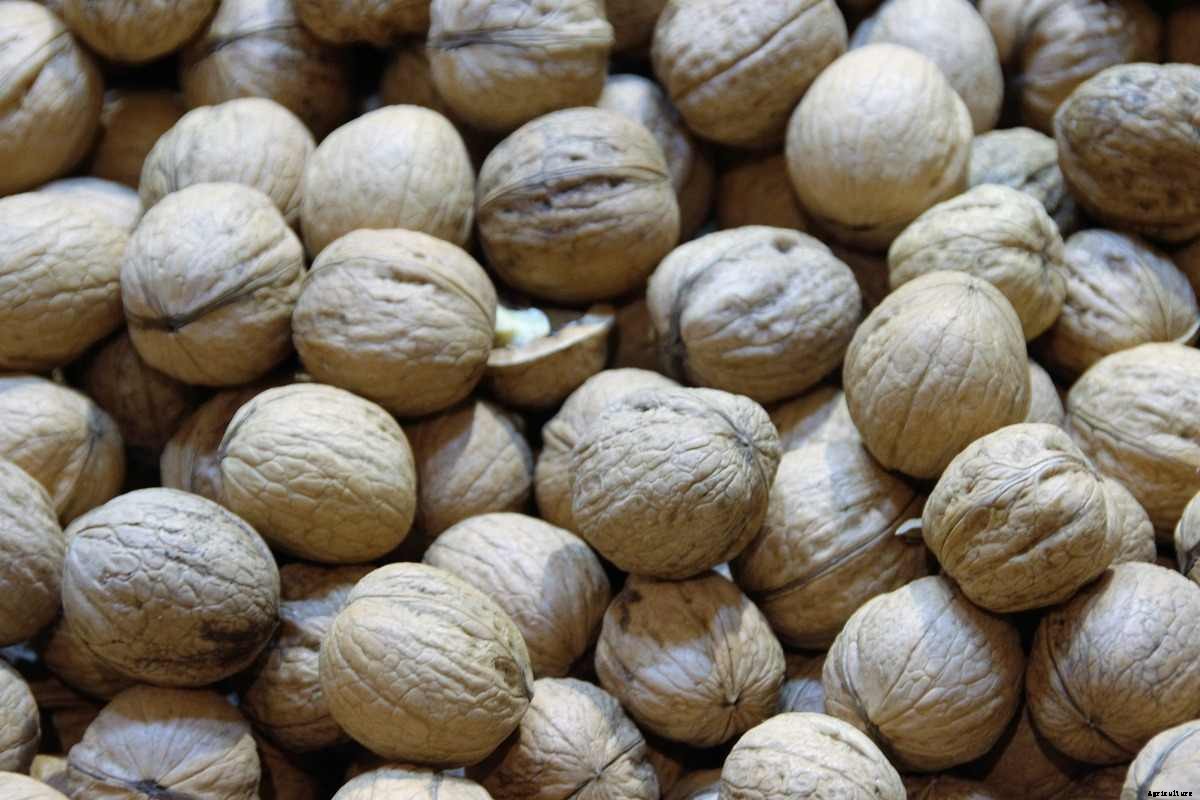
The combined application of different pre-sowing treatments resulted in minimum days taken for seed germination. Seeds of Walnut showed early seed germination (12 days) when a combination of cracking with GA3 (Gibberellic acid) by 750 ppm stratification for 30 days than control and single treatments. Early germination might be because Gibberellic acid plays an important role in two stages of germination one at initial enzyme induction and other inactivation of reserve food mobilizing system which helps in the enhancement of seed germination. The maximum days taken for seed germination (76 days) were recorded with control treatment.
Walnut seeds require a certain temperature to germinate. Each plant has a specific optimum and a range within which seed germination will occur. The closer the temperature range is to optimum the quicker germination will occur. The seeds germinate rapidly once exposed to warm conditions and 29°C if daytime temperatures stay below 18°C.
The combined application of different pre-sowing treatments resulted in minimum days taken for germination and maximum germination. Seeds of Walnut showed early germination (12.68 days) as well as best germination (75.68%) when a combination of nut-cracking with GA3 by 750 ppm stratification for 60 days and combination of nut-cracking with GA3 by 500 ppm for 60 days stratification were used respectively as compared to control and single treatments. The maximum germination might be because GA3 mainly involved in the activation of cytological enzymes which stimulates α – amylase enzyme that converts insoluble starch into soluble sugars and early germination might be because GA3 plays an important role in two stages of seed germination one at initial enzyme induction and other inactivation of reserve food mobilizing system which helps in enhancement of seed germination.
Gibberellic acid was required in relatively lower concentrations with stratification and scarification for the maximum germination. The inability of Walnut seeds to germinate can be due to the presence of a hard seed coat. As the scarification treatment given to the seed helped in water uptake, growth hormones, and air which is essential for germination. Prechilling stratification had a significant effect on breaking of seed dormancy and it can be attributed that at low temperature more oxygen dissolves in water and therefore more oxygen is available for an embryo.
You may also check this: Vertical Herb Farming, Advantages, Ideas, and Tips.
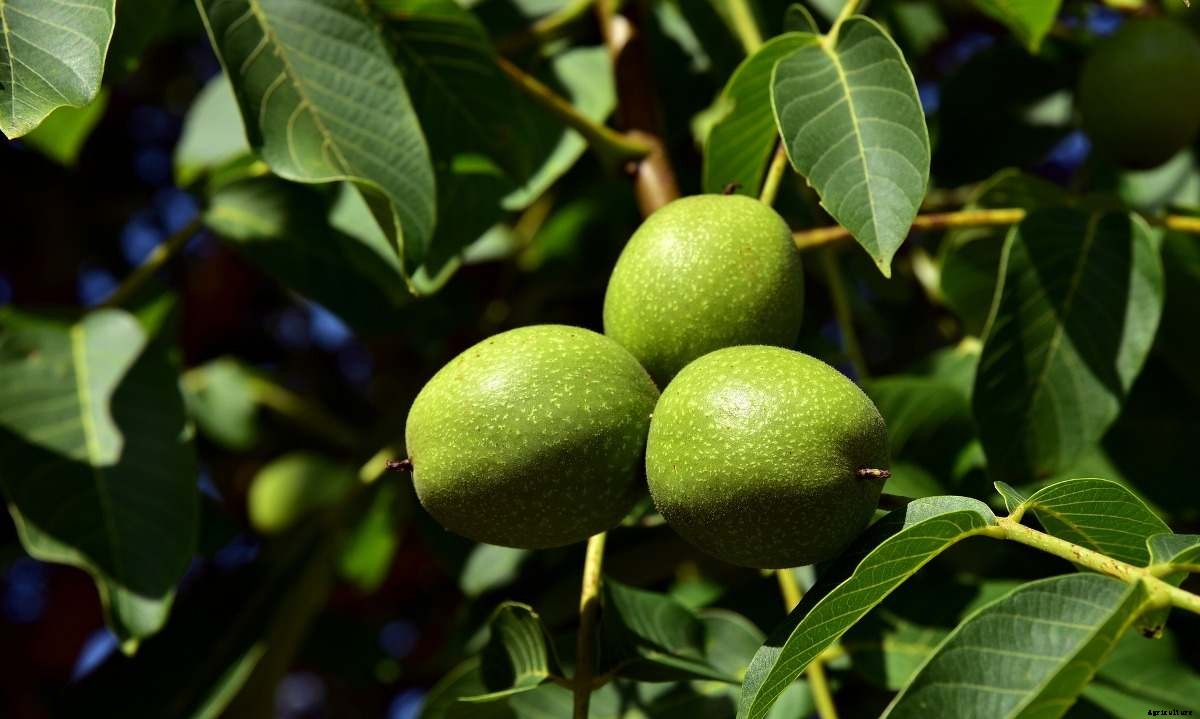
To successfully germinate and grow, Walnuts need stratification or a period of cold temperature. After purchasing the whole Walnuts from the grocery store, and then soak the nuts in water overnight. In the spring season, plant the Walnuts in the ground or pots with good quality potting soil.
About 12 to 15 weeks later, some seeds will have normally sprouted. We plant them directly in the field (in areas with mild winters) or in individual pots containing special soil mix that means soil with river sand and compost etc.
According to timber experts, black Walnut trees, when planted to maximize tree growth, can grow as much as 3 to 4 feet per year in good soil, reaching a mature height of over 100 feet and 30 to 40 inches in diameter, with 16 inches diameter nuts ready to harvest in 30 years.
Nut production continues to increase until 20 years of age and trees are grown for nuts and timber. A Walnut orchard can take a few years to come into full production but then produces up to about 6,000 pounds per acre.
Walnut trees are capable of producing nuts every year, but you can experience patterns of high and low yields from year to year.
In case if you are interested in How to Make Money from an Organic Farming Business.


