
Welcome to Modern Agriculture!

Today, let us learn the topic of India Agro Based Industries.
What is the meaning of Agro-based industries? Agro-based industries are industries which use agricultural products as raw materials. For example, cotton textiles, silk textiles, and jute industries are Agro-based industries.
Agro-based industries are depending on agriculture for their raw material and other basic inputs. This inter-dependence should be oriented to suit the need of our country and State. Stabilization and growth of agricultural production effects in rapid advancement in output and employment in agro-industries.
Further, the cumulative result of agricultural growth and growth of agro-industries creates greater opportunities for industrial growth as well as the integration of the different sectors of the economy. Agro-based industries can be classified into two categories namely food processing industries and nonfood processing industries. Food processing industries mostly deal with the preservation of perishable products and utilization of by-products for other purposes. These types of industries contain the processing of wheat, rice, maize, barley, pulses, meat, fruits, vegetables, etc.
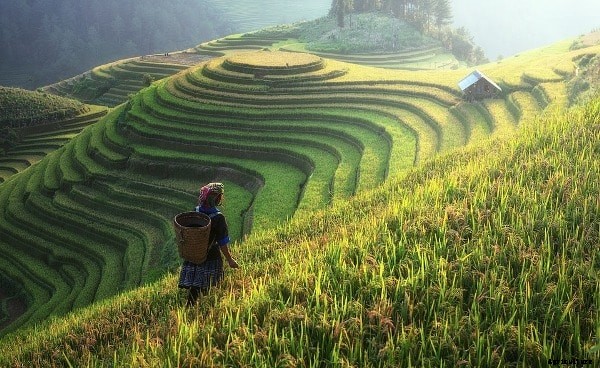
Different factors influencing growth of Agro-based industries are given below;
The Agro-based industry is an enterprise that processes raw materials, containing ground and tree crops as well as livestock. The degree of processing can differ tremendously, ranging from the cleaning and grading of apples to the milling of rice, to the cooking, mixing, and chemical alteration that makes a texturized vegetable food Agro-industries can be approximately categorized according to the degree the raw material is transformed. In general, capital investment, technological complexity, and management necessities increase in proportion with the degree of transformation.

According to the International Standard Industrial Classification (ISIC) Agro-based industry consists of;
The Agro-based industry includes industries like textiles, sugar, paper and vegetable oil. These all industries use agricultural products as their raw materials. The textile industry is the very largest industry in the organized sector.
Read: Types of Machinery Used in Agriculture.
The Agro-based industry depends upon agriculture region for raw materials. This industry is the major market of agricultural commodities. Main agro-based industries in India are the sugar industry, the cotton textile industry, oil industry, jute industry, food processing industries, paper industry, etc. The sugar industry is a very important agro-based industry in India. Employment opportunity in the rural region of the country is increasing due to the establishment of more and more Agro-based industries. Farmers get reasonable cost of the Agro-based product by interlinking of Agro-based industry and farmers. Internal and external economies are helpful to rural people due to the establishment of Agro-based industries. Rural infrastructure is developed with the help of these Agro-based industries.
There are four types of agro-based industries;
They merely system the raw material so that it can be preserved and transported at a cheaper cost. There is no new product is manufactured. Example: Rice mills, Dal mills, etc.
Manufacture completely new products. Finished goods will be totally different from its original raw material. Example: Sugar factories, bakery, solvent extraction units, textile mills, etc.
Industrial units which create goods either for mechanization of agriculture or for increasing productivity come under this type. Example: Agricultural implements, seed industries, pump set, fertilizer and pesticide units, etc.
Agro service centers are mainly workshops and service centers which are engaged in repairing and servicing of pump sets, diesel engines, tractors and all types of farm equipment.
Different types of Agro-based industries based on textile industries are given below;
Textile Industry: In the Indian economy, the textile industry occupies a unique position. Because, it contributes to industrial production (14 percent), employment generation (35 million persons directly and the second largest after agriculture) and foreign exchange earnings (about 24.6 percent). It contributes 4 percent towards Gross Domestic Product (GDP). It is the only industry in the country, which is self-reliant and entire in the value chain i.e., from raw material to the highest value-added products.
Cotton Textiles: In ancient India, these industries were formed with hand spinning and handloom weaving techniques. Nowadays, there are almost 1600 cotton and human-made fiber textile mills in the country.
Jute Textiles: India is the first largest producer of raw jute and jute goods and stands at second place as an exporter after Bangladesh. There are totally about 70 jute mills in India. The jute textile industry supports 2.61 lakh workers directly and another 40 lakhs small and marginal farmers who are engaged in the cultivation of jute and Mesta. Many more people are associated indirectly.
Sugar Industry: An India stands second as a world producer of sugar however occupies the first place in the production of gur and khandsari. The raw material used in this sugar industry is bulky, and in haulage its sucrose content reduces. There are totally 460 sugar mills in the country spread over Uttar Pradesh, Bihar, Maharashtra, Karnataka, Tamil Nadu, Andhra Pradesh, and Gujarat along with Punjab, Haryana and Madhya Pradesh. Totally sixty percent of mills are in Uttar Pradesh and Bihar. This industry is seasonal in nature so, it is ideally suitable to the cooperative sector.
In recent years, a tendency for the mills to shift and concentrate in the southern and western states, particularly in Maharashtra; this is since the cane formed here has higher sucrose content. The cooler climate ensures a longer crushing season. Also, cooperatives are more successful in these states.
Agriculture and industry both are miles apart from each other but there are definite industries which are dependent on agriculture and these types of industries are known as Agro-based industries. Agro-based industries use agriculture products as its raw materials as far as the production of products is concerned, given below are some of the examples of Agro-based industries;
The importance of Agro-based industries is discussed below;
The impact of Agro-based industries on regional development is;
The problems faced by agro-based industries in India are given below;
Small Landholdings: This makes economies of scale hard to operate and farmers are forced to rely on subsistence farming.
Seasonal nature: This means that the farmers have a very small window to reap benefits of their hard labor. In recent times, climate change has affected weather patterns which in turn has had an adverse contact on agricultural production.
Perishable nature: Products are of perishable nature and thus it needs huge infrastructure in terms of cold storage, good road connectivity, etc. India suffers on account of both forward linkages and backward linkages.
Variability: Agro-industries contain variability in the quantity and quality of raw materials. Quantity is uncertain as of fluctuations in weather, in soil condition, etc. Quality changes because of standardization, of raw materials remain elusive even though there has been an advancement in animal and plant genetics. These changes exert additional pressure on agro-industrial units in terms of operations related to production, scheduling, and quality control.
Sugarcane Agro-based industry in India is suffering on account of poor export scenario, large arrears due to sugar manufacturers, over-regulation in the sector. Since the advent of globalization of trade, a development in one region has an impact on all other regions. For example, the sugar prices globally are low which affect the Indian manufacturers.
Read: List of Hydroponic Flowers.

