
Welcome to Modern Agriculture!

The following content details about Shrimp Cultivation Methods and Shrimp culture techniques and ideas. We also discuss shrimp feeding, pond management, etc..
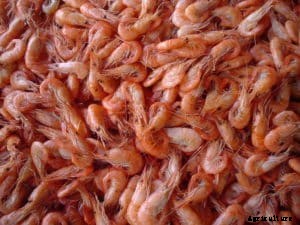
Over the years, aquaculture in India has evolved from a subsistence and backyard activity to that of a technology-driven commercial and profitable venture. India is now second in world aquaculture production next to China.
The estimated brackish water area suitable for undertaking shrimp cultivation in India is around 11.91 lakhs ha spread over 10 states and union territories viz; West Bengal, Orissa, Andhra Pradesh, Tamil Nadu, Pondicherry, Kerala, Karnataka, Goa, Maharashtra, and Gujarat. Of this only around 1.2 lakhs ha are under shrimp farming now and hence lot of scope exists for entrepreneurs to venture into this field of activity. The following table gives the state-wise potential and present level of development.
The success of commercial aquaculture in India is attributed to the availability of vast untapped surface water resources, standardization of many new products and associated techniques of input and output subsystems, an extension of technology and practical knowledge to the farmers. Now let us dive into actual cultivation of shrimp.
Read: Horticulture Training Centers in India.
In Shrimp Cultivation, a shrimp pond should be designed according to the characteristics of the selected site and the culture system. There is no unique design, but optimum and functional farm layout plan and design should be based on the physical and economic conditions prevailing in the locality.
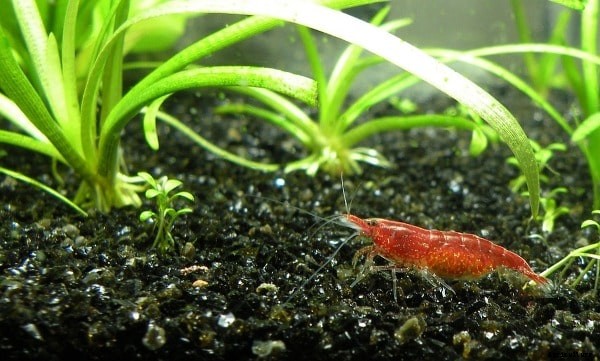
Before a pond can be stocked for a new crop, the excessive wastes, which accumulate in the pond during the previous crop, must be removed and the soil and water conditioned. Growing of shrimp in an improperly prepared pond may lead to difficulty in pond management during the culture period, which could result in a decrease in production capacity of the pond.
The most suitable species for culture in India are the Indian white prawn Penaeus indicus and tiger prawn P. monodon. The stocking density varies with the type of system adopted and the species selected for the culture. As per the directives of Supreme Court, only traditional and improved traditional shrimp farming can be undertaken within the Coastal Regulation Zone (CRZ) with a production range of 1 to 1.5 t/ha/crop with a stocking density of 40,000 to 60,000/ha/crop. Outside CRZ extensive shrimp farming with a production range of 2.5 to 3 t/ha/crop with a stocking density of 1,00,000/ha/crop may be allowed.
Selection of good quality seed for stocking into a pond is the first important step of the shrimp grow-out management. The farmer must ensure that he or she gets healthy seed by purchasing them from reliable hatchery or hatcheries. It may not always be possible to obtain the desired shrimp seed due to limitations in availability and quantity.
The following parameters should be taken into consideration in purchasing shrimp seed for stocking.
(i) Size
Seeds of PL 15-20, indicated by the appearance of 4-6 spines on the rostrum, are recommended for stocking in a pond. The healthy PL should have the muscle-to-gut ratio in the sixth abdominal segment of about 4:1 or the thickness of the gut should be about the thickness of the muscle. Practically, seed from the first and second spawning of broodstock with uniform size can be used.
(ii) Morphology
The postlarvae should have the normal appearance of trunk, appendages, and rostrum. The abdominal muscle must be clear, no discoloration or erosion on any parts of the body, the gut should be full of food, and the muscle should fill the carapace.
(iii) Color
Postlarvae with the presence of pigment cells in the uropods should be used since this indicates the stage of development. PL that will have high survival and growth rates will be light gray, brown to dark brown and black in color. Signs of red or pink coloration are normally related to stress.
(iv) Behavior
Healthy seed swims straight, respond rapidly to external stimuli such as a tap on the side of the basin, actively swim against the current when the water is stirred, and cling to the sides rather than aggregate or be swept down into the center of the container when the current has subsided.
(v) External Fouling
Seeds should be free from external parasites, bacteria, and other fouling organisms. The presence of these organisms indicates unhealthy conditions, which will affect the growth and survival of the PL. It is recommended that before purchasing, the farmer should visit the hatchery to check the seed once or twice either in the early morning or late afternoon, especially one day prior to stocking. However, healthy seed with some fouling may be used when the animals are in good condition after treatment.
(vi) Pathogen Free
Seed should be checked for the presence of viral occlusion bodies. Seed with large numbers of occlusions indicate stress conditions and will not so vigorous in the pond.
Read: Tilapia Fish Farming.
When a farm is ready for operation, the optimum stocking density of PL in a pond should be determined in accordance with the production capacity of the farm and the culture system, which include the soil and water quality, food availability, seasonal variations, target production, and farmer’s experience. It is recommended that farmers should start a new crop with a low stocking density to access the production capacity of the pond. If production is successful, then the stocking density could be increased for subsequent crops. Overstocking should be avoided since it may result in management problems and loss of entire production.
The stocking density between 10-20 PL/m2 is usually practiced in a semi-intensive culture. In intensive culture, a well-managed pond with consistent good water quality can stock up to 25-30 PL/m2 at 1.2 m water depth and up to 40-50 PL/m2 at 1.5 m water depth or deeper. However, it must be emphasized that intensive cultures involve high densities and can only be sustained in well-managed farms under an experienced farmer.
Shrimp requires approximately 40 essential nutrients. These nutrients are provided in various amounts by natural food and supplemental feeds. Although the nutrition principles are similar for all animals, the quality and quantity of nutrient requirements vary from species to species. The recommended levels of nutrients and dietary components for black tiger shrimp are listed in the table below.
Read: Beekeeping Training in India.
Water conditions in the rearing pond deteriorate through the production cycle due to uneaten food, animal’s excretion, etc. Generally, shrimp farmers use dissolved oxygen (DO), pH, ammonia, watercolor, and water odor as indicators to judge the water quality of the pond.
These parameters are observed regularly by using either scientific equipment or the farmer’s experience in order to control them within the optimum range.
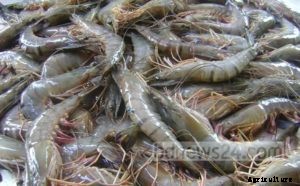
Two methods of harvesting are generally practiced on farms. These are either by draining the pond and catching the shrimp in a bag net or by netting the shrimp within the pond.
With either method, it is necessary to hand-pick the remaining shrimp in the pond, after the pond is drained. The harvested shrimp can be quickly killed by giving them a temperature shock (dip in iced water) to prevent damage and to improve storage.
Read: Seed Sowing Methods in Agriculture.
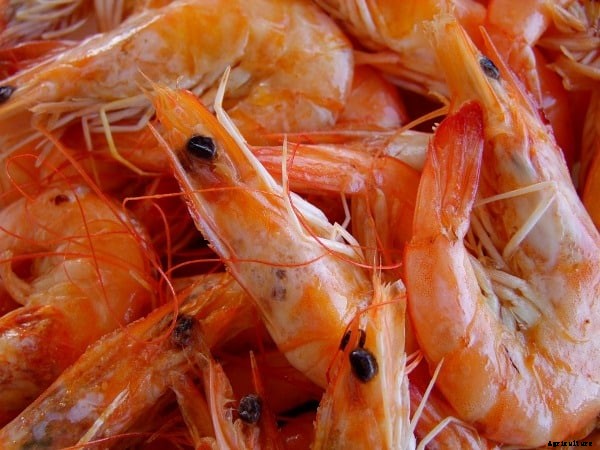
Cultured shrimps suffer from various diseases due to infectious and non-infectious causes. Infectious diseases are caused by viruses, bacteria, fungi, and certain parasites. Treatment cannot be carried out effectively when shrimp diseases occur in a pond. The best way to get rid of diseases is by practicing good farm management or prevention. In this regard, information on various kinds of diseases and their prevention procedures are useful.
Quality Control plays a major role in Profits and Marketing. It is very important to make sure the end product is healthy.
That’s all folks about the cultivation of shrimp and cultural practices. Keep developing aquaculture!.
Read: Growing Celery in the Backyard.

