
Welcome to Modern Agriculture!

Your Monstera is doing something you didn’t plan for. It’s leaning, reaching, and stretching those iconic fenestrated leaves toward the nearest light source, as if it has somewhere to be.
And now you’re wondering: should you spin it around to even things out, or just let it do its thing?
This is one of the most common questions Monstera owners face as their plant grows from a tabletop sprout into a room-dominating powerhouse.
While rotating sounds like a simple fix for a lopsided silhouette, the results vary depending on your aesthetic goals and the natural growth habits of these tropical climbers.
This article breaks down the science of plant movement and the trade-offs of each method, so you can make the best choice for your plant and your space.
Rotating a Monstera deliciosa isn’t just about spinning a pot. It’s about understanding how your plant responds to its environment and deciding what kind of growth you actually want to encourage.
Some plant parents rotate religiously and end up with lush, full plants. Others never touch the pot and end up with dramatic, sculptural masterpieces. Both outcomes are valid. The trick is knowing which path you’re on.
Monsteras are phototropic, meaning they naturally grow toward their light source. Every new leaf, every aerial root, every reaching stem follows the brightest spot in the room.
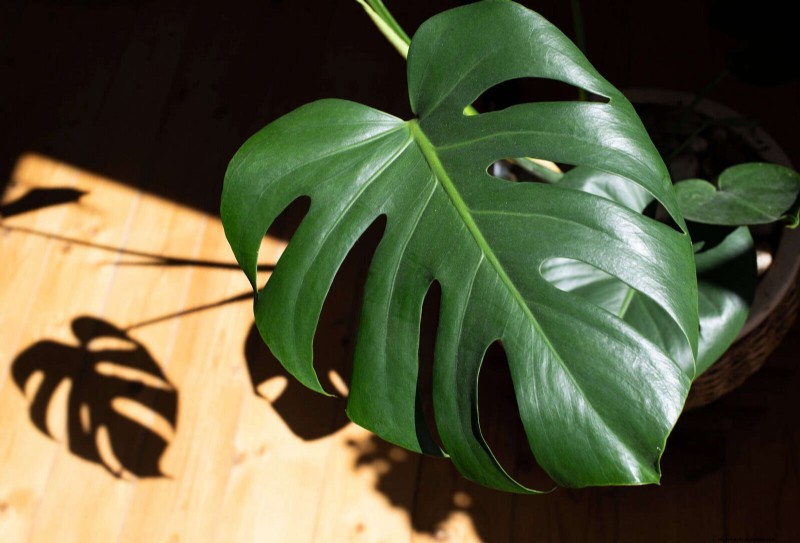
This behavior is hardwired. In the wild, Monstera deliciosa climbs tree trunks toward the forest canopy, always chasing light. Inside your home, that same instinct plays out in slower, subtler ways.
What makes this interesting is the role of auxins, the growth hormones that drive the process. When light hits one side of your Monstera’s stem, auxins migrate to the shaded side.
That concentration causes cells on the dark side to elongate faster, effectively pushing the stem and leaves toward the light. Your plant isn’t passively bending. It’s actively redirecting its own growth chemistry.
Here’s a fun twist: young Monsteras actually exhibit skototropism, a tendency to grow toward darkness. In the wild, seedlings crawl along the forest floor toward the darkest shape they can detect, usually the base of a large tree trunk.
Once they latch on and begin climbing, the behavior flips to phototropism, and the plant starts chasing light upward. Your mature indoor Monstera is firmly in its light-seeking phase, but that early darkness-seeking stage is a fascinating part of its biology.
We'll email it to you so you can read it later!
By saving, you agree to receive occasional emails. Unsubscribe anytime.
Symmetrical growth means leaves and stems spread out relatively evenly in all directions. Natural growth means the plant follows its own instincts and develops a shape based on where the light actually lives.
Neither one is wrong. Symmetrical growth results from intentional, consistent human intervention. Natural growth is what happens when you step back and let the plant lead.
The anatomy helps explain why this matters. Monstera is a hemiepiphyte, a plant that spends part of its life cycle attached to other plants. They develop a distinct “front” and “back.”
The front face produces leaves and aerial roots that reach outward and upward. The back face, which in the wild presses against a host tree, stays relatively bare.
When you rotate a Monstera, you’re asking a plant with a built-in “spine” to turn around and reorganize its entire orientation. It can do this, but it’s not a trivial adjustment.
Pro Tip: Want a full, balanced look without rotating? Plant two vines in the same pot, angled in opposite directions. Each vine develops its own “front,” and together they fill out the pot on all sides. Many experienced growers use this technique to get a lush, symmetrical silhouette while letting each individual vine grow naturally.
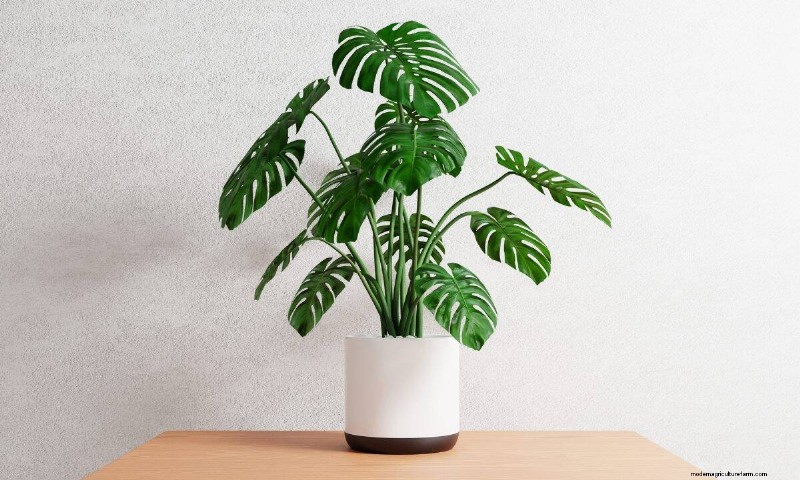
A symmetrically grown Monstera looks balanced and full. Leaves fan out in multiple directions. The plant looks like it belongs in a magazine spread or a well-designed living room corner.
This shape feels intentional, and it photographs beautifully, which is probably why so many plant influencers swear by regular rotation.
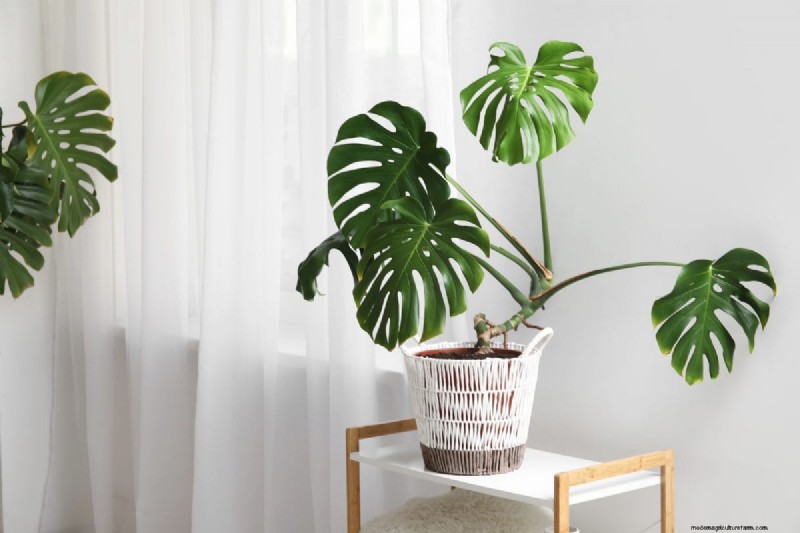
A naturally grown Monstera has personality. It leans. It reaches. It claims space in a room as if it owns the place.
Interior designers often love an unrotated Monstera for its architectural qualities. The asymmetry creates visual interest. It looks alive because it absolutely is living on its own terms.
Monstera owners who grow their plants on moss poles must choose not to rotate.
Because the plant has a designated “back” that clings to the pole and a “front” that displays its leaves, rotating would force the plant to expend massive amounts of energy twisting its leaves backward to find the sun, ruining the structure it’s carefully built.
Regular rotation evenly distributes light across the entire plant. This encourages more growth points to activate and produces a fuller, more symmetrical canopy over time.
It also helps prevent one side from becoming leggy and weak. A balanced plant is often healthier, with more even access to resources across all its stems and leaves.
There’s a structural argument too. A Monstera that grows heavily in one direction develops lopsided weight distribution. Over time, this can become a real problem with larger specimens in tall pots.
A heavy lean increases the risk of tipped pots or snapped vines, especially once the plant reaches several feet tall. Regular rotation keeps the weight balanced and the plant standing upright.
Note: If you prefer the unrotated, leaning look, be sure to use a heavy ceramic or terracotta pot to act as a counterweight against the front-heavy foliage!
Every time you rotate a Monstera, you disrupt its orientation. The plant has to recalibrate. It was growing toward the light, and suddenly, the light was somewhere else entirely.
This isn’t always harmful, but it can slow growth. A Monstera left alone builds momentum. It knows where it’s going, and it gets there faster.
There’s also a real physiological cost. When you change a Monstera’s orientation, the petioles (the stems connecting each leaf to the main vine) have to twist and bend to reposition the leaf blades toward the new light source.
That bending requires energy that would otherwise go toward producing larger leaves, deeper fenestrations, or new growth points. Over a growing season, frequent rotation can quietly siphon off resources the plant could have used more productively.
In strong, consistent light, a quarter turn every two to four weeks is a common recommendation among experienced plant parents. This gives the plant time to respond before being moved again.
In lower light, rotate less frequently. The plant is already working harder to get enough energy, and changing its orientation too often adds unnecessary stress.
A good rule of thumb: rotate only during the active growing season (spring through early fall) and leave the plant alone during winter. When growth slows naturally, the plant’s ability to adapt to a new orientation slows with it. Six to eight rotations per year during the growing season is plenty.
Plant size matters here, too. A small Monstera near a bright window handles rotation well because its stems aren’t heavily committed to one direction yet.
A large, established Monstera is a different story. Rotating it aggressively can cause confusion and even physical damage to older, stiffer stems. For plants in the 2- to 4-foot range, rotation is most effective and least risky.
If your Monstera is in a corner with light from only one direction, rotation may do more harm than good. The plant will always try to return to the light, and each turn just restarts that process.
In those cases, consider repositioning the plant closer to the light source rather than spinning it in place.
Always rotate slowly and gently. Check that no stems or aerial roots are tangled in nearby furniture or support structures before you move the pot.
Rotate in small increments rather than dramatic 180-degree flips. A quarter turn is the sweet spot. Dramatic or irregular turns cause the leaves to twist in conflicting directions, which can leave your plant looking tangled and chaotically “bushy” as the stems cross over one another.
Water the plant a day or two before rotating so the soil is settled and roots aren’t disturbed by dry, loose medium shifting around.
For larger specimens in heavy pots, consider using a rolling plant stand. This lets you make smooth, gradual adjustments without jerky lift-and-twist movements that can stress stems.

View on Amazon.
Note: If your large specimen is attached to a moss pole, you should not be rotating it for light exposure at all. A rolling stand should only be used to gently move the plant for cleaning or watering.
Watch for slow or stalled growth after rotating. If your Monstera was putting out new leaves regularly and suddenly stops, the change in orientation might be the reason.
Another indicator: smaller-than-expected new leaves. If your Monstera has been producing progressively larger, more fenestrated leaves and then puts out a noticeably smaller one after a rotation, it may be diverting energy to petiole adjustment rather than leaf development.
Persistent leaning back toward a former light direction, even weeks after rotating, is also a signal. Some plants are simply more committed to their orientation than others, and forcing the issue rarely ends well.
A moss pole placed near the center of your Monstera gives it something to climb vertically instead of sprawling sideways.
This can help create a more upright, structured shape, but it requires a strict “no-rotation” habit. Alternatively, choosing not to use a pole and allowing the plant to sprawl horizontally creates a dramatic, creeping silhouette, but it requires more floor space and a heavy pot.
Once attached to a pole, the plant’s “back” must stay against the support while its “front” permanently faces the light source.
Stakes and trellises can redirect individual stems. If you want to encourage growth in a specific direction, gently tie a stem toward where you want it to go. The plant will follow over time.
Read more: Monstera Trellis Vs Moss Pole: Which Is Better?
Once a Monstera has developed strong, established growth in one direction, reversing it dramatically isn’t always worth the effort. The plant has invested significant energy into its current shape.
If your Monstera has been growing unrotated for a year or more and has built a clear front-facing orientation (especially on a moss pole), switching to regular rotation will likely cause a prolonged awkward phase. The payoff is rarely worth it.
Instead, work with the shape you have. Reposition the pot so the plant’s natural lean complements your room layout.
Prune selectively to balance visual weight. And if you want fuller coverage, add a second vine in the same pot rather than fighting the existing one’s direction.
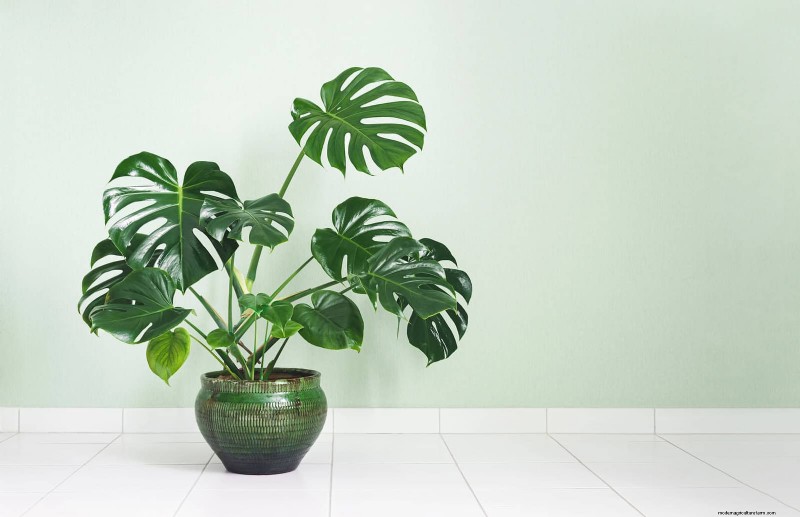
There is no universally correct answer to the rotation question, but there are physical realities to each choice.
The symmetrical Monstera is a crowd-pleaser that works beautifully in curated interiors, provided you have the patience for consistent, careful turning.
The wild, unrotated Monstera is sculptural and bold, but it requires a heavy pot, plenty of floor space, or a sturdy moss pole to keep it from toppling over.
The best approach is the one that matches your space and the one you can actually commit to. Monsteras are tough and communicative, but they aren’t magic. If you constantly change your mind about where the light is, the plant will waste its energy twisting into a tangled, chaotic mess.
Pick your path, whether that is a disciplined rotation schedule, a hands-off sprawling vine, or a vertically trained moss pole. Pay attention to how the plant responds, keep an eye on its center of gravity, and adjust your support when necessary.
A Monstera will always show you exactly what it needs, as long as you are paying attention to the signs!


